Low-End Torque for Off-Roading: The Complete Guide
Table of Contents
- What Is Low-End Torque and Why It Dominates Off-Road Performance
- Torque vs. Horsepower for Off-Roading: Which Matters More
- The Role of RPM and Power Band in Technical Terrain
- Gear Ratios and Torque Multiplication: Multiplying Your Advantage
- How to Increase Low-End Torque: Forced Induction and Engine Modifications
- Diesel vs. Gasoline Engines: Torque Delivery and Off-Road Capability
- Throttle Control and Drivability: Mastering Low-End Power on the Trail
- Conclusion
What Is Low-End Torque and Why It Dominates Off-Road Performance
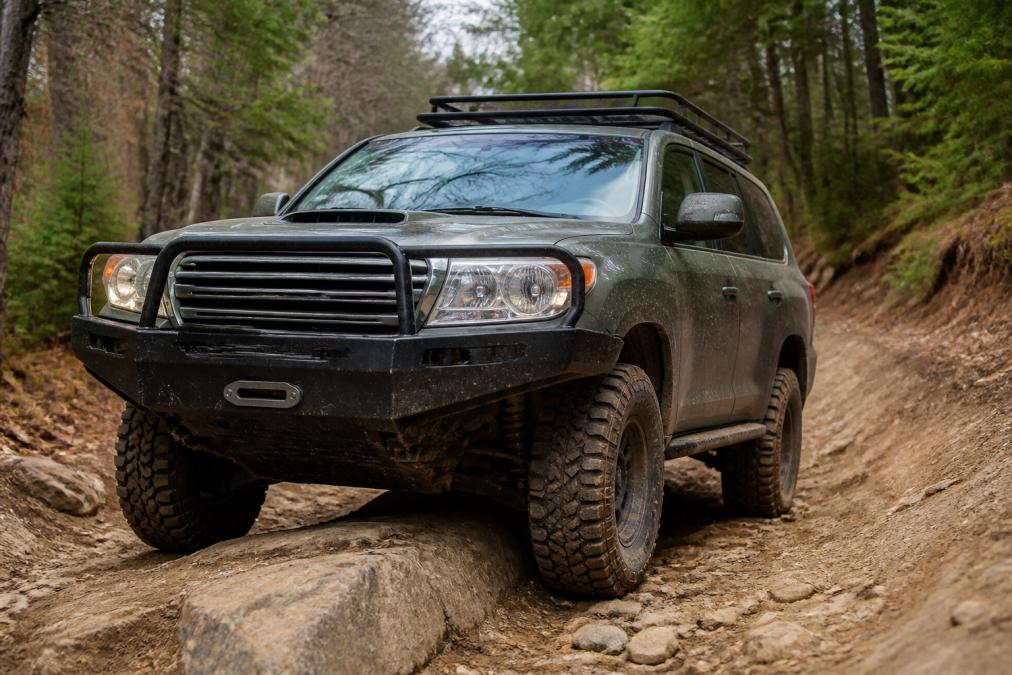
Low-end torque is the rotational force your engine produces at lower RPM ranges, typically between 1,000 and 3,500 revolutions per minute. When crawling over rocks, navigating mud, or climbing steep inclines, your engine operates in this lower power band where low-end torque determines whether you make forward progress or get stuck.
Peak torque often arrives much earlier than peak horsepower. A diesel engine might produce 450 lb-ft at 1,800 RPM, while a gasoline engine doesn't hit peak torque until 4,500 RPM. That gap matters enormously in technical terrain where immediate pulling power determines success. Low-end torque maintains momentum through soft sand without constant downshifting and keeps wheels turning when you're in a rut with three wheels off the ground.
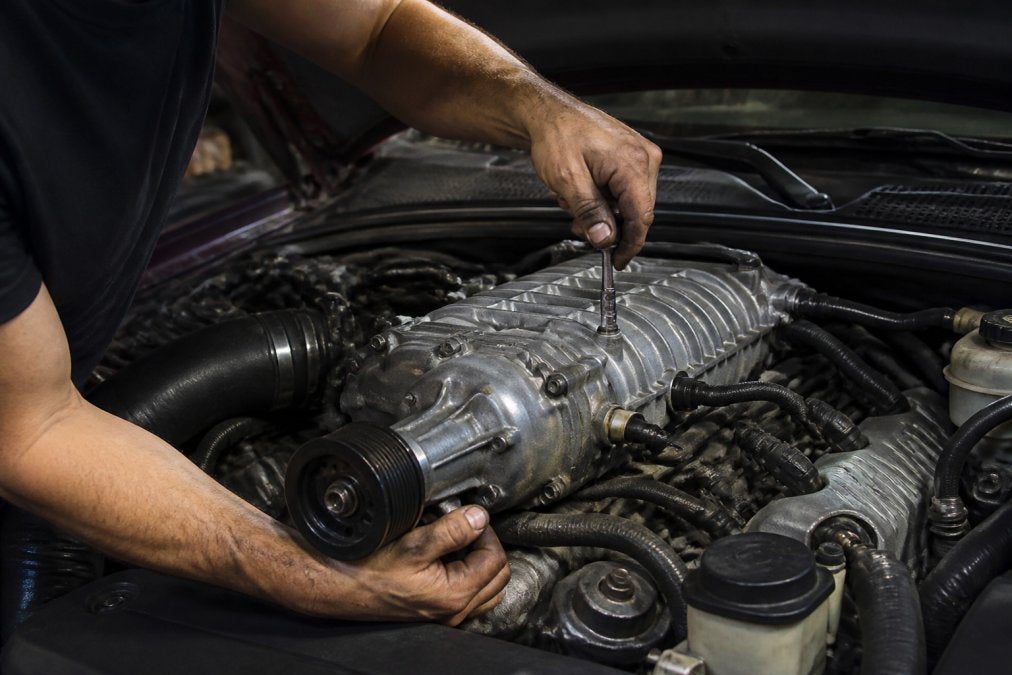
At VT Superchargers, we've engineered bolt-on supercharger kits specifically to deliver torque where you need it most, in that critical lower RPM band where off-road driving happens. You need pulling power when your vehicle is already under load, tires buried in sand, frame tilted on an obstacle. That's precisely where forced induction through supercharging transforms your vehicle's capability.
Pro Tip
The key to understanding low-end torque is recognizing that it's not about maximum power, it's about usable power at the RPM range where you're actually driving off-road. Most street-focused performance upgrades ignore this completely, which is why they often disappoint off-road drivers.
Torque vs. Horsepower for Off-Roading: Which Matters More
Torque is what moves your vehicle. Horsepower is how quickly it moves. For off-roading, torque is the primary metric that determines capability.
Horsepower measures the rate at which work gets done, it's torque multiplied by RPM. On a dyno, horsepower looks impressive. On a technical trail at 1,500 RPM, it's often irrelevant. A vehicle with 300 hp at 5,500 RPM and one with 250 hp at 2,200 RPM might look different on paper, but if you're rock crawling at 1,500 RPM, the second vehicle is pulling harder.
Off-road driving happens in narrow RPM windows. You're not accelerating 0 to 60 mph; you're maintaining steady throttle input while navigating obstacles, using engine braking to control descent, and feathering throttle through technical sections. All of this occurs at RPM ranges where torque availability directly translates to vehicle control.
Towing capacity is directly tied to torque. A pickup truck rated to tow 12,000 pounds isn't limited by horsepower but by how much torque the drivetrain can handle. A vehicle with higher low-end torque can pull heavier loads at lower engine speeds, reducing heat generation and transmission strain.
For off-road work, torque multiplied through low-range gearing creates the mechanical advantage that lets smaller-displacement engines tackle terrain otherwise requiring much larger powerplants. A 2.0-liter turbocharged engine with 280 lb-ft of torque, geared through a 4.1:1 low-range ratio, produces more effective pulling force than a naturally aspirated 3.5-liter engine with 280 hp but only 265 lb-ft of torque at peak.

Key Takeaway
Horsepower wins on highways. Torque wins on trails. For off-road vehicles, focus on low-end torque, it's the metric that determines whether you'll clear an obstacle or stall trying.
The Role of RPM and Power Band in Technical Terrain
RPM defines where your engine operates within its power band. The power band is the RPM range where your engine produces usable power. Technical terrain forces you to operate in specific RPM windows, making this relationship essential.
Most naturally aspirated gasoline engines have a narrow power band. Peak torque might arrive at 4,200 RPM, with usable torque extending from about 3,000 to 5,500 RPM. Below 3,000 RPM, the engine feels sluggish. This narrow band is why stock vehicles with marginal power feel exhausting on technical terrain, you're constantly searching for the right gear.
Diesel engines characteristically produce peak torque at lower RPM. A modern diesel might peak at 1,800 RPM and maintain usable torque from 1,200 to 3,500 RPM. This broader, lower power band is why diesels dominate off-road performance. You can maintain steady throttle input across a wider range of driving conditions without constant gear changes.
In a rock crawling situation, you want your engine's peak torque and usable power band to align with the RPM range where terrain forces you to operate. If you're climbing a steep obstacle and your engine naturally settles at 2,000 RPM due to tire slip and load, you need your power band centered around 2,000 RPM. If your power band doesn't start until 3,500 RPM, you're fighting the engine's natural characteristics.
Forced induction through supercharging or turbocharging expands the power band downward. A supercharger compresses air continuously across all RPM ranges, making low RPM operation more responsive. You generate meaningful torque at 1,500 RPM instead of waiting until 3,500 RPM. This is why supercharged engines feel dramatically more responsive in technical terrain, the power band shifts lower and broadens.
Gear Ratios and Torque Multiplication: Multiplying Your Advantage
Gear ratios multiply torque through mechanical advantage. A 4.1:1 gear ratio means the output shaft rotates 4.1 times slower than the input shaft, but with 4.1 times more torque. This is how a modest engine can move a heavy vehicle.
Off-road vehicles use multiple layers of gear reduction. Your transmission has multiple gears, each with its own ratio. Your transfer case has high-range and low-range gearing. Your differential has a final drive ratio. These stack multiplicatively. A vehicle with a T-case low-range ratio of 2.72:1, a first-gear transmission ratio of 3.27:1, and a differential ratio of 4.1:1 produces a combined mechanical advantage of approximately 36.6:1 in low-range first gear.

Larger tire sizes reduce effective gear ratios. Installing 35-inch tires on a vehicle originally equipped with 30-inch tires reduces your gear ratios by approximately 17 percent. The same engine torque now translates to less wheel torque because the larger tire diameter requires more rotational force. This is why vehicles with oversized tires often feel sluggish.
When you've installed larger tires, you've already reduced your effective gearing. Adding low-end torque through forced induction restores the pulling power you lost. A supercharger kit that adds 90 lb-ft of torque at 2,000 RPM directly compensates for the power loss from tire upsizing.
VT Superchargers kits address this scenario. Our Toyota Tacoma 3.5L supercharger kit delivers +100 HP and +90 lb-ft of torque, with that torque available across the low and mid-range RPM band. For vehicles running 35-inch tires that would otherwise hunt gears constantly, this torque multiplication through forced induction restores drivability without requiring differential regearing.
The math is straightforward: torque × gear ratio = wheel torque. Increase either the numerator (engine torque) or the denominator (gear ratio), and you increase pulling power. Forced induction increases engine torque directly. For most enthusiasts, adding low-end torque through supercharging is the more practical solution.
Watch Out
Installing larger tires without addressing torque output creates a compounding problem. Each gear ratio reduction from tire upsizing requires progressively more engine torque to maintain the same pulling power. Ignoring this leads to constant transmission downshifting, excessive heat generation, and accelerated wear on drivetrain components.
How to Increase Low-End Torque: Forced Induction and Engine Modifications
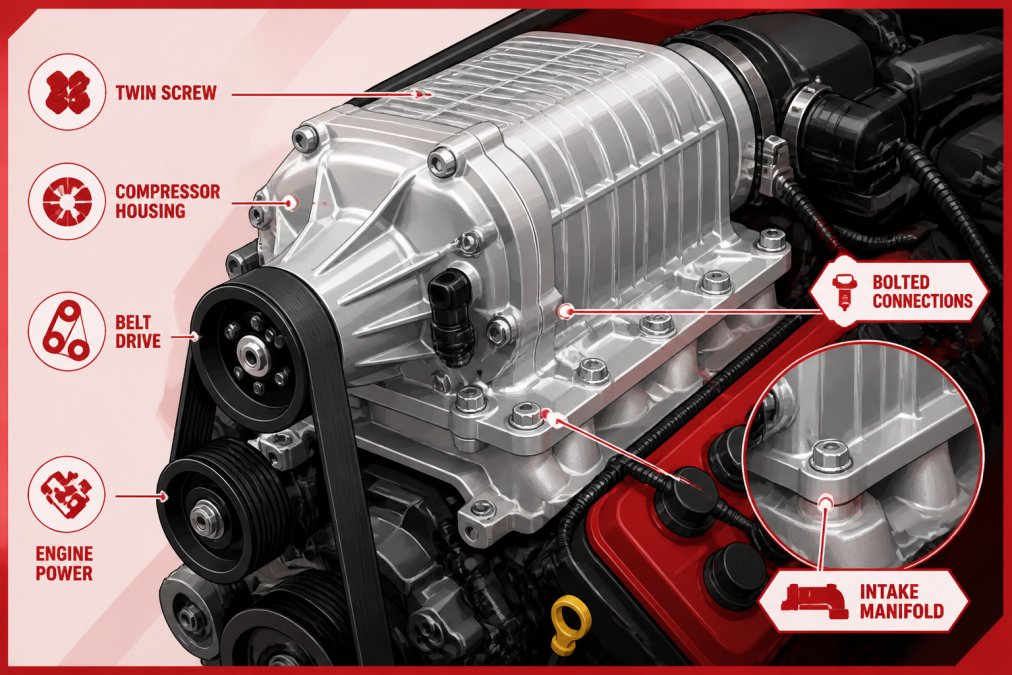
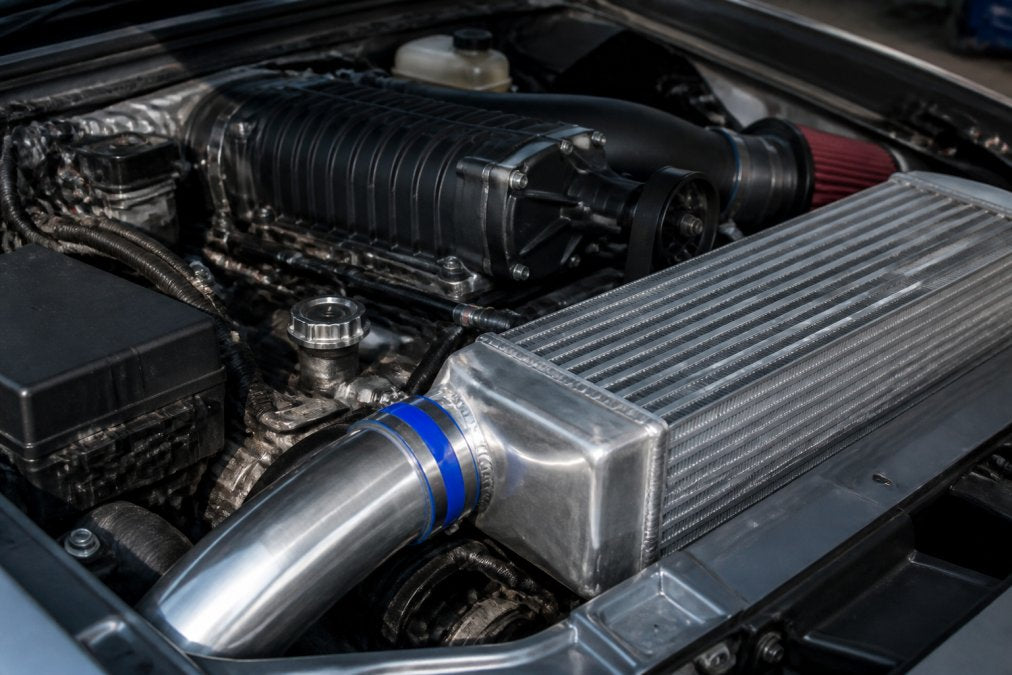
Forced induction, supercharging or turbocharging, is the most effective method to increase low-end torque for off-roading. Both systems compress air into the engine, increasing oxygen density and enabling more fuel combustion per cylinder.
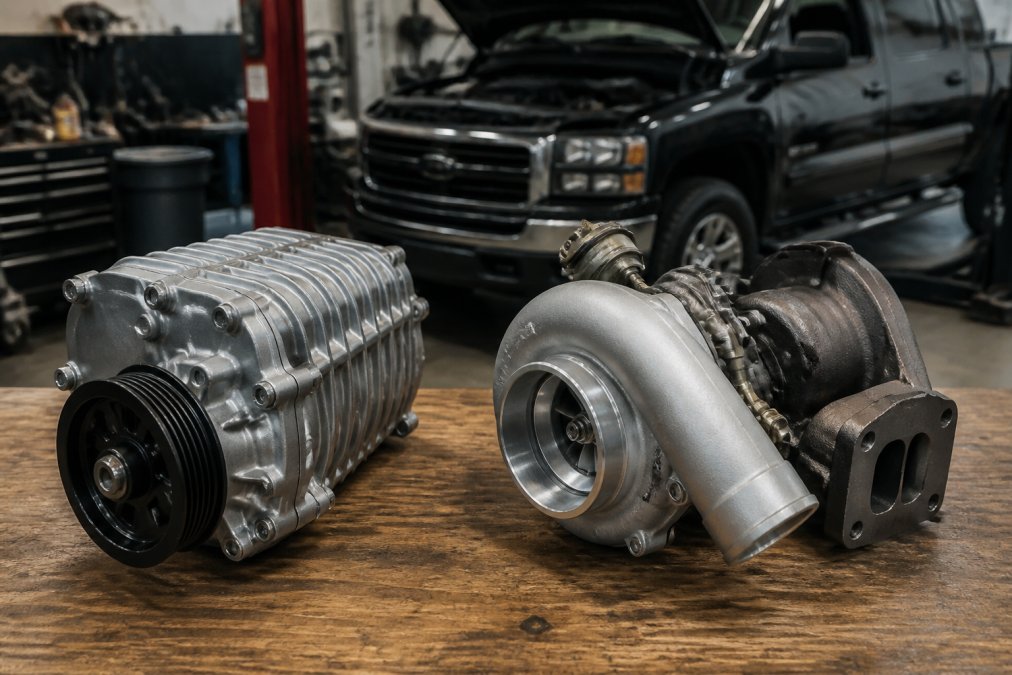
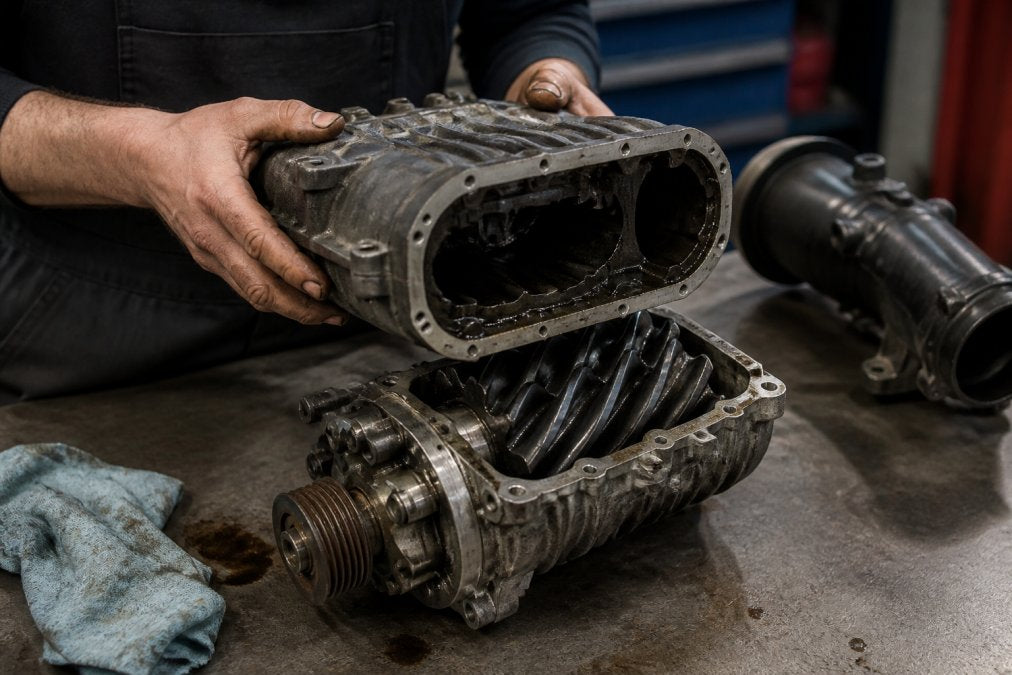
Superchargers operate continuously, driven by a belt connected to the crankshaft. They compress air at all RPM ranges, with output increasing proportionally to engine speed. A supercharger produces immediate boost with no lag between throttle input and air compression. This characteristic makes superchargers ideal for off-road driving where instant throttle response matters.
Turbochargers use exhaust gas energy to spin a turbine that compresses intake air. They're more efficient at high RPM but suffer from turbo lag, a delay between throttle input and boost delivery. At low RPM, turbochargers produce minimal boost because exhaust gas volume is insufficient to spin the turbine quickly. This lag contradicts what off-road driving demands: immediate low-end response.
For low-end torque for off-roading specifically, superchargers deliver superior performance. They provide consistent boost across the entire RPM range, with particular advantage in the 1,500 to 3,500 RPM band where technical terrain forces your engine to operate.
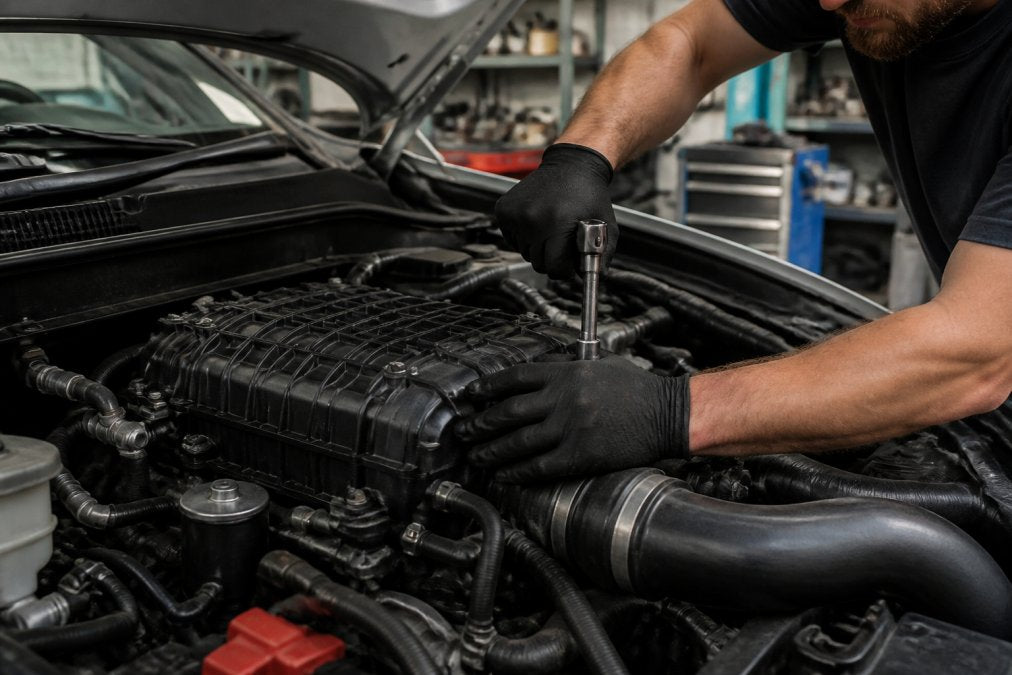
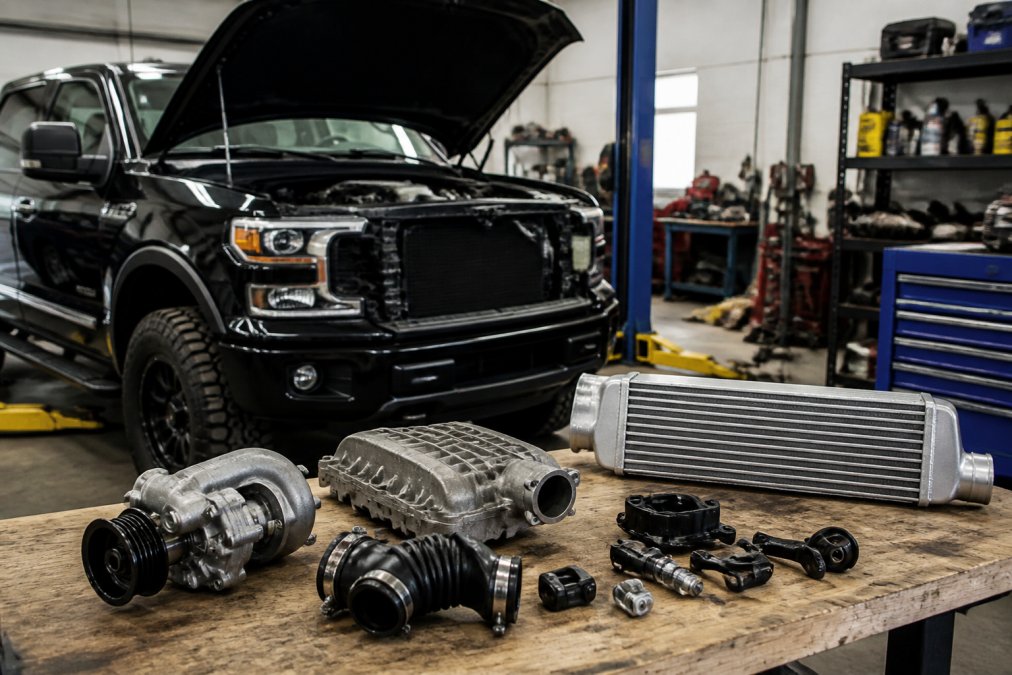
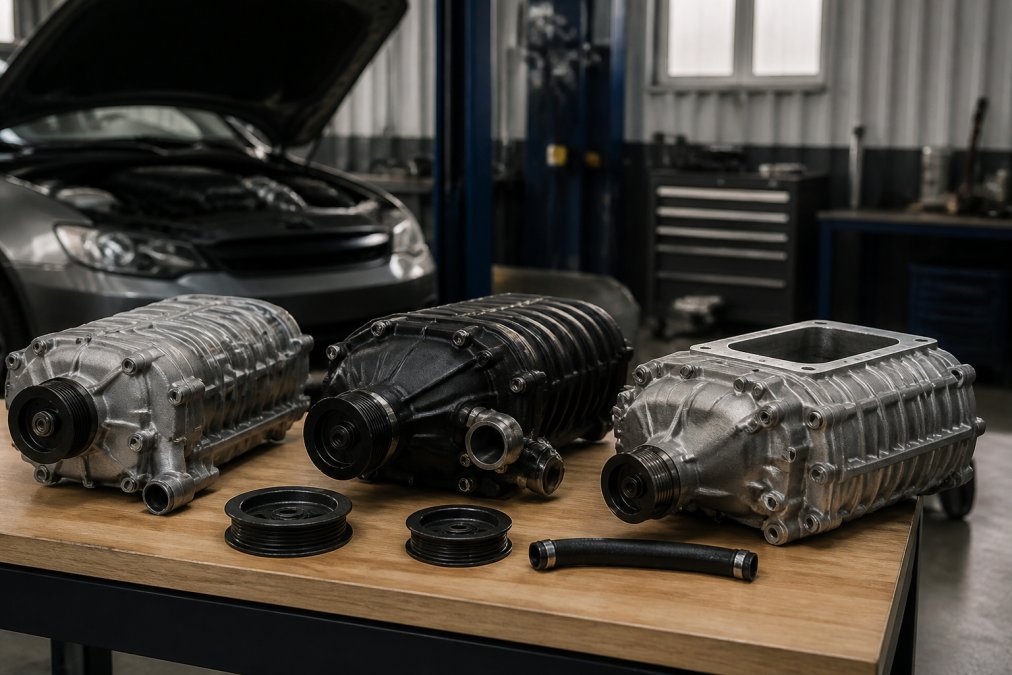
VT Superchargers specializes in bolt-on supercharger kits engineered for OEM-style fitment. Our kits bolt directly onto your engine with no cutting, welding, or fabrication required. Each kit includes the supercharger unit, intake manifold, belt drive system, and all necessary hardware.
Our Jeep Wrangler 3.6L V6 supercharger kit delivers +40% horsepower and +30% torque, transforming a vehicle from marginal off-road performance to genuinely capable. The Suzuki Jimny JB74 supercharger kit adds +50% power to a vehicle that desperately needs it for technical terrain.

Forced induction through supercharging represents the best balance of performance gain, reliability, installation simplicity, and cost-effectiveness for most off-road enthusiasts.
Diesel vs. Gasoline Engines: Torque Delivery and Off-Road Capability
Diesel engines produce peak torque at lower RPM than equivalent gasoline engines. A modern diesel pickup might generate 450 lb-ft at 1,800 RPM, while a comparable gasoline truck produces 400 lb-ft at 4,500 RPM. This fundamental difference shapes off-road capability.
Diesel combustion operates at higher compression ratios, typically 16:1 to 18:1 compared to 10:1 to 12:1 for gasoline. Higher compression generates more pressure and force per combustion cycle, translating to higher torque output. This mechanical advantage is why diesel engines dominate heavy-duty applications and off-road performance.
The broader power band of diesel engines means you can maintain steady throttle input across a wider RPM range without constant gear changes. In technical terrain, this translates to fewer gear hunting situations and more consistent vehicle control.
Diesel fuel's energy density is approximately 11 percent higher than gasoline, meaning diesel engines extract more energy per unit volume. Combined with higher compression ratios, this explains why diesels achieve superior fuel economy under load while producing more torque.
However, gasoline engines offer advantages for off-road driving. They're lighter, which improves power-to-weight ratio and reduces unsprung weight that impacts suspension articulation. Gasoline engines produce peak horsepower at higher RPM, which matters for highway driving. Gasoline fuel is more widely available and costs less per gallon in most regions.
For pure off-road capability in technical terrain, diesel engines have the inherent advantage. For vehicles that must balance off-road performance with highway driving and daily-driver usability, gasoline engines with forced induction through supercharging close the gap effectively.
VT Superchargers manufactures kits for both diesel and gasoline platforms. Our approach recognizes that each engine type has different characteristics. For gasoline engines, supercharging adds the low-RPM torque availability that diesel engines naturally possess.
Best For
Diesel engines for dedicated off-road vehicles and trucks prioritizing maximum low-end torque. Supercharged gasoline engines for daily drivers and vehicles that must balance off-road capability with highway performance and fuel economy.
Throttle Control and Drivability: Mastering Low-End Power on the Trail
Throttle control, the precise modulation of engine power, becomes critical when you have abundant low-end torque. More power requires more skill to apply effectively.
Feathering the throttle means making small, deliberate adjustments to throttle input rather than applying full throttle or completely releasing it. In technical terrain, you're constantly feathering, adding just enough power to maintain momentum through a rut, backing off slightly to prevent wheel spin on loose surfaces. This continuous modulation prevents stalling while maintaining traction.
Vehicles with strong low-end torque are more forgiving of throttle mistakes. If you apply too much throttle, the engine has enough pulling power that you still move forward even if wheels slip slightly. If you apply too little, abundant low-end torque means you don't stall. This responsiveness is why experienced off-road drivers prefer engines with strong low-end torque.
Engine braking, using the engine to slow the vehicle during descent, relies on low-end torque availability. When descending a steep slope and wanting to control speed without riding the brakes, you downshift and use engine compression to slow the vehicle. This works effectively only if the engine produces meaningful torque in low gears at low RPM.
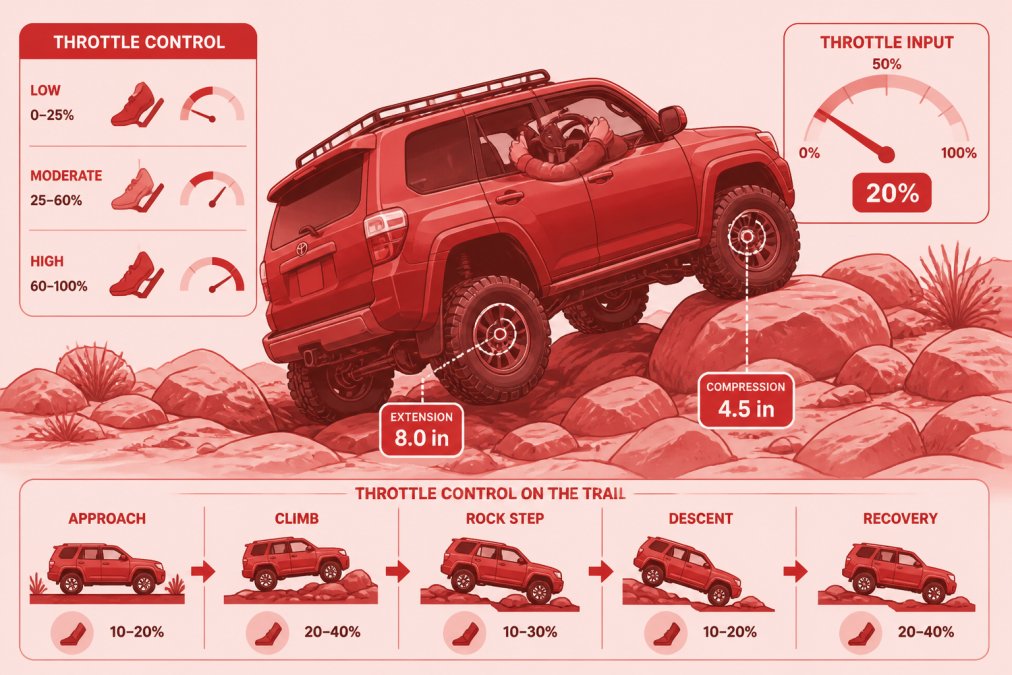
Drivability, how a vehicle feels and responds to driver input, improves dramatically with strong low-end torque. A supercharged engine feels immediately responsive to throttle input. The vehicle accelerates smoothly without hesitation. Gear hunting disappears because the engine produces sufficient torque across a broader RPM range, reducing the need for constant downshifting.
For daily driving, this matters substantially. A vehicle that hunts gears constantly on the highway, downshifting when climbing slight grades, is exhausting to drive. Adding low-end torque through supercharging often eliminates this behavior entirely. The engine produces enough torque in higher gears that it doesn't need to downshift for minor grade changes.
This is a common complaint from owners of vehicles with larger tires: constant gear hunting on highways. The solution is adding low-end torque through forced induction. VT Superchargers has engineered kits specifically to address this scenario, with torque delivery optimized for the RPM ranges where highway driving and mild off-road use occur.
Low-end torque for off-roading isn't a luxury, it's the foundation of capable vehicle performance on technical terrain. Whether you're rock crawling, navigating sand dunes, or driving a vehicle with oversized tires, abundant torque at lower RPM translates directly to improved capability, drivability, and control.
For vehicles that need this performance enhancement, forced induction through supercharging offers the most practical solution. VT Superchargers bolt-on supercharger kits deliver immediate, measurable improvements in low-end torque across a range of vehicle platforms. Our Jeep Wrangler 3.6L V6 supercharger kit adds +40% horsepower and +30% torque with OEM-style fitment and no fabrication required. For those seeking maximum capability, explore our complete lineup of supercharger solutions engineered for real-world off-road performance and backed by a 24-month warranty.
| Vehicle Platform | Power Gain | Torque Gain | Best For |
|---|---|---|---|
| Toyota Tacoma 3.5L | +100 HP | +90 lb-ft | Mid-size trucks, overlanding |
| Jeep Wrangler 3.6L | +40% HP | +30% torque | Rock crawling, technical terrain |
| Suzuki Jimny JB74 | +50% power | Broad range | Compact off-road, tight trails |
| Jeep Gladiator 3.6L | +40% HP | +30% torque | Full-size trucks, towing |
According to Society of Automotive Engineers technical standards, torque measurement and rating protocols ensure consistent comparison across vehicle platforms. Understanding these standards helps buyers evaluate genuine performance improvements versus marketing claims.
For vehicles already running larger tires or modified suspensions, off-road vehicle engineering resources document how drivetrain modifications interact with tire sizing. Adding low-end torque through supercharging directly addresses the performance loss from tire upsizing without requiring complete drivetrain regearing.
Frequently Asked Questions
What is considered good low-end torque for off-roading?
Good low-end torque for off-roading typically starts at 250-300 lb-ft, but the real measure depends on your vehicle's weight and tire size. A lighter Jeep Wrangler with 33-inch tires benefits from 300+ lb-ft, while a heavier truck with 37-inch tires needs 350+ lb-ft to climb rock faces and power through sand without bogging down. Peak torque arriving below 3,500 RPM is the sweet spot for rock crawling.
How can I increase low-end torque without replacing my engine?
Bolt-on forced induction like a supercharger is the fastest path. A supercharger kit delivers instant torque with no turbo lag, adding 50-100 lb-ft across the RPM range. Gear ratio upgrades (lower numerically) also multiply existing torque by 20-30%, solving gear-hunting issues on larger tires. Transmission tuning and low-range gearing refinement squeeze additional performance from stock engines.
Is 400 lb-ft of torque enough for serious rock crawling?
Yes, 400 lb-ft is excellent for rock crawling, especially paired with low-range gearing and proper throttle control. The limiting factor is rarely peak torque, it's how quickly that torque arrives (below 3,000 RPM) and your torque-to-weight ratio. A 4,500-pound vehicle with 400 lb-ft at 2,500 RPM outclimbs a 5,500-pound vehicle with 450 lb-ft at 4,000 RPM. Feathering the throttle and gear selection matter as much as raw numbers.
Why does low-end torque matter more than horsepower on trails?
Off-road obstacles demand power at low speeds and low RPM. Rock crawling, mudding, and sand driving happen at 2-3 MPH with engines spinning 1,500-2,500 RPM. Horsepower peaks at high RPM and contributes little at crawl speeds. Low-end torque directly translates to traction, climbing ability, and the capacity to power through obstacles without stalling. Horsepower becomes relevant only once you're moving at highway speeds on fire roads.
Do diesel engines provide better low-end torque than gasoline?
Diesel engines deliver peak torque 500-1,000 RPM lower than gasoline engines, making them exceptional for off-roading. A diesel's torque curve peaks early and stays flat across the RPM band, while gasoline engines build torque gradually. However, modern supercharged gasoline engines can match or exceed diesel torque delivery. The VT Superchargers kit for the Toyota Tacoma 3.5L adds 90 lb-ft, bringing low-end response closer to diesel performance without sacrificing high-RPM power.
What is turbo lag and why does it matter for off-roading?
Turbo lag is the delay between pressing the throttle and the turbocharger spooling up to deliver boost, typically 500-1,500 milliseconds. On technical terrain, this delay means delayed power when you need instant traction on a rock face or steep climb. Superchargers eliminate lag entirely because they're belt-driven by the engine, delivering torque instantly. This responsiveness is why superchargers are preferred for rock crawling and technical off-roading over turbochargers.
How does transmission gearing multiply low-end torque?
Lower gear ratios (like 4.56 vs. 3.73) multiply engine torque at the wheels. A 4.56 ratio multiplies torque by roughly 20-25% compared to stock gearing. This solves gear-hunting on larger tires and dramatically improves crawling power. Combined with low-range gearing in a transfer case, total torque multiplication can exceed 50×, allowing a 300 lb-ft engine to deliver 450+ lb-ft of usable power at the wheels for rock crawling.
This article was written using GrandRanker
Related post
RECENT POSTS