What Is Supercharger Engine Stress? Causes & Effects
Table of Contents
- How Superchargers Work and What They Change Inside Your Engine
- How Much Horsepower Do Superchargers Add (and What That Costs Internally)
- What Supercharger Engine Stress Actually Means: Cylinder Pressure, Thermal Load, and Mechanical Strain
- Signs of Engine Stress From Forced Induction You Should Not Ignore
- Supercharger vs. Turbocharger: How Each Type of Forced Induction Stresses the Engine
- Supercharger Maintenance Tips for Longevity: Oil, Cooling, and ECU Tuning
- Conclusion
- Frequently Asked Questions
Last Updated: September 16, 2026
How Superchargers Work and What They Change Inside Your Engine
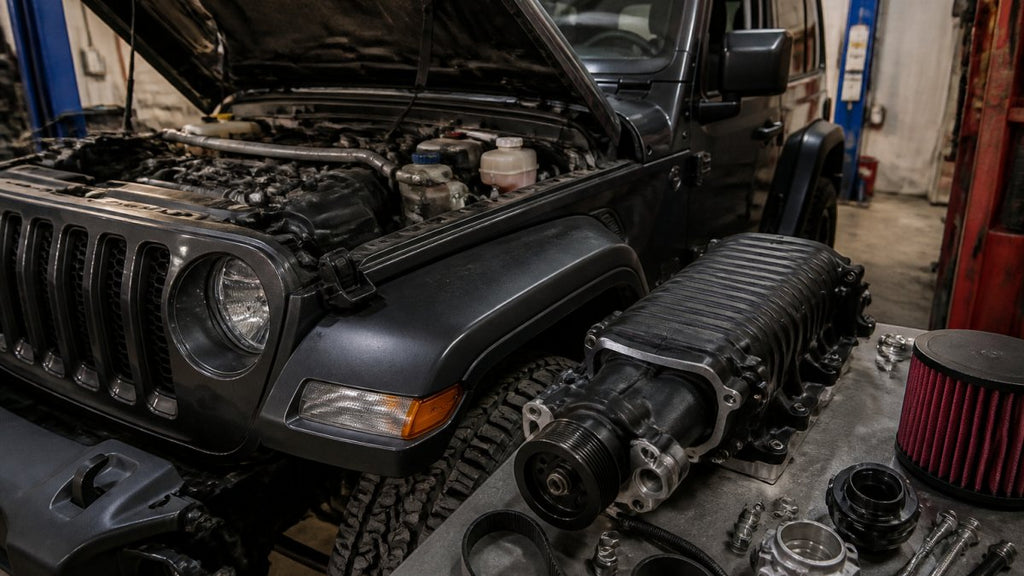
Supercharger engine stress is the cumulative mechanical, thermal, and pressure-related strain an engine endures when a supercharger forces more air into the combustion chamber than the engine would naturally draw in. This guide from VT Superchargers breaks down exactly where that stress lands and how to manage it.
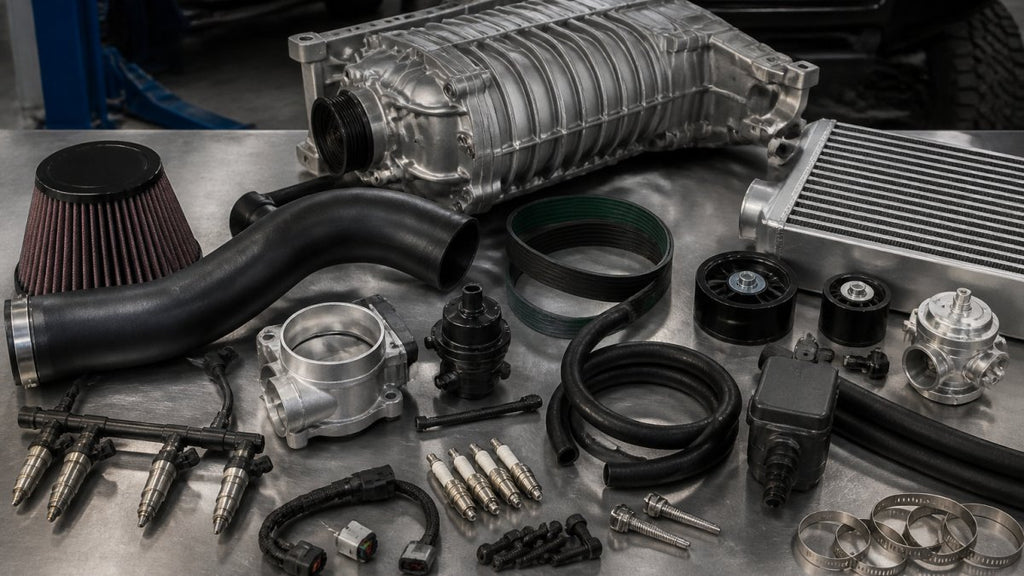
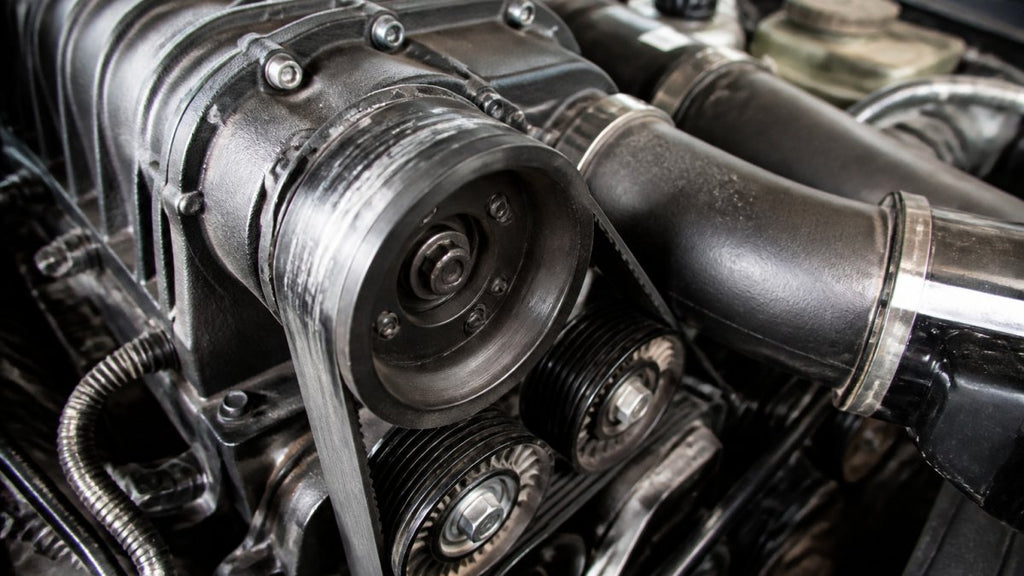
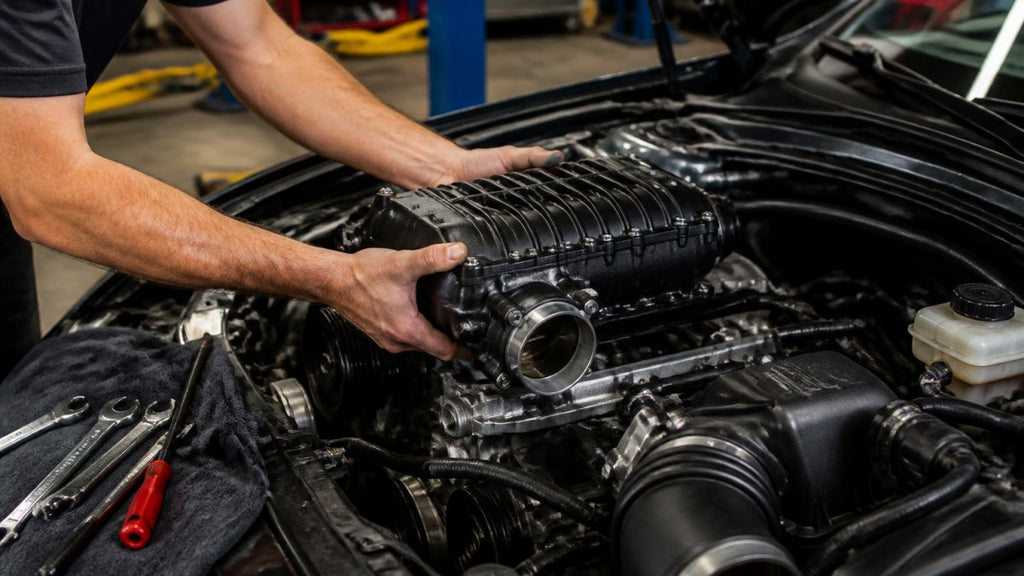
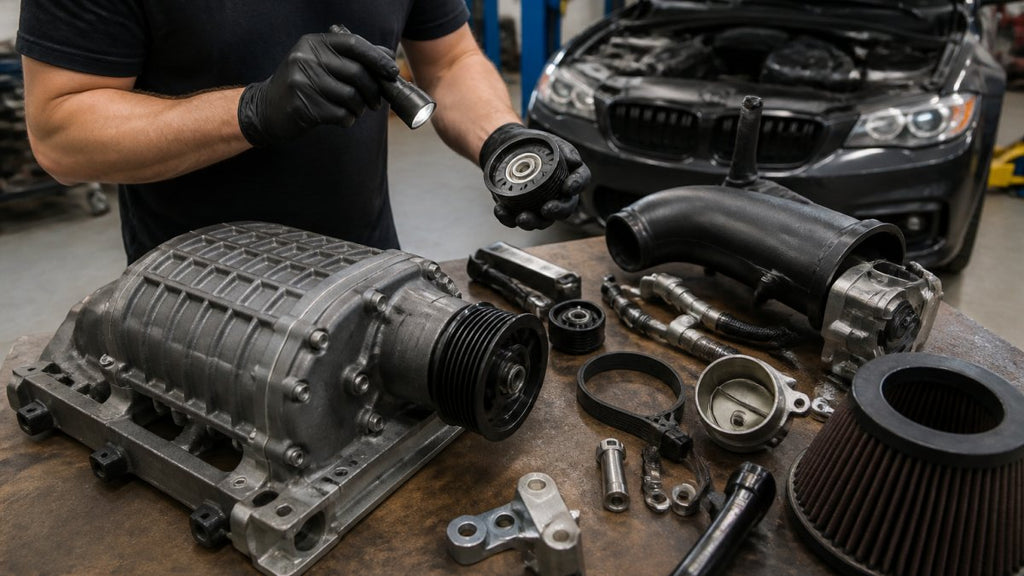
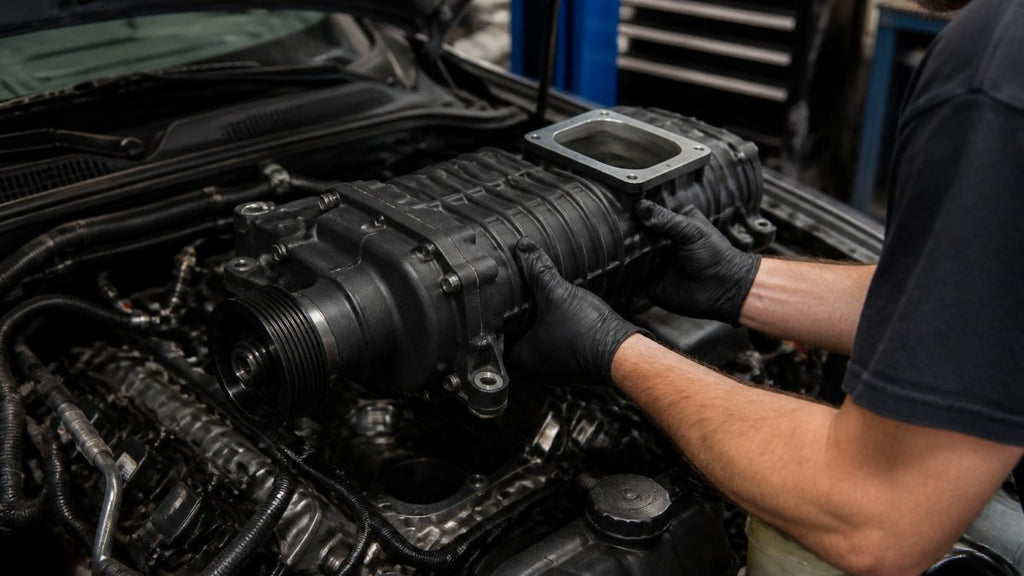
A supercharger is a mechanically driven air pump bolted to the engine and spun by a belt or gear drive off the crankshaft. Because it is driven directly by engine rotation, it builds boost the moment you open the throttle, with no exhaust-side lag. That immediacy is the appeal, and it is also the source of the stress.
Forced Induction vs. Naturally Aspirated: The Core Difference
A naturally aspirated engine fills its cylinders using atmospheric pressure alone. A forced induction engine uses a compressor to push intake air compression beyond atmospheric pressure, so each cylinder receives a denser air charge on every intake stroke. More air means more fuel can be burned, which raises torque output and horsepower gains across the rev range.
The trade-off is straightforward: cramming more air and fuel into the same combustion chamber raises cylinder pressure, thermal load, and mechanical strain on every component downstream of the intake.
U.S. Department of Energy guide to internal combustion engine fundamentals
How Much Horsepower Do Superchargers Add (and What That Costs Internally)
How much horsepower do superchargers add? It depends on boost pressure, engine displacement, and tuning, but a mild bolt-on kit typically adds a meaningful double-digit percentage over stock output, while aggressive high-performance tuning can push far higher. The exact figure for your vehicle comes from the kit's pulley size, boost target, and engine mapping.
That extra power is not free. Every additional pound of boost raises the load on the crankshaft, connecting rods, and pistons. A common mistake is chasing peak horsepower while ignoring the torque curve, because it is low-end torque that stresses rods and bearings hardest.
Watch Out
Running more boost than your fuel system and ECU calibration can support leads to detonation, and detonation can crack a piston ring land in a single hard pull. Upgrade fuel delivery and engine mapping before you increase pulley size.
What Supercharger Engine Stress Actually Means: Cylinder Pressure, Thermal Load, and Mechanical Strain
Supercharger engine stress is the combined effect of three forces: elevated cylinder pressure during combustion, added thermal load from compressed intake air, and the mechanical strain that pressure places on rods, bearings, and the valve train. Each one wears components at a different rate, and each one can be measured, which is what separates a real diagnosis from guesswork.
Cylinder Pressure: The Load That Breaks Parts
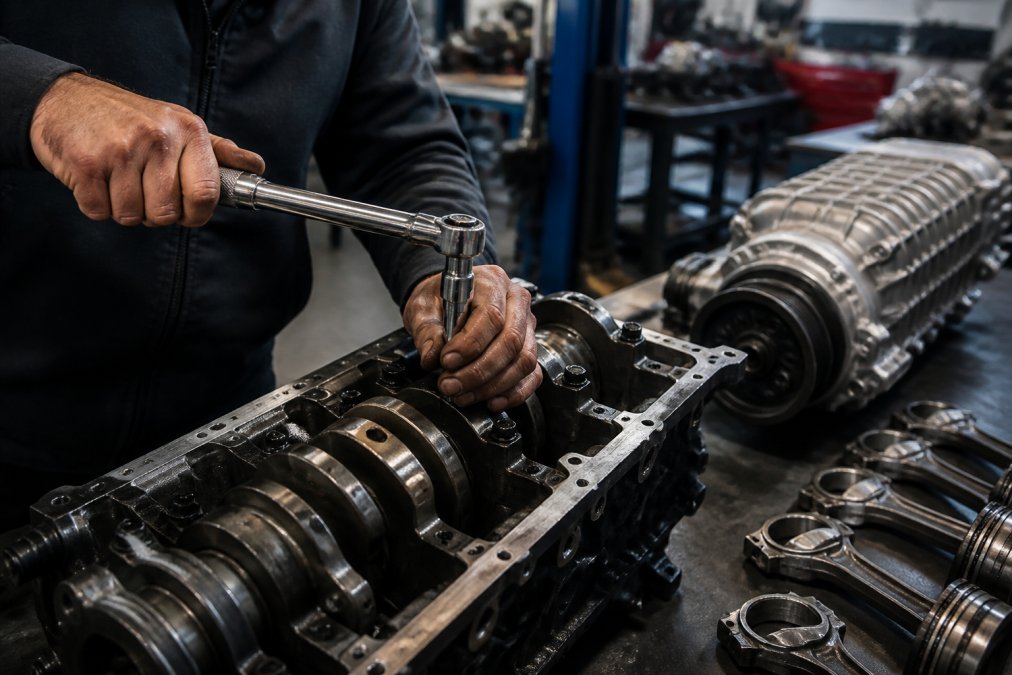
Cylinder pressure is the force that actually bends rods and lifts ring lands. A naturally aspirated engine at wide-open throttle typically peaks somewhere in the range of 600 to 900 PSI of cylinder pressure during combustion. Add boost and that figure climbs roughly in proportion to absolute manifold pressure, a engine running 8 PSI of boost is ingesting air at roughly 1.5 times atmospheric pressure, so peak cylinder pressure can rise by a comparable order of magnitude before timing and fuel corrections pull it back.
What matters for durability is not just the peak, but how fast it arrives. Boost that comes on instantly, the way a positive-displacement supercharger delivers it, slams the rod and bearing with a near-instant torque spike at low rpm. That is why low-end torque, not peak horsepower, is the number that kills stock bottom ends.
Thermal Load: Heat You Can Log
Compressing air heats it. A supercharger outlet temperature can easily run 100 to 200 degrees Fahrenheit above ambient before the intercooler, and that heat transfers into the intake charge, the combustion chamber, and eventually the oil. Two temperatures tell the story:
- Intake air temperature (IAT): Measured at the manifold. Rising IAT under sustained load means the intercooler is heat-soaked and the ECU is likely pulling timing.
- Exhaust gas temperature (EGT): Measured in the exhaust port or downpipe. High EGT is the signature of retarded timing or a lean condition, and it is the precursor to burned valves and melted pistons.
Most practitioners consider sustained EGT above roughly 1,600 degrees Fahrenheit at the port a warning zone on pump gas, though the exact ceiling depends on the piston alloy and tune.
Mechanical Strain: Where the Force Lands
Pressure in the cylinder becomes force on the rotating assembly. The connecting rod sees tension on the exhaust stroke and compression on the power stroke, and it is the compression side that fails first under boost. Crankshaft journals see higher bearing loads, the valve springs see higher seat pressure demands, and the head gasket sees higher clamping stress between the block and head. Each of these has a different fatigue curve, which is why a build that survives 6 PSI may fail at 10 PSI even though the parts are the same.
Knock: The Multiplier That Turns Stress Into Failure
Detonation, knock, is the single event that converts ordinary stress into a cracked ring land or a spun bearing. When unburned end gas ignites spontaneously ahead of the flame front, cylinder pressure spikes far above the normal combustion curve and hammers the piston crown. The knock sensor detects the characteristic vibration and the ECU responds by retarding timing and, in some calibrations, adding fuel. That protection has limits: it can only pull so much timing, and on a hot day with poor fuel it may not be enough.
Key Takeaway
Stress is measurable. Log cylinder pressure if you can, but at minimum log IAT, EGT, knock retard, and fuel trims. A tune that looks clean on a dyno pull can be dangerous after 20 minutes of heat soak.
U.S. Department of Energy guide to internal combustion engine fundamentals
Signs of Engine Stress From Forced Induction You Should Not Ignore
Signs of engine stress from forced induction include audible detonation or "pinging" under load, rising oil consumption, blue exhaust smoke, a check engine light for knock or misfire, and a noticeable drop in boost pressure. Catching these early separates a cheap fix from a rebuild.
What most guides miss is that the first symptom is often subtle: a slight hesitation at part throttle or a faint rattle on cold start.
Supercharger vs. Turbocharger: How Each Type of Forced Induction Stresses the Engine
| Factor | Supercharger | Turbocharger |
|---|---|---|
| Power source | Belt or gear drive | Exhaust gas |
| Boost delivery | Immediate, linear | Delayed, then surge |
| Parasitic loss | Higher | Lower |
| Thermal load | Steadier | Spikier at spool |
| Best for | Towing, off-road, low-end torque | Peak power, efficiency |
Supercharger Maintenance Tips for Longevity: Oil, Cooling, and ECU Tuning
Supercharger maintenance tips for longevity start with three things: the right synthetic oil changed on a shorter interval, a cooling system that can handle the added thermal load, and an ECU calibration matched to your boost level.
Oil: Interval, Spec, and Analysis
- Iron: Rises with cylinder wall and cam wear.
- Copper and lead: Bearing wear metals, a rising trend is the first sign of rod or main bearing distress.
- Fuel dilution: Indicates rich running or blow-by, both common on boosted engines with worn rings.
Cooling: Intercooler, Radiator, and Heat Soak
Heat soak is the enemy of a boosted daily driver.
ECU Tuning: The Calibration That Decides Whether Stress Becomes Failure
- Sets the air-fuel ratio under load. Boosted engines typically want richer mixtures under load than naturally aspirated engines, because the extra fuel cools the charge and slows combustion.
- Manages ignition timing against knock. The ECU advances timing for power and retards it when the knock sensor reports detonation. A tuner who disables or desensitizes knock detection is trading reliability for a dyno number.
- Controls boost by gear and condition. Boost-by-gear and torque limiting protect the driveline and the bottom end in the gears where load is highest.
- Protects against overboost and lean-out. Fail-safes that cut boost or add fuel when IAT or EGT climbs are what keep a hot day from becoming a rebuild.
Preventative Maintenance Checklist for Boosted Engines
Pro Tip
Ask your tuner to log knock retard and air-fuel ratio on a hot day under full load, not on a dyno pull alone. Heat soak reveals stress that a single dyno run hides.
Conclusion
Managing supercharger engine stress comes down to matching boost to the components that can handle it, then maintaining oil, cooling, and tuning with discipline.
Frequently Asked Questions
Does adding a supercharger reduce engine life?
It can if the engine is not prepared for the added load. Supercharger engine stress raises cylinder pressure, thermal load, and mechanical strain on components like connecting rods and bearings. A stock engine with conservative boost, proper ECU tuning, and synthetic oil can last well past 100,000 miles. Pushing boost beyond what the block and internals can handle is what shortens engine longevity.
What components are most affected by supercharger stress?
Connecting rods, piston rings, crankshaft bearings, and the valve train take the most punishment. Boost pressure increases cylinder pressure, which loads the rods and bearings on every power stroke. Piston ring wear accelerates when detonation occurs. The cooling system and lubrication system also work harder to manage heat dissipation and keep oil temperatures in a safe range.
Can a stock engine handle a supercharger kit?
Many stock engines handle low to moderate boost reliably when the kit includes proper engine mapping and a knock sensor strategy. The deciding factors are the engine's original design margin, the air-fuel ratio under load, and cooling system capacity. Engines built for forced induction from the factory handle more boost. Others need upgraded pistons, rods, or head gaskets before you push past 6-8 psi.
What are the signs of engine stress from forced induction?
Watch for detonation or pinging under acceleration, rising oil consumption, coolant temperature spikes, a check engine light for knock sensor codes, and a drop in boost pressure. Blue smoke at startup points to valve guide or piston ring wear. A metallic rattle at cold start can mean bearing wear. Catching these early and adjusting boost or tuning prevents a rebuild.
Related post
09
Oct
RECENT POSTS