How to Check Supercharger Belt Tension: 2026 Guide
Table of Contents
- Why Supercharger Belt Tension Matters for Boost and Reliability
- Tools You Need: The Right Supercharger Belt Tensioner Tool and Gauges
- How to Check Supercharger Belt Tension: Step-by-Step
- Signs of Supercharger Belt Slippage You Should Never Ignore
- Supercharger Belt Maintenance Schedule by Interval
- Common Mistakes That Ruin Belts and Boost
- When to Replace the Belt, Pulley, or Tensioner
- Frequently Asked Questions
Last Updated: September 15, 2026
Why Supercharger Belt Tension Matters for Boost and Reliability
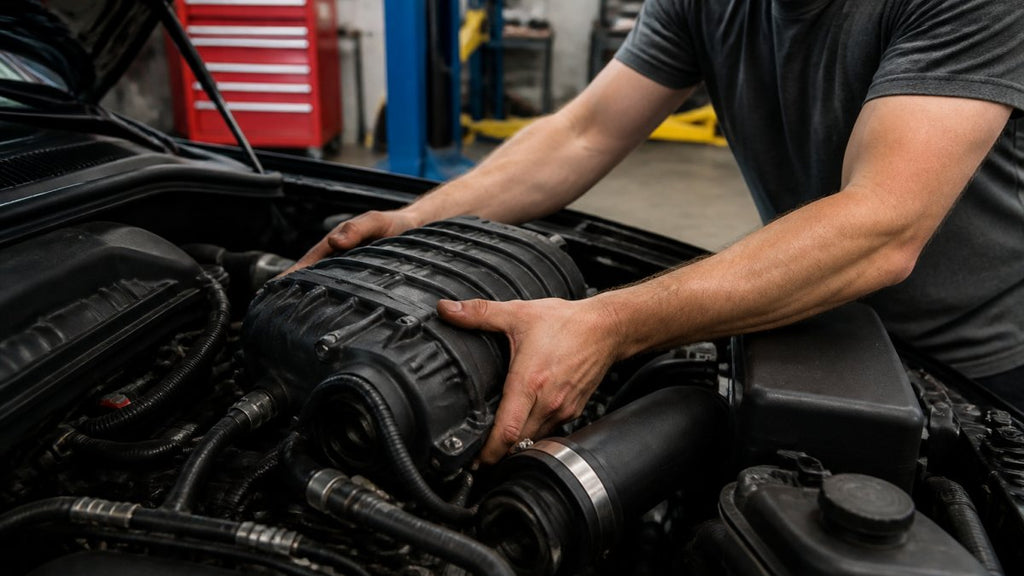
Supercharger belt tension is the force holding the drive belt against the pulleys that spin the blower's rotors. Get it right and the belt transfers power silently for tens of thousands of miles; get it wrong and you lose boost, shred belts, or damage bearings.
A supercharger belt rarely fails from age, it fails from slipping. Each slip glazes the belt surface, and a glazed belt slips more easily next time, so a belt that looked fine last month can be howling today.
At VT Superchargers, we build bolt-on kits for Dodge, Ford, Jeep, Mazda, Nissan, Suzuki, and Toyota, and belt tension is our most common question. The short answer: check tension at every oil change and recheck after the first 500 miles on a new belt.
Key Takeaway
Tension problems almost never announce themselves as tension problems. They show up as lost boost, a chirp at cold start, or black dust around the nose cone. Learn the symptoms before the belt teaches you.
The NHTSA vehicle safety database is a useful reference point for how belt-driven accessory failures get reported when they escalate into safety issues. This guide covers the tools, the measurement process, the warning signs, and the maintenance intervals that keep a blown application reliable.
Tools You Need: The Right Supercharger Belt Tensioner Tool and Gauges
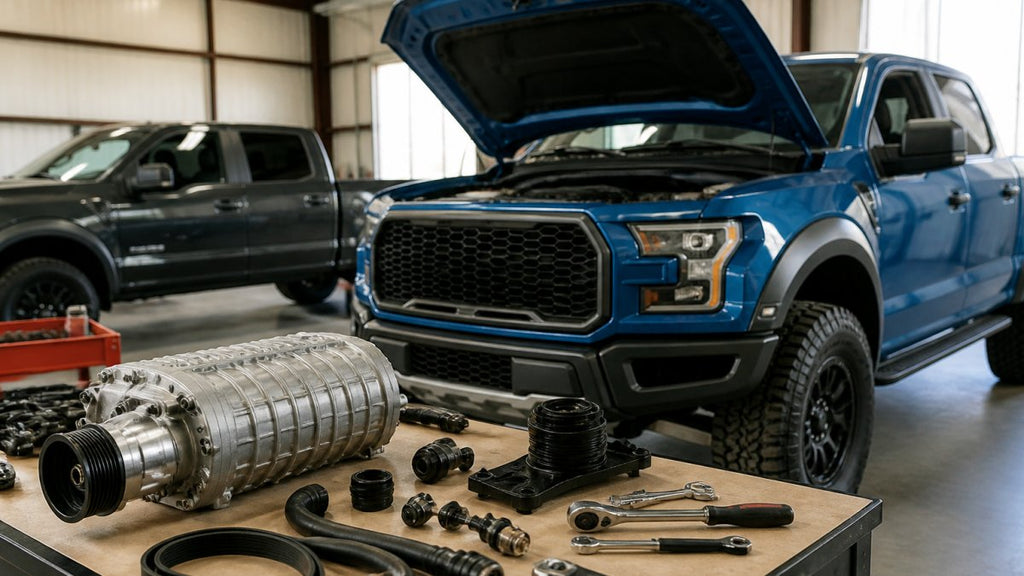
The correct supercharger belt tensioner tool depends on your setup. Automatic tensioners need a breaker bar or tensioner wrench to release load; manual tensioners need a belt tension gauge to set the value directly.
You'll want these on hand before you start:
- Belt tension gauge - the critical instrument for manual tensioners; a Gates or equivalent KriKit-style gauge reads in pounds
- Breaker bar or tensioner wrench - sized to your tensioner's hex or square drive
- Allen socket and hex bit set - metric and SAE, for tensioner bolts and idler hardware
- Torque wrench - for tensioner fasteners and pulley bolts
- Flashlight and inspection mirror - to read belt ribs and check the nose cone area
- Replacement sealing washer or o-ring - if your tensioner hardware uses one
- Suction syringe or fluid extraction tool - only if you're also servicing blower oil in the same session
Don't trust a cheap tension gauge, its spring drifts, and a reading off by 20 pounds can cook a bearing over time. If it has a calibration screw, verify it against a known weight first.
For Mazda owners running our kits, the 61 mm Pulley for VT Mazda Supercharger Kits and the 63 mm Pulley for VT Mazda Supercharger Kits both change the belt wrap geometry slightly, so recheck tension after any pulley swap.


How to Check Supercharger Belt Tension: Step-by-Step
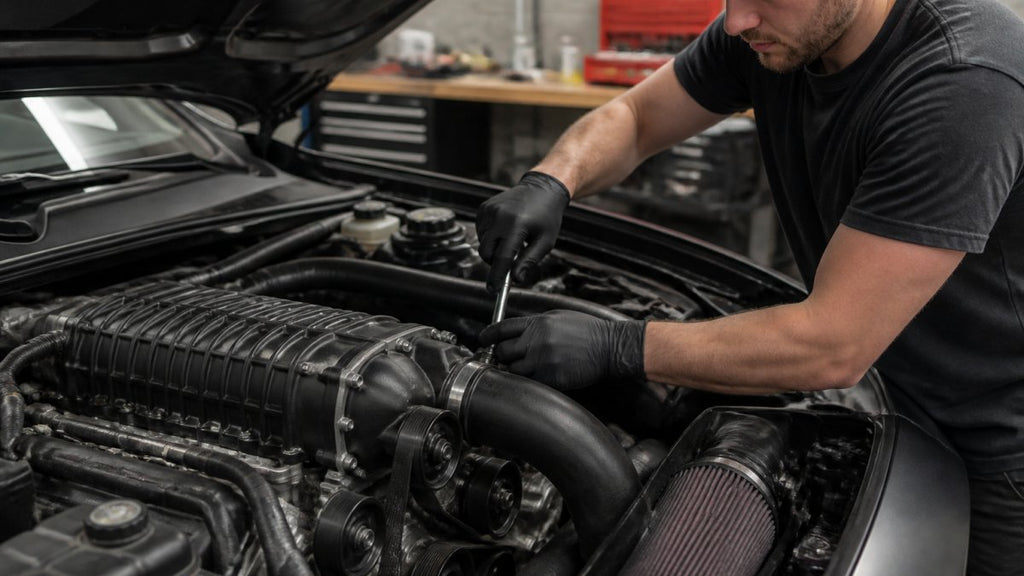
Checking supercharger belt tension takes about 20 minutes on a cold engine and requires three things: a cooled bay, a repeatable measurement, and a torqued tensioner.
Step 1: Cool the Engine and Prepare the Bay
Let the engine sit at least an hour. Supercharger belts and the intake manifold get hot enough to cause serious burns, and a hot belt stretches, throwing off your reading.
Once cool, disconnect the negative battery terminal if working near the alternator or wiring. Remove the engine cover and any intake ducting blocking the belt path, and photograph the belt routing before loosening anything, aftermarket kit diagrams aren't always in the factory service manual.
Step 2: Pick Your Measurement Method
Use whichever method your kit specifies; if it's silent, use deflection.
Deflection method (no gauge required). Find the longest unsupported span, usually crank-to-blower or blower-to-first-idler. Mark the midpoint with a paint pen, lay a straightedge across the span, push down with firm thumb pressure, and measure how far the belt moves off the straightedge.
A common working range is roughly 1/4 to 1/2 inch of deflection per 12 inches of free span. A 12-inch span moving 3/4 inch is loose; a 6-inch span moving 1/2 inch is already tight, short and long spans don't deflect the same at equal tension.
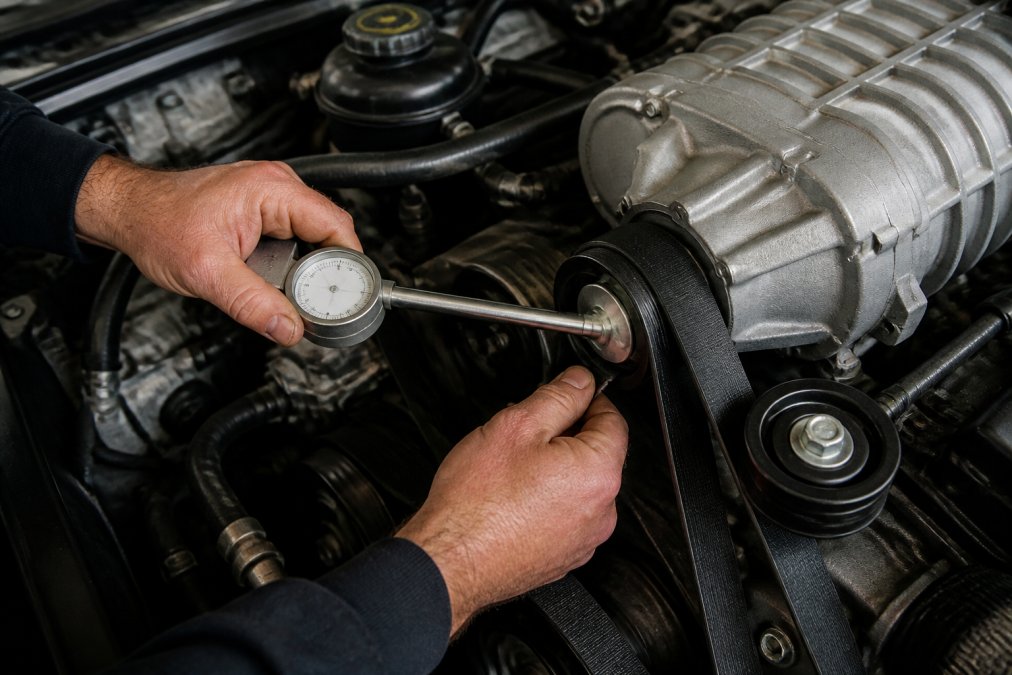
Gauge method (preferred when a spec exists). A KriKit-style or Gates gauge reads in pounds. Clip the hook under the belt at the span midpoint, pull straight up until the belt lifts off the straightedge, and read the scale. Typical specs land in the 60 to 120 pound range depending on belt width and span, but use the figure your kit or service manual lists, never a generic number.
Step 3: Read the Belt and Pulleys While You're There
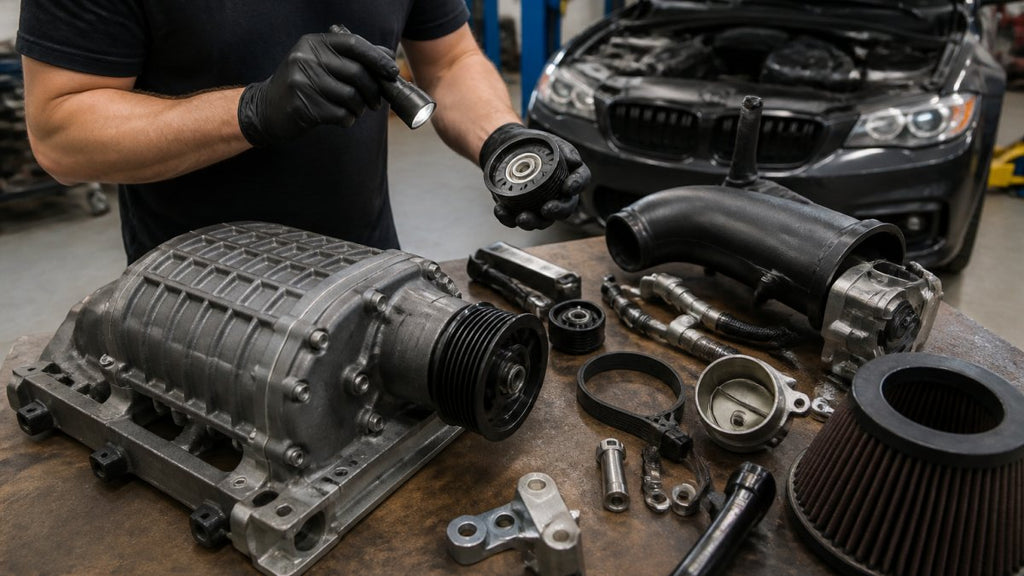
Tension is only half the inspection. With the belt slack or off, spin each idler and the tensioner pulley by hand, they should turn smoothly with no grit, rumble, or side play. Run a fingernail across the ribs; glazing feels slick and glassy and will slip even at correct tension. Confirm the belt sits centered on every pulley.
Step 4: Adjust and Torque the Tensioner
If tension is out of spec, adjust at the tensioner. Automatic units self-adjust, so a loose reading means the spring is fatigued and the assembly needs replacement, don't shim or stretch a worn automatic tensioner back into spec.
For manual tensioners, loosen the lock bolt, turn the adjuster to take up slack, and re-measure until it matches spec. Then torque the lock bolt to your kit's value, an untorqued tensioner walks out of adjustment within a few hundred miles.
Step 5: Recheck After a Heat Cycle
Drive normally for 15 to 20 minutes, let it cool completely, and re-measure. New and freshly adjusted belts seat and stretch on the first heat cycle. If the reading drifted, reset it once; if it drifts again, the belt is stretching past its service life or the tensioner isn't holding, stop adjusting and diagnose the cause.
Watch Out
Never set tension by feel alone on a manual tensioner. Over-tensioning is the fastest way to destroy a blower bearing, and the damage usually shows up as a whine that gets worse over weeks, not immediately.
Pro Tip
Log your reading, the ambient temperature, and the date in a notes app or a grease-pencil mark on the tensioner. Tension readings only mean something compared to the last one, and a slow drift over several checks is the earliest sign of a failing tensioner spring.
Signs of Supercharger Belt Slippage You Should Never Ignore
Signs of supercharger belt slippage show up in three places: sound, boost behavior, and physical debris. Catching them early is the difference between a belt replacement and a bearing rebuild, and not every blower noise is a tension problem.
The Three Symptoms That Point to Tension
Sound. A chirp or squeal at cold start that fades once warm is the belt slipping on the first few revolutions. A rhythmic squeak that follows RPM points to a glazed belt or misaligned pulley.
Boost behavior. If peak boost drops a few pounds or builds slower under load, the belt is likely slipping, the symptom most people miss because the car still drives normally at part throttle.
Debris. Black dust around the nose cone and front of the engine bay means belt material is being abraded off, a reliable early warning. Check the ribs for glazing, cracking, or missing chunks.
Other signs worth noting:
What a Tension Adjustment Will NOT Fix
Key Takeaway
If re-tensioning fixes the noise for a week and then it comes back, the belt was never the problem. The pattern of return, same RPM, same temperature, same boost loss, tells you which component is actually failing.
A Quick Diagnostic Order
Supercharger Belt Maintenance Schedule by Interval
| Interval | Action | What to Check |
|---|---|---|
| Every oil change | Visual inspection | Ribs, edges, glazing, dust |
| Every 10,000 miles | Tension check | Deflection or gauge reading |
| Every 30,000 miles | Tensioner inspection | Spring tension, bearing play |
| After any pulley change | Full re-tension | Gauge value, torque spec |
| After 500 miles on a new belt | Re-tension | Belt stretch seating |
| Annually | Full belt path audit | Alignment, idler condition |
Common Mistakes That Ruin Belts and Boost
Pro Tip
Mark the tensioner's adjustment position with a paint pen after you set it. Next time you're under the hood, one glance tells you whether it has moved. It takes five seconds and it catches drift before it becomes a failure.
When to Replace the Belt, Pulley, or Tensioner
Frequently Asked Questions
What are the symptoms of a loose supercharger belt?
A loose supercharger belt usually shows up as boost that falls short of target, a chirping or squealing noise on cold starts, black dust around the pulley, and belt glazing. You may also notice hesitation under hard acceleration because the belt slips instead of driving the blower. If you see any of these signs of supercharger belt slippage, stop and recheck tension before the belt wears further.
Do I need a special tool to check supercharger belt tension?
You do not need a dealership-grade tool, but a dedicated supercharger belt tensioner tool or belt tension gauge gives repeatable readings. A straightedge and ruler can work for a quick deflection check, but a gauge removes guesswork. Many DIY kits pair a tension gauge with a breaker bar or tensioner wrench sized for your accessory drive.
How much deflection should a supercharger belt have?
Deflection targets vary by kit and pulley size. As a general rule, most supercharger belts should move roughly 1/4 to 1/2 inch when you press firmly at the longest span between pulleys. Always confirm the exact spec for your kit before adjusting, because too little deflection can overload the blower bearings and too much causes slip.
What happens if a supercharger belt is too tight?
An over-tightened belt loads the supercharger bearings, the tensioner, and the crank pulley beyond their design limits. That shortens bearing life, can cause whine or vibration, and may lead to premature belt failure. Follow the torque specification in your kit manual and recheck tension after the first few heat cycles.
Related post


RECENT POSTS