How to Improve Throttle Response Instantly
Table of Contents
- Understanding Throttle Response and Throttle Lag Causes
- How to Clean Throttle Body for Better Response
- Electronic Throttle Control Reset Procedure
- Throttle Response Controller Benefits and Installation
- Upgrading Your Cold Air Intake System
- ECU Tuning and Performance Exhaust Upgrades
- Common Mistakes to Avoid
- DIY vs. Professional Installation: Risks and Considerations
Last Updated: August 15, 2026
Understanding Throttle Response and Throttle Lag Causes
Throttle response is the time between pressing your accelerator pedal and feeling your engine deliver power. When that delay becomes noticeable, you're experiencing throttle lag, a frustration that affects highway merging and off-road climbing alike. Modern vehicles use drive-by-wire technology, where a sensor reads your pedal position, sends that signal to the engine control unit (ECU), and the ECU decides how far to open the throttle. This digital intermediary adds latency by design, prioritizing smooth transitions and emissions compliance over instant response. Carbon deposits on the throttle body, vacuum leaks, clogged fuel filters, or an engine management strategy tuned for fuel economy rather than responsiveness all compound the problem.
The good news is that improving throttle response doesn't require an engine rebuild. Most drivers can address the issue through maintenance, simple resets, or affordable upgrades.
Pro Tip
Carbon buildup on the throttle plate is one of the most common causes of throttle lag in vehicles over 50,000 miles. A clean throttle body often restores 15-20% of lost response without any other modifications.
How to Clean Throttle Body for Better Response
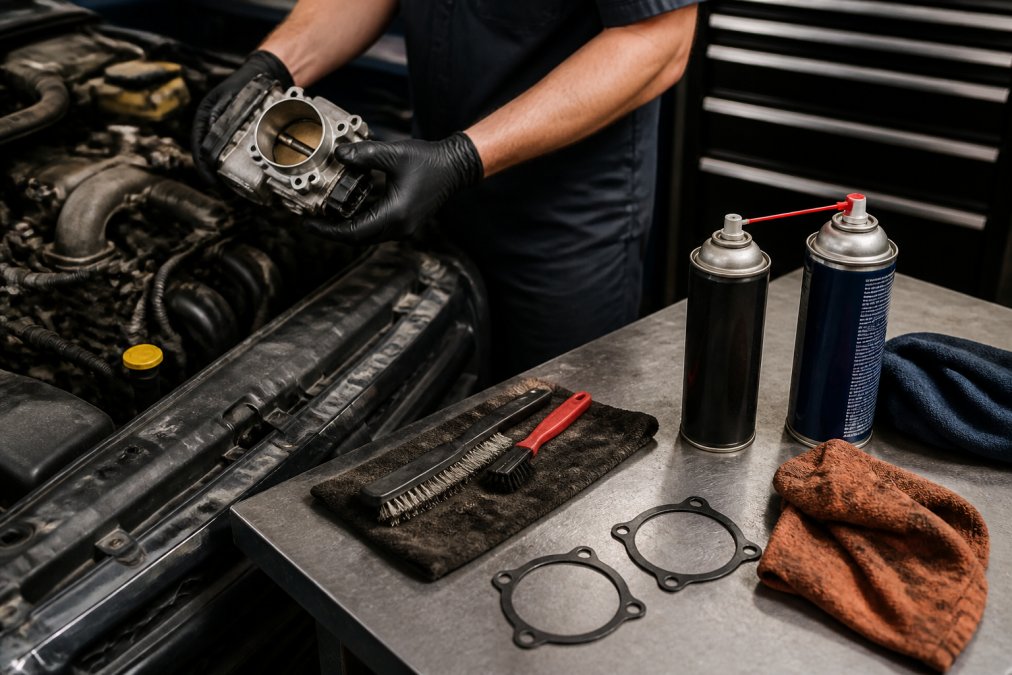
The throttle body accumulates carbon deposits from blow-by gases and fuel vapors. Over time, this buildup restricts the throttle plate's movement and throws off the idle air control system. Cleaning it is one of the fastest ways to improve throttle response instantly.
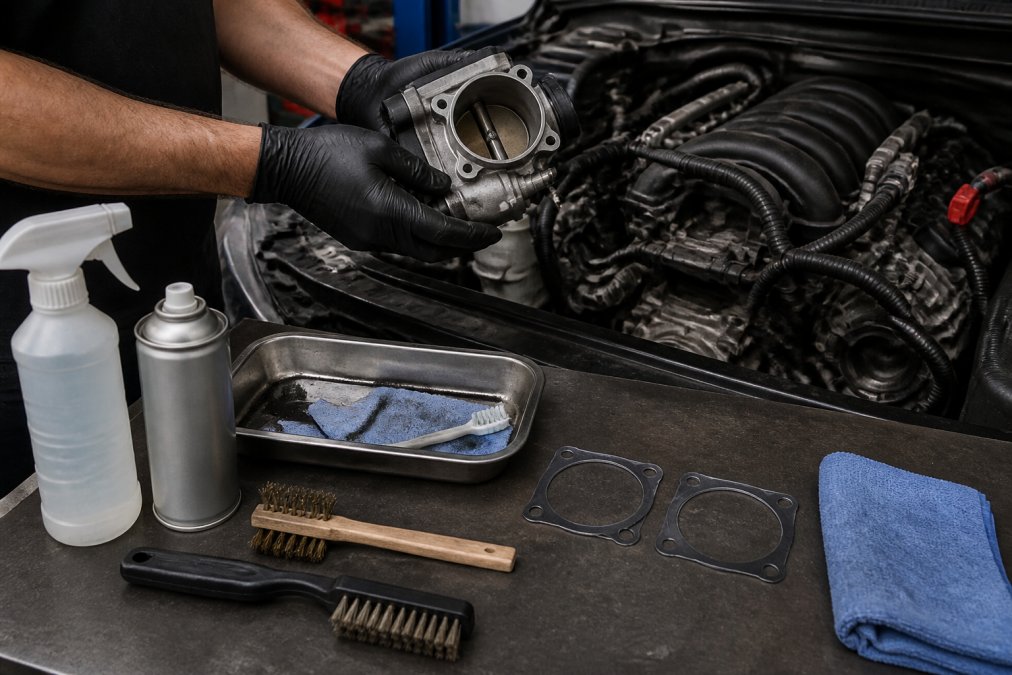
What You'll Need
- Socket set (10mm, 13mm, 15mm sockets typical)
- Screwdrivers (Phillips and flathead)
- Throttle body cleaner or carburetor cleaner
- Wire brush or soft brass brush
- Clean rags or paper towels
- Gasket scraper (plastic preferred)
- New gasket (order the correct one for your vehicle)
- Torque wrench
- Safety glasses and gloves
Most vehicles require 30-45 minutes for a complete throttle body cleaning. Consult your vehicle's service manual for exact bolt locations and torque specifications.
Step-by-Step Cleaning Process
Step 1: Disconnect the Battery and Remove Components
Disconnect the negative battery terminal to prevent electrical shorts. Remove the air intake hose, vacuum lines, and electrical connectors leading to the throttle body. Take photos before disconnecting anything. Unbolt the throttle body from the intake manifold, typically four bolts, and carefully remove it.
Step 2: Inspect the Throttle Plate
Look inside the throttle body opening. If the throttle plate appears gray or brown with visible deposits, you've found your problem. Carbon deposits create resistance and cause the system to delay response.
Step 3: Apply Cleaner and Scrub
Spray throttle body cleaner generously on the throttle plate, bore walls, and visible deposits. Use a wire brush to gently scrub away buildup without excessive force. Work methodically until the metal shows through, then wipe clean with a rag.
Step 4: Clean the Idle Air Control Passages
These small passages control engine idle and are prone to carbon accumulation. Spray cleaner into each passage and use a smaller brush or pipe cleaner to remove deposits. This step significantly improves idle quality and low-speed response.
Step 5: Reassemble with a New Gasket
Never reuse an old gasket. Install a fresh gasket between the throttle body and intake manifold. Bolt everything back in place, torquing to specification. Reconnect vacuum lines and electrical connectors exactly as they were. Reconnect the battery.
Step 6: Clear Codes and Relearn
Start the engine and let it idle for 2-3 minutes. The ECU will relearn the throttle position and idle characteristics. Take a test drive and feel the difference. Most drivers report noticeably snappier throttle response within the first few miles.
Key Takeaway
A clean throttle body removes one of the most common mechanical causes of throttle lag. This maintenance task typically costs under $50 in parts and takes less than an hour, making it the highest-ROI improvement for most drivers.
Electronic Throttle Control Reset Procedure
Modern vehicles rely on electronic throttle control (ETC) systems that learn your driving patterns and adjust response curves accordingly. Sometimes this learning gets stuck in a state that prioritizes fuel economy over responsiveness. Resetting the ETC system forces it to relearn from scratch, often resulting in snappier initial response.
Start with the engine off and the battery disconnected for 15 minutes. This clears all learned parameters from the ECU's memory. Reconnect the battery and start the engine. Let it idle for 5-10 minutes while the system relearns idle characteristics. You'll see the idle RPM fluctuate slightly as the ETC system recalibrates the throttle position sensor.
After the relearn cycle completes, take a cautious test drive at low speeds. The vehicle may feel slightly different for the first 20-30 miles as the ETC system builds new learning curves. Many drivers report that this reset alone improves throttle response noticeably, especially in vehicles driven conservatively or primarily in city traffic.
If you're uncomfortable disconnecting the battery yourself, most dealerships and independent shops can perform this reset in under 15 minutes for minimal cost.
Throttle Response Controller Benefits and Installation
A throttle response controller is an aftermarket module that sits between your accelerator pedal sensor and the engine control unit. It intercepts the pedal signal, applies a custom curve to it, and sends the modified signal to the ECU. The result is that a smaller pedal movement triggers a larger throttle opening, making the engine respond faster to driver input.
These devices eliminate the dead zone, that initial range of pedal movement where nothing seems to happen. Installation typically takes 15-30 minutes and requires no permanent modifications to your vehicle. The benefits are immediate: merging on the highway feels more responsive, off-road situations become easier to manage, and city driving becomes less frustrating.
Most users report that a quality throttle response controller delivers 60-70% of the perceived improvement of a full ECU tune at a fraction of the cost. VT Superchargers customers often pair a throttle response controller with our bolt-on supercharger kits to maximize the feel of added power.
Best For
Daily drivers and off-road enthusiasts who want improved throttle response without permanent modifications, ECU tuning, or significant expense. Throttle response controllers are reversible, affordable, and deliver immediately noticeable results.
Upgrading Your Cold Air Intake System
A restrictive factory air intake limits the mass airflow sensor's ability to detect incoming air accurately. When the engine can't measure air volume precisely, the ECU struggles to calculate correct fuel injection timing and quantity, resulting in sluggish throttle response.
Cold air intake systems replace the restrictive factory airbox with a larger diameter intake tube that draws cooler air from outside the engine bay. Cooler air is denser, meaning more oxygen molecules enter the combustion chamber with each breath. The mass airflow sensor detects this increase and signals the ECU to adjust fuel delivery accordingly. The combination of better air measurement and increased oxygen availability improves throttle response and adds modest horsepower gains.
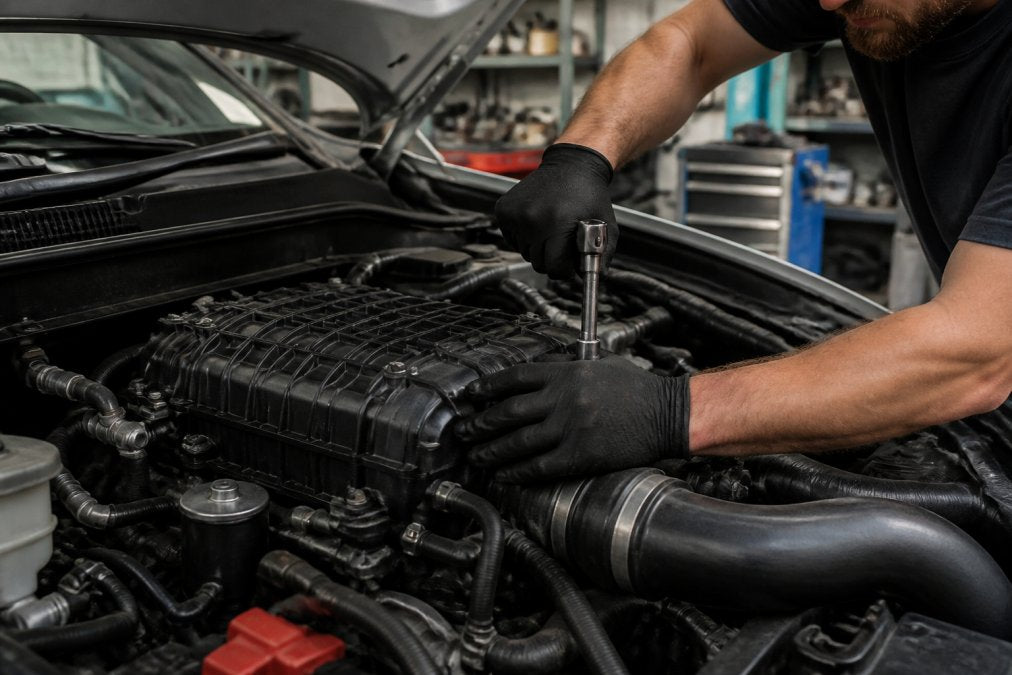
Installation is straightforward, most cold air intakes bolt directly to existing engine mounts and use your factory airbox location. No cutting, welding, or permanent modifications required. The entire job typically takes 30-45 minutes with basic hand tools. You'll immediately notice sharper throttle response, especially in the 2,000-4,000 RPM range.
ECU Tuning and Performance Exhaust Upgrades
ECU tuning unlocks the biggest throttle response improvements. The factory ECU prioritizes emissions compliance, fuel economy, and conservative power delivery. A custom tune optimizes the acceleration curve, reduces throttle lag in the drive-by-wire system, and sharpens engine response across the entire RPM range.
A professional ECU remap typically adjusts spark timing, fuel injection duration, and throttle response curves, resulting in noticeably faster throttle response and often 10-30% more horsepower. The best tuners offer vehicle-specific calibrations rather than generic maps.
Performance exhaust systems complement ECU tuning by reducing backpressure and improving combustion cycle efficiency. Factory exhaust systems are designed for quiet operation and emissions control, not performance. A quality performance exhaust with less restriction allows exhaust gases to exit faster, improving cylinder scavenging and allowing fresh air-fuel mixture to enter more completely on the next intake stroke. This improved combustion efficiency translates directly to better throttle response and more power.
The combination of ECU tuning plus a performance exhaust system often delivers the most dramatic throttle response improvement you can achieve without forced induction.
Watch Out
ECU tuning voids many factory warranties and can cause issues if the tune isn't matched to your specific vehicle's condition. A poorly executed tune can cause check engine lights, rough idle, or transmission problems. Always use a reputable tuner with proven experience on your specific vehicle make and model.
Common Mistakes to Avoid
The most common mistake is treating throttle response as a single problem with a single solution. Drivers often spend money on expensive upgrades when a simple throttle body cleaning would have solved the issue. Start with maintenance: clean the throttle body, reset the electronic throttle control, and verify your fuel filter isn't clogged. These cost almost nothing and often deliver surprising results.
Another mistake is upgrading components without understanding how they interact. Adding a cold air intake without ECU tuning leaves performance on the table. Tuning the ECU without a clean throttle body means the system is working with bad data. Address problems systematically: maintenance first, then electronic improvements, then mechanical upgrades.
Ignoring vehicle-specific limitations is another pitfall. Understanding your specific vehicle's limitations prevents wasted money on upgrades that won't solve your actual problem.
Many DIYers also underestimate the importance of proper torque specifications when reassembling throttle bodies or intake components. Use a torque wrench and follow your vehicle's service manual specifications exactly.
DIY vs. Professional Installation: Risks and Considerations
Cleaning a throttle body is well within the capability of most DIY mechanics. The risk of damage is low if you follow instructions carefully, and the cost savings are substantial.
Electronic throttle control resets are equally safe to perform yourself. Disconnecting the battery carries minimal risk.
Throttle response controller installation is straightforward DIY work. The device plugs into existing connectors with no cutting wires or soldering required.
Cold air intake installation falls into a gray area. The mechanical installation is simple, but getting connections sealed properly requires attention to detail. A loose connection causes a vacuum leak that can trigger a check engine light and negate all performance benefits.
ECU tuning and performance exhaust installation should generally be left to professionals. ECU tuning requires specialized equipment and expertise to avoid creating problems. Performance exhaust installation often requires removing other components or dealing with tight spaces that are difficult to access without a lift.
For VT Superchargers bolt-on kits, we provide detailed installation instructions and support our approved installer network. Our OEM-style fitment means installation is straightforward for mechanically inclined DIYers, but professional installation is available through our approved shops if you prefer. The 24-month warranty covers both DIY and professionally installed kits.
Watch Out
[Installing a supercharger is more complex](/blogs/news/how-to-choose-a-supercharger-kit-a-2026-guide) than basic maintenance. While our bolt-on kits are engineered for precise fitment, improper installation can damage components or void the warranty. If you're not experienced with engine bay work, professional installation through one of our approved installers is the safer choice.
Improving throttle response doesn't always require expensive modifications. Start with maintenance, a clean throttle body and electronic throttle control reset often deliver noticeable results at minimal cost. If you're seeking more dramatic improvements, a throttle response controller or cold air intake provides affordable next steps. For maximum gains, ECU tuning paired with a performance exhaust system delivers genuine performance improvements that transform how your vehicle feels on the road and trail.
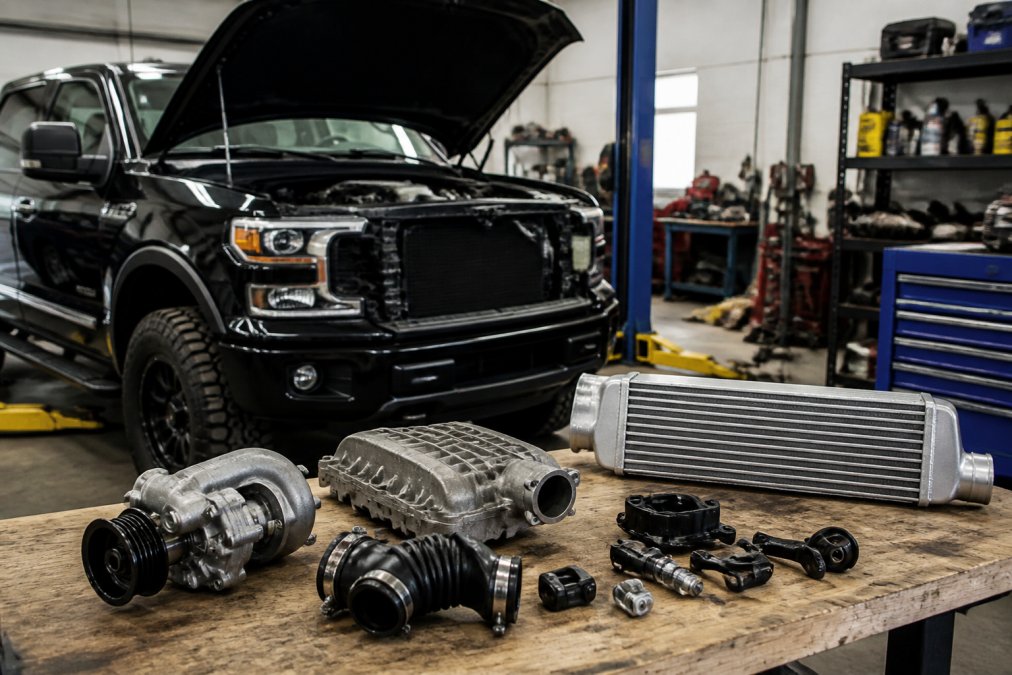
If you're ready to take throttle response to the next level, VT Superchargers' bolt-on supercharger kits deliver 40-60% more power with precision engineering and reliability. Our kits for Toyota Tacoma, Tundra, Sequoia, and 4Runner models provide instant throttle response combined with real power gains. Explore our Toyota Tacoma 3.5L Supercharger Kit or Toyota Tundra 5.7L kit to see how forced induction transforms your vehicle's performance. With our 24-month warranty and accessible financing options, upgrading is more affordable than ever. Register with VT Superchargers today to explore your options.


Frequently Asked Questions
What causes sluggish throttle response in modern cars?
Modern vehicles use electronic throttle control (drive-by-wire) instead of mechanical cables, which introduces a slight delay between pedal input and engine response. Common causes include carbon buildup on the throttle plate, a vacuum leak affecting the intake manifold, a dirty mass airflow sensor, or a faulty throttle position sensor. Additionally, transmission shift points and engine management system calibration can create perceived lag. Diagnostic troubleshooting with OBD-II can identify sensor issues.
Does cleaning the throttle body improve throttle response?
Yes, cleaning the throttle body can noticeably improve throttle response. Carbon buildup on the throttle plate restricts airflow and forces the engine management system to work harder to achieve the correct air-fuel ratio. Removing this buildup restores the combustion cycle efficiency and allows the throttle to modulate more freely. Many owners report sharper acceleration immediately after cleaning, especially on vehicles with higher mileage.
Can a throttle response controller actually improve performance?
A throttle response controller reduces the dead zone between pedal input and engine response by adjusting the signal sent to the electronic throttle control. This eliminates the delay many drivers feel, particularly in drive-by-wire systems. However, it does not add horsepower or torque; it only makes existing power feel more immediate. For vehicles already running a supercharger or turbo, a controller helps you access that power faster.
Is it safe to modify throttle response settings?
Modifying throttle response through cleaning, controller installation, or ECU remapping is generally safe when done correctly. However, aggressive ECU tuning can affect engine longevity and transmission shift points, potentially voiding your factory warranty. Always verify that modifications are compatible with your specific vehicle, check with your manufacturer about warranty implications, and use reputable tuning software. DIY throttle body cleaning is low-risk; professional ECU work carries more responsibility.
This article was written using GrandRanker
Related post


RECENT POSTS