Bolt-On Supercharger Kits for Daily Drivers: 2026 Guide
Table of Contents
- Bolt-On Supercharger Kits for Daily Drivers: What You Need to Know
- Centrifugal vs. Roots-Style Superchargers: Which Works Best for Daily Driving
- How Much Horsepower Does a Supercharger Add to Your Daily Driver
- Supercharger Kit Installation Cost and Complexity for DIY Installers
- Supercharger vs. Turbo for Daily Drivers: Reliability and Drivability
- Supercharger Maintenance for Daily Drivers: Long-Term Ownership Costs
- ECU Calibration, Warranty Coverage, and Legal Considerations
- Best Bolt-On Supercharger Kits for Popular Daily Driver Platforms
Bolt-On Supercharger Kits for Daily Drivers: 2026 Guide
Last Updated: July 31, 2026
Bolt-on supercharger kits deliver 40-60% power increases while maintaining OEM-level reliability and drivability. Whether you're battling gear-hunting on the highway or want responsive throttle feel in stop-and-go traffic, superchargers offer a straightforward path to real performance gains without major engine rebuilds. Installation, fuel system requirements, tuning demands, and long-term costs separate a smart upgrade from an expensive mistake.
Centrifugal vs. Roots-Style Superchargers: Which Works Best for Daily Driving
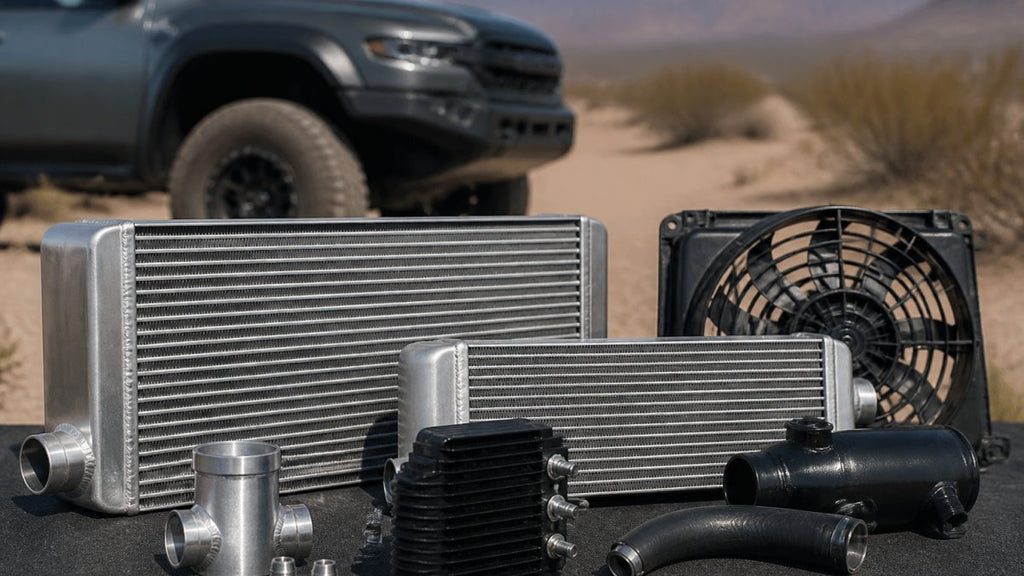
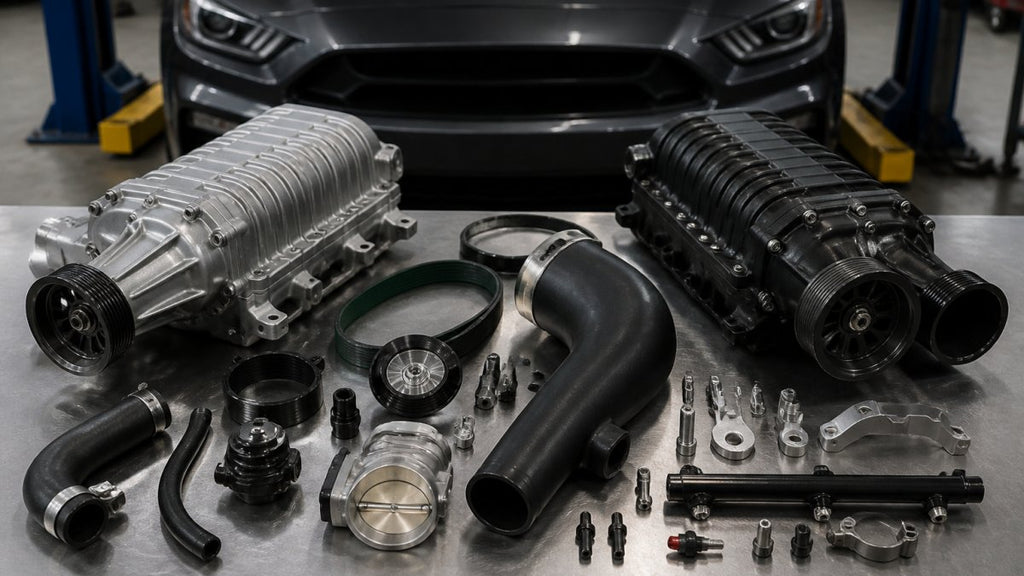
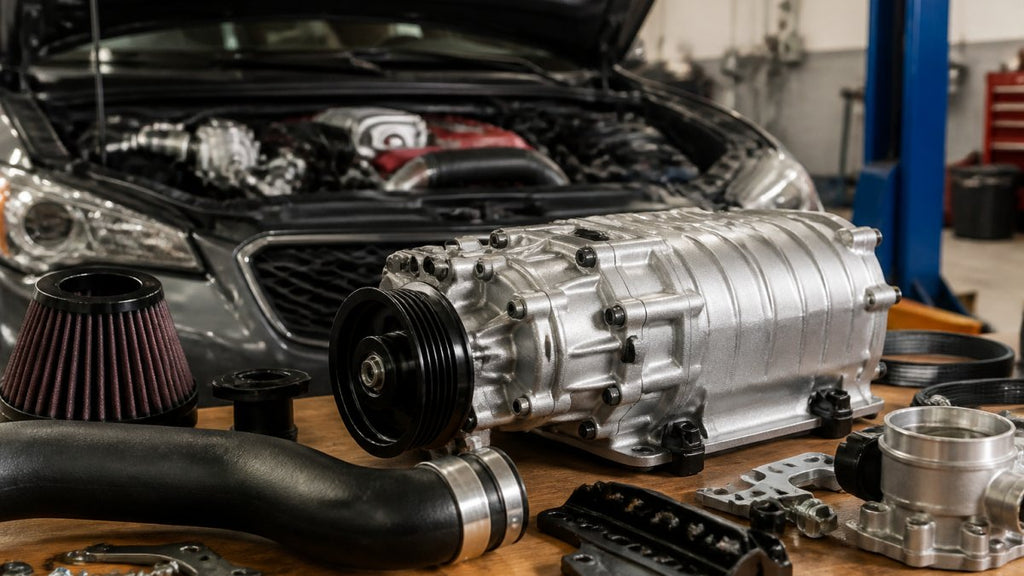
Centrifugal superchargers spin an internal impeller at 50,000+ RPM to compress intake air. Boost builds gradually as engine RPM climbs, peaking near redline. For daily drivers, they run cooler and quieter than roots-type designs, with less heat soak in traffic. They cost less and require minimal fuel system upgrades. The tradeoff is low-end torque, barely adding power until above 3,500 RPM.
Roots-type superchargers use interlocking helical rotors for positive displacement compression. Boost arrives instantly from idle, delivering strong low-end torque ideal for towing or stoplight launches. The cost is heat generation and complexity, requiring more aggressive tuning and stronger fuel system upgrades.
For pure daily driving in moderate climates, centrifugal wins on comfort and reliability. For towing or off-roading, roots-type delivers the low-end response you need.
| Supercharger Type | Boost Delivery | Low-End Torque | Heat Generation | Cost | Best For |
|---|---|---|---|---|---|
| Centrifugal | Linear, RPM-dependent | Minimal below 3,500 RPM | Lower | $4,600-$6,950 | Highway driving, peak power seekers |
| Roots-Type | Instant from idle | Strong across RPM range | Higher | $5,500-$6,950 | Towing, off-road, low-end response |
How Much Horsepower Does a Supercharger Add to Your Daily Driver
Real-world power gains depend on engine displacement, supercharger type, and boost pressure. For smaller displacement engines (2.5L-3.6L), bolt-on kits typically deliver 40-60 additional horsepower and 30-50 lb-ft of torque. A Toyota Camry 2.5L jumps from 203 hp to roughly 280-320 hp. Larger engines see proportionally larger gains, the Toyota Tundra 5.7L moves from 381 hp to approximately 520-560 hp, a 140+ horsepower increase that transforms a truck from adequate to genuinely quick.

Torque gains matter more for daily driving than peak horsepower. A 50 lb-ft increase in mid-range torque makes throttle response snappier and reduces downshifting needs.
Dyno Testing and Verification
Dyno runs from reputable shops provide the clearest picture of actual power. A quality dyno run costs $150-$300 and measures real power at the wheels. Wheel horsepower is always lower than crank horsepower due to drivetrain losses (typically 12-15% for rear-wheel drive, 15-20% for all-wheel drive). Reputable manufacturers publish both figures or acknowledge that boost pressure and power drop as intake air temperature climbs.
Supercharger Kit Installation Cost and Complexity for DIY Installers
Modern bolt-on supercharger kits don't require cutting engine bay panels or fabricating custom brackets.
Bolt-On Installation Process Overview
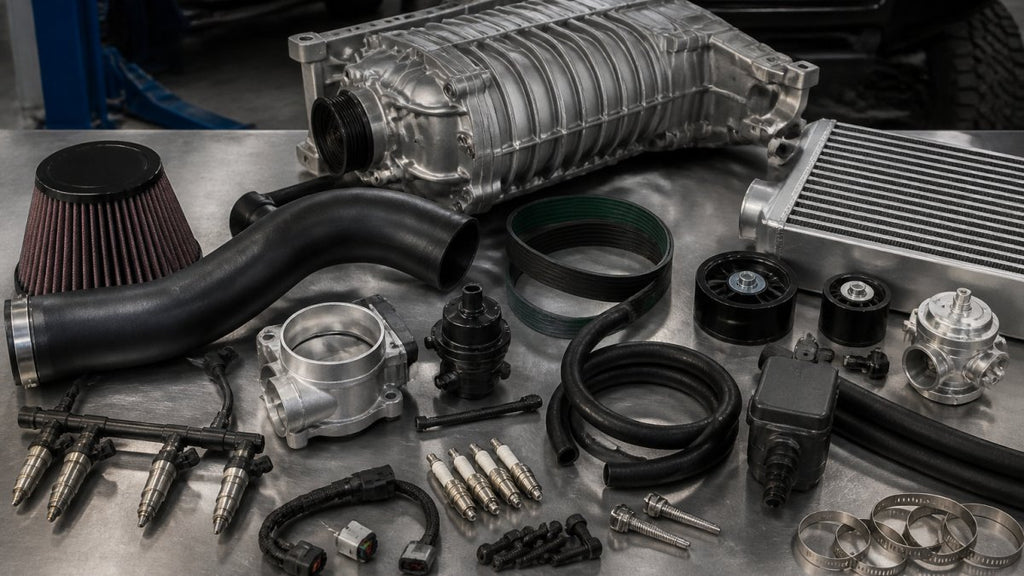
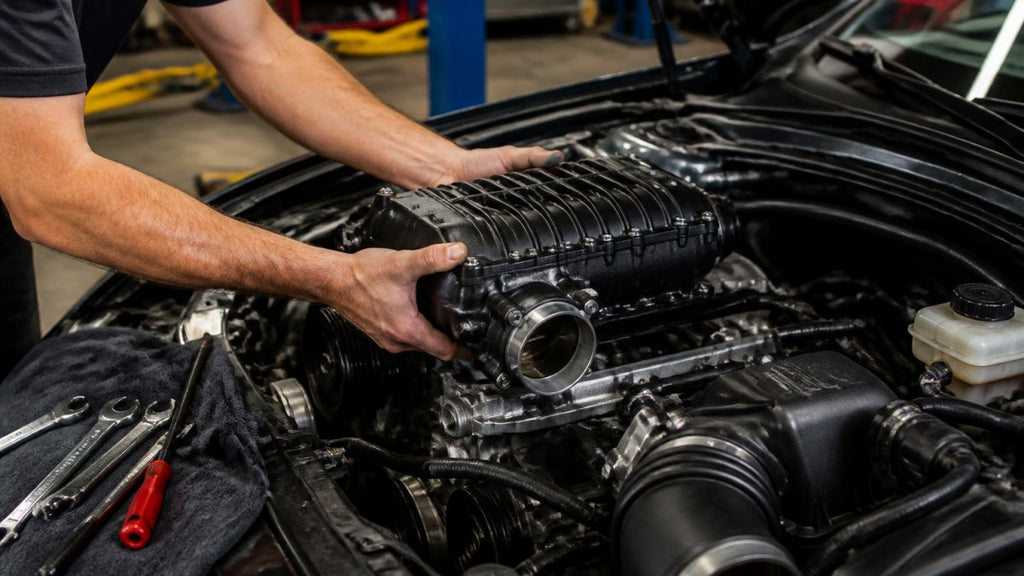
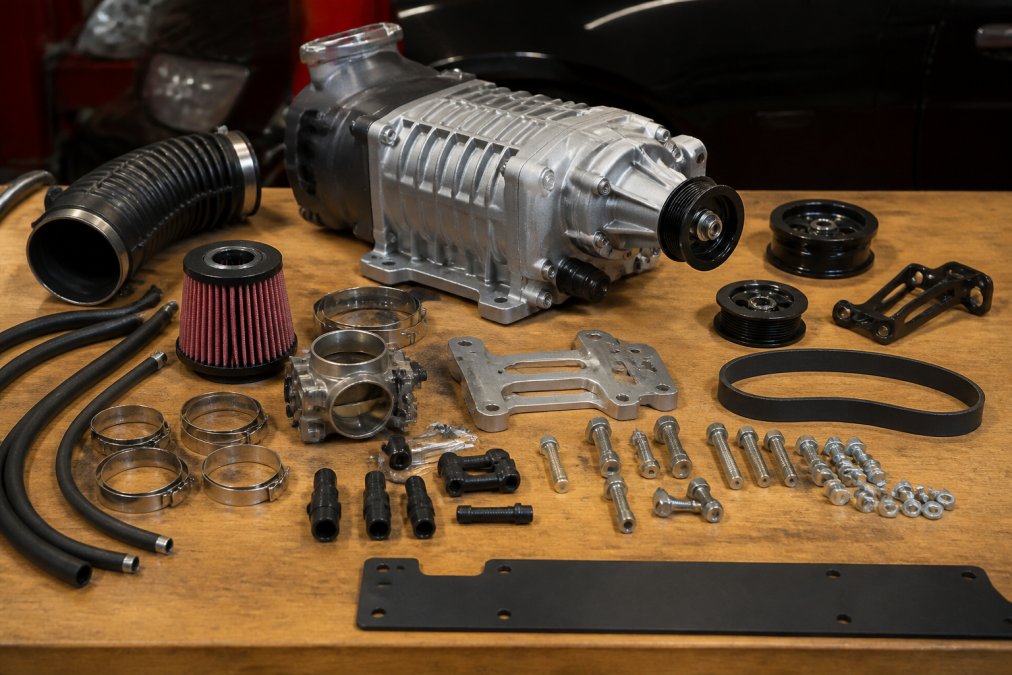
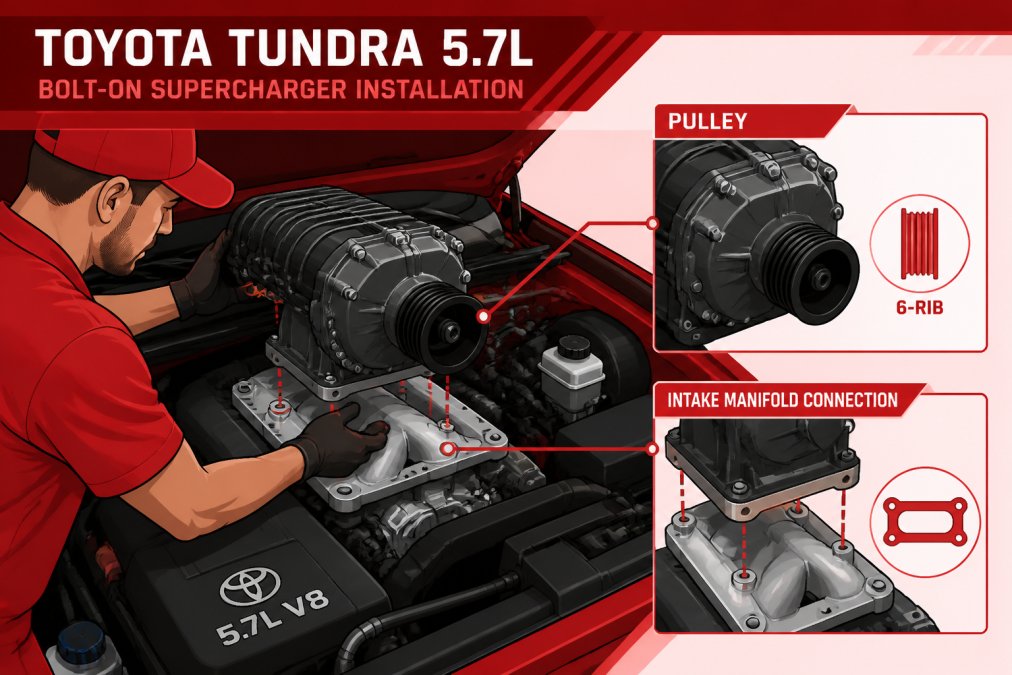
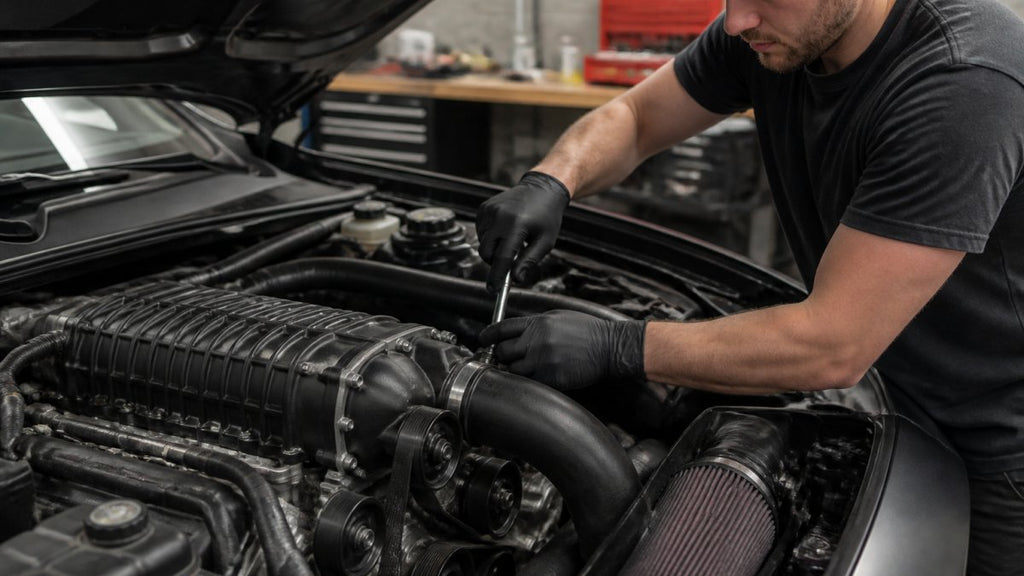
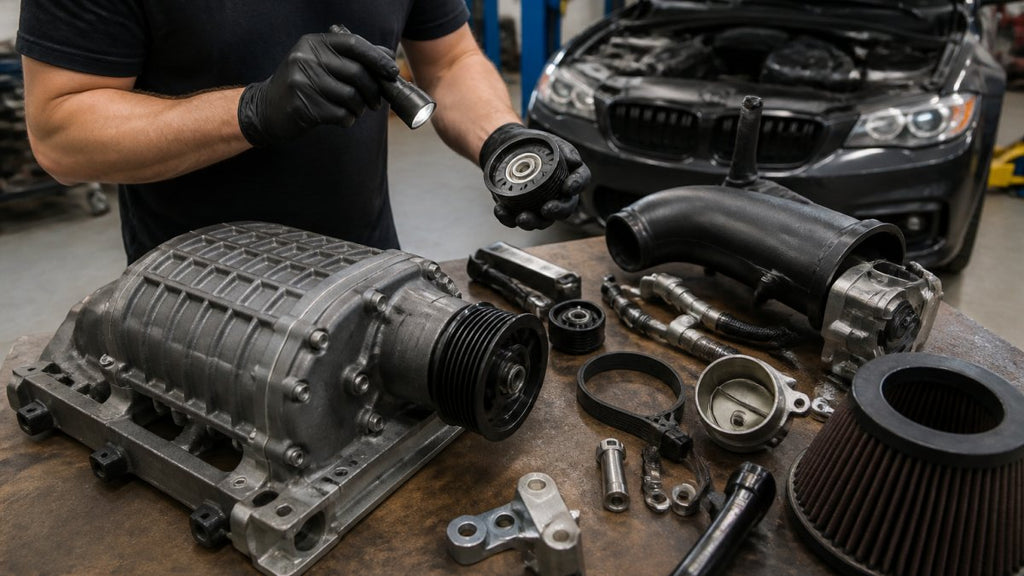
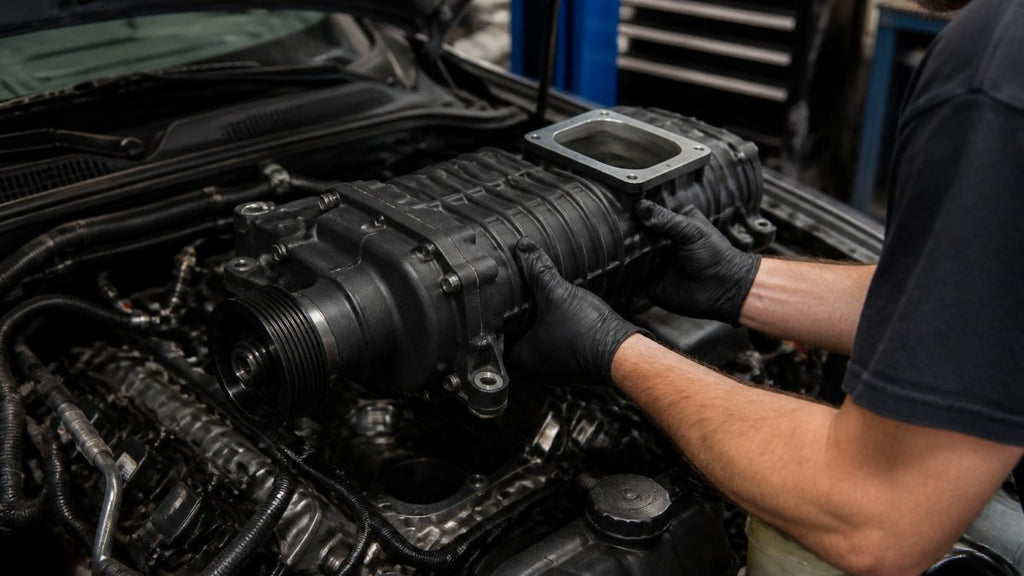
Installation follows this sequence: disconnect the battery, remove the factory intake manifold and air filter housing, install the supercharger mounting bracket, bolt the supercharger unit to the bracket, route intercooler piping, connect fuel injector wiring and boost pressure sensor, run the serpentine belt, and install the ECU tune.
For someone with basic mechanical skills and a full weekend, this is achievable. You'll need a socket set, torque wrench, serpentine belt tool, and jack stands. The challenge is detail work, every connection must be tight, every hose clamp secure, and every electrical connection correct.
Professional Installation vs. DIY: When to Seek Help
If you've rebuilt an engine or swapped a transmission, a supercharger installation is achievable. If your experience is limited to oil changes and brake pads, professional installation makes sense. A reputable shop charges $1,500-$3,000 for installation labor. Professional dyno tuning costs $400-$800 and is non-negotiable regardless of installation method.
Watch Out
Installing a supercharger without proper fuel system upgrades or ECU tuning risks engine damage. Lean air-fuel ratios under boost can cause catastrophic detonation. Never skip the tuning step.
Supercharger vs. Turbo for Daily Drivers: Reliability and Drivability
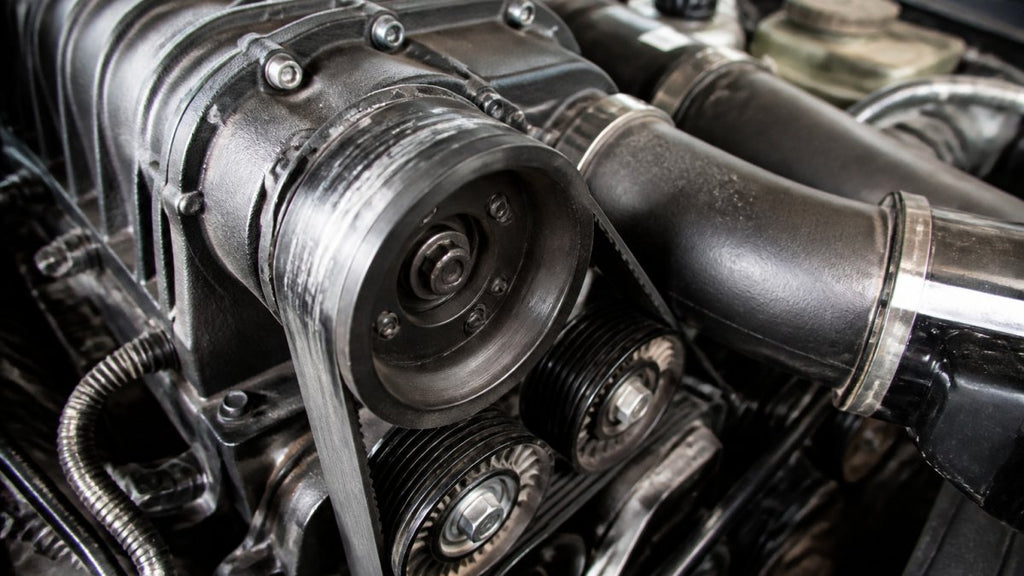
Turbos deliver more peak power per dollar but have distinct disadvantages for daily driving. A turbocharger relies on exhaust heat to spool the turbine, creating turbo lag, a delay between throttle input and boost arrival. Superchargers eliminate this: boost is instantaneous because the supercharger is mechanically driven by the engine's crankshaft via a serpentine belt.
Turbos run hotter, with exhaust manifolds reaching 1,000+ degrees Fahrenheit. Under-engine heat becomes a real issue in traffic. Superchargers operate at lower temperatures and require only a standard intercooler.
Throttle Response and Heat Soak Differences
A supercharged engine responds immediately to throttle input with no hesitation. Heat soak is the silent killer of turbo performance, after sustained highway driving or heavy traffic, intake air temperature climbs, boost pressure drops, and peak power becomes unavailable precisely when you need it. Superchargers experience less severe heat soak because the compression process is more efficient.
Engine Longevity and OEM-Level Reliability
A properly tuned supercharger system doesn't shorten engine life if maintained correctly. The supercharger is a sealed, oil-lubricated unit with no wearing parts exposed to combustion. Engine internals experience higher pressure and temperature under boost, but modern materials handle this if air-fuel ratio is correct and detonation is prevented. Turbos operate in a harsher environment, with turbo failures common after 100,000 miles. A supercharger-equipped engine can easily exceed 200,000 miles with normal maintenance.
Supercharger Maintenance for Daily Drivers: Long-Term Ownership Costs
Routine Maintenance and Service Intervals
The supercharger itself requires minimal maintenance. Check the serpentine belt at regular intervals (every 50,000 miles) and replace if it shows cracks or glazing. The internal rotor assembly is sealed and oil-lubricated; it doesn't need service unless it fails, which is rare. Oil changes become slightly more important because the engine works harder, but intervals remain 5,000-10,000 miles.
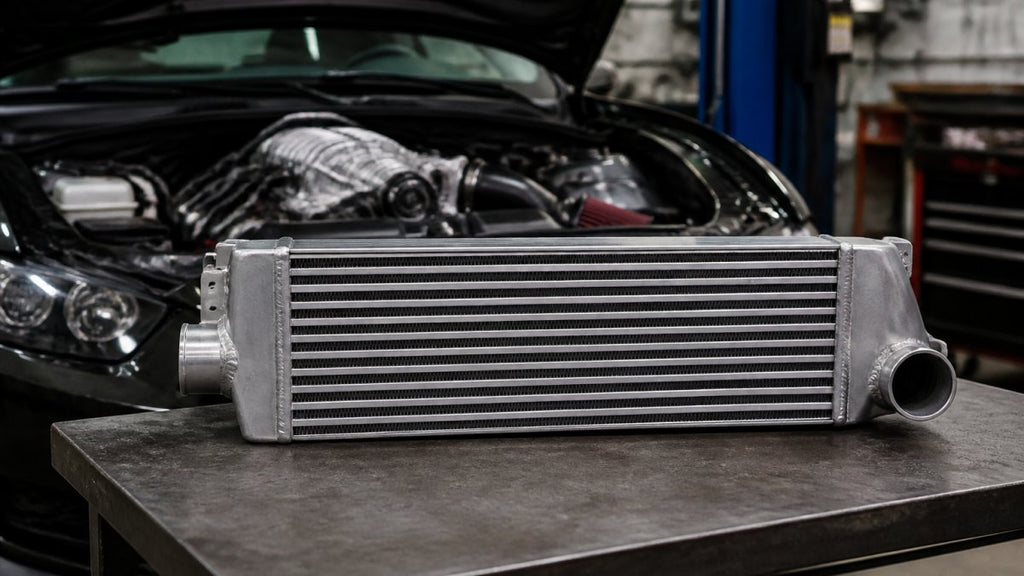
Intercooler maintenance is straightforward. For air-to-air intercoolers, check fins for debris and clean annually. Spark plugs may need changing more frequently, plan on every 30,000-50,000 miles instead of the factory 100,000-mile interval.
Fuel System Upgrades and Octane Requirements
Supercharger kits increase fuel system demand. A centrifugal system on a smaller engine might work with the factory fuel pump if conservative with boost. Larger engines and roots-type systems almost always require a fuel pump upgrade costing $400-$800. Injector upgrades run $300-$600.
Octane requirements climb with boost pressure. A stock engine running 87-octane can shift to requiring 91 or 93 octane under supercharger boost. Premium fuel costs 40-60 cents more per gallon. Over 15,000 annual miles, that's an extra $600-$900 per year.
ECU Calibration, Warranty Coverage, and Legal Considerations
A supercharger without proper tuning is a liability. The factory ECU doesn't know how to manage boost pressure, and running blind risks detonation and engine damage.
Dyno-Tune and Air-Fuel Ratio Optimization
Professional dyno tuning adjusts fuel injection timing, ignition timing, and boost pressure to keep the air-fuel ratio safe (typically 11.5:1 to 12.5:1 under boost). A dyno tune costs $400-$800 and takes 3-5 hours.
Pro Tip
A proper dyno tune isn't just about making power, it's about making power safely. A tuner who focuses only on peak numbers without monitoring knock, fuel trim, and intake air temperature is cutting corners. Demand a tune that includes safety margins and real-time monitoring.
Insurance and Emissions Compliance in Your State
Most insurance policies cover modifications if you disclose them, but some insurers classify forced induction as significant risk. Contact your insurer before installation and ask explicitly whether bolt-on superchargers are covered.
Emissions compliance varies by state. California and other strict states may not allow aftermarket superchargers unless the kit carries a CARB Executive Order number. Check your state's emissions regulations before purchasing.
Factory Warranty Protection and 24-Month Coverage Options
Installing a supercharger typically voids the factory powertrain warranty. Many aftermarket supercharger manufacturers, including VT Superchargers, offer 24-month warranty coverage on their kits. This covers defects in the supercharger unit, brackets, and included components. It does NOT cover engine damage from detonation, lean running, or improper installation.

Best Bolt-On Supercharger Kits for Popular Daily Driver Platforms
Toyota Tundra and Sequoia 5.7L: Maximum Torque for Towing
The 5.7L 3UR-FE V8 in Toyota trucks is an ideal supercharger candidate with robust internals. The Toyota Tundra 5.7 Supercharger Kit by VT Superchargers delivers 40-60% more power, taking the Tundra from 381 hp to approximately 520-560 hp with significant torque across the RPM range. For a truck that hunts gears constantly on the highway, this supercharger solves the problem. The Toyota Sequoia 5.7 Supercharger Kit by VT Superchargers applies the same engineering to the Sequoia platform. Budget $1,000-$1,500 for fuel system work on top of the kit cost.
Jeep Pentastar V6 and Grand Cherokee: Off-Road Capability Meets Daily Comfort
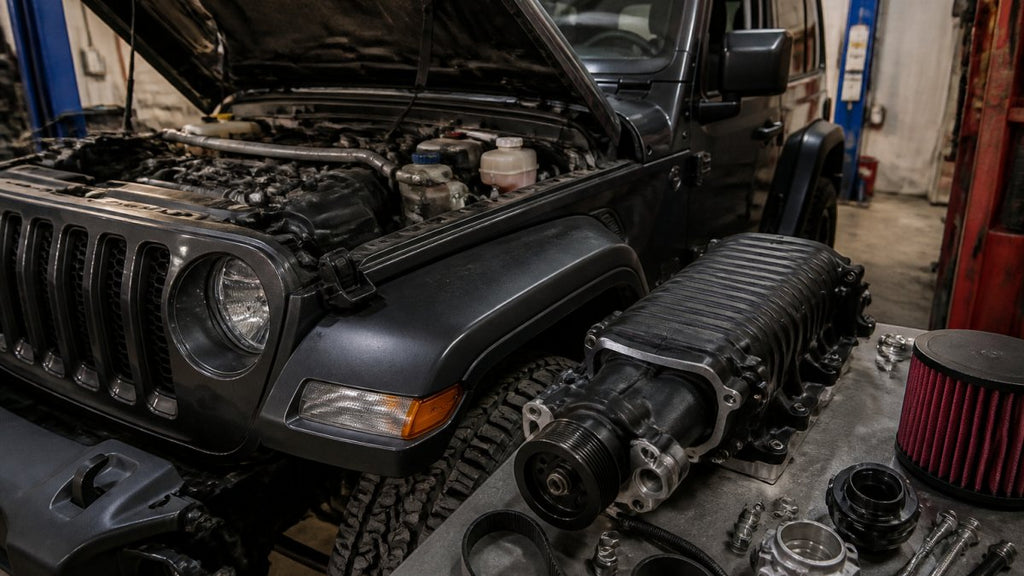
The Pentastar 3.6L V6 is one of the most popular supercharger platforms because Jeep owners value both daily drivability and off-road capability. The [Jeep Pentastar v6 3.6L Supercharger Kit](https://vtsuperchargers.com/products/jeep-pentastar-v6-3-0l-3-6l-supercharger-kit) adds 40% horsepower and 30% torque, taking the engine from 285 hp to approximately 400+ hp. The Jeep Grand Cherokee 3.6 Supercharger Kit 2011 and newer applies the same engineering to the full-size platform.

Ford Explorer and Dodge Charger: Sedan and Crossover Performance
The Ford Explorer 3.5L V6 Supercharger Kit VT Superchargers transforms the Explorer from adequate family hauler to genuinely quick vehicle. The Dodge Charger 3.6L V6 Supercharger Kit - by VT Superchargers delivers similar power gains for the performance sedan crowd.
Compact Daily Drivers: Toyota Camry and RAV4 2.5L Options
The Toyota Camry 2.5L 2018-2024 Supercharger Kit - by VT Superchargers takes the Camry from 203 hp to approximately 280-320 hp, a 40-50% increase that makes highway passing effortless. The Toyota RAV4 2.5L 2018-2024 Supercharger Kit applies the same engineering to the popular crossover platform. For compact engines, the fuel system upgrade is often simpler, reducing fuel system work to $300-$500.
Choosing a supercharger for your daily driver pays dividends for years if you get it right. The real challenge is committing to proper installation, professional tuning, and long-term maintenance. A supercharger is only as good as the tune running it and the fuel system feeding it.
VT Superchargers specializes in bolt-on kits engineered for OEM-style fitment and real performance. Their kits are available for Toyota, Jeep, Ford, and Dodge platforms, backed by a 24-month warranty. With financing options available and worldwide shipping, starting your supercharger upgrade is accessible. Register with VT Superchargers today and get matched with an approved installer who can handle installation and tuning properly.
Frequently Asked Questions
Are superchargers good for daily driving, or will they hurt reliability?
Bolt-on supercharger kits engineered for OEM-level reliability are safe for daily driving when properly installed and maintained. Forced induction systems like those offered by VT Superchargers deliver 40-60% more power without compromising engine longevity. The key is ECU calibration, premium fuel compliance, and regular maintenance. Many daily drivers report years of trouble-free operation with supercharged engines, especially when using quality kits with 24-month warranty protection.
How much horsepower does a supercharger add to a daily driver?
Horsepower gains typically range from 40-60% depending on engine size and boost pressure. For example, a Toyota Tundra 5.7L gains substantial torque for towing, while a Ford Explorer 3.5L V6 sees measurable throttle response improvement. Dyno testing provides accurate numbers for your specific vehicle. The actual gain depends on air-fuel ratio optimization, intercooler efficiency, and manifold pressure settings. Smaller daily drivers like the Toyota Camry 2.5L still see meaningful power increases suitable for responsive highway merging.
What is the average cost to install a bolt-on supercharger kit for a daily driver?
VT Superchargers kits range from $4,600 for compact daily drivers like the Toyota Camry to $6,950 for larger trucks like the Tundra. Installation costs vary: bolt-on kits typically require 4-8 hours of labor at a shop (roughly $800-$2,000 depending on your region), though many DIY enthusiasts handle installation themselves. Financing options are available to spread costs. Factor in dyno-tune ($300-$600) and fuel system upgrades if needed for your boost pressure requirements.
Do superchargers require a lot of maintenance compared to stock engines?
Supercharger maintenance for daily drivers is straightforward: follow regular oil change intervals, monitor intercooler cleanliness, and inspect belt tension periodically. Premium fuel is required to prevent detonation under boost pressure. Unlike turbos, superchargers have no lag and generate less heat soak, reducing thermal stress. Most owners report maintenance costs similar to stock vehicles when using quality kits with proper ECU calibration. The 24-month warranty covers defects, giving peace of mind during the critical break-in period.
Supercharger vs. turbo for daily driving, which is better for reliability and drivability?
Superchargers offer instant throttle response with no turbo lag, making them ideal for daily driving comfort. They deliver consistent torque across the RPM range without heat soak issues that plague turbos in traffic. Centrifugal superchargers provide linear power delivery, while roots-type units offer strong low-end torque for towing. Turbos are more fuel-efficient at cruise but require more complex cooling and maintenance. For daily drivers prioritizing reliability and responsive feel, bolt-on superchargers with OEM-style fitment are the preferred choice.
This article was written using GrandRanker
Related post
09
Oct
RECENT POSTS