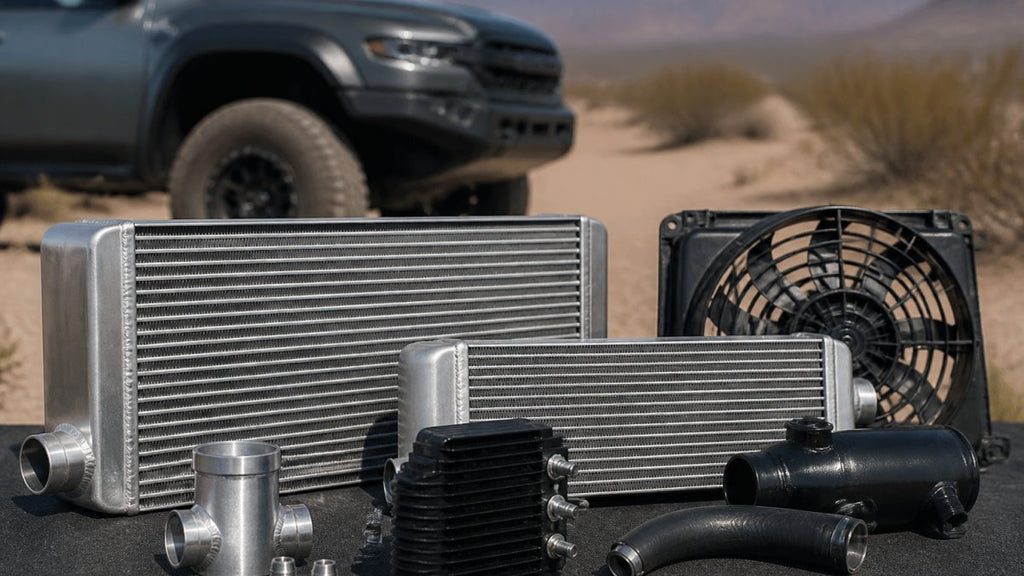
Supercharger Alternatives for Off-Road Builds: 2026 Guide
Table of Contents
- Supercharger Alternatives for Off-Road Builds: What You Need to Know
- Centrifugal vs. Roots-Style Superchargers for Off-Road Performance
- Supercharger vs Turbocharger Off-Road: Which Forced Induction Wins?
- Nitrous Oxide Off-Road Pros and Cons: A Real Alternative?
- Engine Swap for Off-Road Power: When Forced Induction Isn't Enough
- Best Forced Induction for Rock Crawling: Low-End Torque and Reliability
- Installation Complexity, Warranty, and Daily Driving Drivability
- Conclusion: Choosing Your Supercharger Alternative
Last Updated: August 1, 2026
Supercharger Alternatives for Off-Road Builds: What You Need to Know
When building an off-road vehicle with larger tires and aggressive gearing, your engine struggles to maintain efficiency. A procharger alternative for off road builds becomes necessity, not curiosity. At VT Superchargers, we've spent years helping off-road enthusiasts understand their forced induction options. The reality: ProCharger isn't the only path to real power gains.
Your options now extend far beyond centrifugal superchargers. Turbochargers deliver low-end torque for crawling. Roots-style superchargers provide instant boost without lag. Nitrous systems offer affordable power for specific scenarios. Engine swaps remain viable for complete drivetrain overhauls.
This guide covers the mechanical realities of each procharger alternative for off road builds, including advantages and limitations that matter when tackling rock crawls or highway towing. We'll address reliability on modified platforms, warranty implications, installation complexity, and whether you'll actually see the power gains you're paying for.
Key Takeaway
The best forced induction choice depends on your vehicle's displacement, budget, and whether you prioritize low-end torque or peak horsepower. Off-road builds rarely benefit from peak power alone; low-end delivery matters more than ProCharger's high-RPM efficiency.
Centrifugal vs. Roots-Style Superchargers for Off-Road Performance
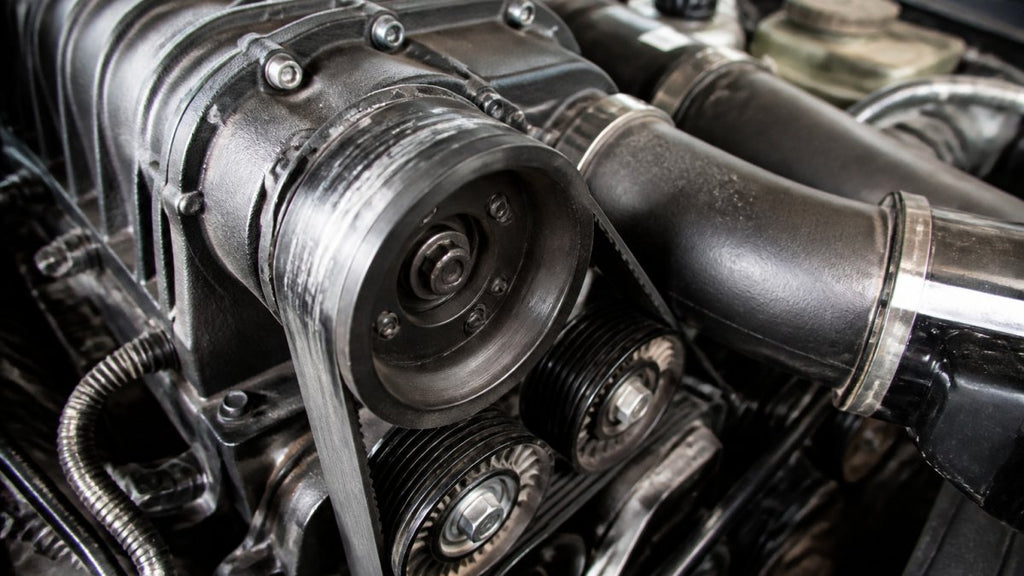
Understanding the mechanical difference between these two supercharger designs is essential when evaluating any procharger alternative for off road builds. Centrifugal superchargers, including ProCharger units, use a belt-driven impeller spinning at 50,000+ RPM to compress incoming air. Roots-style superchargers use two counter-rotating lobes that trap and compress air at lower speeds, typically 5,000-8,000 RPM.
Centrifugal Superchargers: High RPM Efficiency
Centrifugal designs excel at producing peak horsepower because boost pressure builds gradually as engine RPM increases. At 2,000 RPM, a centrifugal unit might produce only 2-3 PSI; by 6,000 RPM, you're seeing 8-10 PSI. This efficiency curve maintains decent fuel economy at cruise speeds and generates minimal heat at low throttle inputs.
For off-road applications, this creates a problem. Rock crawling happens at 1,500-3,000 RPM where you need maximum torque. A centrifugal supercharger delivers minimal boost when you need it most. Horsepower gains are real, often 40-60% at peak RPM, but low-end torque suffers. Your vehicle feels responsive on highways but sluggish navigating technical terrain.
VT Superchargers has engineered bolt-on kits for vehicles like the Toyota Tacoma 3.5L that balance centrifugal efficiency with off-road usability. The [Tacoma 3.5L Supercharger Kit](https://vtsuperchargers.com/products/vt-racing-toyota-tacoma-3-5l-supercharger-kit) delivers 100 HP and 90 lb-ft torque gains, concentrating in the upper RPM band where highway acceleration matters most.
Watch Out
Centrifugal superchargers create boost lag at low RPM. In rock crawling scenarios where you need immediate throttle response at 1,500-2,000 RPM, you'll feel the delay.
Roots-Style Superchargers: Instant Boost Pressure
Roots-style superchargers operate differently. The two rotating lobes trap air and force it into the intake manifold at lower engine speeds. Boost pressure builds immediately, often 5-6 PSI at 2,000 RPM, creating the low-end torque delivery that off-road driving demands.
A Roots-style unit produces power more evenly across the entire RPM range. You get meaningful torque gains from 1,500 RPM onward, not just above 4,000 RPM. For technical off-road driving, this translates to better throttle response navigating obstacles, more consistent power during hill climbs, and fewer gear hunting issues on highways with taller tires.
The trade-off is efficiency. Roots-style superchargers generate more heat because they compress air less efficiently than centrifugal designs. Fuel consumption increases noticeably, typically 1-2 MPG losses compared to naturally aspirated baseline, whereas centrifugal systems might only cost 0.5-1 MPG at cruise speeds.
The mechanical complexity also differs. Roots-style units require more precise engineering to minimize internal leakage between lobes and housing. This is why Roots-style kits typically cost more.
| Characteristic | Centrifugal | Roots-Style |
|---|---|---|
| Low-End Torque (2,000 RPM) | Minimal | Strong |
| Peak Horsepower | Excellent | Good |
| Fuel Efficiency | Better at cruise | Noticeably lower |
| Heat Generation | Lower | Higher |
| Boost Response | Gradual | Immediate |
| Best For | Highway performance | Off-road crawling |
Supercharger vs Turbocharger Off-Road: Which Forced Induction Wins?
Turbochargers use exhaust gas energy to spin a turbine that drives a compressor wheel, extracting wasted energy from the exhaust system. However, turbochargers introduce boost lag, a delay between throttle input and boost pressure delivery. At 2,000 RPM, you might experience 200-300 milliseconds of lag before boost arrives. For off-road crawling where precise throttle control matters, this lag creates unpredictable power delivery.
Superchargers deliver boost pressure directly proportional to engine speed. There's no lag. You press the throttle, boost arrives immediately. This responsiveness proves invaluable navigating technical terrain where you need instant power modulation to maintain momentum through obstacles.
The reliability equation favors superchargers for modified off-road platforms. Turbochargers operate at extreme temperatures, turbine inlet temps often exceed 1,000 degrees Fahrenheit. Extended crawling sessions generate sustained boost pressure and heat, creating thermal stress on turbo seals and bearings. Superchargers operate at significantly lower temperatures because they're cooled by engine coolant circulation or ambient air. Long-term durability improves.
Pro Tip
Turbochargers excel at efficiency and peak power. Superchargers excel at reliability and low-end responsiveness. For off-road vehicles spending extended periods at low RPM in harsh conditions, superchargers consistently outperform turbos.
Nitrous Oxide Off-Road Pros and Cons: A Real Alternative?
Nitrous oxide systems inject a nitrous oxide and fuel mixture directly into the intake manifold during acceleration. The chemical reaction dramatically increases combustion energy, producing sudden power spikes.
The appeal is obvious: cost. A quality nitrous system costs $1,500-$3,000 installed, compared to $5,000-$7,500 for a supercharger kit. Horsepower gains are significant, 50-150 HP depending on system size and tune.

The limitations become apparent in off-road scenarios. Nitrous systems excel at brief acceleration events, not sustained boost pressure. Off-road driving demands continuous, predictable power delivery across varied RPM ranges. You're not making a 10-second drag racing run; you're spending 30 minutes navigating technical terrain.
Nitrous bottles require regular refilling. A typical 10-pound bottle provides 2-3 minutes of continuous flow. Off-road sessions routinely exceed this window. Additionally, nitrous systems create sudden power surges that can overwhelm stock drivetrain components. Driveshafts, differentials, and transmission components suddenly experience shock loads. Breakage rates increase significantly.
For occasional highway performance driving, nitrous makes sense. For serious off-road builds, superchargers and turbochargers deliver more reliable, sustained power.
Engine Swap for Off-Road Power: When Forced Induction Isn't Enough
Engine swaps represent the ultimate power solution when forced induction doesn't meet your goals. Dropping a larger-displacement engine into your platform eliminates forced induction entirely by increasing displacement and naturally aspirated power.
The appeal is straightforward: a 5.7L engine produces significantly more power and torque than a 4.0L, regardless of forced induction. You get inherent reliability because there's no supercharger, turbocharger, or nitrous system adding complexity.
However, engine swaps introduce massive complexity. Transmission compatibility becomes critical. Engine bay modifications are often necessary. Electrical integration requires custom wiring harnesses and ECU programming. The cost becomes prohibitive quickly, typically $8,000-$15,000 or more. For comparison, a bolt-on supercharger kit from VT Superchargers delivers 40-60% power gains at a fraction of that investment. The Land Cruiser 5.7 Supercharger Kit at $6,950 transforms a stock 5.7L into a genuinely powerful platform without fabrication complexity.
Engine swaps make sense for specific scenarios: severely underpowered original engines, platforms where forced induction kits don't exist, or builders wanting naturally aspirated reliability above all else. For most off-road enthusiasts, forced induction delivers better value and faster implementation.
Best Forced Induction for Rock Crawling: Low-End Torque and Reliability
Rock crawling demands specific forced induction characteristics. You need torque delivery at 1,500-3,500 RPM where you're navigating obstacles. You need reliability under sustained thermal stress during extended low-speed, high-throttle sessions. You need predictable power response without lag or sudden surges.
Roots-style superchargers deliver this profile better than any alternative. The immediate boost pressure at low RPM creates the torque curve rock crawling demands. The mechanical simplicity ensures predictable performance in extreme conditions.
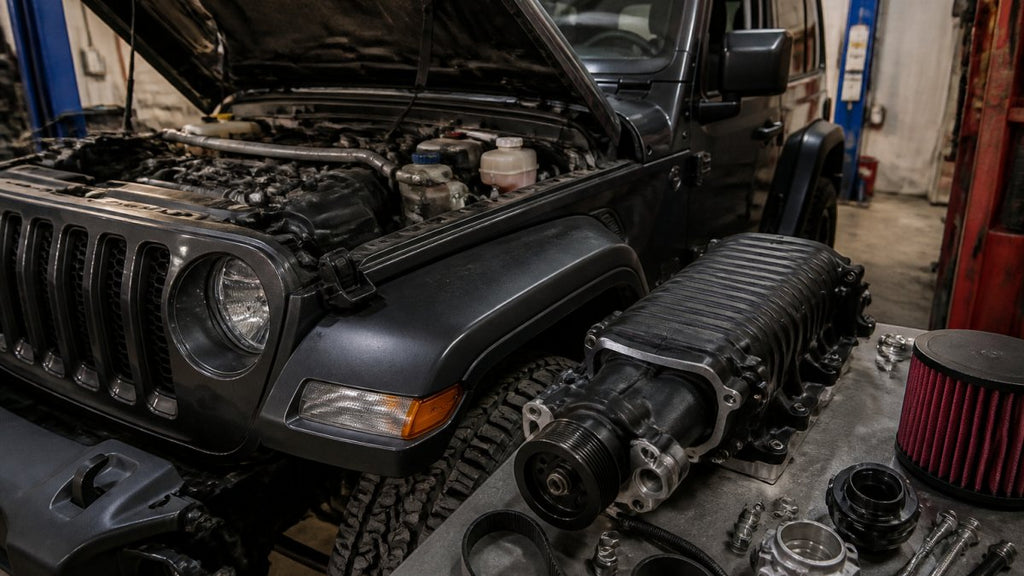
VT Superchargers has engineered kits specifically for this use case. The Jeep Wrangler 3.6L V6 Supercharger Kit at $5,500 delivers immediate boost response that transforms crawling capability. The low-end torque gains let you maintain momentum through technical sections without constant gear hunting. OEM-style fitment means no custom fabrication; bolt-on installation preserves warranty coverage and drivetrain reliability.
For overlanders, the [Suzuki Jimny JB74 Supercharger Kit](https://vtsuperchargers.com/products/suzuki-jimmy-supercharger-kit) provides 50% power increases on a platform that desperately needs it. The supercharger delivers immediate response at low RPM, maintaining drivability on challenging terrain.

Dust and debris filtration becomes critical in off-road scenarios. Superchargers pull intake air through the engine's air filter system, so your existing filtration handles boost air. However, increased air volume stresses standard filters. Upgrading to a high-flow air filter rated for forced induction improves reliability and maintains consistent boost pressure.
Watch Out
Never install a supercharger on a vehicle with marginal cooling capacity. Off-road forced induction generates sustained heat during crawling sessions. Inadequate cooling causes engine temperatures to spike, reducing boost pressure and creating reliability issues. Upgrade cooling systems before installing forced induction.
Installation Complexity, Warranty, and Daily Driving Drivability
The practical realities of installation and warranty coverage determine whether a forced induction upgrade actually gets completed and remains reliable long-term.
Bolt-On vs. Custom Fabrication Trade-Offs
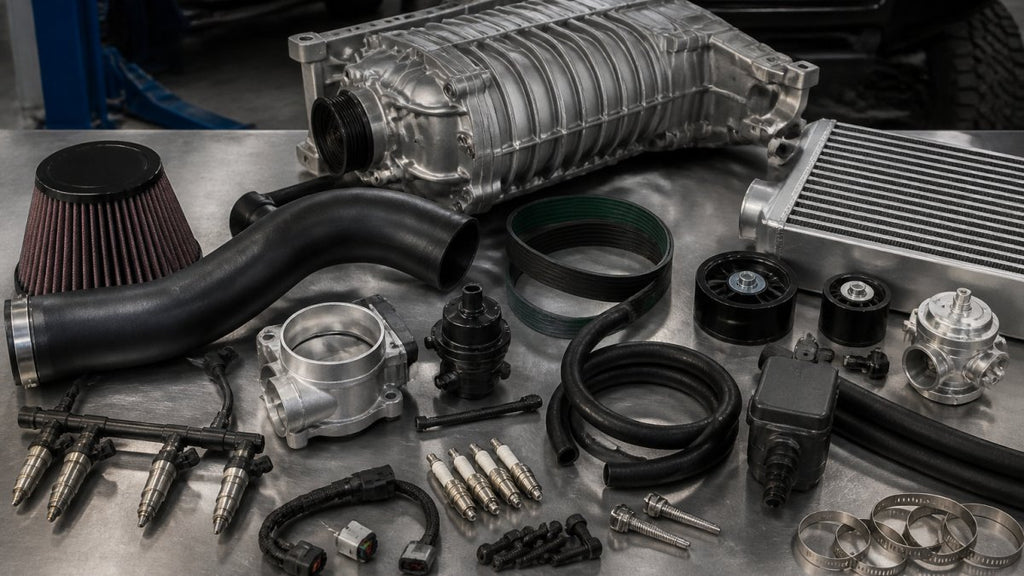
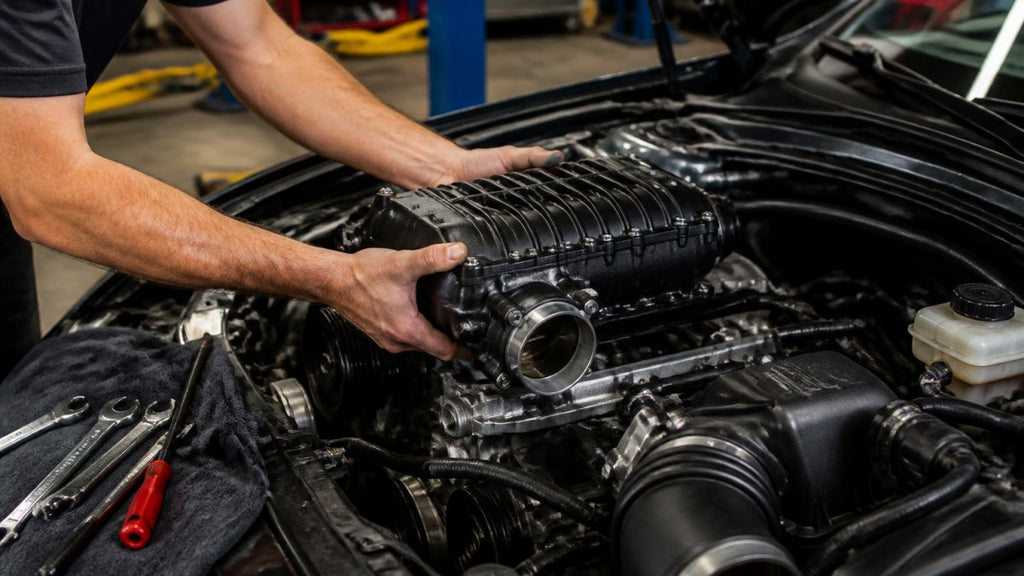
Bolt-on supercharger kits from VT Superchargers are engineered for specific vehicle platforms with OEM-style fitment. The kit arrives with all necessary brackets, hoses, and fasteners. Installation typically takes 8-16 hours for experienced DIY builders, or 2-4 hours for professional shops. No cutting, welding, or custom fabrication is required.
Custom fabrication kits require extensive modification. Custom brackets must be fabricated to fit your engine bay geometry. Intake manifolds might need modification. Exhaust systems require rerouting. Installation costs escalate to $2,000-$4,000 in labor alone. Warranty coverage becomes complicated because modifications fall outside factory specifications.
For daily drivers, bolt-on kits make sense. For weekend off-road vehicles where warranty matters less, custom fabrication might be acceptable if cost savings justify the complexity.
Powertrain Warranty and Long-Term Reliability
VT Superchargers backs its kits with a 24-month warranty covering defects in materials and workmanship. This protection extends to the supercharger unit itself, not the engine or transmission.
Properly installed bolt-on superchargers rarely cause engine or transmission problems. The forced induction is engineered to work within the vehicle's designed parameters. Modern engine management systems adjust fuel injection and ignition timing to accommodate increased air intake. Transmissions rated for the vehicle's stock torque output can handle moderate supercharger boost without modification.
The key is professional installation and realistic tuning expectations. A bolt-on supercharger adding 40-60% power maintains reliability; aggressive ECU tuning pushing boost pressure beyond safe limits risks drivetrain damage.
Daily driving drivability improves dramatically with forced induction. Off-road vehicles that struggle with gear hunting on highways suddenly feel responsive. A Tacoma with 35-inch tires that constantly downshifts now cruises effortlessly with the supercharger providing consistent torque. Towing capacity increases because low-end torque improves significantly.

The fuel economy trade-off varies by supercharger type. Centrifugal units show minimal impact at cruise speeds. Roots-style units typically cost 1-2 MPG. For vehicles spending significant time on highways, this matters. For primarily off-road vehicles, the efficiency loss is acceptable given the performance gains.
| Consideration | Bolt-On Kit | Custom Fabrication |
|---|---|---|
| Installation Time | 8-16 hours DIY | 20-40 hours |
| Installation Cost | $500-$1,500 labor | $2,000-$4,000 labor |
| Warranty Impact | Minimal | Significant |
| Reliability | Excellent | Good with proper tuning |
| Daily Drivability | Excellent | Excellent |
| Resale Value | Positive | Neutral |
Conclusion: Choosing Your Supercharger Alternative
Evaluating a procharger alternative for off road builds means understanding your specific priorities. If low-end torque and rock crawling performance matter most, Roots-style superchargers deliver superior results. If you're balancing off-road capability with highway efficiency, centrifugal designs make sense. If you need the absolute lowest cost entry point, nitrous oxide works. If you want naturally aspirated reliability without forced induction complexity, engine swaps solve the problem at higher cost.
Off-road performance doesn't require ProCharger's high-RPM efficiency. It requires predictable, sustained torque delivery at low engine speeds. VT Superchargers has engineered bolt-on kits for vehicles like the [Jeep Gladiator 3.6L](https://vtsuperchargers.com/products/jeep-gladiator-3-6l-v6-supercharger-kit) and Nissan Titan 5.6L that deliver exactly this performance profile. With 24-month warranty coverage, OEM-style fitment, and proven reliability on modified platforms, these kits transform off-road capability without custom fabrication complexity. Explore your options with confidence, knowing the right forced induction solution exists for your specific vehicle and driving priorities. Get started with VT Superchargers and experience the low-end torque response that rock crawling demands.
Frequently Asked Questions
What's the best supercharger alternative for off-road builds with larger tires?
For vehicles running larger tires that hunt gears on the highway, a roots-style supercharger provides instant boost pressure across the entire RPM range, delivering the low-end torque needed to pull heavy loads. Roots-style units maintain consistent boost delivery at lower RPMs where off-road crawling happens, unlike centrifugal designs that require higher engine speeds. Bolt-on kits like VT Superchargers' offerings deliver 40-60% power gains with OEM-style fitment, eliminating gear-hunting issues while preserving drivability and maintaining your factory warranty protection through their 24-month coverage.
How does a turbocharger compare to a supercharger for off-road performance?
Turbochargers use exhaust gases to spin a turbine, creating boost lag, a delay before power delivery. This lag is problematic off-road where instant throttle response is critical for rock crawling and technical terrain. Superchargers use engine-driven belts to provide immediate boost pressure without lag, delivering consistent torque across the entire RPM range. For off-road use, superchargers offer superior low-end torque and more predictable power delivery, though turbochargers may provide slightly better thermal efficiency on highway driving.
Will a supercharger void my factory warranty or cause engine reliability issues?
Quality bolt-on supercharger kits engineered with OEM-style fitment, like VT Superchargers' 24-month warranty coverage, are designed for reliability without voiding manufacturer coverage on non-forced-induction components. The key is proper ECU tuning and fuel system upgrades to handle increased manifold absolute pressure. Engine management adjustments ensure the fuel injectors and ignition timing adapt to forced induction, maintaining thermal efficiency and preventing heat soak. Professional installation and adherence to boost pressure specifications preserve powertrain reliability.
Is installing a supercharger kit a DIY job, or do I need professional help?
Bolt-on supercharger kits with precise OEM-style fitment are designed for experienced DIY installation, typically requiring 4-8 hours depending on your mechanical skill level. You'll need basic hand tools, a torque wrench, and familiarity with intake manifold removal. However, ECU tuning and fuel system upgrades often require professional dyno work to optimize boost pressure and throttle response safely. Many installers charge $1,500-$3,000 for labor, so factor this into your budget when comparing total installation costs against kit pricing.
What horsepower and torque gains should I realistically expect from a supercharger kit?
Bolt-on supercharger kits typically deliver 40-60% power increases depending on engine displacement and design. For example, VT Superchargers' Toyota Tacoma 3.5L kit adds 100 horsepower and 90 lb-ft torque, while the Land Cruiser 5.7L achieves 40-60% gains. Actual results depend on pulley ratio, intercooler efficiency, fuel system capacity, and ECU tuning. Roots-style superchargers generally produce more consistent low-end torque gains, while centrifugal designs peak at higher RPMs. Dyno testing after installation confirms your specific vehicle's volumetric efficiency improvements.
How do universal supercharger kits compare to vehicle-specific kits for off-road use?
Vehicle-specific bolt-on kits like VT Superchargers' engineered solutions offer OEM-style fitment with minimal bracket fabrication, ensuring compatibility with factory mounting points and under-hood clearance. Universal kits require extensive custom fabrication, affecting reliability and drivability. For off-road builds with modifications already in place, vehicle-specific kits maintain better weight distribution and thermal management. The precision fitment of engineered kits also simplifies ECU tuning and fuel injector upgrades, reducing installation complexity and long-term maintenance concerns.
This article was written using GrandRanker
Related post
09
Oct
RECENT POSTS