Ford Ranger Boost Upgrade Path That Makes Sense
Put 33s on a 2.3L Ford Ranger, load the bed with recovery gear, hook up a camper, then point it at a long grade. That is when the factory truck starts feeling like it is working overtime. The Ford Ranger boost upgrade path is not about chasing a dyno-sheet number for bragging rights. It is about getting back the low-end pull, passing power, and hill-climbing confidence your truck lost once it became a real truck.
We see this all the time. A Ranger owner comes in after adding a leveling kit, heavier wheels, a bed rack, sliders, and 33-inch tires. Around town, it is fine. On the highway, it downshifts hard. With a trailer behind it, the throttle feels buried and the truck still takes its time gathering speed. The 2.3L EcoBoost has a strong foundation, but every added pound and every extra inch of tire changes what you feel from the driver’s seat.
The right answer depends on how you use the truck. A daily-driven Ranger on 31s needs a different plan than an overland build crossing Colorado passes or a towing rig dragging a 4,000-pound boat through summer heat.
Start Your Ford Ranger Boost Upgrade Path With the Truck You Have
Before buying parts, be honest about the truck’s job. Most owners tell us they do not need a Ranger that feels wild for one wide-open-throttle pull. They want the truck to respond when they merge, stay in the right gear on a grade, and pull away cleanly with camping gear or a trailer attached.
For the 2019-2023 Ranger, the 2.3L EcoBoost and 10-speed transmission are very responsive to calibration changes. The 2024-and-newer Ranger uses a revised 2.3L setup, so do not assume a part, tune, or power claim for the earlier truck automatically applies. Verify model year, engine, emissions equipment, and transmission calibration before ordering anything. That is not paperwork. It is how you avoid a truck with warning lights, poor shifting, or a tune that does not match the hardware.
Also look at the basics. Fresh plugs, clean filters, healthy coils, no boost leaks, and up-to-date maintenance come first. If your truck has been towing, wheeling in dust, or running hot summers for 50,000 miles, fix the foundation before asking it to make more cylinder pressure. After installing hundreds of kits across boosted platforms, I can tell you the cleanest-running upgraded truck is usually the one that was maintained before the parts went on.
Stage One: Tuning Is Where the Ranger Wakes Up
A quality, vehicle-specific tune is usually the first meaningful move for a stock 2.3L Ranger. The factory turbo has more to give, and proper calibration can improve boost control, throttle response, torque delivery, and transmission behavior. You feel it most in the middle of the pedal. Instead of waiting for a downshift and a bunch of noise, the truck gets moving now.
That matters more than peak horsepower when you are passing an RV on a two-lane road or climbing a forest-service road with the bed loaded. One of the biggest complaints we hear is not that the Ranger is slow from a stop. It is that it feels flat once the speed climbs and the load comes on. A conservative tune can make that midrange feel much more useful.
But tune choice is where people get careless. Do not run an aggressive calibration built around premium fuel if you live somewhere you regularly end up with questionable 87 octane. Do not stack a generic handheld tune with mystery intake piping and assume the engine will sort it out. The Ranger’s EcoBoost responds well to smart changes, but knock control, intake-air temperature, fuel quality, and transmission strategy all matter.
For a daily driver, towing truck, or overland Ranger, I would rather see a conservative tune from a proven calibrator than a maximum-output file that feels great for two pulls and becomes inconsistent when the weather turns hot. Clean drivability wins. Every time.
Stage Two: Control Heat Before You Chase More Boost
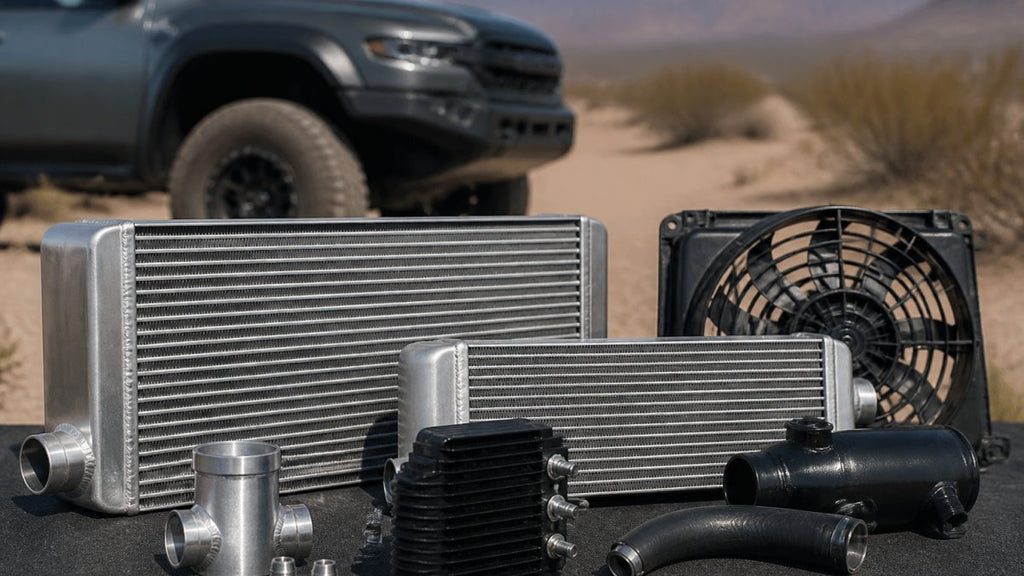
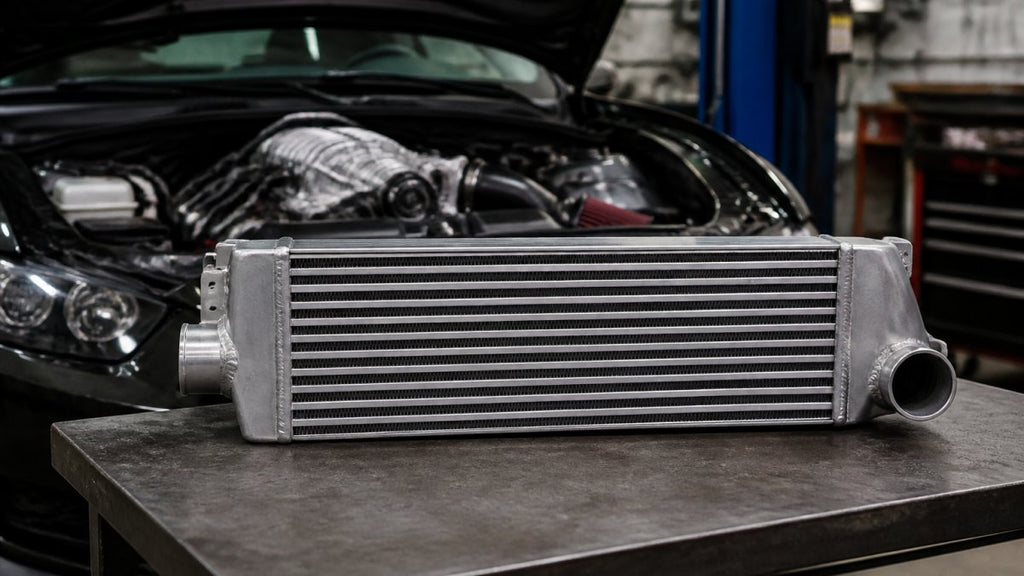
More boost makes more heat. That is the part people skip when they are shopping by price alone. The stock intercooler can become a bottleneck when you make repeated pulls, tow uphill, run higher elevation trails, or sit in traffic during a hot July afternoon.
A larger, well-designed intercooler helps the Ranger hold its power instead of feeling strong once and soft the next time you roll into it. This is not just a track concern. It is a real-world concern for a truck with 33s heading up I-70, towing a side-by-side through Arizona, or crawling all day and then merging onto the highway.
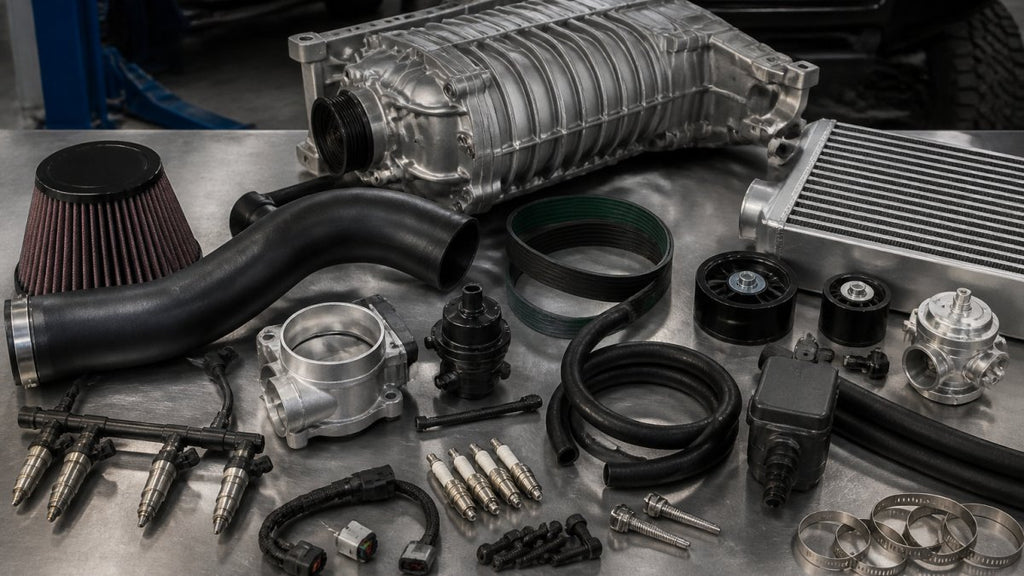
Look for a kit with clean fitment, solid couplers, proper brackets, and plumbing that does not rub through against the radiator support. Cheap clamps and loose charge pipes create the kind of boost leak that sends a customer back to the shop saying, “It was fast for a week.” Proper installation matters just as much as the intercooler core itself.
An intake can be worthwhile if it is designed to pull cool, protected air and does not create a fitment headache. It may sharpen turbo sound and support airflow, but do not expect an intake alone to transform your Ranger. The same goes for exhaust. A quality cat-back can change tone and reduce restriction behind the turbo, but it should be chosen because you want the sound and the supporting airflow - not because somebody promised it is the magic power part.
Stage Three: Match the Setup to Tires, Gears, and Towing
Bigger tires are the hidden power thief in Ranger builds. A 33-inch all-terrain or mud-terrain is heavier, taller, and harder to accelerate than the factory tire. Add beadlock-style wheels, a steel bumper, winch, rooftop tent, and a loaded cooler, and you have changed the truck’s effective gearing in a big way.
A tune and intercooler often make a 33-inch Ranger feel dramatically better, especially for everyday driving. But if you are on 35s, tow regularly, or spend a lot of time in mountain terrain, gearing should be part of the conversation. More boost can add torque, but it cannot fully erase a gear ratio that is too tall for the tire and load. Sometimes the best driving Ranger is not the one with the biggest turbo. It is the one where the calibration, tire size, gears, and cooling package agree with each other.
For towing, keep your expectations honest. Extra torque makes merging and grades easier, but it does not increase the truck’s rated towing capacity, improve trailer brakes, or replace proper weight distribution. Watch temperatures, use Tow/Haul when it makes sense, and make sure the trailer is set up correctly. More power should make towing less stressful, not encourage bad decisions.
When a Bigger Turbo Makes Sense
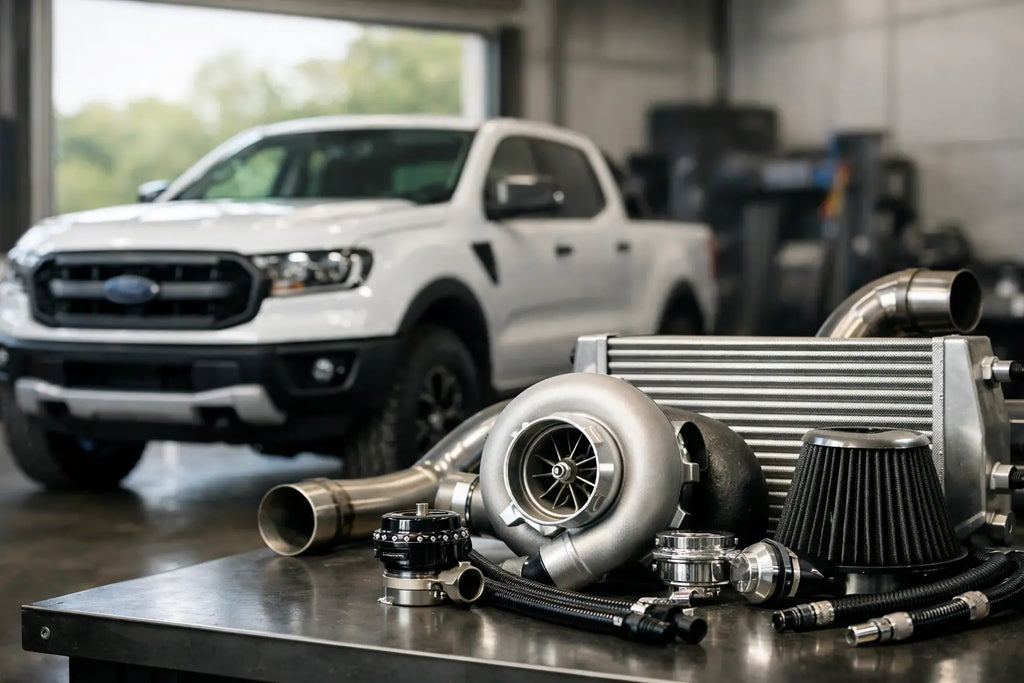
A larger turbo belongs later in the plan, not first. If you already have the fuel quality, tuning support, intercooler capacity, and maintenance handled, a bigger turbo can move the Ranger’s powerband higher and provide more top-end pull. It can be a good fit for an owner who runs premium fuel, wants stronger highway acceleration, and understands that custom calibration and supporting hardware are part of the deal.
For the average daily-driven Ranger, though, the stock turbo with a sensible tune and cooling upgrades is often the sweet spot. The factory turbo comes on quickly, which is exactly what you want when the truck is loaded, pointed uphill, or trying to pass without drama. Going bigger can trade some of that instant response for more power farther up the tach. That may be worth it for your build, but it depends on how you drive.
Avoid piecing together a high-boost setup from whatever happens to be on sale. The ECU is not a suggestion, the transmission is not an afterthought, and the cheapest charge pipe is rarely the part you want failing 200 miles from home. Use matching components, follow the calibration requirements, and work with an installer or tuner who knows the Ranger platform.
The Setup That Feels Right Every Day
For most 2019-2023 2.3L Ranger owners, the practical order is maintenance first, then a proven tune, then intercooler and charge-air improvements if the truck sees heat, towing, altitude, or repeated hard use. Add intake and exhaust only when they support your goals, not because the internet says every build needs them. Address gearing when tire size and weight have gone far beyond stock.
That path gives you a Ranger that still starts cleanly, idles normally, shifts like it should, and does not become a project every time you take a road trip. You press the pedal, it pulls. You hook up the trailer, it holds speed. You hit the trail loaded for the weekend, and the truck feels like it has something left in reserve. That is the kind of boost upgrade you will appreciate long after the first hard pull.
Related post
09
Oct
RECENT POSTS