Procharger vs Edelbrock for Daily Driving: 2026 Guide
Table of Contents
- Procharger vs Edelbrock for Daily Driving: Key Differences
- Power Delivery and Daily Drivability: Real-World Performance
- Edelbrock E-Force Reliability and Long-Term Durability
- Installation Complexity and Bolt-On Fitment
- Supercharger Installation Cost: Budget Breakdown
- Supercharger Maintenance for Daily Drivers
- Real-World MPG Impact and Fuel Economy Trade-Offs
- Street Legal Compliance and Insurance Considerations
Procharger vs Edelbrock for Daily Driving: 2026 Guide
Last Updated: July 30, 2026
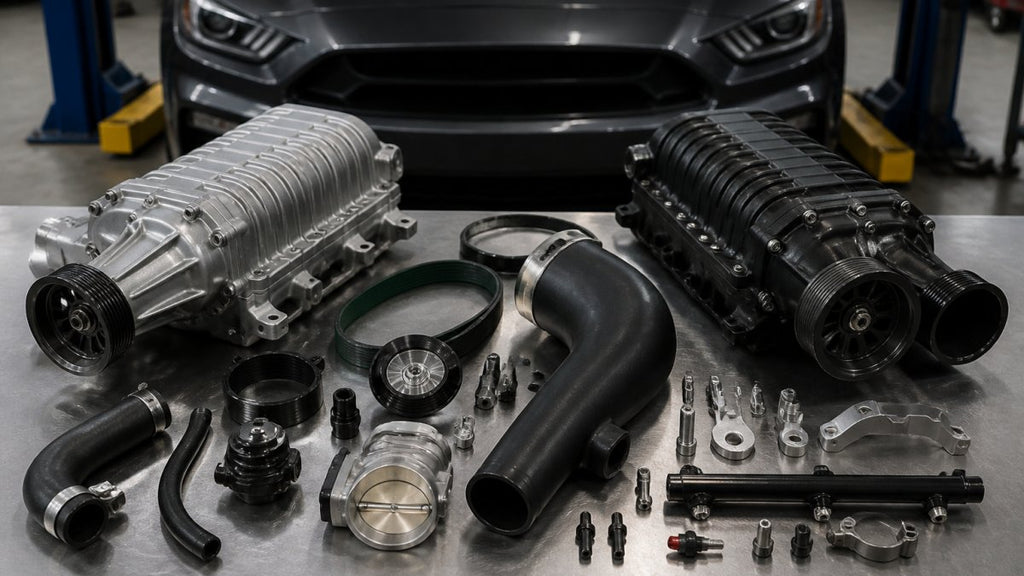
When choosing between forced induction options for your daily driver, the comparison of procharger vs edelbrock for daily driving comes down to fundamentally different engineering philosophies. Centrifugal superchargers and positive displacement blowers deliver power in distinctly different ways, and for daily commuting, that difference matters more than peak horsepower numbers suggest.
Procharger vs Edelbrock: Key Differences
Centrifugal superchargers like Procharger spin faster as engine RPM climbs, meaning boost builds gradually and peaks in the upper rev range. Edelbrock's positive displacement design delivers a more linear torque curve that starts building boost almost immediately off idle.
For daily driving, centrifugal superchargers feel more "normal" at low speeds because they produce minimal boost pressure until higher RPMs. Positive displacement blowers start pushing air into your engine right away, creating noticeable torque gain even at 1,500 RPM. The trade-off is heat: centrifugal designs compress air less aggressively, so intercooling requirements are lighter. Positive displacement blowers work harder at lower speeds, generating more heat that demands serious intercooling infrastructure.
Pro Tip
Centrifugal superchargers feel almost stock below 4,000 RPM, which is where most daily driving happens. If your commute involves sustained freeway speeds, that gradual boost curve means smooth acceleration when you need it.
Centrifugal vs Positive Displacement: Which Matters for Your Commute
Centrifugal superchargers use an impeller that spins internally, compressing air by accelerating it outward. Positive displacement blowers use rotating lobes or screws that trap air and force it into the engine.
For daily drivers, centrifugal's RPM-dependent nature creates delayed response in stop-and-go traffic. Positive displacement designs eliminate this lag almost entirely because the blower is mechanically linked to the engine, delivering meaningful torque at 1,500 RPM. However, positive displacement blowers create supercharger whine, that distinctive high-pitched noise from the lobes rotating. Centrifugal superchargers are quieter because the impeller creates less mechanical noise.
Centrifugal designs can run cooler and demand less fuel system upgrading because boost pressure stays moderate until higher RPMs. Positive displacement blowers work harder at all engine speeds, requiring stronger fuel systems and intercooling from day one.
Power Delivery and Daily Drivability: Real-World Performance
A centrifugal supercharger like Procharger feels almost stock at part throttle, with the boost gauge reading 2-3 PSI during highway merging. Positive displacement blowers like Edelbrock's E-Force change the engine's character immediately, with even gentle acceleration producing noticeable boost.
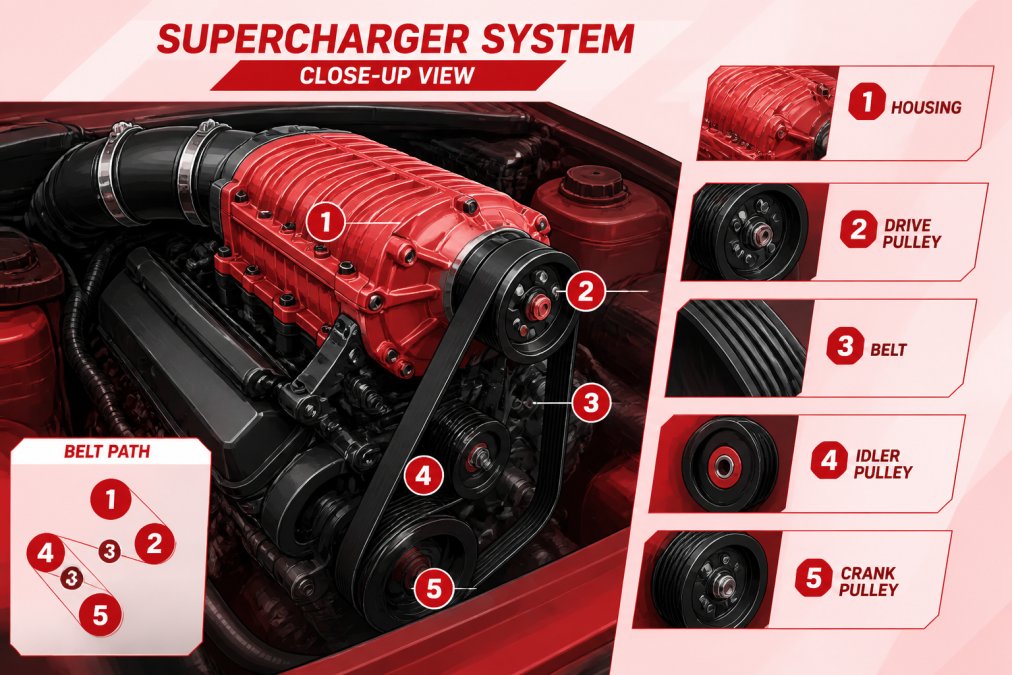
For daily driving, where you spend most of your time between 2,000 and 4,000 RPM, the positive displacement's mid-range torque advantage is more relevant than peak power. A centrifugal supercharger might make 450 RWHP at 6,500 RPM while producing 380 lb-ft of torque at 5,000 RPM, whereas an equivalent positive displacement blower makes 420 RWHP but delivers that 380 lb-ft at 3,000 RPM.
Key Takeaway
The best daily driver supercharger delivers usable power where you actually drive. Centrifugal designs excel at high-RPM punch. Positive displacement designs excel at responsive, immediate torque. Choose based on your driving pattern, not the spec sheet.
Centrifugal superchargers run cooler at part throttle because they're not compressing air as aggressively. Positive displacement blowers generate heat immediately because they're working harder at all engine speeds. A centrifugal system might get away with a smaller air-to-air intercooler, while a positive displacement design often requires an air-to-water intercooler to maintain engine safety during sustained driving.
Boost Lag, Throttle Response, and Street Manners
Boost lag is the delay between pressing the throttle and feeling power arrive. Centrifugal superchargers experience this lag because the impeller needs time to spin up. Positive displacement blowers essentially eliminate boost lag because the lobes are mechanically connected to the engine, making parking lot driving and stop-and-go traffic feel responsive and controllable.
Positive displacement blowers can feel twitchy at low speeds if tuned aggressively. A centrifugal design naturally feels smoother because low-speed boost pressure is minimal. Street manners favor centrifugal designs for most daily commuters because the gradual boost curve means fewer surprises and better engine longevity.
Edelbrock E-Force Reliability and Long-Term Durability
Edelbrock's E-Force positive displacement superchargers have a solid reputation for durability when properly maintained. The real reliability question isn't whether the supercharger itself fails, but whether the engine can handle sustained boost pressure without modification. A stock engine pushed hard by a positive displacement blower will heat-soak faster than one with a centrifugal design.
Centrifugal superchargers impose fewer demands on supporting systems because boost pressure stays low until higher RPMs. A stock fuel system can often handle a centrifugal installation with minimal modification.
Watch Out
The most common reliability issue with positive displacement superchargers is heat soak during sustained driving. If your intercooling system isn't adequate, engine knock can develop during heavy traffic or highway driving. Budget for proper intercooling before committing to a positive displacement design.
Warranty Coverage and Engine Longevity
Most aftermarket supercharger manufacturers, including Edelbrock and Procharger, offer 24-month warranties on their products. VT Superchargers backs all kits with a 24-month warranty, protecting against manufacturing defects and component failure. However, warranty coverage doesn't extend to engine damage caused by improper tuning, inadequate cooling, or fuel system limitations.
Engine longevity depends heavily on tuning and cooling. A centrifugal supercharger running conservative boost levels can last indefinitely with minimal stress on internal components. Positive displacement blowers push the engine harder at all speeds, accelerating wear on pistons, rings, and bearings. The solution for positive displacement reliability is engine building with forged pistons, upgraded rods, and stronger bearings, an expensive upgrade.
Installation Complexity and Bolt-On Fitment
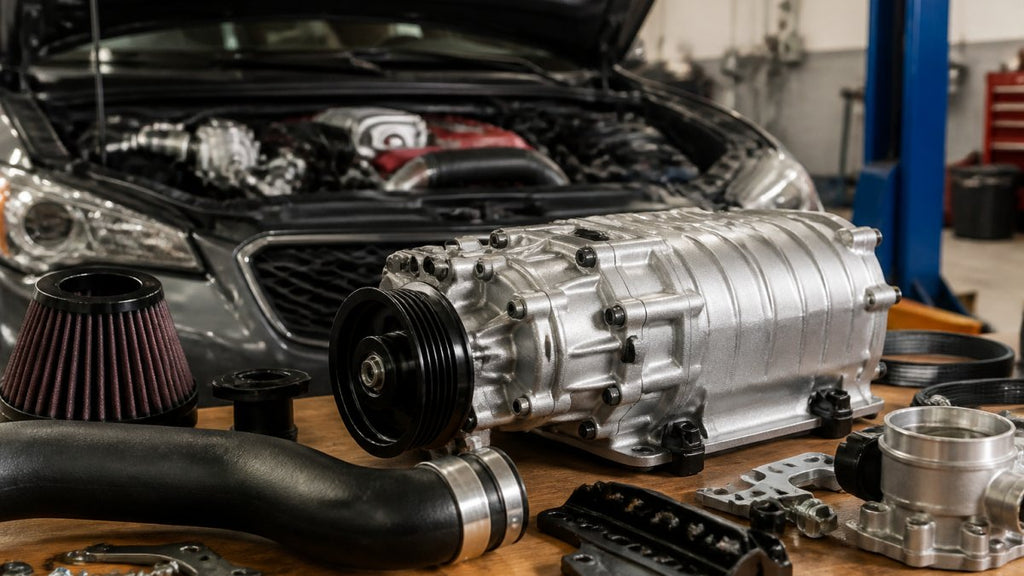
Both Procharger and Edelbrock E-Force kits are marketed as bolt-on designs. Centrifugal superchargers like Procharger use a belt drive system that wraps around the crankshaft pulley, requiring removal of the alternator, power steering pump, and sometimes the air conditioning compressor. Edelbrock E-Force kits often require more custom fabrication because the positive displacement blower is bulkier than a centrifugal impeller.
For vehicles with tight engine bays, centrifugal designs often fit more easily because the impeller is smaller. Professional installation costs vary widely but expect $1,500 to $3,000 in labor for either design.
OEM-Style Fitment and Intercooling Considerations
Procharger kits generally achieve better OEM fitment because centrifugal designs are compact. Edelbrock E-Force kits also aim for OEM fitment, but positive displacement blowers are larger, creating fitment challenges on some vehicles.
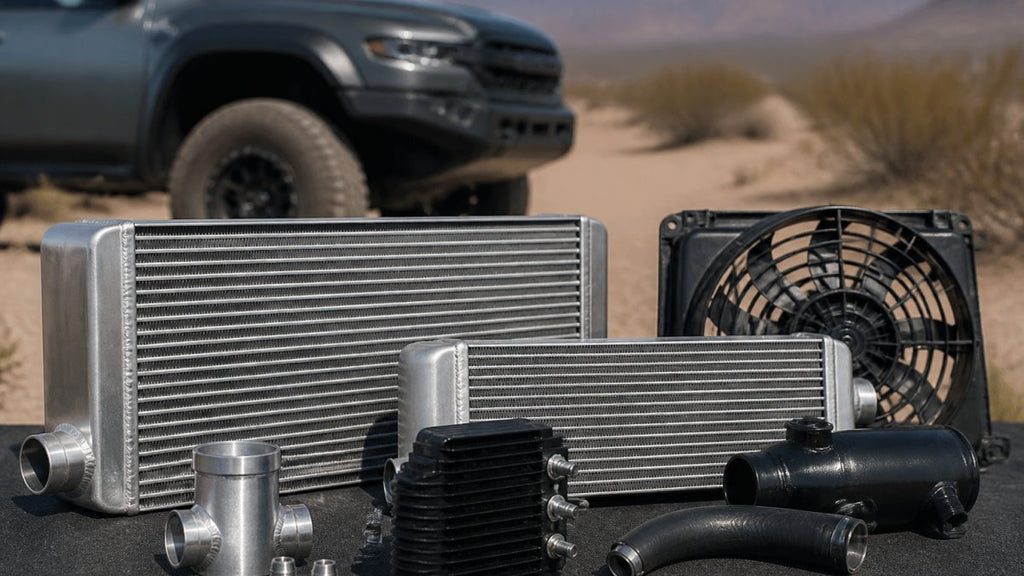
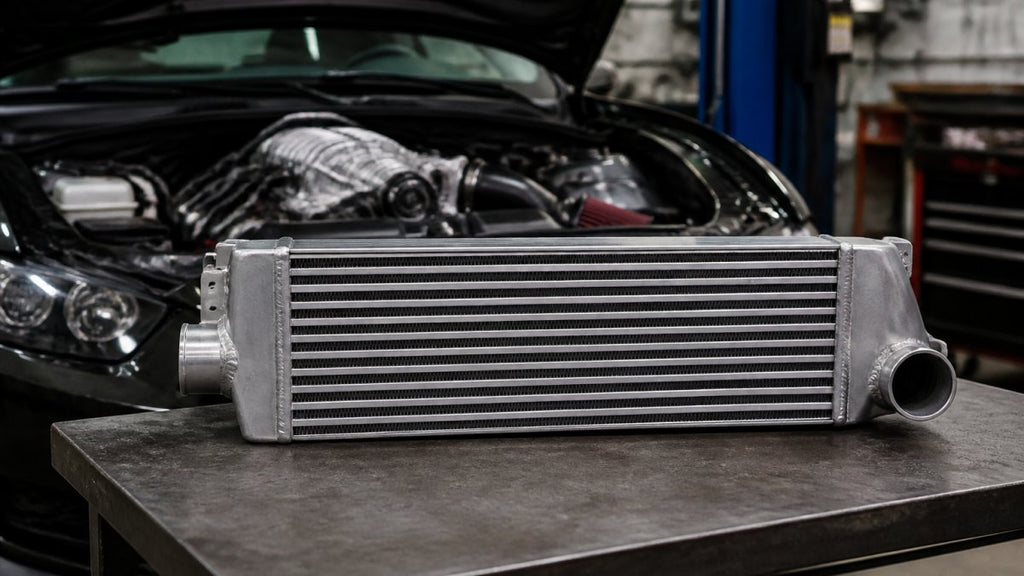
Intercooling is where the two designs diverge dramatically. Centrifugal superchargers run cool enough that many installations use air-to-air intercoolers, essentially a radiator that cools compressed air before it enters the engine. Positive displacement blowers generate more heat, which often demands air-to-water intercoolers that use coolant circulated through a separate radiator. For daily drivers, the intercooling difference is significant, a centrifugal system with a simple air-to-air intercooler is cleaner, lighter, and more reliable.
Supercharger Installation Cost: Budget Breakdown
The total cost of installing a supercharger includes the kit itself, supporting modifications, professional installation labor, and tuning. For a centrifugal system, expect to budget $4,500 to $7,000 total. For a positive displacement system, budget $5,500 to $9,000.
Kit cost varies by vehicle platform and manufacturer. Procharger kits typically range from $2,500 to $4,500. Edelbrock E-Force kits run $2,800 to $4,200. Supporting modifications add significant expense: fuel system upgrades run $800 to $1,500, intercooling systems run $600 to $2,000, and exhaust modifications might add another $400 to $1,000. Professional installation labor typically runs $1,500 to $3,000. Tuning is essential and costs $400 to $1,500 depending on comprehensiveness.
Pro Tip
The cheapest [supercharger installation](/products/toyota-4runner-4-0-supercharger-kit) is rarely the best value. A $4,500 total cost that includes proper fuel system upgrades and professional tuning will last longer and perform better than a $3,500 installation that skips these steps.
DIY vs Professional Installation and Hidden Expenses
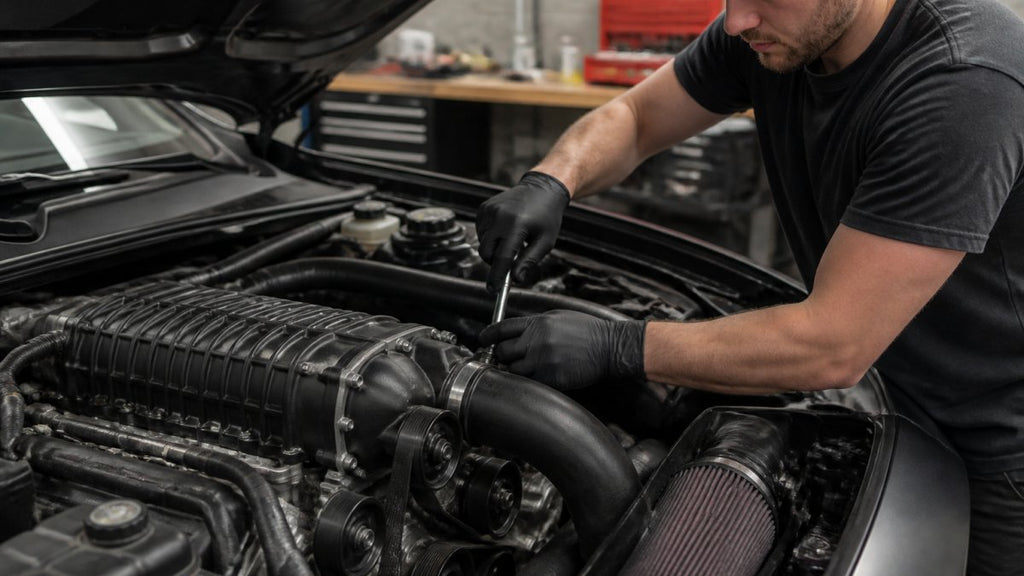
Installing a supercharger yourself is possible if you have mechanical skills, proper tools, and patience. However, mistakes are expensive. Professional installation eliminates most risk and is worth the cost for a daily driver where reliability matters.
Hidden expenses emerge constantly during supercharger installation. Budget 10-15% above your initial estimate for unexpected costs. If you plan to spend $6,000, budget $7,000.
Supercharger Maintenance for Daily Drivers
Centrifugal superchargers require minimal maintenance beyond normal engine care. The belt needs periodic inspection every 30,000 miles. Positive displacement blowers have slightly higher maintenance demands, with most manufacturers recommending checking supercharger oil level at regular intervals.
Intercooler maintenance depends on type. Air-to-air intercoolers need occasional cleaning to remove debris from the cooling fins. Air-to-water intercoolers require monitoring of coolant level and condition. Replace the fuel filter every 15,000 miles instead of 30,000, and change oil every 5,000 miles instead of the stock interval. Monitor boost pressure and engine knock regularly.
Fuel System Upgrades, Tuning, and Cold-Start Performance
A supercharger forces more air into the engine, which demands proportionally more fuel to maintain the correct air-fuel ratio. Upgrading the fuel pump, injectors, and fuel pressure regulator is essential. Fuel pump upgrades typically cost $400 to $800. Fuel injectors cost $300 to $600 and require professional installation and tuning.
Tuning optimizes fuel delivery, ignition timing, and boost pressure for your specific engine and vehicle. Cold-start performance is critical for daily drivers, as cold engines are harder to tune because they run richer and knock more easily. Some supercharger systems use boost by gear, meaning boost pressure increases as you shift into higher gears, which prevents excessive boost during acceleration in low gears and benefits daily drivers.
Real-World MPG Impact and Fuel Economy Trade-Offs
Superchargers don't improve fuel economy, they reduce it. A centrifugal supercharger used conservatively might reduce fuel economy by 10-15%. A positive displacement blower reduces fuel economy more aggressively because it produces boost at low RPMs where you spend most of your time during city driving, resulting in 20-25% reduction.
Highway driving shows different patterns. At constant highway speed, a supercharger isn't producing much boost, so fuel economy approaches stock levels. A centrifugal system might see only 5-10% fuel economy loss on the highway. Some drivers offset fuel economy loss by tuning conservatively, using lower boost pressure and avoiding aggressive acceleration except when necessary.
Street Legal Compliance and Insurance Considerations
Supercharger legality varies by state and local jurisdiction. Most states allow bolt-on superchargers if they don't modify emissions systems or exceed noise limits. CARB EO (Executive Order) approval means the California Air Resources Board has tested the supercharger and determined it doesn't increase emissions beyond acceptable levels. Procharger and Edelbrock both pursue CARB approval for their kits on popular vehicles, but not all applications are approved.
Check your local emissions regulations before purchasing a supercharger. Noise regulations also matter, as superchargers are louder than stock engines, particularly positive displacement designs with their characteristic whine.
Most insurance companies don't increase premiums for bolt-on superchargers if they're disclosed. However, some insurers view any engine modification as grounds for denial of claims if the modification contributed to an accident or mechanical failure. Get a quote from your insurer before committing to a supercharger installation. Keep all receipts, tuning logs, and professional installation records to prove the supercharger was installed professionally and properly tuned.
Choosing between procharger vs edelbrock for daily driving ultimately depends on your driving pattern, budget, and tolerance for complexity. Centrifugal designs like Procharger excel at providing responsive high-RPM power while maintaining stock-like low-speed manners. Positive displacement designs like Edelbrock's E-Force deliver immediate torque and aggressive performance but demand more cooling infrastructure and careful tuning.
For most daily drivers, VT Superchargers' bolt-on kits provide the precision fitment and 24-month warranty you need to upgrade with confidence. Our engineered solutions deliver real performance gains without requiring custom fabrication or extensive engine modifications. Whether you choose centrifugal or positive displacement technology, proper installation and professional tuning are non-negotiable. Register with VT Superchargers today and explore kits engineered specifically for your vehicle's needs.
| Aspect | Centrifugal (Procharger) | Positive Displacement (Edelbrock) | Winner for Daily Drivers |
|---|---|---|---|
| Boost Lag | Moderate (builds with RPM) | Minimal (instant response) | Edelbrock |
| Low-RPM Torque | Moderate | Strong | Edelbrock |
| Heat Generation | Lower | Higher | Procharger |
| Intercooling Needs | Simple air-to-air | Often requires air-to-water | Procharger |
| Street Manners | Stock-like at part throttle | Responsive but aggressive | Procharger |
| Fuel Economy Loss | 10-15% | 20-25% | Procharger |
| Installation Complexity | Straightforward | May require fabrication | Procharger |
| Engine Stress | Lower | Higher | Procharger |
| Supercharger Whine | Quiet | Pronounced | Procharger |
| Peak Power | High (upper RPM) | Moderate | Procharger |
SAE International performance standards for forced induction systems
EPA emissions testing procedures for modified vehicles
Automotive Engineering magazine on supercharger design comparison
Frequently Asked Questions
What are the main differences between Procharger and Edelbrock superchargers for daily driving?
Procharger uses centrifugal forced induction technology, which produces minimal boost lag and quieter operation, ideal for daily commuting. Edelbrock E-Force systems use positive displacement mechanics, delivering stronger low-end torque and mid-range response but with slightly more supercharger whine. For daily drivers, Procharger excels in throttle response and drivability, while Edelbrock prioritizes peak power and usable torque across the RPM band. Both offer bolt-on installation and OEM-style fitment, but their power delivery characteristics suit different driving priorities.
How does centrifugal vs positive displacement affect daily driving performance?
Centrifugal superchargers (Procharger style) spin faster as RPM increases, minimizing boost lag and providing smooth, linear power delivery, perfect for highway cruising and responsive acceleration. Positive displacement units (Edelbrock E-Force) deliver consistent boost pressure immediately, offering stronger low-end torque and mid-range punch for towing or gear-hunting with larger tires. For pure daily drivability and fuel economy, centrifugal designs are gentler on engines and provide more predictable street manners. Positive displacement excels when you need immediate torque response off-the-line.
What is the real cost of supercharger installation, and should I DIY or hire a professional?
Installation costs vary by vehicle and supercharger type. Bolt-on kits from VT Superchargers are engineered for OEM-style fitment, reducing labor complexity. DIY installation typically requires 6-12 hours and basic mechanical skills; professional shops charge $1,500-$3,000+ for labor alone. Hidden expenses include fuel system upgrades, tuning (dyno sessions), intercooler installation, and potential pulley size adjustments. For daily drivers without prior experience, professional installation ensures proper heat management, boost pressure calibration, and warranty protection. Budget $5,000-$8,000 total for a complete, reliable bolt-on system.
Will a supercharger void my factory warranty, and how reliable are these systems for daily driving?
Most OEM warranties do not explicitly cover forced induction modifications, but a 24-month aftermarket warranty (like VT Superchargers provides) protects against defects in the supercharger kit itself. Engine longevity depends on proper tuning, fuel system upgrades, and maintenance. Quality bolt-on kits with air-to-air intercoolers manage heat soak effectively, reducing engine stress. Daily drivers experience excellent reliability when using quality components, avoiding extreme boost pressure, and maintaining regular service intervals. Edelbrock E-Force systems are known for durability; Procharger centrifugal units similarly perform well when installed correctly.
How much will a supercharger impact my fuel economy on a daily driver?
Real-world MPG impact depends on driving habits and boost pressure. Daily drivers typically see 1-3 MPG loss in city driving due to increased engine load, but highway cruising (where boost is minimal) shows minimal change. Centrifugal superchargers like Procharger generally preserve fuel economy better than positive displacement units because they only produce boost at higher RPMs. Proper tuning and intercooling (air-to-water or air-to-air systems) reduce heat soak and improve efficiency. Conservative driving with moderate boost pressure minimizes fuel consumption while maintaining responsiveness and performance gains.
This article was written using GrandRanker
Related post
09
Oct
RECENT POSTS