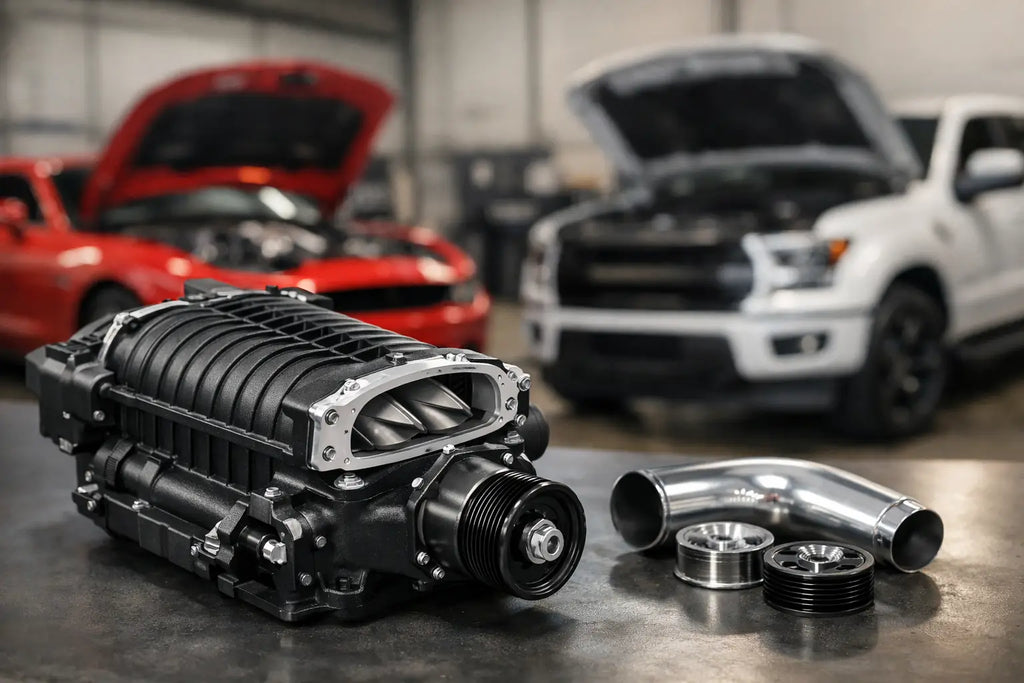
Vehicle Specific Supercharger Buying Guide
Your Tacoma felt fine on stock tires. Then came the 33s, steel bumpers, camping gear, a rooftop tent, and maybe a trailer behind it. Now it drops two gears on every grade and passing a semi takes a written plan. This vehicle specific supercharger buying guide is for owners who are tired of building a capable rig that feels slower with every upgrade.
A supercharger is not a universal part you order because the box says it makes big horsepower. The right kit has to match your exact engine, model year, transmission, use case, and the parts already bolted to the truck, SUV, or car. Get that right and the vehicle still starts, idles, cruises, and drives like it should - except it finally has the torque to move.
Start With the Exact Vehicle, Not the Vehicle Badge
"Toyota Tacoma" is not enough information. A 2012 4.0L Tacoma, a 2019 3.5L Tacoma, and a 2024 Tacoma are completely different conversations. Same deal with a Dodge Charger: engine, year, drivetrain, and factory calibration matter. A kit engineered around a particular application is built around the intake routing, accessory drive, fuel system, ECU strategy, hood clearance, and cooling package on that vehicle.
Before looking at boost numbers, confirm the year, model, engine, drivetrain, and transmission. Verify trim details where they affect fitment. Take a picture of the engine bay and make a real list of modifications. We see this all the time: an owner assumes two engines are the same because displacement matches, then finds out the brackets, sensors, or calibration are not.
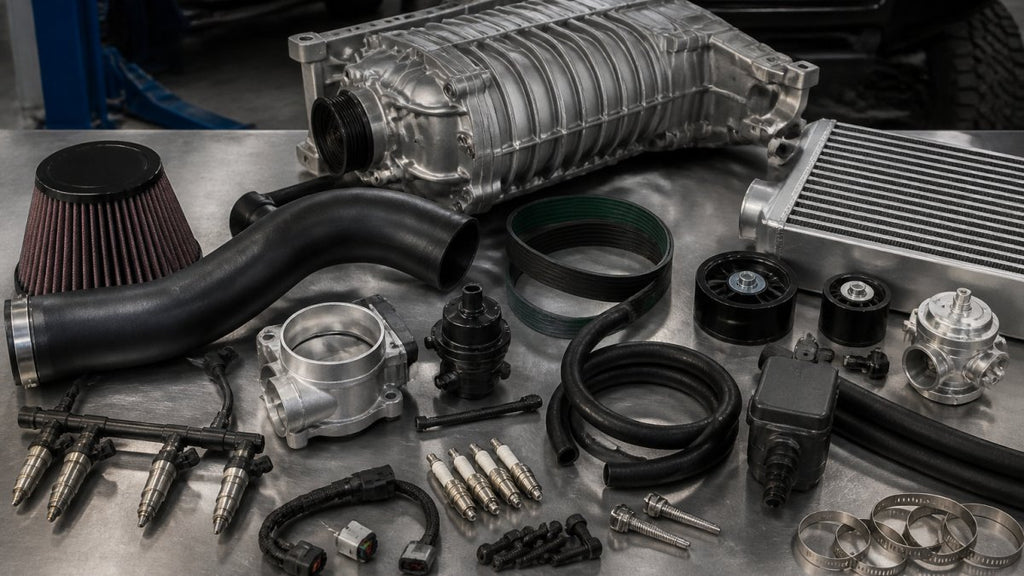
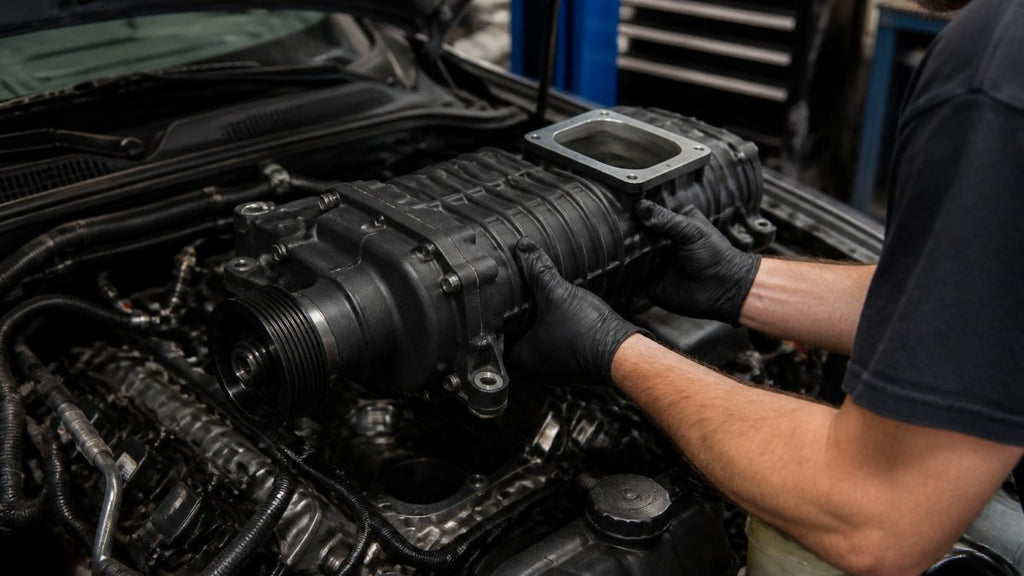
This is where a true bolt-on package earns its keep. You want components that land where they belong, belts that track correctly, hoses that clear, and a calibration built for the engine you actually own. Making a kit fit is not the same as a clean installation.
Choose Torque for the Way You Drive
Peak horsepower gets the attention. Midrange torque is what you feel when the trailer is loaded, the road turns uphill, or the Jeep has 35-inch tires and four people inside.
Most owners tell us they do not need to race from every stoplight. They want to merge without burying the throttle. They want the 4Runner to stop hunting between gears on a mountain pass. They want a Nissan Frontier to pull a small camper without feeling like it is working itself to death. They want a Mazda 3 that feels eager in the middle of the rpm range, not only at redline.
That is why the best street-driven supercharger setup is usually not the wildest one. A properly matched kit delivers power in a predictable way. Throttle response gets sharper, but it should not become touchy or jerky in traffic. The vehicle should still be easy to hand to your spouse, valet, or buddy without a five-minute warning speech.
For truck and SUV owners, be honest about the load. A stock-height Tacoma on factory-size tires has different needs than an overland build with armor, 34s, a bed rack, recovery gear, and a trailer. Bigger tires effectively make the gear ratio taller. The engine has to work harder just to turn them. More usable torque brings back the punch you lost.
In This Vehicle Specific Supercharger Buying Guide, Tune Matters
One of the biggest complaints we hear is from owners who have bought power parts separately, then get stuck trying to make everything agree. They have an intake from one company, headers from another, a mystery tune, and a drivability issue nobody wants to own.
A supercharger kit is an engine system. Airflow, fuel delivery, ignition timing, boost control, cooling, and transmission behavior all need to work together. The tune is not an afterthought you deal with after the hardware is installed. It is part of why the vehicle runs cleanly in July heat, cold starts normally in January, and does not surge while creeping through a parking lot.
Ask what calibration is supplied, what fuel it requires, and whether your vehicle needs any supporting changes. Do not assume every kit is intended for every octane level or every aftermarket part combination. If you live where premium fuel is hard to find, that needs to be part of the buying decision, not a surprise after installation.
For automatic vehicles, pay attention to how the added power works with the transmission. Good power delivery reduces the constant downshifting owners hate on grades. But it also needs to be controlled enough that the transmission is not constantly reacting to an overly aggressive throttle map. After installing hundreds of kits, that smooth, OEM-like behavior is what separates a vehicle you enjoy every day from one that becomes a weekend headache.
Check the Parts Already on Your Rig
Modifications are not automatically a problem. They just need to be known before you order. Common items worth discussing include long-tube headers, aftermarket exhaust systems, cold-air intakes, auxiliary lighting brackets, winches, lift kits, oversized tires, body lifts, and non-stock cooling components.
On a Jeep Gladiator, the tire size and gearing tell a big part of the story. A Gladiator on 37s with stock gears may feel flat even with more engine power because the whole combination is working against itself. A supercharger can transform the way it climbs and passes, but it does not erase basic drivetrain math. Sometimes the smart long-term answer includes re-gearing, especially for a heavily loaded off-road build.
On Toyota 4Runners and Tacomas, owners often add weight before they add power. Skid plates, sliders, bumpers, drawer systems, and roof gear add up fast. On a Suzuki or Nissan platform with fewer aftermarket choices, a vehicle-specific kit is even more valuable because you are not piecing together a custom setup with questionable fitment.
Tell the installer everything. The small detail that seems unrelated - like an accessory bracket, a relocated battery, or a non-stock intake tube - can determine whether installation is straightforward or turns into a fabrication project.
Decide Who Will Install It Before It Shows Up
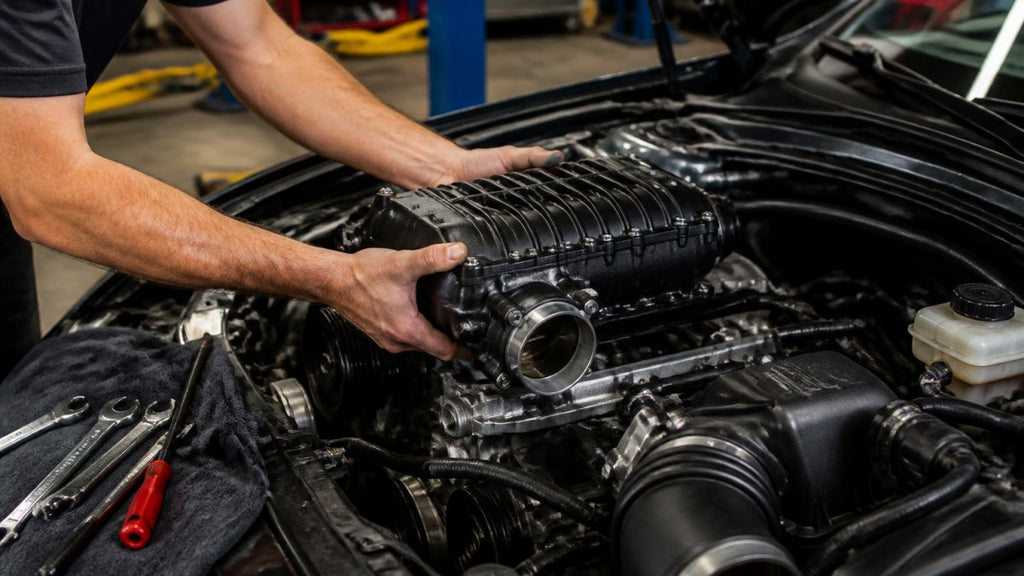
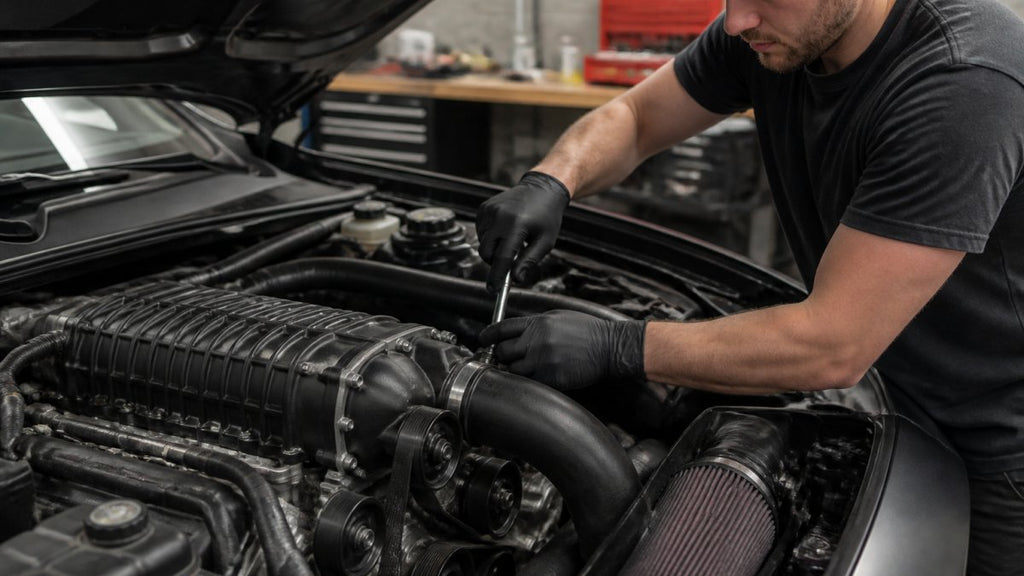
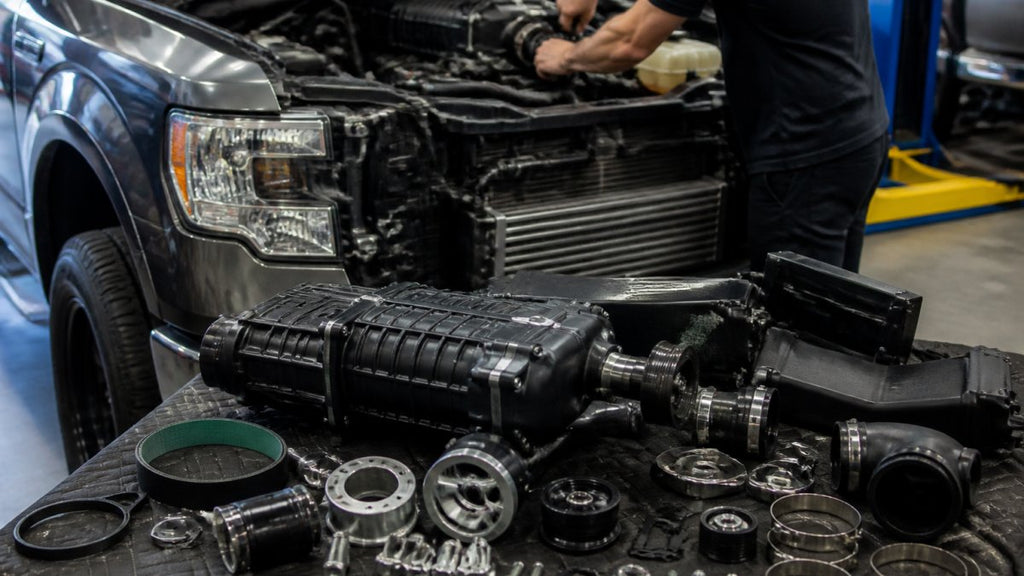
A clean kit can be installed by a capable owner with the right tools, time, and patience. But be realistic. This is not a Saturday afternoon oil change. Expect careful disassembly, correct torque procedures, fluid handling, wiring or sensor work where required, belt alignment checks, and calibration steps.
If you are using a shop, choose one that understands forced induction and your platform. An approved installer or tuner is worth considering when you want support from people who have seen the kit before. Ask who handles the first startup, calibration loading, diagnostics, and any issue that shows up after the install. You want clear answers before the vehicle is on a lift with half the intake system removed.
Do not shop installation on price alone. The cheapest quote can get expensive when hardware is missing, hoses are routed poorly, or a shop starts guessing at a tune. Good installation work is usually obvious when you open the hood: nothing is rubbing, wiring is secured, clamps are accessible, and the system looks like it belongs there.
Buy for the Next 50,000 Miles
The right question is not just, "How much power does it make?" Ask how it will fit into your ownership plan. Is the vehicle a daily driver? Does it tow in summer heat? Does it see washboard roads, snow, steep grades, or long highway trips? Are you likely to add bigger tires next year?
Reliability comes from matching the kit to the application, using the required fuel, following service intervals, and not stacking random power parts without a plan. Keep an eye on belts, fluid condition, clamps, and filters just like you would with any serious upgrade. More power does not have to mean fragile power, but it does mean you need to maintain the system you installed.
Warranty coverage and real support matter here. When something needs an answer, you want a company that knows the application, not a generic parts seller reading from a catalog. VT Superchargers builds its approach around vehicle-specific packages because owners need more than a blower and a promise.
Buy the kit that makes your particular vehicle better at its actual job. If your 4Runner needs to pull hard through a mountain pass, build for that. If your Charger needs stronger street response without becoming a temperamental project, build for that. Bolt it on, treat the supporting pieces with respect, and enjoy the first hill where your vehicle finally feels like it has something to say.
Related post
09
Oct
RECENT POSTS