Alternatives to Factory Supercharger Pulleys
Table of Contents
- Why Factory Supercharger Pulleys Limit Your Build
- How Much Horsepower Do Superchargers Add With a Pulley Change?
- Supercharger Pulley Upgrade Risks You Need to Know
- ECU Tuning for Forced Induction: Why It's Not Optional
- Pulley Size Comparison and Pricing Breakdown
- Supporting Mods That Keep Your Pulley Upgrade Reliable
- Conclusion
- Frequently Asked Questions
Last Updated: September 12, 2026
Why Factory Supercharger Pulleys Limit Your Build
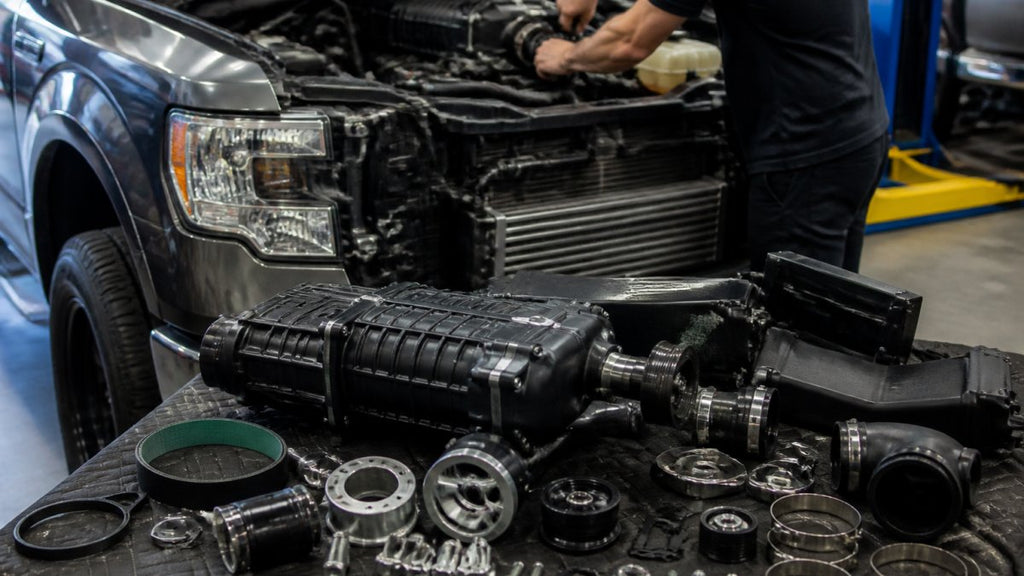
Factory supercharger pulleys are sized by the manufacturer to deliver a modest, warranty-safe boost increase, which is why they leave so much power on the table. The pulley diameter controls how fast the blower spins relative to the crank, and stock sizing keeps that speed conservative to protect the engine and the drivetrain.
Swapping to a smaller pulley is one of the most cost-effective alternatives to factory supercharger pulleys, because it raises blower rpm without touching the blower itself. The trade-off is real, though: more boost means more heat, more demand on fuel and ignition, and less margin for error. This guide from VT Superchargers breaks down what a pulley change actually delivers, what it risks, and which supporting upgrades keep the whole system together.
Key Takeaway
A pulley change is a boost multiplier, not a power source. It only produces reliable horsepower when the fuel, ignition, and cooling systems can keep up with the extra airflow.
How Much Horsepower Do Superchargers Add With a Pulley Change?
There is no single number, and any guide that quotes one is guessing. Gains depend on blower type, pulley ratio, elevation, fuel quality, and how well the ECU is calibrated. A common approach is to treat the pulley as a percentage increase in blower speed, then estimate airflow gains from there.
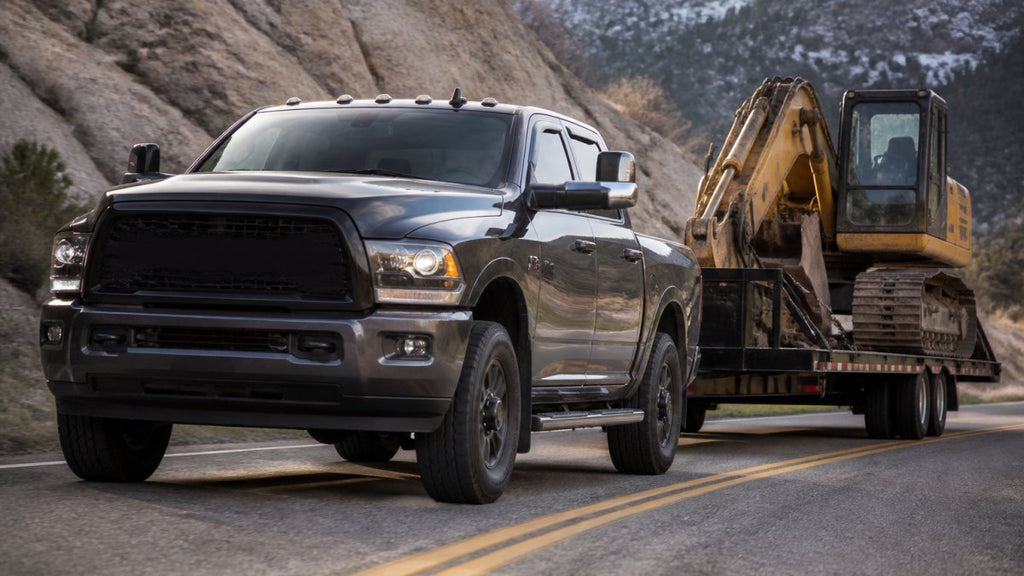
What matters more than a headline figure is the acceleration curve. A pulley that adds strong mid-range torque transforms how a truck feels on a grade or a trail, even when peak horsepower barely moves. For towing and off-road use, that low-end response is usually the gain owners actually notice.
- Smaller pulley diameter increases blower rpm and boost
- Real gains show up in the mid-range, not just at redline
- Heat and intake air temperature rise with boost, which can erase gains
- Fuel octane and injector capacity set the practical ceiling
That last point is where most builds stall. Adding boost without addressing fuel delivery produces knock, and the ECU pulls timing to protect the engine, which quietly cancels out the power you paid for.
Supercharger Pulley Upgrade Risks You Need to Know
The biggest risk of a pulley change is detonation, and it gets worse the more boost you add without supporting changes. Higher blower speed raises intake air temperature and cylinder pressure at the same time, which is exactly the combination that pushes pump fuel past its limits.
Other risks worth naming:
- Belt slip from a pulley that changes the drive ratio without a matching belt and tensioner setup
- Reduced supercharger lifespan when the blower spins well past its designed efficiency range
- Drivetrain stress on stock clutches, driveshafts, and axles that were never sized for the extra torque
- Warranty exposure if the modification is tied to a failure the manufacturer can attribute to it
Watch Out
Running a smaller pulley on 87-octane fuel is the fastest way to damage a forced-induction engine. Knock under boost can crack pistons before the driver hears anything. Match octane to boost or leave the stock pulley alone.
None of this makes pulley swaps a bad idea. It makes them a decision that has to be paired with the right supporting work.
ECU Tuning for Forced Induction: Why It's Not Optional
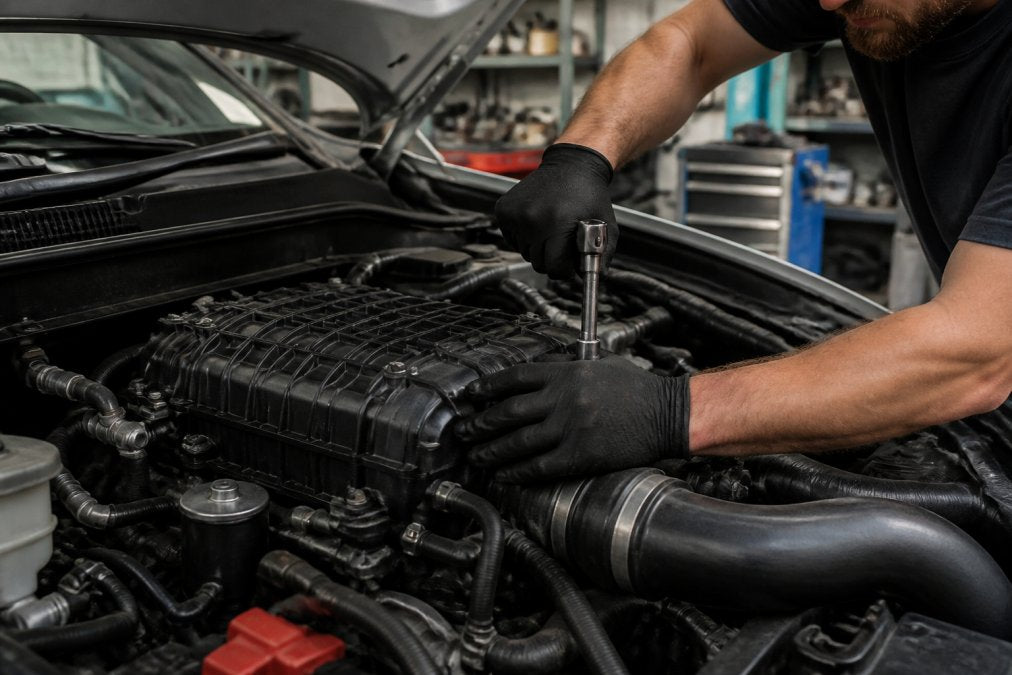
ECU tuning for forced induction is the process of recalibrating fuel delivery, ignition timing, and boost control so the engine can safely use the extra airflow a pulley provides. Skipping it is the single most common mistake in DIY boost builds.
Factory calibrations are written for factory boost levels. Add airflow and the stock map runs lean in the upper rpm range, where cylinder pressure is highest. A proper tune adjusts air-fuel ratio, pulls timing where knock is likely, and in some cases raises the rev limiter or adjusts throttle mapping for better throttle response.
What most guides miss is that tuning is not a one-time event. It is a starting point. Seasonal fuel blends, elevation changes, and later modifications all shift what the engine needs, and a tune that was safe in mild weather can be marginal in summer heat.
- Data log before and after every change
- Confirm air-fuel ratio under load, not at idle
- Watch for knock retard in the logs, not just seat-of-the-pants feel
- Retune when you change pulley size, fuel, or elevation
EPA fuel and octane guidance is worth reviewing if you are unsure how regional fuel blends affect a boosted engine.
Pulley Size Comparison and Pricing Breakdown
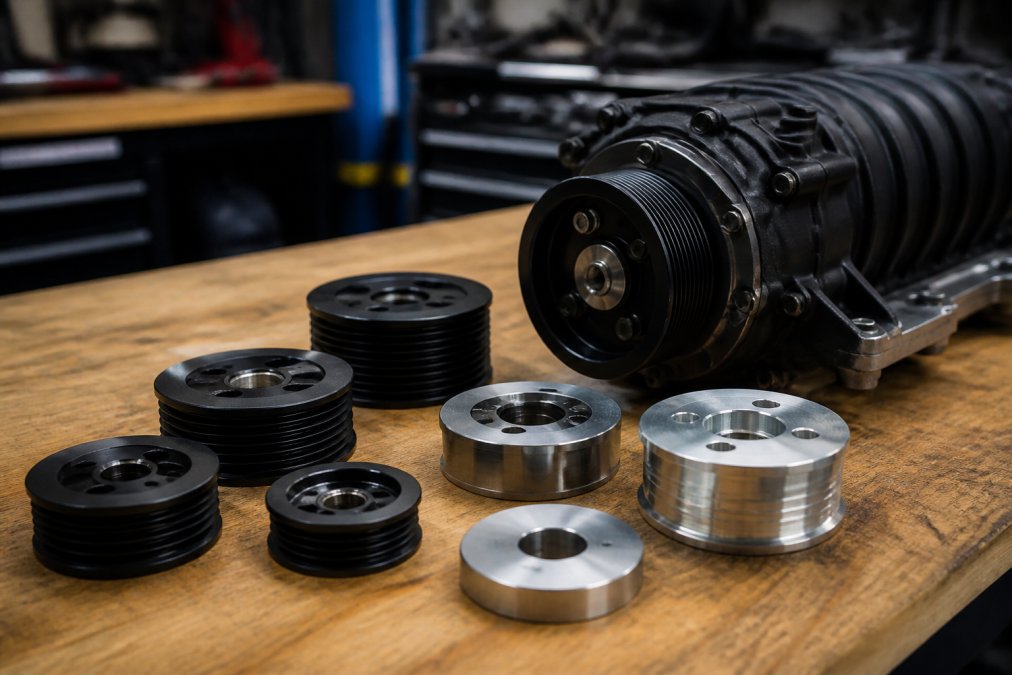
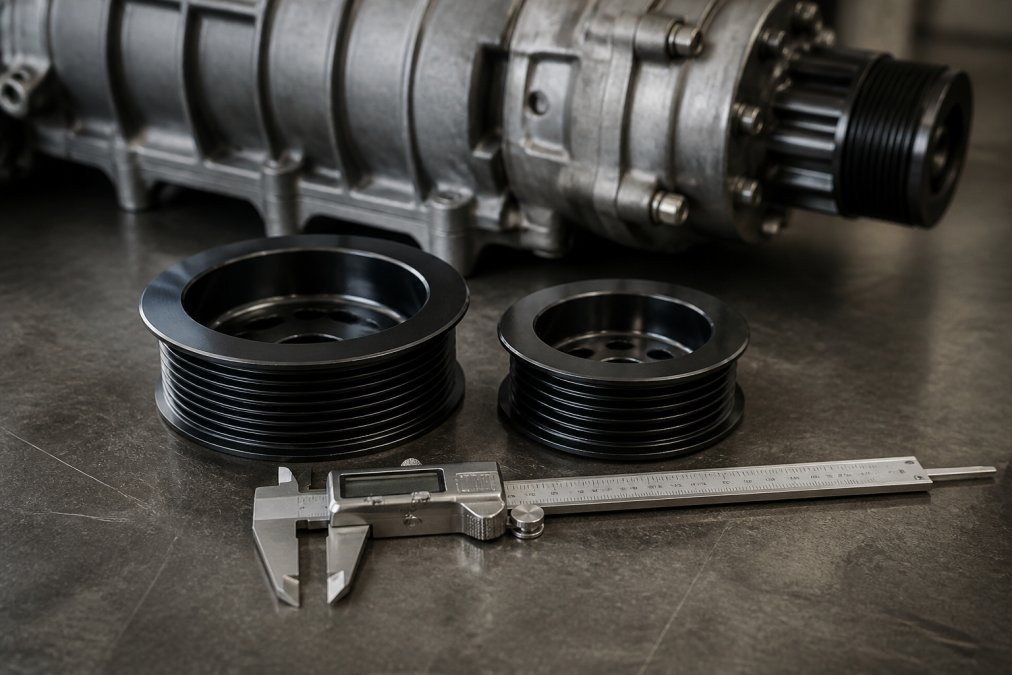
Pulley selection comes down to a simple trade-off: smaller diameter means more boost and more heat, larger diameter means less boost and more margin. Matching the pulley to your fuel, tune, and cooling setup matters more than chasing the smallest size available.
The reason is mechanical. Boost pressure scales roughly with the ratio of crank pulley diameter to supercharger pulley diameter, so dropping from a 63 mm to a 61 mm blower pulley is not a linear 2 mm change, it is a percentage increase in blower rpm that compounds across the entire rpm range. Most practitioners find that each step down in pulley diameter adds a few psi of boost, and each psi adds heat that the intercooler and fuel system have to absorb.
| Option | Approx. Diameter | Boost Effect | Best For | Price |
|---|---|---|---|---|
| 63 mm pulley | 63 mm | Moderate increase | Daily drivers, stock fuel systems | $200.00 |
| 61 mm pulley | 61 mm | Higher increase | Tuned builds with supporting mods | $200.00 |
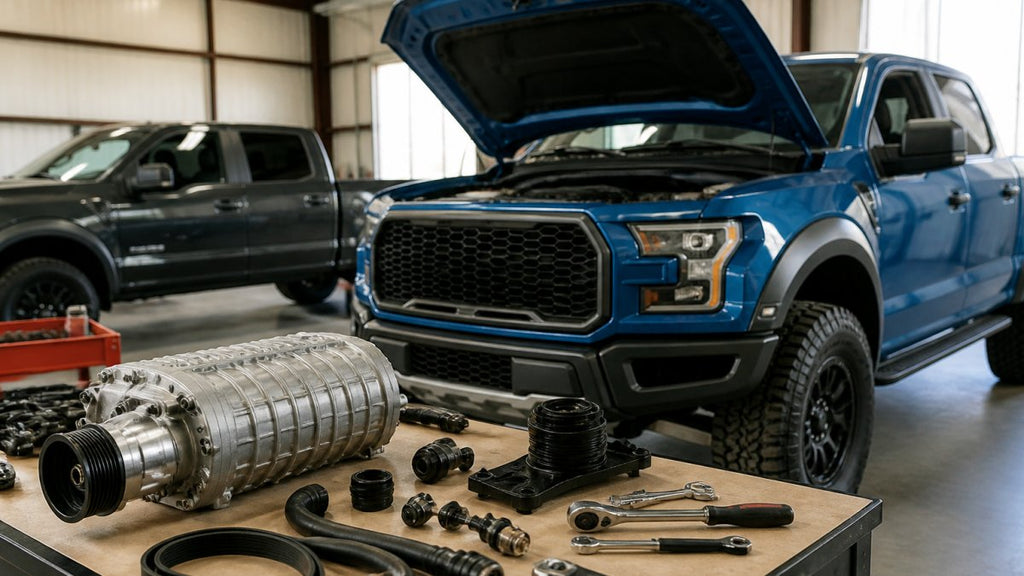
Both options are direct-fit replacements for VT Superchargers Mazda supercharger kits, and both are priced at $200.00. The 61 mm pulley for Mazda supercharger kits suits owners who have already upgraded fuel and cooling. The 63 mm pulley for Mazda supercharger kits is the better starting point for a mostly stock vehicle.


Three factors decide which one you actually need:
- Fuel headroom. If the injectors are near their duty cycle at stock boost, the smaller pulley will push them past it and the tune will have to pull fuel or timing to compensate.
- Intake air temperature. A pulley that raises blower speed without a matching intercooler upgrade can raise charge temps enough that the ECU retards timing, canceling the gain.
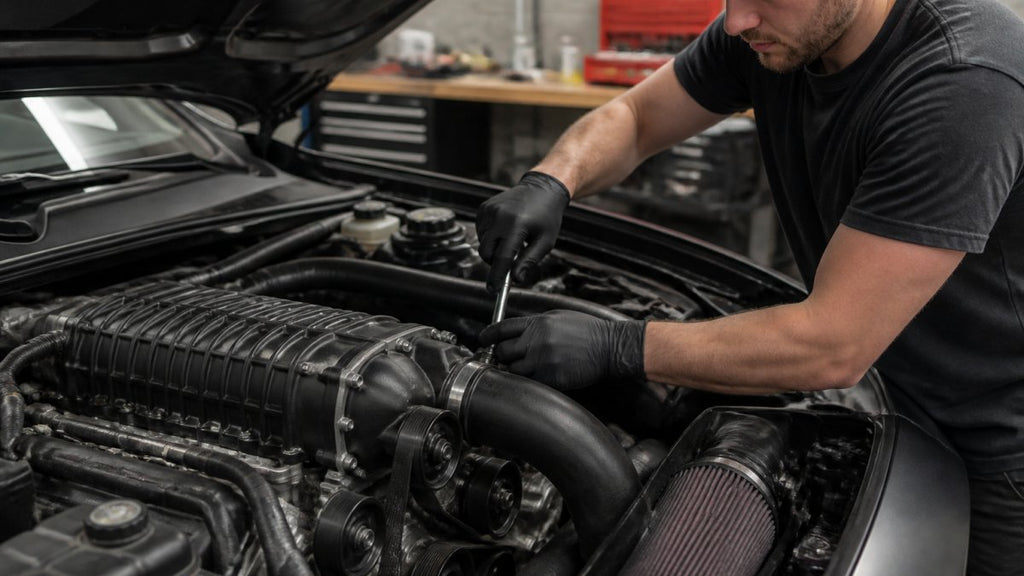
- Belt and tensioner geometry. A smaller blower pulley changes the wrap angle and the belt length the tensioner has to absorb. Reusing the stock belt on a smaller pulley is a common cause of slip and glazing.
Pro Tip
Confirm your kit's current pulley size before ordering. VT Superchargers recommends verifying fitment first, because the wrong diameter either leaves power on the table or pushes the blower past what the rest of the build can support.
The Legal and Warranty Side Nobody Mentions
Most pulley guides stop at horsepower and skip the paperwork. Two federal realities matter here:
- Emissions compliance. Under the Clean Air Act, tampering with an emissions control device on a street-driven vehicle is prohibited, and many states run OBD-II or tailpipe inspections that will flag a modified calibration (the EPA). A pulley change that alters boost and fueling can affect what the ECU reports. Check your state's inspection rules before you commit.
- Warranty exposure. The Magnuson-Moss Warranty Act prevents a manufacturer from voiding your entire warranty just because you installed an aftermarket part, but it does allow them to deny coverage for a failure they can reasonably attribute to that part (the FTC). A supercharger pulley failure that takes out the blower is the classic example.
This is the trade-off competitors gloss over: the same pulley that adds mid-range torque can also be the reason a claim gets denied or a vehicle fails inspection. Knowing that before you buy is worth more than a peak horsepower number.
Acceleration vs. Top Speed: What the Ratio Actually Does
A smaller pulley does not just add boost, it shifts where the engine makes its power. More blower rpm at low engine speed means boost builds earlier, which improves 0-60 and towing response. The cost shows up at the top end, where the blower can run past its efficiency range and intake air temperature climbs faster than the intercooler can shed it. That is why a pulley that feels dramatically quicker around town can feel flat on a long highway pull. If top-speed stability matters more to you than stoplight response, a larger pulley paired with a good tune is often the smarter build.
Supporting Mods That Keep Your Pulley Upgrade Reliable
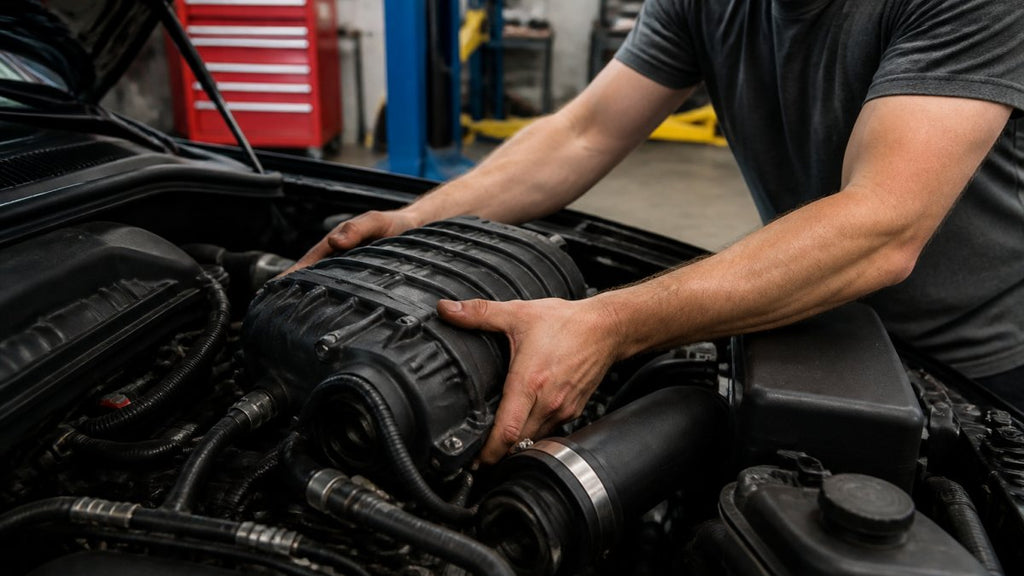
Reliability after a pulley change comes down to the supporting systems, not the pulley itself. Four areas matter most: fuel delivery, ignition, heat management, and the drivetrain that has to put the extra torque to the ground.
Fuel Delivery
Fuel injectors and the fuel pump have to supply enough volume at the new airflow level, or the engine runs lean under load. A common pattern is to check injector duty cycle in a data log at wide-open throttle; if it is approaching its practical ceiling at stock boost, a smaller pulley will push it past it. Upgrading the pump and injectors together is usually cheaper than replacing a piston.
Ignition
Spark plugs should be one step colder and gapped for boost, which reduces the chance of pre-ignition. Ignition timing gets handled in the tune, but the hardware has to be capable of supporting it. Coil packs and plug wires that were marginal at stock boost often fail first once cylinder pressure rises.
Heat Management
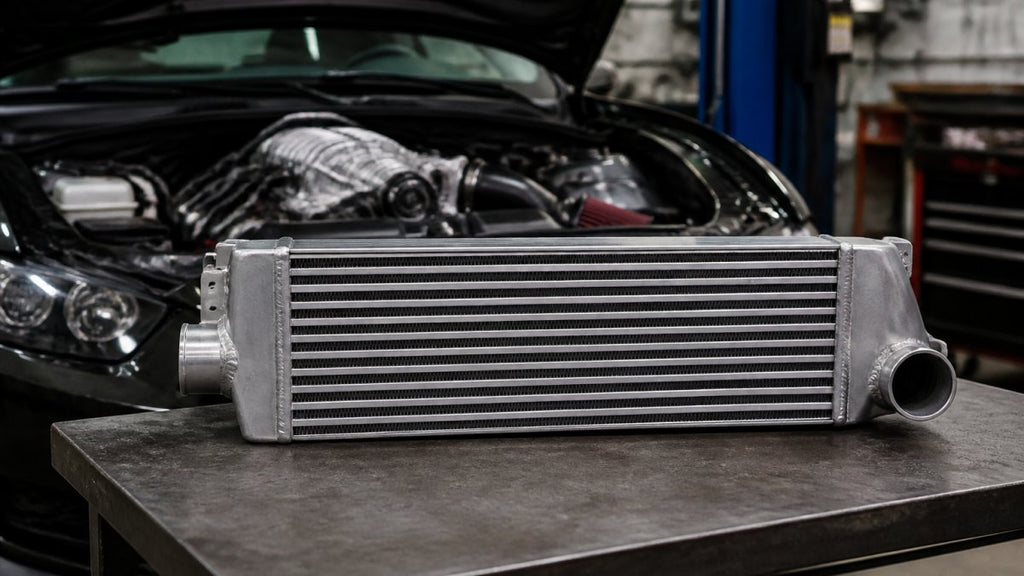
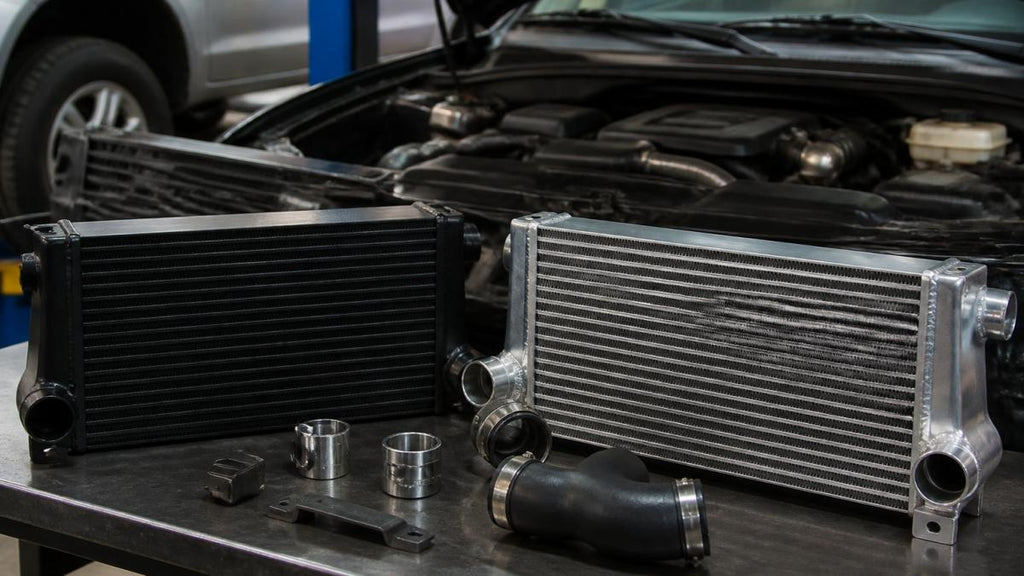
Cooling deserves equal attention. A heat exchanger or intercooler upgrade keeps intake air temperature down, which preserves both power and engine life. On a street-driven build, the intercooler is often the single highest-value supporting mod, because it protects every other component from the heat the pulley creates.
Drivetrain, Gearing, and Traction
Extra boost only helps if the tires can put it down. On trucks running larger tires, re-gearing the final drive restores the effective ratio that big tires stole, and it takes load off the powertrain at the same time. A numerically higher gear set improves acceleration but raises highway rpm and hurts fuel economy, the classic acceleration-versus-top-speed trade-off. Traction upgrades (stickier tires, a limited-slip or locker, and proper alignment) are what convert the pulley's mid-range torque into actual forward motion instead of wheelspin.
Maintenance First, Parts Second
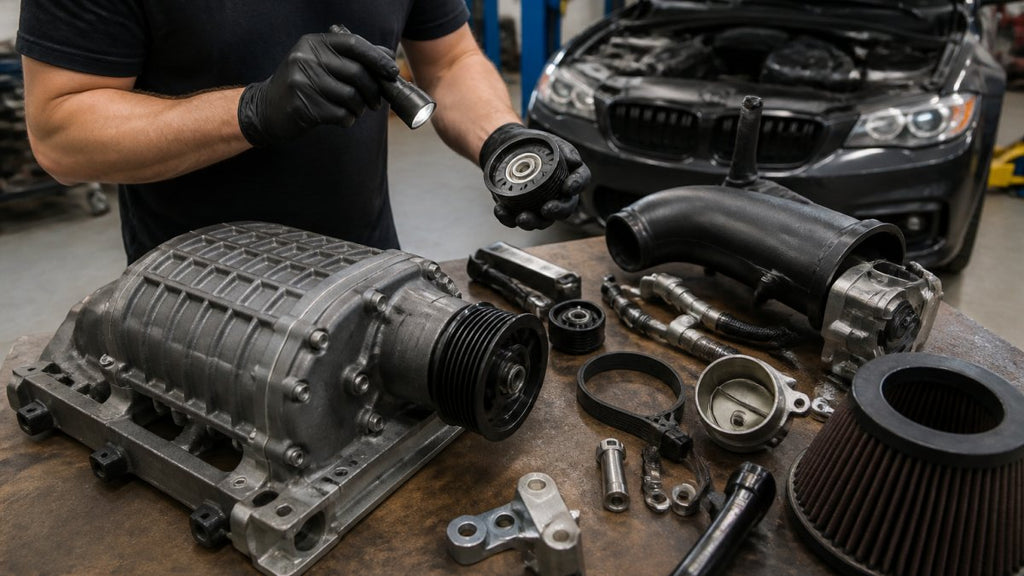
Before spending on any of the above, restore what you already have. A dirty air filter, a clogged intercooler, worn plugs, a tired fuel filter, or old oil can each cost measurable power on a forced-induction engine. A compression and leak-down test tells you whether the engine is healthy enough to accept more boost in the first place. The cheapest horsepower is the horsepower you get back by fixing what is already broken.
- Upgrade injectors and fuel pump to match airflow
- Fit colder spark plugs gapped for boost
- Improve intercooling before chasing more boost
- Re-gear if tire size has changed the effective final drive ratio
- Verify compression and leak-down before adding boost
- Address tires, alignment, and traction before the pulley
Watch Out
If a compression or leak-down test shows a tired engine, a pulley change will accelerate the failure, not fix it. Rebuild or replace first, then add boost.
Conclusion
Adding boost is the easy part. Keeping it reliable takes fuel, ignition, cooling, and calibration working together, and that is where most DIY builds run into trouble. VT Superchargers builds bolt-on supercharger kits with OEM-style fitment for Dodge, Ford, Jeep, Mazda, Nissan, Suzuki, and Toyota platforms, backed by a 24-month warranty, worldwide shipping, and financing options that spread the cost. Get started with VT Superchargers and build a pulley upgrade that holds together under real load.
Frequently Asked Questions
Does changing a supercharger pulley increase horsepower?
Yes. A smaller supercharger pulley spins the blower faster, pushing more air into the engine and raising boost pressure. That extra airflow supports more fuel and typically adds horsepower across the powerband. The exact gain depends on your engine, current pulley size, and supporting mods. VT Superchargers offers 61 mm and 63 mm pulleys for Mazda kits at $200.00 each, letting you choose a smaller diameter than the factory unit for a measurable bump in output.
What are the risks of installing a smaller supercharger pulley?
Supercharger pulley upgrade risks include increased intake air temperatures, higher stress on the blower and belt, and possible detonation if the ECU tune does not account for added boost. Without supporting mods like upgraded fuel injectors or a revised tune, you can run lean and damage pistons. Start with a modest pulley change, monitor air-fuel ratio and knock, and confirm your tune is calibrated for the new boost level before pushing harder.
Can you improve supercharger efficiency without changing the pulley?
You can. A cold air intake, less restrictive exhaust, and a quality synthetic oil change reduce parasitic losses and help the blower breathe. ECU tuning for forced induction can also optimize ignition timing and air-fuel ratio to extract more from the existing pulley. These steps restore factory performance and often reveal gains you were missing before spending money on a smaller pulley.
What supporting modifications are needed when upgrading a supercharger system?
Plan for a revised ECU tune, upgraded fuel injectors, a higher-flow fuel pump, and a colder spark plug range. An intercooler or heat exchanger upgrade helps control intake temps, especially on smaller pulleys. For trucks running larger tires, re-gearing and a transmission tune can fix gear hunting. Do maintenance first: fresh synthetic oil, clean filters, and a belt inspection before adding boost.
Related post

RECENT POSTS