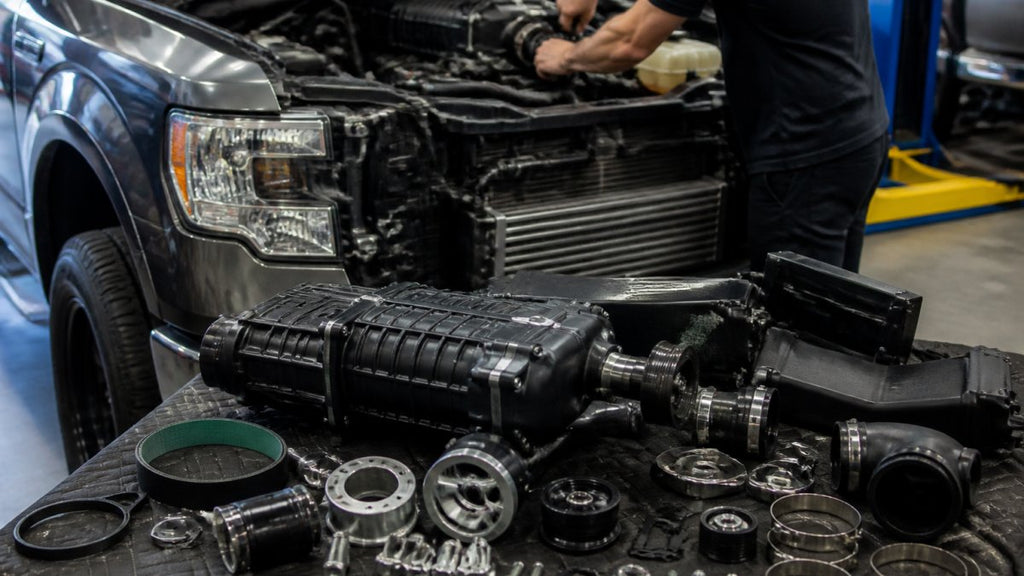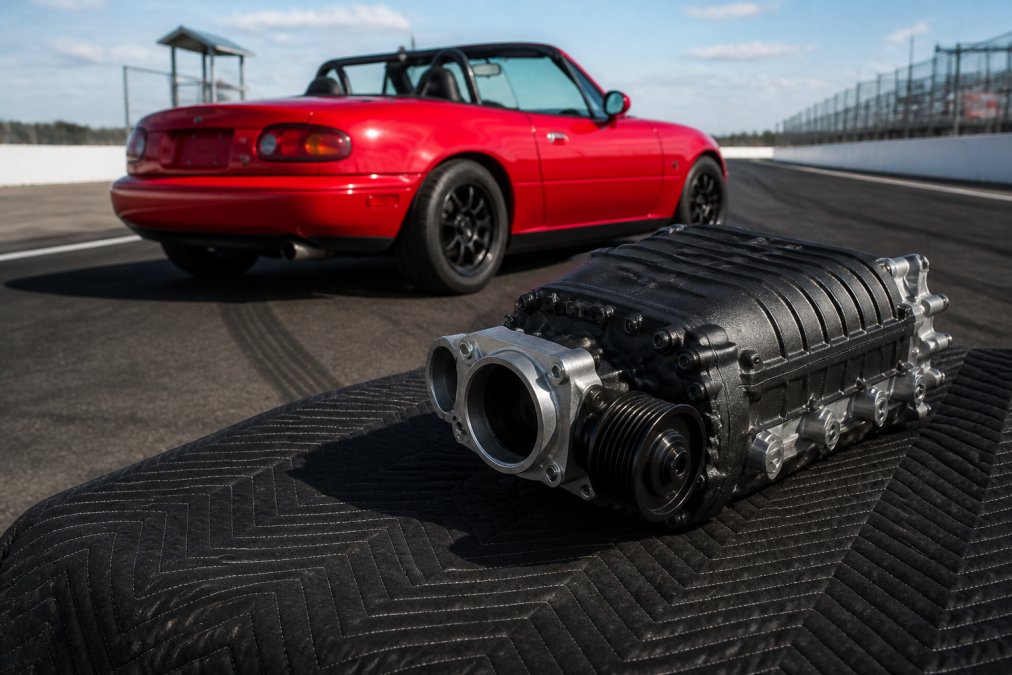
Is a Supercharger Worth It for a Mazda Miata Track Day?
Table of Contents
- The Verdict: When a Supercharger Pays Off on Track
- How Much Horsepower Do Superchargers Add to a Miata?
- Supercharger vs. Turbo: Which Forced Induction Suits Track Days?
- Supercharged Miata Track Reliability: What to Expect
- Miata Cooling System Upgrades for Track: Preventing Heat Soak
- Cost, Installation, and Maintenance: The Real Numbers
- VT Superchargers: A Bolt-On Option for Miata Owners
- Conclusion: Is It Worth It for Your Track Goals?
- Frequently Asked Questions
Last Updated: September 10, 2026
The Verdict: When a Supercharger Pays Off on Track
Is a supercharger worth it for a Mazda Miata track day? For most owners chasing faster lap times without turbo lag, yes, provided you budget for cooling and supporting mods. A supercharger delivers the linear power delivery that suits the Miata's lightweight chassis, and the numbers back it up: quarter-mile times improve by roughly 2.2 seconds on a supercharged build, according to HotCars' coverage of Miata performance gains.
This guide from VT Superchargers breaks down the real costs, reliability trade-offs, and track-specific upgrades so you can decide before you spend.
The catch most buyers miss: the supercharger itself is only part of the bill. Heat management, tuning, and maintenance intervals decide whether your boosted Miata survives a 30-minute session or limps off after five laps.
Key Takeaway
A supercharger is worth it for track days if you pair it with cooling upgrades and a disciplined maintenance schedule. Skip those, and you'll spend more time in the paddock than on the circuit.
How Much Horsepower Do Superchargers Add to a Miata?
Superchargers typically add 40% to 60% more horsepower to a Miata, depending on the kit, pulley size, and tune. The ND1 Miata produces 155 hp, while the later ND2 engine produces 181 hp from the factory, according to a track review comparing ND generations. A well-tuned supercharger kit pushes those figures well past 220 hp at the wheels.
Pulley size controls boost pressure, and it's the easiest lever to adjust. A smaller pulley spins the blower faster for more boost; a larger one keeps things conservative. VT Superchargers offers both a 61 mm pulley and a 63 mm pulley for its Mazda kits, each priced at $200, so you can tune boost to your track goals rather than guessing.


| Goal | Pulley Size | Boost Character | Best For |
|---|---|---|---|
| Maximum output | 61 mm | Higher boost, more heat | Time attack, short sessions |
| Balanced track use | 63 mm | Moderate boost, stable temps | 20-30 minute sessions |
| Daily plus occasional track | Stock pulley | Conservative, OEM-like | Street-first builds |
Supercharger vs. Turbo: Which Forced Induction Suits Track Days?
Superchargers win on track for one reason: predictable torque. Enthusiasts favor superchargers over turbochargers for track days because the torque curve is linear, with none of the lag that disrupts corner exits, according to Drifted's analysis of forced induction types.
That predictability changes how you drive. With a roots blower or centrifugal supercharger, throttle response is immediate. You can modulate power mid-corner without waiting for a wastegate to spool. Turbo builds often make more peak power, but the boost arrives late, and on a tight circuit that delay costs you cornering speed.
Here's the honest trade-off. Turbochargers generally run higher thermal efficiency and can be tuned for bigger top-end numbers. Superchargers cost you a small amount of parasitic drivetrain loss because they're belt-driven. For a lightweight platform like the Miata, where chassis balance matters more than peak output, the supercharger's linear delivery usually wins.
Pro Tip
If you're coming from a turbo build, expect to unlearn your throttle habits. Supercharged Miatas reward smooth, early throttle application because boost is there the moment you ask for it.
Supercharged Miata Track Reliability: What to Expect
A properly cooled and tuned supercharged Miata can survive a full track season, but only if you understand the specific failure modes that boosted track cars develop. The blower itself is rarely what fails. The supporting systems around it are.
Track usage of 20-30 minutes at full throttle creates cooling demands that autocross and canyon driving never approach. On a stock Miata, the cooling system is sized for a 181 hp naturally aspirated engine loafing at partial throttle. Add 40-60% more power and hold it for 20 minutes, and every thermal margin disappears (MX-5 Miata Forum discussion on track cooling).
The failure sequence, in order of likelihood:
- Intake air temperature climb (heat soak). The intercooler saturates, intake temps rise 40-60°F above ambient, and the ECU pulls timing to protect the engine. You feel it as a lap-time fade over the session. This is annoying, not fatal.
- Oil temperature creep. Sustained high oil temps thin the oil film and accelerate bearing wear. Most builders target oil temps under 250°F; sustained runs above 270°F are where damage starts accumulating.
- Coolant temperature spike. Once the radiator can't shed the combined engine + blower heat, coolant temps climb, the head gasket sees uneven thermal expansion, and you're looking at a head gasket job or worse.
- Detonation under load. If the tune is aggressive, intake temps are high, and fuel octane is marginal, knock can crack a ringland before the ECU reacts. This is the failure that ends engines, not sessions.
Reliability levers you actually control:
- Intercooler capacity and airflow through the core (air-to-air for simplicity, air-to-water for packaging)
- Oil cooler sizing matched to session length, not just peak power
- Coolant temperature monitoring with a real gauge, not the factory dummy light
- Air-fuel ratio verified on a dyno before your first track day
- Conservative boost pressure for longer sessions
- Fuel octane at or above the tuner's minimum spec, every fill-up
Track-day maintenance schedule for a boosted Miata:
| Interval | Action |
|---|---|
| Pre-event | Check belt tension, pulley bolts, coolant and oil levels, tire pressures |
| Every session | Glance at coolant and oil temp gauges on the cool-down lap |
| After every 2 track weekends | Oil and filter change, spark plug inspection |
| Every 3,000-5,000 miles | Full oil service, air filter clean, boost leak check |
| Annually | Dyno re-check of air-fuel ratios, intercooler core cleaning, coolant flush |
Spark plug heat range matters more than most owners realize. A boosted engine running track sessions benefits from a plug one step colder than stock to reduce pre-ignition risk, gapped to the tuner's spec rather than the factory number.
Jason Fenske of Engineering Explained supercharged an ND Miata for better power delivery and later sold the car for $8,000, showing that a well-executed, well-documented build holds secondary market value rather than becoming a liability (Road & Track's report on the build).
Watch Out
A supercharged Miata that runs flawlessly on the street can still cook itself on track. Street driving never holds full throttle for 20 minutes. If you haven't logged oil and coolant temps during a real session, you don't know your car's limits yet.
Miata Cooling System Upgrades for Track: Preventing Heat Soak
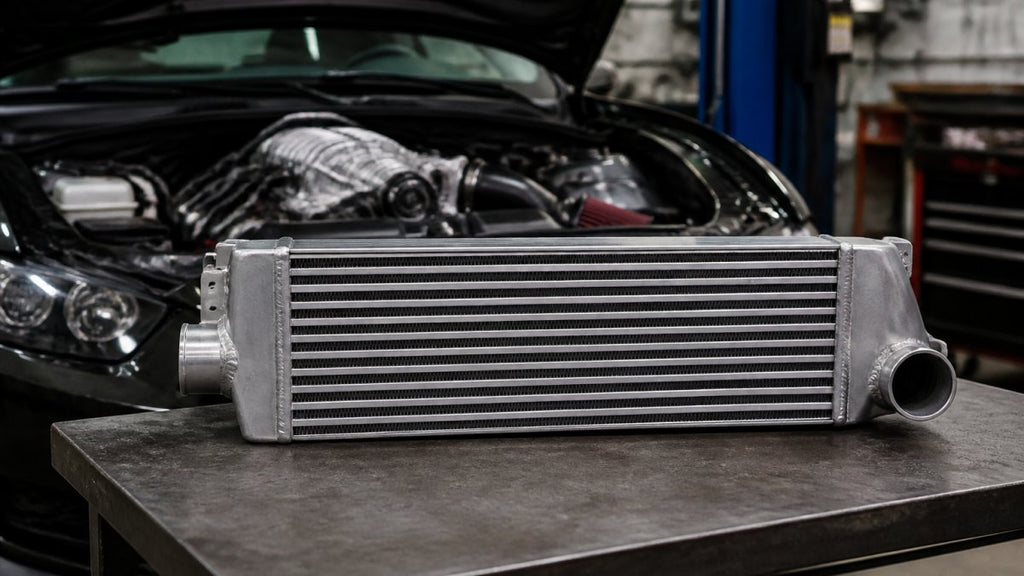
Miata cooling system upgrades for track use start with the intercooler, then the oil cooler, then the radiator. Get that order wrong and you'll spend money without solving the heat soak that kills lap times.
Heat soak is the gradual loss of power as intake and coolant temperatures rise during sustained lapping. On a 20-30 minute session, a stock cooling system simply can't shed the heat a supercharger generates. The fix is a system, not a single part.
Priority upgrades for boosted track Miatas:
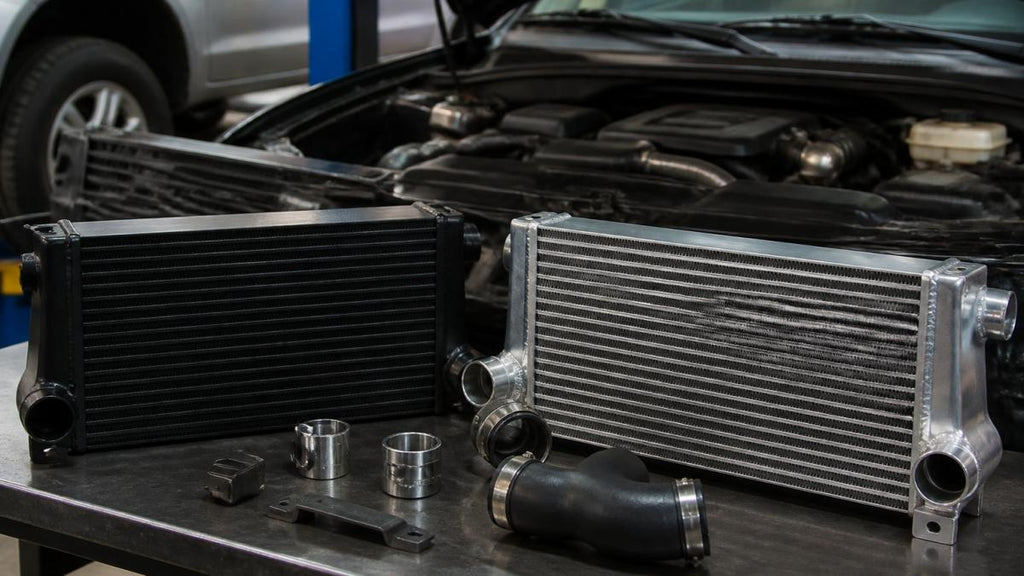
- Air-to-air or air-to-water intercooler sized for continuous boost, not short bursts
- Oil cooler to keep oil temperatures in a range that protects bearings
- Upgraded radiator with higher capacity and better airflow
- Coolant temperature gauge so you see problems before the ECU derates power
- Heat extraction through hood venting or ducting to move hot air out of the engine bay expensive performance gear.
Watch Out
Running a supercharger on the stock cooling system for full 30-minute sessions is the fastest way to cook a head gasket. Heat soak isn't just a power problem; it's an engine longevity problem.
Cost, Installation, and Maintenance: The Real Numbers
Budget $3,000 to $6,000 for a complete supercharger setup, and expect high-end track builds to exceed $11,000 in parts alone, according to Grassroots Motorsports' build cost analysis. The blower is the headline cost, but cooling, tuning, and supporting hardware add up fast.
Where the money actually goes on a track-focused build:
| Line item | Typical range |
|---|---|
| Supercharger kit | $3,000-$5,500 |
| Tuning solution | $500-$1,500 |
| Intercooler | $400-$1,200 |
| Oil cooler | $300-$800 |
| Upgraded radiator | $250-$600 |
| Gauges and monitoring | $150-$500 |
| Labor (if shop-installed) | $800-$2,500 |
Tuning is where DIY builders often underestimate the work. VT Superchargers' Mazda 2.0L / 2.5L Supercharger Tuner Kit bundles a Tactrix cable, MazdaEdit Lite tuning software, an off-the-shelf Sauce Tuning supercharger calibration, tune revisions, and installation support for $750. That's the tuning layer handled, which removes the biggest DIY stumbling block.

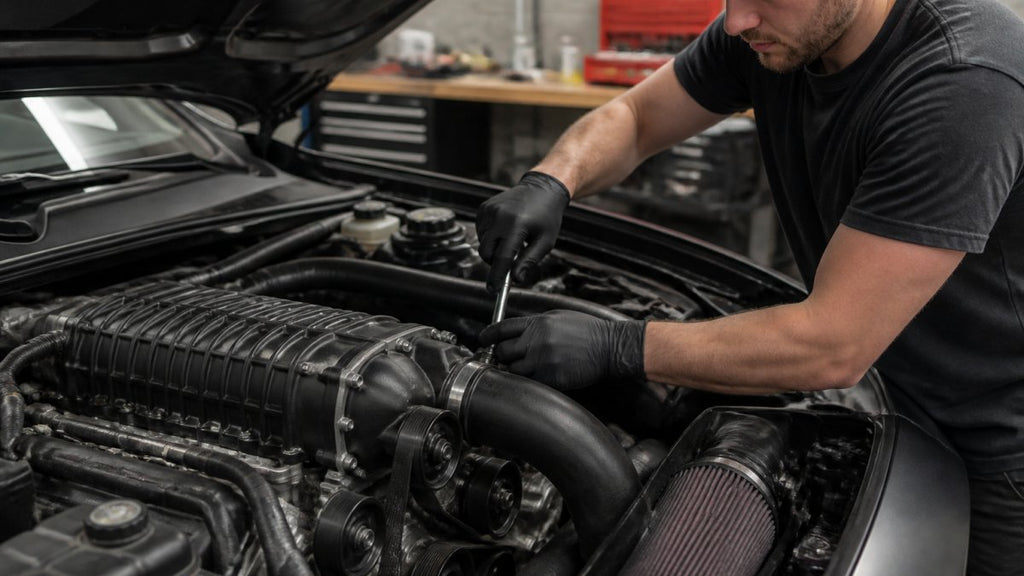
Installation complexity depends on the kit. Bolt-on designs with OEM-style fitment can be a weekend job for a competent home mechanic. Custom or high-boost builds often need a shop, and the labor line item is where budgets quietly blow past the estimate.
The two costs nobody mentions: warranty and insurance.
Adding a supercharger to a Miata with remaining factory powertrain coverage will almost certainly void that coverage for any failure the manufacturer can attribute to the modification. Under the Magnuson-Moss Warranty Act, a dealer can't void your entire warranty just because you added a part, but they can deny a specific claim if they can show the supercharger caused the failure. In practice, that means a blown engine on a boosted car is your bill, not theirs. If your Miata is still under powertrain warranty, factor that risk into the decision.
On the insurance side, most standard auto policies don't cover track-day driving at all, modified or not. If you buy track-day insurance from a specialty provider, declare the supercharger and any supporting mods. Undisclosed modifications can give an insurer grounds to reduce or deny a claim. Premiums for a declared boosted Miata typically run higher than for a stock car, and agreed-value coverage is worth pricing if you've sunk $8,000+ into the build.
Weight distribution: the handling cost of boost.
The Miata's near-50/50 front-to-rear weight balance is a big part of why it punches above its class on track. A typical supercharger kit adds 40-60 lbs to the front of the car, mostly ahead of the front axle. That shifts the balance forward, and on a 2,300 lb car, even 50 lbs up front is noticeable in turn-in and mid-corner rotation.
Most owners compensate with a corner-balance session after the install, and some add ballast or relocate the battery to the rear to restore the front/rear split. It's not a dealbreaker, but it's a real handling trade-off that a turbo kit mounted low and rearward doesn't impose to the same degree.
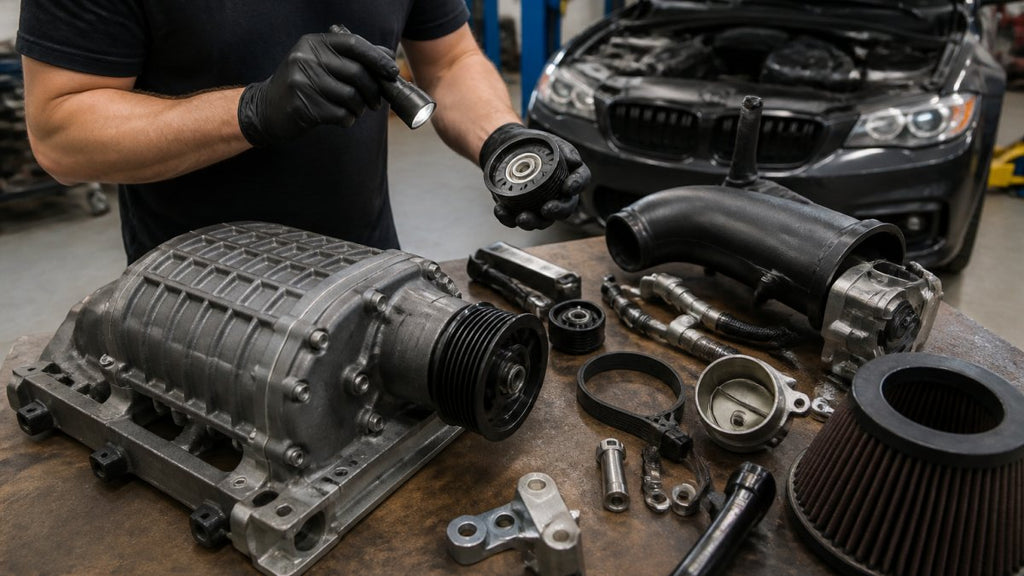
Maintenance intervals tighten once you're boosted:
- Oil changes every 3,000-5,000 miles, or after every two track weekends
- Spark plugs one heat range colder, inspected more frequently and gapped for boost
- Belt and pulley inspection before each event
- Air filter cleaning at shorter intervals
- Pre-event fluid checks on coolant and oil
Pro Tip
Buy a pre-modified supercharged Miata and you may pay far less than building one. One owner purchased a supercharged Miata for $8,000, a fraction of the parts cost of a from-scratch build (Road & Track). Just verify the tune, cooling setup, and maintenance history before you hand over cash.
VT Superchargers: A Bolt-On Option for Miata Owners
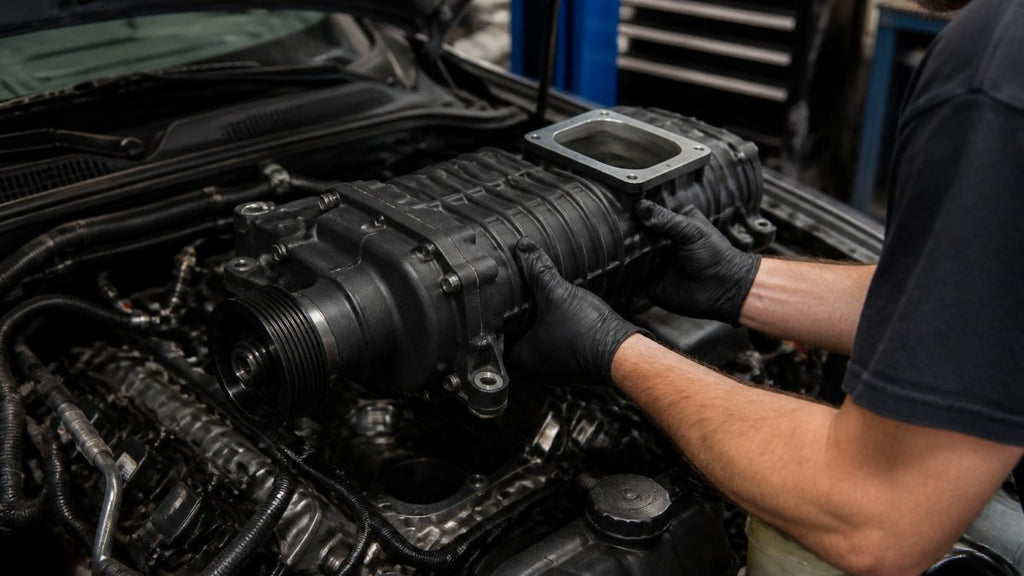
VT Superchargers builds bolt-on supercharger kits with OEM-style fitment, and the Mazda line is aimed squarely at owners who want real gains without a custom fabrication project. The kits ship worldwide, come with a 24-month warranty, and financing is available, which matters when you're spreading a build across a season.
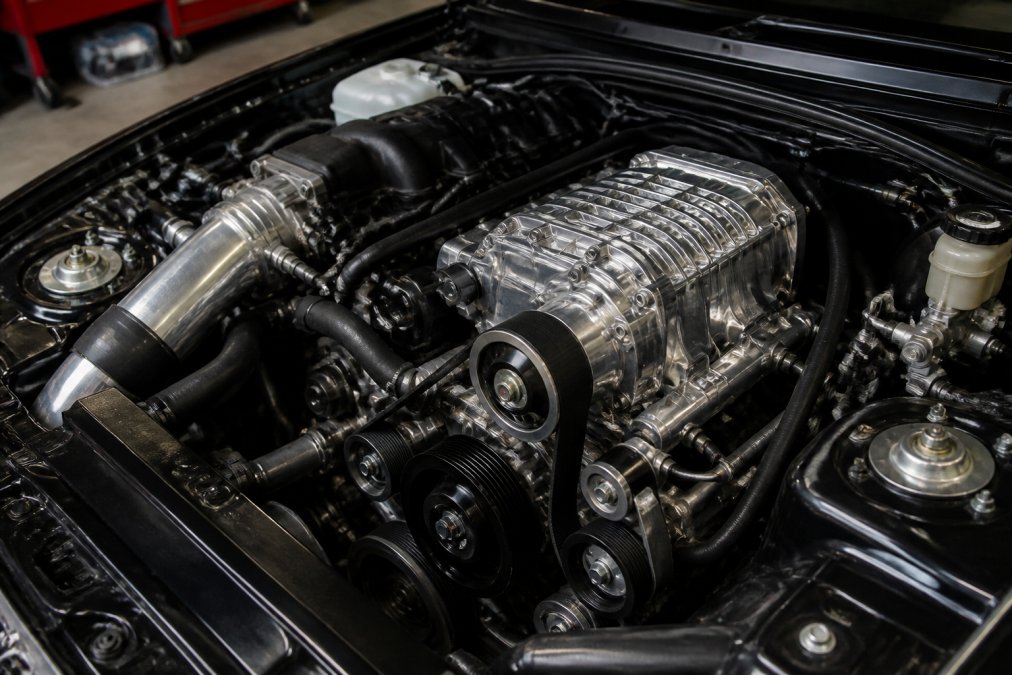
The supporting catalog is built around adjustability. The 61 mm and 63 mm pulleys let you dial boost to your track goals, and the tuner kit covers the calibration side so the install doesn't stall waiting on a tune.
Pros:
- OEM-style fitment reduces install guesswork
- Tuner kit bundles tuning software and calibration
- 24-month warranty and financing options
Cons:
- High-boost track builds still need separate cooling upgrades
- Pulley selection requires confirming fitment before ordering
Conclusion: Is It Worth It for Your Track Goals?
The honest answer: a supercharger is worth it for a Miata track day if your goal is predictable, usable power and you're willing to fund the cooling and maintenance that keep it alive. If you want the cheapest possible lap-time gain, spend your money on tires and brakes first.
For owners who want real performance with a precise fit and a warranty behind it, VT Superchargers' bolt-on Mazda kits, the tuner kit, and the 61 mm and 63 mm pulleys give you a clear path from stock to boosted. Register with VT Superchargers to match the right kit and pulley to your build, and get the power delivery your Miata's chassis was built to use.
Frequently Asked Questions
Does a supercharger make a Miata reliable for track use?
With proper supporting modifications, a supercharged Miata can be reliable for track days. The key is addressing cooling and tuning. Track sessions of 20-30 minutes create sustained heat, so an upgraded radiator, oil cooler, and intercooler are essential. A professional tune ensures safe air-fuel ratios. Many owners report years of trouble-free track use when these steps are followed.
How much horsepower do superchargers add to a Miata?
Typical gains range from 40 to 80 horsepower depending on the kit and engine. For example, the ND1 Miata's 155 hp can increase to around 200 hp with a supercharger. The ND2's 181 hp can reach over 220 hp. VT Superchargers offers tuner kits that include tuning support to optimize these gains.
What are the cooling requirements for a supercharged track Miata?
Cooling is critical. You'll need an upgraded radiator, an oil cooler, and an intercooler to manage intake temperatures. A hood vent or larger front opening helps expel heat. For 20-30 minute sessions, a coolant temperature gauge is recommended to monitor for heat soak. Many track-focused builds also add a transmission cooler.
Is a supercharger better than a turbo for road course driving?
Superchargers provide linear power delivery with no turbo lag, which many drivers prefer on a road course for predictable throttle response. Turbos can make more peak power but may feel less responsive out of corners. For track days, the immediate torque of a supercharger often translates to smoother, faster lap times.
What supporting modifications are needed for a supercharged Miata?
Beyond the supercharger kit, you'll need a tune, upgraded cooling (radiator, oil cooler, intercooler), and often a stronger clutch. For track use, consider brake upgrades and tires. VT Superchargers offers a tuner kit that includes tuning software and support, simplifying the process.
Related post
RECENT POSTS