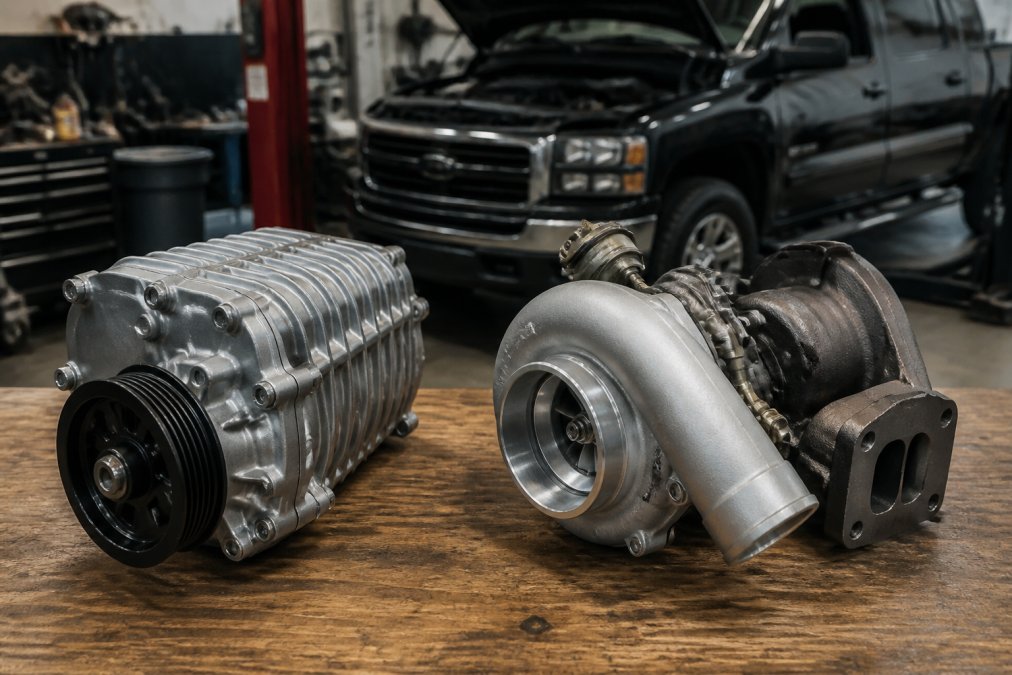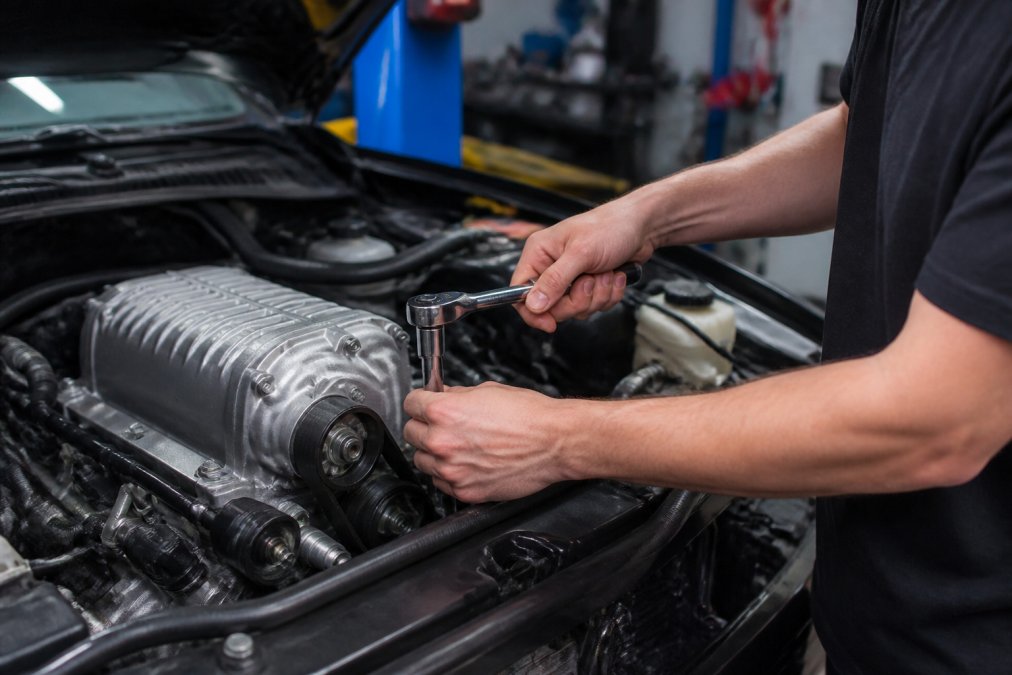
Alternatives to Welding for Supercharger Installation
Table of Contents
- Mechanical Fastening vs Welding: Which Holds Under Boost?
- Why Welding Isn't Always the Right Call for Supercharger Kits
- Structural Adhesives: A Viable Alternative for Non-Load-Bearing Parts
- Bolting and Threaded Fasteners for Mounting Brackets
- Riveting and Sheet Metal Screws for Custom Fabrication
- Bolt-On Supercharger Kits: The No-Weld Solution
- How Much Horsepower Do Superchargers Add Without Welding?
- Conclusion
- Frequently Asked Questions
Last Updated: September 9, 2026
The instinct to break out the welder when mounting a supercharger is understandable, but it is often the wrong move for modern kits. Forced induction components live in a harsh environment of heat cycles, vibration, and boost pressure, where a poorly executed weld bead can introduce stress risers and metal fatigue. This guide from VT Superchargers examines the practical alternatives to welding for supercharger installation.

The core tension is permanence versus serviceability. A welded bracket is permanent and strong, but it locks you into a configuration that is difficult to reverse or maintain. Alternatives to welding like bolting and riveting offer comparable joint integrity while preserving the ability to disassemble and service the system.
Mechanical Fastening vs Welding: Which Holds Under Boost?
Mechanical fastening is the superior choice for supercharger installation because it delivers predictable clamping force and shear strength without introducing heat-affected zones into your mounting structure. Bolted joints distribute load across the fastener and bracket interface, which is exactly what you want when boost pressure pushes against the intake manifold and mounting brackets.
The physics favor fasteners in this application. A welded joint creates a rigid connection that transfers every vibration directly to the weld toe, where cracks initiate. A bolted joint, by contrast, allows a controlled amount of relative motion that damps vibration energy. Modern performance kits are engineered around this principle, using precision brackets that bolt to existing mounting points rather than requiring custom fabrication ProCharger bolt-on kit engineering notes.
That said, welding still has a place. Custom or salvage-yard builds often require bracket fabrication where no off-the-shelf mounting solution exists, and welding may be the only way to test-fit and secure components in an engine bay with tight clearance Grassroots Motorsports fabrication guidance. The decision comes down to whether you are installing an engineered kit or building something from scratch.
Why Welding Isn't Always the Right Call for Supercharger Kits
Welding introduces three specific problems: heat distortion, metallurgical changes, and permanence. Localized heat can warp thin aluminum sections, compromising the precise alignment that a supercharger pulley and belt system requires.
The metallurgical concern is equally serious. Heat from welding alters the temper of aluminum components, reducing their strength in the heat-affected zone. On a part that experiences cyclic loading from boost pressure, this weakened zone becomes the most likely failure point. This is why destructive weld testing is considered a non-negotiable procedure in automotive repair, yet only a fraction of shops are compensated for it Who Pays for What? 2026 survey findings.
Permanence is the practical issue most owners overlook. A welded supercharger mount makes future maintenance, pulley changes, or kit removal significantly harder. If you need to access the timing cover or replace a gasket behind the mounting bracket, you are cutting the weld and starting over.
Structural Adhesives: A Viable Alternative for Non-Load-Bearing Parts
Structural adhesives are a legitimate tool, but their role in a supercharger installation is strictly limited to non-structural, secondary bonding. The combination of high under-hood temperatures and high-frequency vibration creates failure modes that generic metal-joining guides rarely address.
The Thermal Expansion Problem Specific to Superchargers
A supercharger mount is not a static joint. The aluminum supercharger case and the cast-iron or aluminum engine block have different coefficients of thermal expansion. As the system heats up (often exceeding 200°F under the hood), the adhesive bond line is subjected to differential expansion. Most two-part epoxies and acrylic adhesives have a glass transition temperature (Tg) between 120°F and 180°F. Once the adhesive exceeds its Tg, it softens and loses its modulus, meaning it can no longer transfer shear loads effectively. This is why a bond that feels rock-solid on a cold engine can fail after repeated heat cycling.
Vibration: The Silent Killer of Adhesive Bonds
While a bolted joint can tolerate micro-motion and damp vibration through clamping friction, an adhesive joint relies entirely on the chemical bond at the interface. The constant high-frequency vibration from the accessory belt drive and the rotating supercharger impeller creates cyclic shear stress on the bond line. Over time, this leads to fatigue cracking within the adhesive layer itself (cohesive failure) and breaks the mechanical interlock between the adhesive and the substrate (adhesive failure).
Surface Preparation: The Non-Negotiable Requirement
For a supercharger application, surface prep is the single most important factor determining success. A structural adhesive bond is only as strong as its weakest interface. For aluminum components, you must:
- Degrease the surface with a solvent like acetone or isopropyl alcohol to remove all oils.
- Abrade the surface with 80-grit sandpaper or a Scotch-Brite pad to create a mechanical key. A smooth, polished surface will not hold.
- Re-degrease after sanding to remove the loose particles and any embedded contaminants.
- Apply a chemical etch (such as an alodine or phosphoric acid solution) for maximum durability, though this is often skipped in a home garage setting.
Skipping any of these steps reduces bond strength by up to 50%, which is unacceptable for a component that sits inches away from a spinning belt.
Where Adhesives Are Actually Useful in This Install
Given these limitations, the practical applications for structural adhesives in a supercharger install are limited to:
- Sealing the intake manifold gasket surface: A thin bead of a high-temp RTV or a structural adhesive can fill microscopic imperfections in the mating surfaces, preventing vacuum leaks that would rob boost pressure. This is a sealing function, not a structural one.
- Mounting heat shields: Securing thin aluminum heat shields to the exhaust manifold or turbo housing with a high-temp adhesive can reduce rattles, provided the adhesive is rated for continuous service above 300°F.
- Bonding cosmetic shrouds: Non-load-bearing plastic or composite covers can be bonded, but only if they are not subject to significant vibration or thermal cycling.
Watch Out
Never use structural adhesive as the primary fastener for a supercharger bracket, the supercharger unit itself, or any component that carries boost pressure or supports the weight of the rotating assembly. The combination of heat-softening and vibration fatigue makes adhesive-only joints unpredictable in this application. If you are considering an adhesive for a load-bearing joint, you are using the wrong tool.
The Reversibility Factor
There is one more critical reason to avoid structural adhesives for anything beyond sealing: reversibility. A supercharger setup requires periodic maintenance, belt changes, pulley swaps, and occasional access to the timing cover. A properly cured structural adhesive joint is as permanent as a welded one. Removing an adhesive-bonded component often requires heat guns, solvents, and physical prying, which risks damaging the components you are trying to preserve. Mechanical fasteners allow you to disassemble the system in minutes with a socket set. This serviceability advantage is a core reason why engineered bolt-on kits dominate the market.
In summary, structural adhesives have a place in the toolbox, but that place is not holding your supercharger to the engine. Use them for sealing and secondary bonding, and rely on mechanical fasteners for the actual structural load.
Bolting and Threaded Fasteners for Mounting Brackets
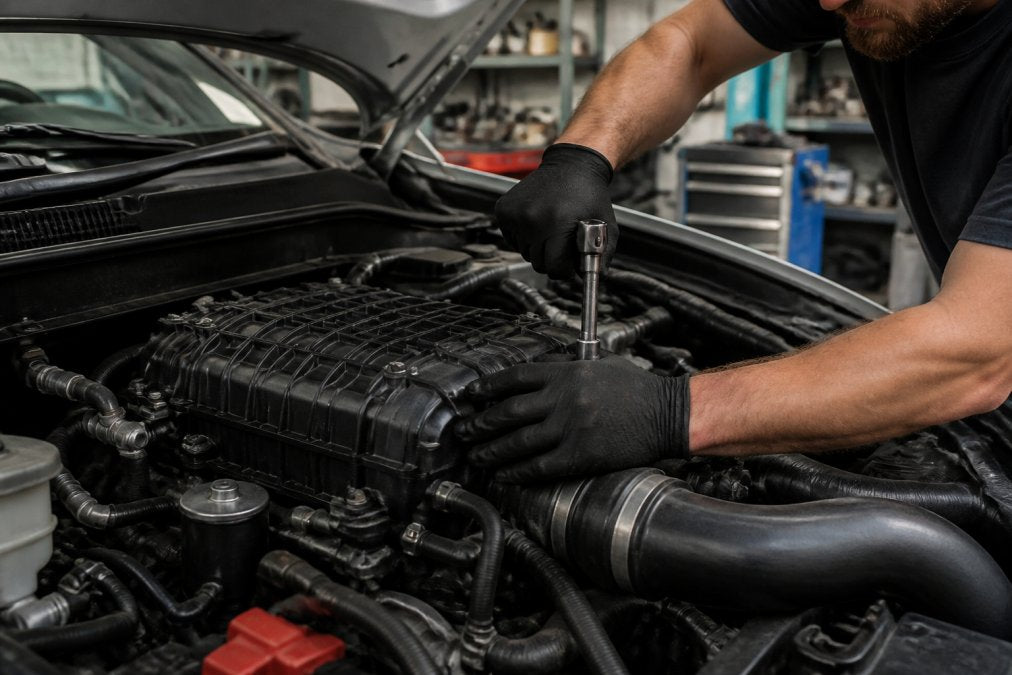
Bolting is the gold standard for supercharger mounting brackets because threaded fasteners deliver precise, repeatable clamping force that you can verify with a torque wrench. The mechanical interlock between bolt threads and the bracket material creates a joint that resists both shear and tensile loads, which is exactly the loading profile a supercharger bracket experiences under boost.
The key to a reliable bolted joint is fastener selection and torque specification. Use grade 8 or metric 10.9 bolts for mounting brackets, apply thread locker to prevent vibration-induced loosening, and torque every fastener to the manufacturer's specification. This is where bolt-on supercharger kits earn their reputation: they ship with the correct fasteners and torque values, eliminating guesswork.
Fastener spacing matters as much as fastener grade. Distribute bolts evenly around the mounting surface to prevent stress concentration, and ensure sufficient edge distance so the material does not tear out under load. A properly designed bolted joint will outlast the vehicle.
Riveting and Sheet Metal Screws for Custom Fabrication
Riveting and sheet metal screws are practical alternatives to welding for custom fabrication work, but they are not interchangeable. Each has a specific role in a supercharger install, and choosing the wrong one can lead to fatigue failure or stripped threads at the worst possible moment.
Rivets: Permanent, Vibration-Resistant, and Load-Bearing
For permanent joints in sheet metal or thin aluminum, rivets are the superior choice over sheet metal screws. A properly installed rivet fills the hole completely, creating a mechanical interlock that resists vibration far better than a screw thread in thin material. The key distinction is between pop rivets and structural rivets.
Pop rivets (also called blind rivets) are the most common type found in auto parts stores. They are fast to install and require access to only one side of the joint. However, their shear strength is limited by the diameter of the mandrel and the thickness of the rivet body. A typical 1/8-inch aluminum pop rivet has a shear strength of roughly 150-200 lbs, which is fine for securing a heat shield or an air duct, but insufficient for a bracket that supports any meaningful weight.
Structural rivets (such as those meeting MIL-R-24243 or NASM20426 specifications) are a different class of fastener. Made from higher-strength alloys (often 7050-T73 aluminum or Monel), they are driven with a specific installation tool that swages the tail to fill the hole completely. A 3/16-inch structural rivet can have a shear strength exceeding 1,000 lbs. The trade-off is that they require precise hole sizing, typically a drill bit that matches the rivet diameter within 0.001-0.002 inches, and a heavier pneumatic or hydraulic rivet gun.
For a custom supercharger bracket, the correct approach is to use structural rivets with a backing plate or a doubler on the opposite side of the joint. This spreads the load over a larger area and prevents the rivet from pulling through thin material.
Sheet Metal Screws: Fast but Limited
Self-tapping sheet metal screws are the fastest way to join two pieces of thin metal, but they have significant limitations in a high-vibration environment. A sheet metal screw relies on the threads cutting into the base material. In thin sheet metal (less than 0.060 inches), there is often not enough material for the threads to grip securely, resulting in a joint that can loosen over time as vibration works the screw back and forth.
If you must use sheet metal screws, follow these rules:
- Use a pilot hole that is slightly smaller than the screw's minor diameter. This prevents the material from splitting and ensures the threads cut cleanly.
- Choose screws with a coarse thread pitch (often called "self-tapping" or "type AB") for thin material. Fine threads are for thicker material.
- Apply thread locker to the screw before installation to resist vibration-induced loosening.
- Never use them for primary structural loads. A sheet metal screw is a convenience fastener, not an engineering solution.
The Load-Bearing Reality Check
Neither rivets nor sheet metal screws should carry the weight of a supercharger unit itself. A typical supercharger head unit weighs between 30 and 50 lbs, and under boost, the bracket experiences dynamic loads that are multiples of that static weight. The correct fastener for any component that supports the supercharger, the intake manifold, or the intercooler is a bolted connection with a proper backing plate.
For ancillary components, air ducts, heat shields, electrical brackets, or cosmetic shrouds, rivets are the better choice over screws because they do not loosen under vibration. The rule of thumb is simple: if you can reach the back side of the joint, use a bolt. If you cannot, use a structural rivet. If you are reaching for a sheet metal screw, ask yourself whether the component really needs to be there at all.
The Reversibility Trade-Off
One advantage rivets have over welding is that they can be removed with a drill, but this is a destructive process. Drilling out a rivet requires care to avoid enlarging the hole in the parent material. This is acceptable for a one-time custom fabrication, but it means that riveted joints are effectively permanent. If you are building a custom bracket that you may need to modify later, bolting is the more serviceable option. This is why most aftermarket supercharger kits use bolts rather than rivets, they allow the owner to disassemble the system for maintenance or to return the vehicle to stock condition.
Pro Tip
For custom fabrication work, a common pattern is to use rivets for the initial assembly to hold components in alignment, then replace the critical fasteners with bolts once the fitment is confirmed. This gives you the convenience of rivets during the build and the serviceability of bolts for the long term.
In summary, rivets and sheet metal screws are useful for non-structural custom fabrication, but they are not substitutes for bolted connections on load-bearing supercharger components. Choose structural rivets for permanent, vibration-resistant joints on ancillary parts, and reserve bolted connections for anything that supports the weight of the forced induction system.
Bolt-On Supercharger Kits: The No-Weld Solution
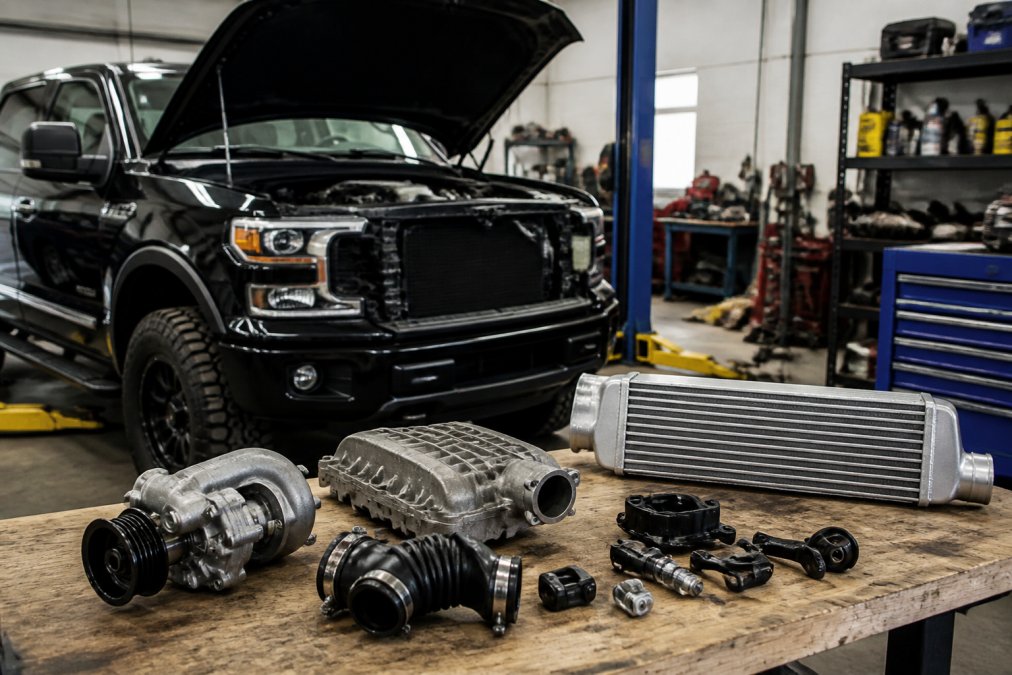
Bolt-on supercharger kits are the cleanest answer to the welding question because they eliminate it entirely through precision engineering. These kits are designed for a specific vehicle and engine combination, with mounting brackets, pulleys, and intake plumbing that attach to existing factory mounting points using mechanical fasteners. The result is an OEM-level installation that requires no cutting, no welding, and no permanent modification to your vehicle ProCharger 2026 F-150 kit release.
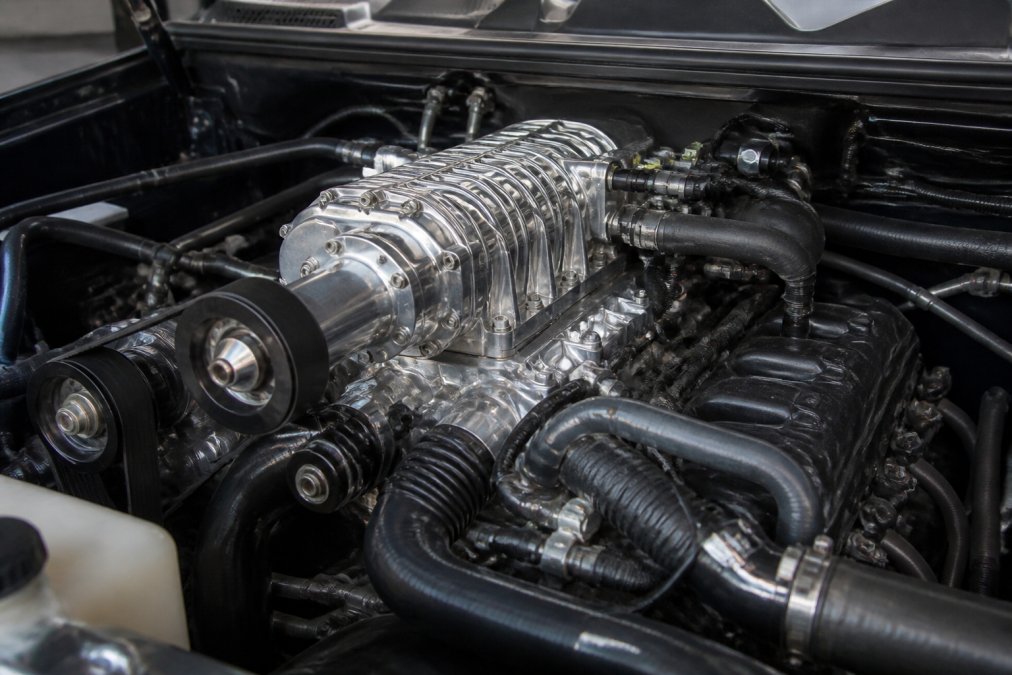
VT Superchargers builds its kits around this philosophy. Each kit includes the supercharger body, intake manifold, intercooler, water pump, belts, brackets, and all hardware, engineered for a precise OEM-style fitment that preserves your original components. The one-piece die-cast aluminum shell provides superior heat dissipation while keeping the install non-destructive.
The practical advantage is reversibility. Because nothing is welded or cut, the kit can be removed and the vehicle returned to stock if you sell it or change direction. This also simplifies maintenance, since individual components can be accessed and serviced without cutting through a welded joint.
How Much Horsepower Do Superchargers Add Without Welding?
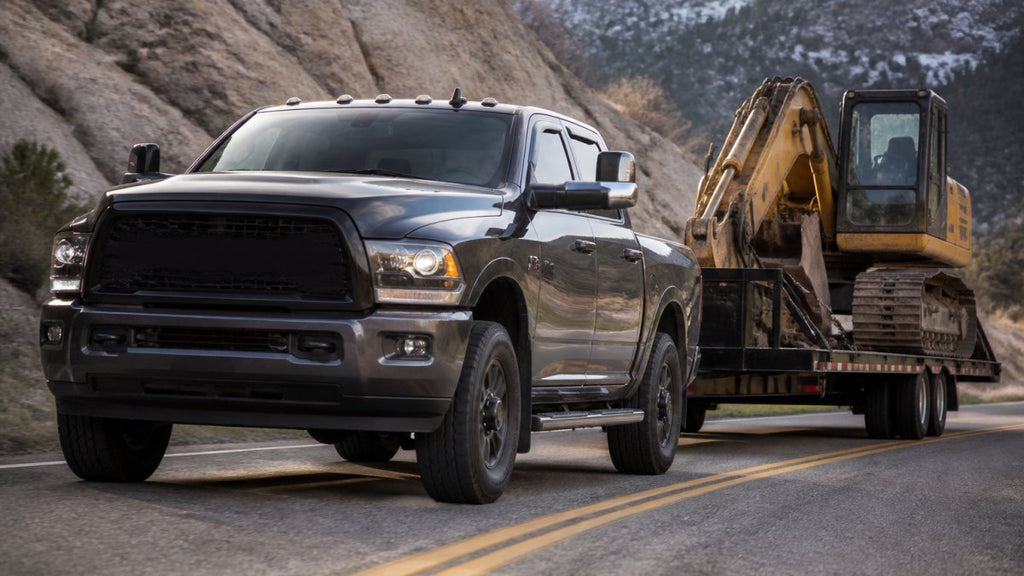
A properly installed bolt-on supercharger kit can add 40 to 70 percent more horsepower over stock, with no welding required. VT Superchargers kits for the Toyota Tundra 5.7L deliver 40 to 60 percent more horsepower, while the Nissan Titan and Armada 5.6L V8 kit produces 50 to 70 percent gains for towing and off-road performance.
| Kit | Horsepower Gain | Torque Gain | Boost | Price |
|---|---|---|---|---|
| Toyota Tundra 5.7L 3UR-FE | +40-60% | +30-50% | 7 psi | $6,900.00 |
| Mazda 6 2.0L Skyactiv-G | +40-60% | +30-50% | 7 psi | $4,800.00 |
| Nissan Titan/Armada 5.6L V8 | +50-70% | +50-70% | 7 psi | $7,600.00 |
These gains come from the supercharger's ability to force more air into the engine, which allows more fuel to be burned and produces more power. The twin-screw design provides strong low-end torque, which is why these kits perform well for daily drivers, towing applications, and off-road builds where responsiveness matters. An ECU tune is required to deliver safe, optimal performance with the increased airflow.

What most guides miss is that the horsepower number is only half the story. The real benefit of a non-welded installation is that you get this power increase without compromising the structural integrity of your engine bay. No heat-affected zones, no warped brackets, no stress risers waiting to crack under boost.
Key Takeaway
The best alternative to welding for supercharger installation is a properly engineered bolt-on kit. It delivers the horsepower gains of forced induction with none of the metallurgical risks, and it keeps your build reversible and serviceable.
Conclusion
Choosing between welding and its alternatives comes down to one question: are you building from scratch or installing an engineered system? For custom fabrication work, bolting, riveting, and adhesives each have their place. For adding forced induction to a daily driver, tow rig, or off-road build, a bolt-on kit eliminates the welding dilemma entirely.
VT Superchargers designs every kit for non-destructive, bolt-on installation with OEM-style fitment, backed by a 24-month warranty and worldwide shipping. Whether you are upgrading a Toyota Tundra, Mazda 6, or Nissan Titan, the kit includes everything you need for a clean install that preserves your factory components. Get started with VT Superchargers and add 40 to 70 percent more power without picking up a welder.

Frequently Asked Questions
What can I use instead of welding for supercharger installation?
The most reliable alternatives to welding for supercharger installation are mechanical fasteners and pre-engineered bolt-on supercharger kits. Modern kits are designed to use factory mounting points with high-strength bolts and brackets, eliminating the need for custom fabrication. For non-load-bearing parts, two-part structural adhesives can work, but they are not recommended for components that must withstand boost pressure, vibration, and thermal expansion. Always prioritize mechanical fastening methods for anything that supports the supercharger unit itself.
Are there specific industrial-grade epoxies suitable for engine bay modifications?
Yes, some structural adhesives are formulated for high-heat automotive environments, but they have limits. Two-part epoxies rated for temperatures above 300°F can bond non-structural components like heat shields or small brackets. They should never be used as the primary fastener for the supercharger or its mounting brackets. Vibration from the engine and thermal expansion cycles will eventually degrade adhesive bonds on load-bearing parts. Surface preparation is critical: the metal must be clean, dry, and roughened for the adhesive to achieve its rated shear strength.
How do bolt-on supercharger kits maintain structural integrity without welding?
Bolt-on supercharger kits are engineered with brackets and mounting plates that use existing threaded holes on the engine block. This design transfers load through mechanical clamping force rather than a welded joint. The components are machined to precise tolerances, ensuring proper alignment of the belt drive system. This approach preserves the vehicle's factory structure and allows for removal without cutting or grinding. The result is a joint that resists vibration and maintains integrity under boost pressure, provided all fasteners are torqued to specification.
What are the risks of using fasteners instead of welding for forced induction components?
The main risks are fastener loosening and improper load distribution. Vibration can cause bolts to back out, so using thread-locking compound and torque-to-yield fasteners is essential. Over-tightening can strip threads in aluminum components, while under-tightening can create a loose joint that leads to belt misalignment. Unlike a weld, a bolted joint can experience micro-movement under load, which may lead to metal fatigue over time. Regular inspection of torque settings is a recommended maintenance step for any bolted supercharger installation.
Can high-strength structural adhesives replace welding for supercharger mounts?
No, high-strength structural adhesives are not a safe replacement for welding on supercharger mounts. The mounting brackets must carry significant load and are exposed to intense vibration and heat cycles. While modern adhesives offer impressive shear strength, they perform poorly under peel forces and long-term exposure to engine heat. A failure here could send the supercharger into the belt or radiator, causing catastrophic damage. Mechanical fastening with properly sized bolts remains the only reliable no-weld method for load-bearing supercharger components.
Related post


RECENT POSTS