Supercharger vs Naturally Aspirated: Performance Difference
Table of Contents
- Supercharger vs Naturally Aspirated: The Real Performance Difference
- Quick Comparison Table: Supercharged vs Naturally Aspirated
- How Much Horsepower Do Superchargers Add?
- Forced Induction vs Naturally Aspirated Throttle Response
- Supercharger vs Naturally Aspirated Reliability and Maintenance
- Altitude, Heat Soak, and Aftermarket Tuning Potential
- Which Engine Type Should You Pick?
- Frequently Asked Questions
Last Updated: September 8, 2026
Supercharger vs Naturally Aspirated: The Real Performance Difference
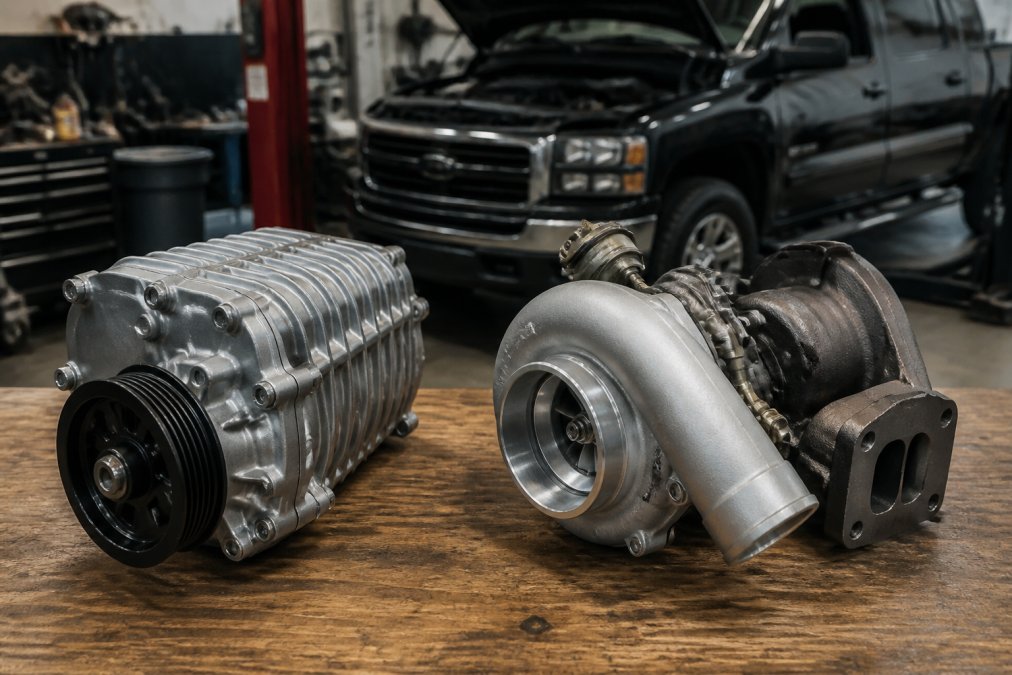
Forced induction systems consistently deliver more power per cubic inch than naturally aspirated engines, which is why the supercharger vs naturally aspirated performance difference has become the central question for anyone planning a serious power upgrade. Exhaust-driven turbochargers can increase engine power and torque by roughly 30%, while superchargers often push that figure higher depending on the design and boost pressure (ALLPCB forced induction comparison). At VT Superchargers, we engineer bolt-on kits that exploit exactly this gap. Below, we break down the measurable differences in horsepower, throttle response, reliability, and cost so you can choose with dyno sheets, not marketing hype.
The supercharger vs naturally aspirated debate is not about which is "better" in the abstract. It is about what you lose and gain when you add a belt-driven compressor to an engine that originally breathed only atmospheric pressure.
Quick Comparison Table: Supercharged vs Naturally Aspirated
| Factor | Supercharged | Naturally Aspirated |
|---|---|---|
| Power per liter | High (forced induction) | Lower (atmospheric pressure only) |
| Throttle response | Instant, no lag | Linear and predictable |
| Low-end torque | Strong, available early | Depends on displacement |
| Maintenance complexity | More components, more attention | Simpler, fewer systems |
| Fuel economy | Slightly lower under boost | Better at light throttle |
| Altitude performance | Minimal loss | Noticeable power drop |
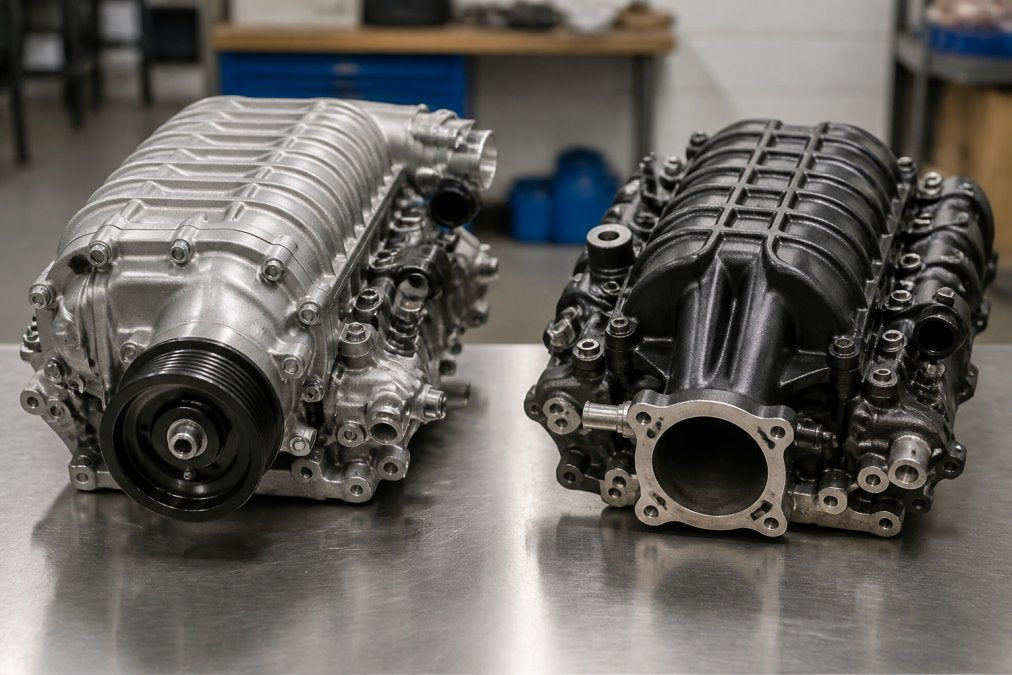
The core distinction is mechanical: a supercharger is driven directly by the crankshaft, so it builds boost pressure the instant you open the throttle. A naturally aspirated engine relies entirely on atmospheric pressure and engine vacuum to fill its cylinders, which limits its volumetric efficiency regardless of displacement (IET Digital Library engine analysis). That single design difference cascades into every other performance characteristic.
How Much Horsepower Do Superchargers Add?
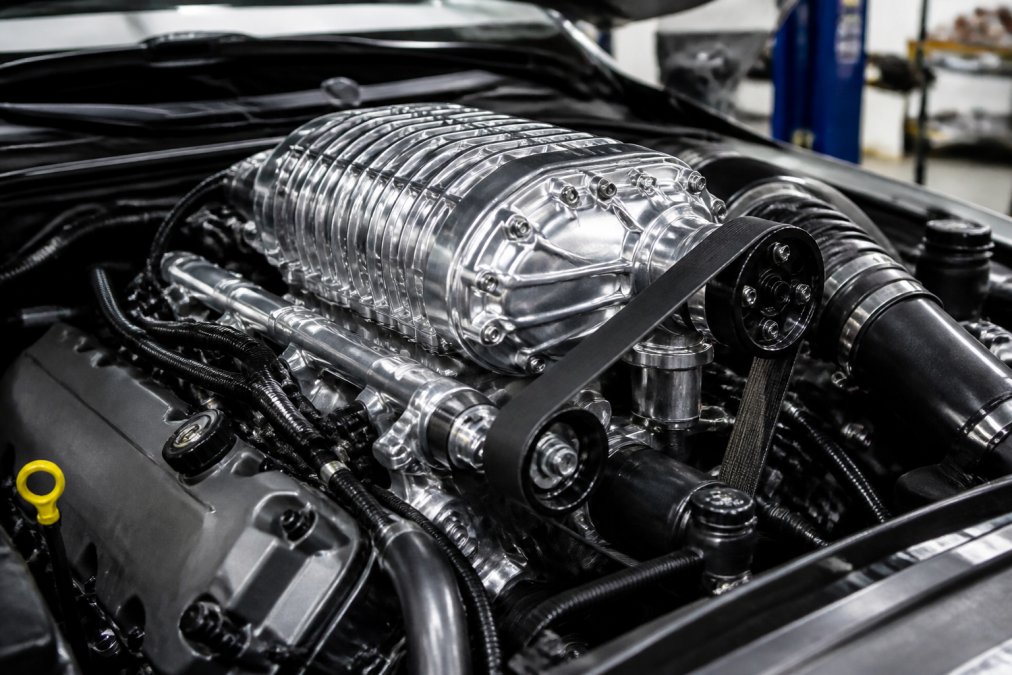
A supercharger typically adds between 30% and 50% horsepower over a stock naturally aspirated engine, with twin-screw and centrifugal designs capable of even more at higher boost levels. The exact gain depends on the supercharger size, pulley ratio, and whether the engine receives a proper tune.
Real-world kits demonstrate this range clearly. For example, a bolt-on kit for a Toyota Tundra 5.7L 3UR-FE delivers 40-60% more horsepower over the stock engine. The mechanical advantage is straightforward: because the supercharger compresses air before it enters the intake manifold, each combustion cycle burns more fuel and air, producing more peak horsepower and a fatter torque curve across the rpm range.

Compare that to a naturally aspirated engine of similar size. To match forced induction output, manufacturers must increase displacement, which adds weight and reduces fuel economy. A Mat Foundry Group analysis of engine architectures confirms that naturally aspirated engines often require larger displacement to compensate for the lack of forced induction power, whereas forced induction systems allow for smaller, more efficient engine packaging.
Pro Tip
When estimating gains, look at the torque curve, not just peak horsepower. A supercharger that adds 40% peak power but 50% torque at 2,500 rpm will feel dramatically faster in daily driving than the peak number suggests.
Forced Induction vs Naturally Aspirated Throttle Response
The throttle response gap between a supercharged and naturally aspirated engine is not just about the absence of turbo lag. It is a function of how each system manages the relationship between crankshaft rotation, manifold pressure, and cylinder filling.
A supercharger is mechanically linked to the crankshaft via a belt, so its output is directly proportional to engine speed. The moment you open the throttle plate, the compressor rotor or impeller is already spinning at the same speed as the engine. This means boost pressure rises almost instantly, but it is not entirely free. The supercharger consumes parasitic power to drive its rotors, typically 10-15% of the engine's gross output at peak boost. This parasitic load is most noticeable at low rpm and light throttle, where the engine must work harder just to spin the supercharger. In practice, this creates a slightly 'heavier' initial pedal feel compared to a naturally aspirated engine, followed by a surge of torque as boost builds.
Naturally aspirated engines, by contrast, have no such parasitic load. Their throttle response is governed by the speed at which the intake manifold can equalize pressure after the throttle plate opens. This is why intake manifold design matters so much on NA engines: long, narrow runners favor high-velocity airflow at low rpm, while short, wide runners favor high-rpm flow. Variable-length intake manifolds, like those used on the Toyota 2GR-FE V6 or the Ford Coyote 5.0L V8, attempt to bridge this gap by physically changing runner length. Even so, the fundamental limitation remains: an NA engine can only fill its cylinders with air at atmospheric pressure, so the torque curve is a direct reflection of the engine's ability to breathe at each rpm.
The real-world consequence is a difference in how the two engines respond to a mid-corner throttle application or a quick downshift. A supercharged engine will deliver a sharp, immediate torque spike that can unsettle the chassis if the driver is not prepared. A naturally aspirated engine delivers a more progressive build, which is why many track-focused drivers prefer it for precise corner exit control. However, for a heavy truck or SUV pulling away from a stop or merging onto a highway, the supercharger's immediate torque is a clear advantage, there is no need to downshift or wait for the rpm to climb into the power band.
Pro Tip
When evaluating throttle response, pay attention to the 1,500-3,000 rpm range. A supercharger will show a steep torque rise in this zone, while a naturally aspirated engine will show a flatter curve that only steepens as it approaches peak torque rpm.
Supercharger vs Naturally Aspirated Reliability and Maintenance
The reliability comparison between supercharged and naturally aspirated engines is not a simple matter of 'more parts, more problems.' It is a question of where the additional stress is concentrated and what maintenance practices are required to manage it.
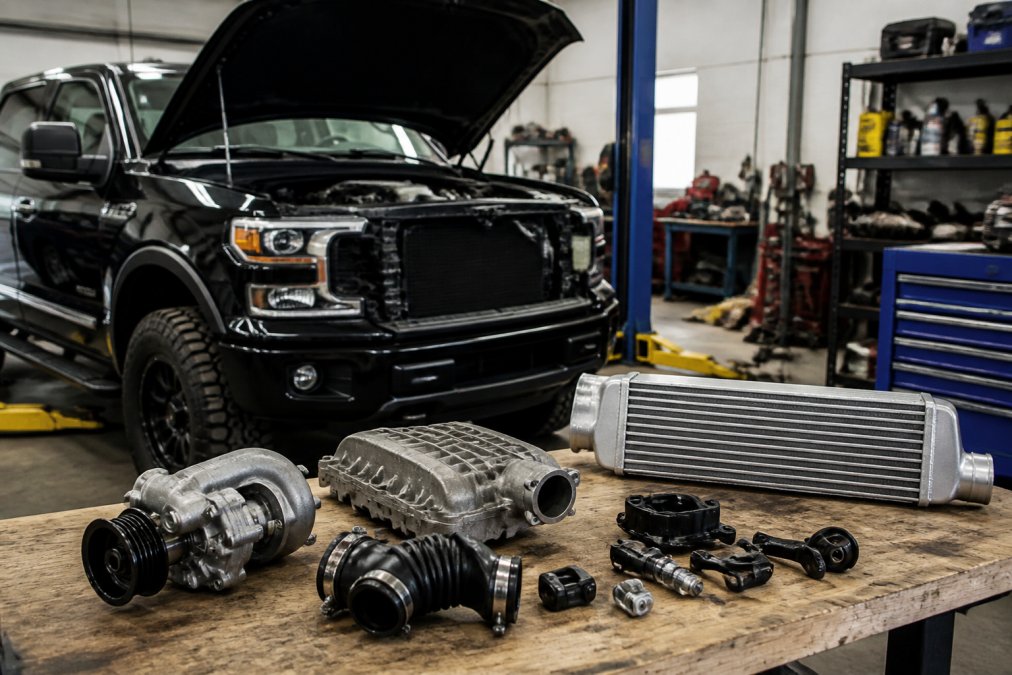
A naturally aspirated engine operates within a narrow band of intake air temperatures and cylinder pressures. Its cooling system is designed to handle the heat generated by combustion alone. A supercharged engine, by contrast, adds a second heat source: the compressor itself. When air is compressed from atmospheric pressure to 7-10 psi of boost, its temperature rises by roughly 50-80°F due to adiabatic heating. Without an intercooler, that hot air enters the combustion chamber, raising the risk of detonation and forcing the ECU to pull ignition timing. This is why a properly engineered supercharger kit includes an intercooler, either air-to-air or water-to-air, and why the intercooler system becomes a new maintenance item.
Water-to-air intercoolers, which are common on truck and SUV supercharger kits, require a dedicated coolant reservoir, an electric pump, and a heat exchanger. The pump should be checked periodically, and the coolant level inspected just like the main radiator. Air-to-air intercoolers are simpler, they have no moving parts, but they are more susceptible to heat soak in stop-and-go traffic because they rely on forward airflow to dissipate heat.
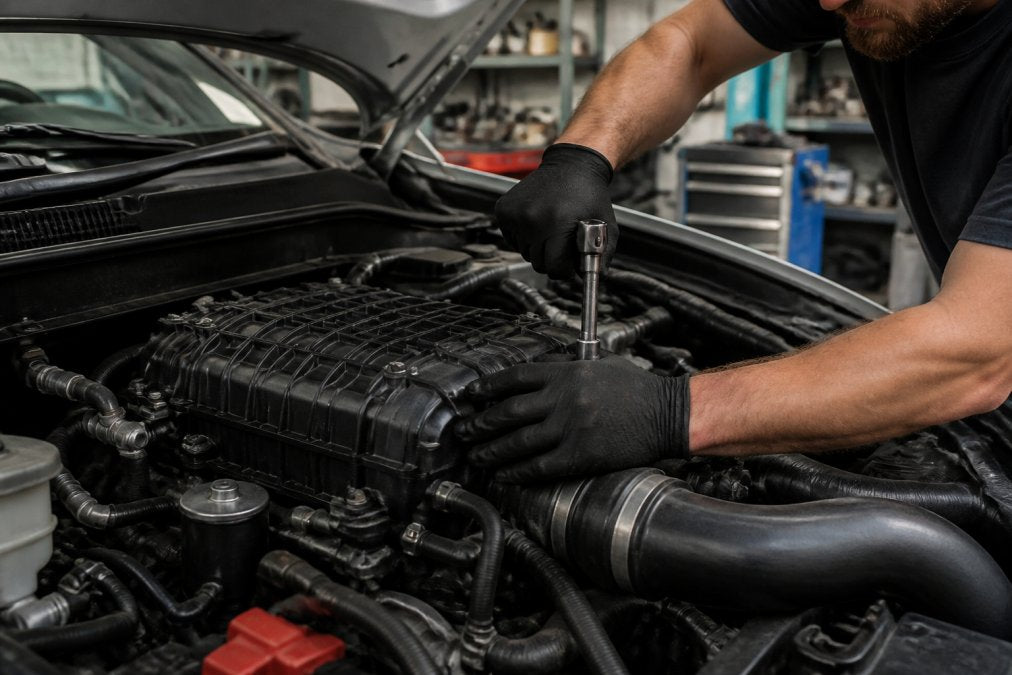
The supercharger unit itself is a high-precision mechanical component. Twin-screw and roots-type superchargers use timing gears and rotors that are machined to tight tolerances. These units are lubricated by the engine's oil in some designs, or by a separate oil reservoir in others. Belt-driven superchargers also place additional load on the serpentine belt and tensioner; a worn belt can slip under boost, causing a sudden loss of power and potential engine damage if the air-fuel mixture goes lean.
Naturally aspirated engines are not immune to maintenance issues, but the failure modes are different. These issues are not caused by high intake temperatures or boost pressure; they are the result of normal combustion byproducts and mechanical wear over time.
Watch Out
If you are considering a supercharger kit, verify whether the supercharger unit shares engine oil or has a self-contained oil system. Self-contained units are generally easier to maintain because they do not introduce contaminants into the engine oil, but they add a separate fluid that must be monitored and changed.
Altitude, Heat Soak, and Aftermarket Tuning Potential
This is where the supercharger vs naturally aspirated performance difference becomes most visible in real-world driving, and it is the angle most comparisons miss entirely.
At altitude, naturally aspirated engines lose power noticeably because there is less atmospheric pressure to push air into the cylinders. A supercharger, by contrast, mechanically forces air in regardless of ambient pressure, so it maintains power much better at 8,000 feet than a naturally aspirated engine of similar output. For anyone driving in the Mountain West or doing mountain passes, this is a decisive advantage.
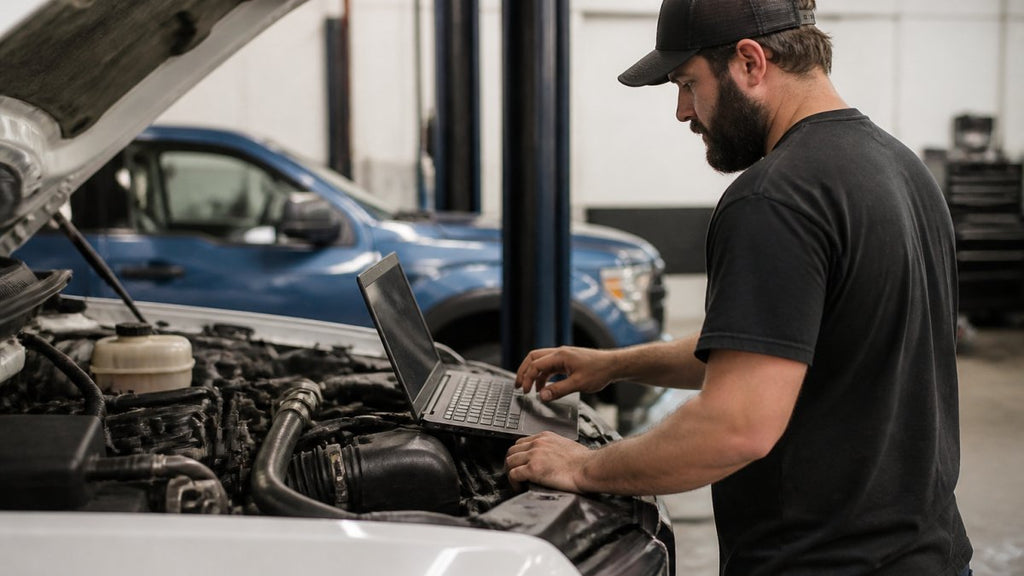
Heat soak is the supercharger's main weakness. When the engine bay gets hot, and the intercooler system is undersized, intake air temperatures rise, and the ECU pulls timing to protect the engine. The result is a noticeable power drop after hard driving. The fix is proper thermal management: a large water-to-air intercooler with a dedicated coolant reservoir and electric pump keeps intake temperatures stable even in demanding conditions.
Aftermarket tuning potential is where forced induction shines. A naturally aspirated engine can gain maybe 10-15% with headers, intake, and a tune. A supercharged engine can gain another 10-20% on top of the initial 40-50% boost with a more aggressive tune, a smaller pulley, or E85 fuel. The ceiling is much higher, which is why most serious performance builds start with forced induction.
Which Engine Type Should You Pick?
Your choice comes down to how and where you drive, not which technology sounds better at a car meet. Choose a supercharger if you want immediate, substantial power gains with minimal installation complexity, and you are prepared for the additional maintenance and tuning requirements. Choose naturally aspirated if you value simplicity, linear power delivery, and lower running costs above outright performance.
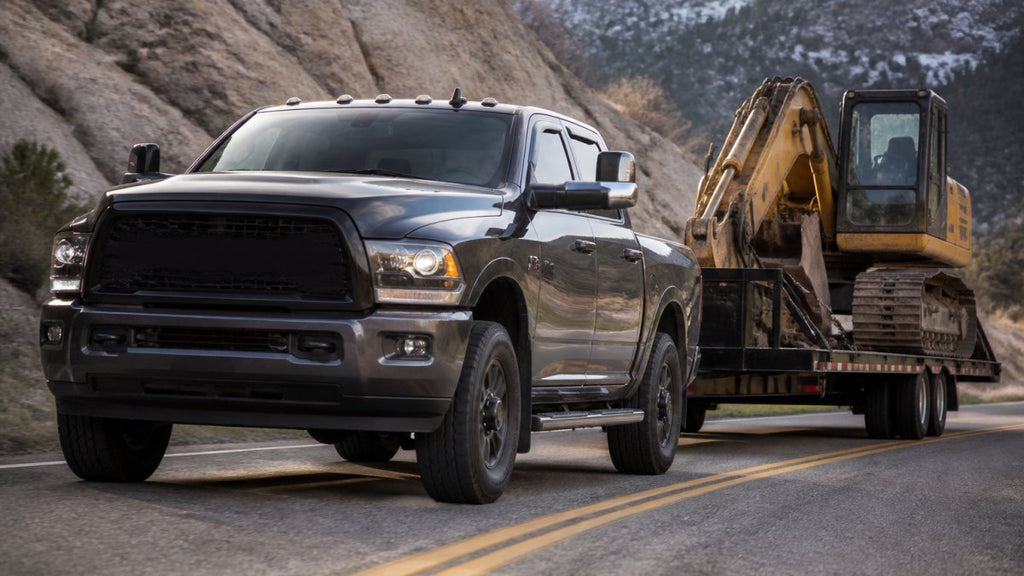
For daily drivers, tow rigs, and off-road vehicles, the supercharger is almost always the better choice. The instant torque eliminates gear hunting on the highway with larger tires, transforms passing power, and makes towing feel effortless. VT Superchargers builds bolt-on kits for many vehicles, including the Toyota Tundra 5.7L, Toyota Tacoma 2.7L, Nissan Titan and Armada 5.6L V8, Ford Explorer 3.5L V6, and Mazda 6 2.0L Skyactiv-G. Each kit is engineered for OEM-style fitment with no cutting or welding required, and they are backed by a 24-month warranty.

The naturally aspirated purist argument has merit. These engines are lighter, simpler, and often rev higher. But the performance ceiling is lower, and the cost per horsepower climbs quickly once you exhaust bolt-on modifications.
Best For
A supercharger is best for truck and SUV owners who tow, haul, or run larger tires, and for daily drivers who want a dramatic, reliable power increase without rebuilding the engine. Naturally aspirated engines suit lightweight sports cars where throttle modulation and high-rpm response matter more than peak torque.
The supercharger vs naturally aspirated performance difference is ultimately a trade-off between instant, abundant power and elegant mechanical simplicity. If you want your vehicle to feel substantially faster in everyday driving, to maintain power at altitude, and to have room to grow with future modifications, a supercharger delivers results that a naturally aspirated engine cannot match without massive displacement. VT Superchargers offers complete bolt-on kits that provide 40-70% more power over stock, with precise fitment, financing options, and a 24-month warranty for peace of mind. Get started with VT Superchargers and put the performance difference to work in your own vehicle.
Frequently Asked Questions
What is the downside of a supercharger?
The main downside is parasitic loss. A supercharger is driven directly by the crankshaft, so it saps engine power to spin its rotors. This reduces overall mechanical efficiency compared to a turbocharger. Supercharged engines also run hotter and demand more maintenance, including more frequent oil changes and closer attention to cooling systems. The added complexity means more components that can fail over time.
Does a supercharger affect engine life?
Yes, forced induction increases cylinder pressure and heat, which can shorten engine life if the system isn't tuned properly. A supercharger adds roughly 40-60% more horsepower, putting extra stress on pistons, rods, and bearings. However, with a proper air-fuel ratio, an intercooler, and conservative boost levels around 7 psi, most modern engines handle it fine. The key is using a quality kit and maintaining shorter oil change intervals.
How does throttle response compare between supercharged and naturally aspirated setups?
Superchargers deliver instant throttle response with no lag because they're belt-driven off the crankshaft. Boost builds immediately as engine speed rises, providing linear power delivery that feels similar to a larger naturally aspirated engine. Naturally aspirated engines also respond immediately, but they lack the torque punch of a supercharger at low rpm. Forced induction gives you that low-end pull without waiting for exhaust gases to spool a turbo.
What are the maintenance trade-offs when adding a supercharger?
Supercharged engines require more attention than naturally aspirated ones. Expect more frequent oil changes since heat and pressure degrade lubricant faster. Cooling system maintenance becomes critical to prevent heat soak. You'll also need to monitor belt condition and tension.
Related post


RECENT POSTS