Edelbrock Supercharger Alternatives: What to Consider Before You Buy
Edelbrock Supercharger Alternatives: What to Consider Before You Buy
Edelbrock is one of the most recognised names in American performance. Their supercharger kits have been a go-to option for muscle car and street performance enthusiasts for years — offering a relatively accessible entry point into positive displacement forced induction with a brand name that carries real credibility in the domestic performance market.
But Edelbrock's supercharger lineup is focused on a specific set of platforms and use cases. If your vehicle isn't in their supported range, or if your build goals call for something different — different intercooling, different power delivery, different platform support — there are alternatives worth understanding. This article looks at the Edelbrock landscape honestly, covering where it fits well, where buyers sometimes look elsewhere, and how options including VT Superchargers compare across the factors that matter most.
This is a practical comparison guide, not a brand takedown. The goal is to help you make a confident, well-informed decision.
Quick Comparison: Edelbrock vs. Alternatives
| Brand | Supercharger Type | Best Use Case | Strengths | Possible Drawbacks |
|---|---|---|---|---|
| Edelbrock | Roots (TVS) | Domestic muscle cars, street performance | Established brand, good street manners, accessible pricing | Narrower platform focus, limited import vehicle support |
| VT Superchargers | Roots / Twin-screw (platform dependent) | OEM+ daily drivers, Toyota/Lexus/Jeep/Dodge builds | Complete bolt-on kits, water-to-air intercooling, strong import platform support | Newer brand with growing platform coverage |
| Magnuson | Roots (TVS) | Trucks, SUVs, OEM-style builds | Strong low-end torque, proven OEM integration | Premium pricing, limited import platform support |
| Whipple | Twin-screw | High-output street and strip builds | Excellent thermal efficiency, strong mid-range power | Higher cost, larger packaging |
| ProCharger | Centrifugal | High-RPM peak horsepower builds | Strong top-end power, wide domestic platform support | RPM-dependent boost, modest low-end torque |
Why Some Buyers Look for Edelbrock Alternatives
Edelbrock has built a solid reputation in the domestic performance market, but several factors lead buyers to compare alternatives before purchasing:
- Platform coverage: Edelbrock's supercharger lineup is focused primarily on domestic V8 applications — GM LS engines, Ford Coyote, and similar platforms. Buyers on Toyota, Lexus, Jeep, or Dodge import-derived platforms often find no Edelbrock fitment available for their vehicle.
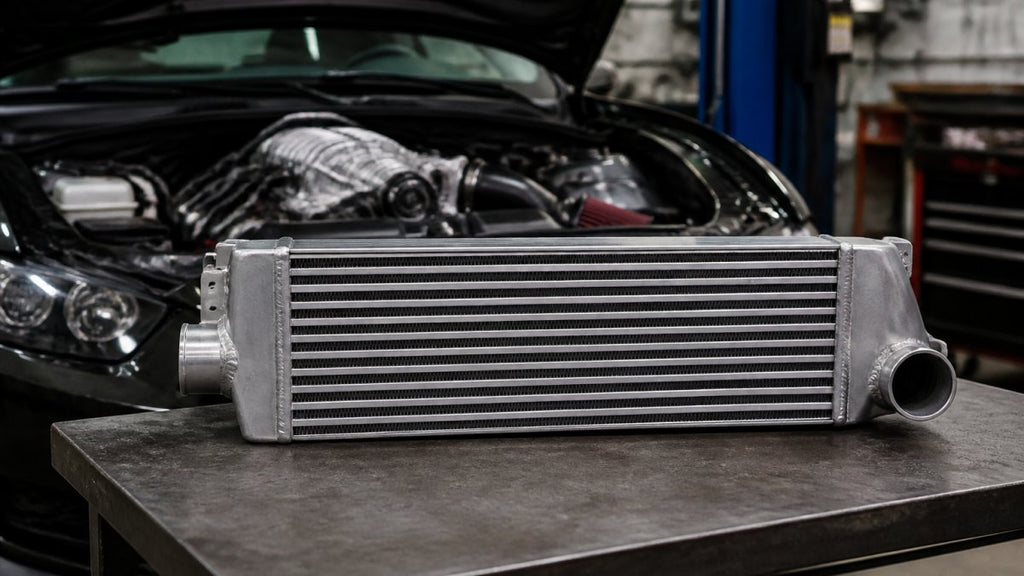
- Intercooling approach: Some Edelbrock kits use air-to-air intercooling, which works well at sustained highway speeds but can be less effective in stop-and-go traffic or at lower vehicle speeds. Buyers who want water-to-air intercooling for more consistent street performance sometimes look elsewhere.
- Power output range: Edelbrock kits are generally positioned as street-friendly, moderate-boost systems. Buyers who want either a milder OEM+ daily setup or a higher-output performance build may find alternatives that better match their specific power goals.
- Tuning ecosystem: Depending on your platform and your local tuner's experience, the tuning support available for Edelbrock systems may vary. This is worth confirming before purchasing.
- Complete kit contents: As with any supercharger purchase, it's worth confirming exactly what's included in the kit versus what needs to be sourced separately. Buyers who want a single-purchase complete solution sometimes compare options on this basis.
These are practical considerations, not criticisms of Edelbrock's engineering. Understanding them helps you choose the right system for your actual build.
Understanding Supercharger Types
Roots-Style Superchargers
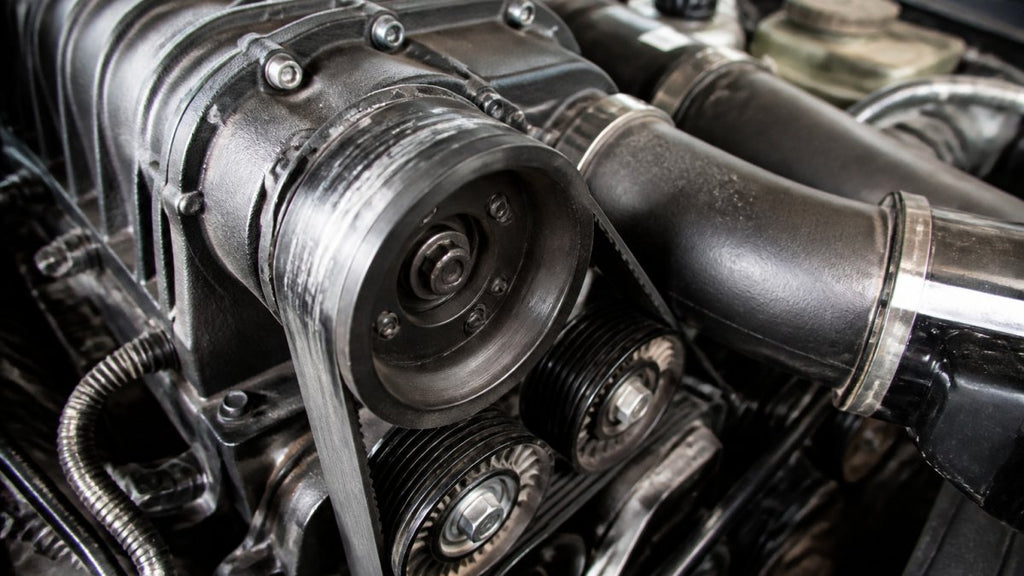
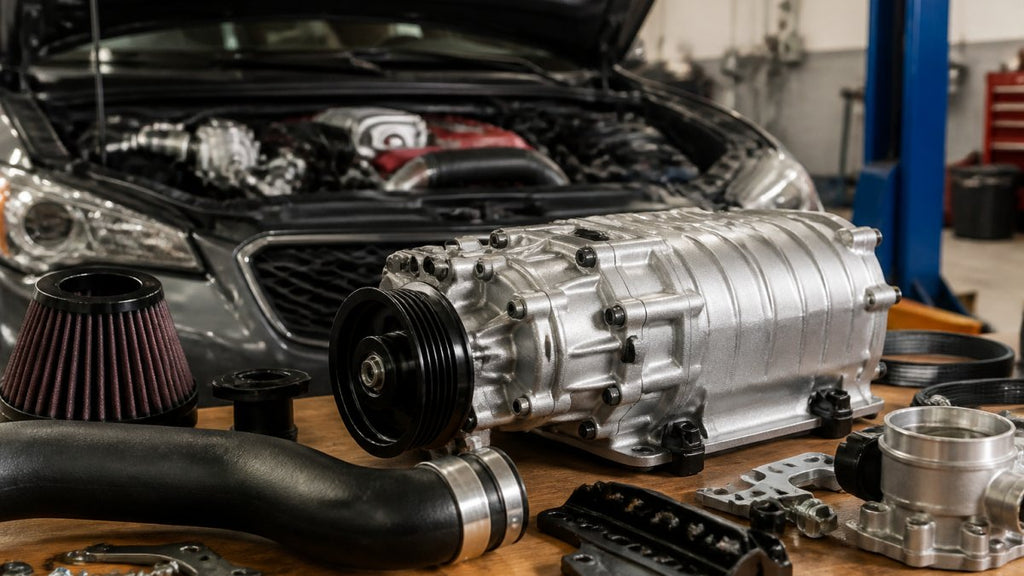
Edelbrock's supercharger kits use TVS (Twin Vortices Series) roots-style compressors — the same technology used by Magnuson and others. Roots superchargers are positive displacement units that move a fixed volume of air per revolution, delivering boost from idle and producing strong low-end torque. This makes them well-suited to street driving, where throttle response at low RPM matters more than peak horsepower at high revs. They're typically mounted in the engine valley for a clean, OEM-like appearance. The trade-off is that they generate more heat than twin-screw designs, which is why intercooling quality matters.
Twin-Screw Superchargers
Twin-screw units compress air internally as it passes through intermeshing rotors, making them thermally more efficient than roots designs. They deliver strong power across a wide RPM range and are popular in high-output builds where thermal management is critical. Whipple and Kenne Bell are the main twin-screw brands. They tend to be physically larger than roots units, which can affect packaging on some platforms.
Centrifugal Superchargers
Centrifugal superchargers build boost progressively with RPM, similar to a turbocharger. They produce strong peak horsepower but modest low-end torque. For daily drivers, towing, or off-road use where low-RPM torque matters, centrifugal systems are generally less satisfying than positive displacement designs. ProCharger and Vortech are the main centrifugal brands.
OEM+ Daily-Driver Systems
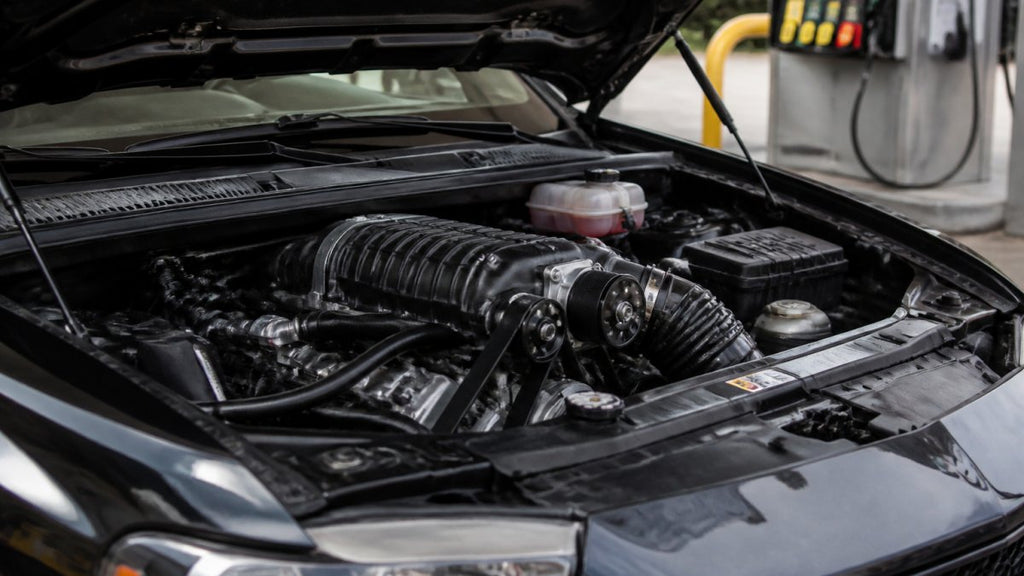
A distinct category of supercharger kits is engineered specifically for street and daily use — prioritising clean installation, manageable boost levels, strong drivability, and long-term reliability. These systems use positive displacement compressors with water-to-air intercooling and are designed to work within the factory engine management system with appropriate tuning. VT Superchargers builds in this space, with a focus on platforms that the domestic performance brands don't typically serve.
Where VT Superchargers Fits
VT Superchargers and Edelbrock share a focus on street-friendly, positive displacement supercharging — but they serve different platforms and slightly different buyer profiles. Edelbrock is focused on domestic muscle car and truck applications. VT Superchargers is focused on Toyota, Lexus, Jeep, and Dodge platforms where OEM+ drivability and a complete bolt-on kit are the priority.
What VT Supercharger kits deliver:
- Water-to-air intercooling where applicable — effective in traffic, at low speeds, and in varying real-world conditions, not just at highway speeds
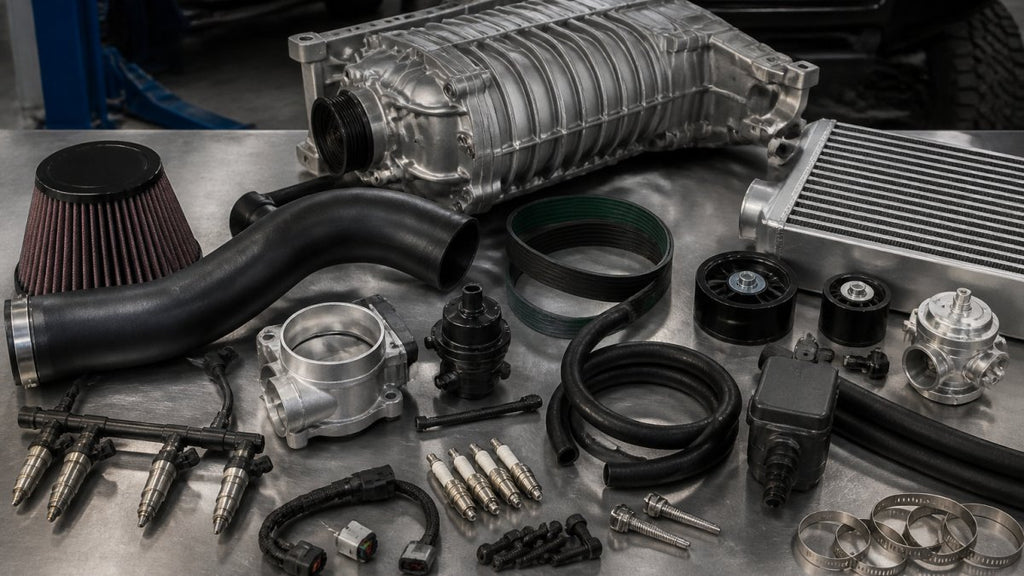
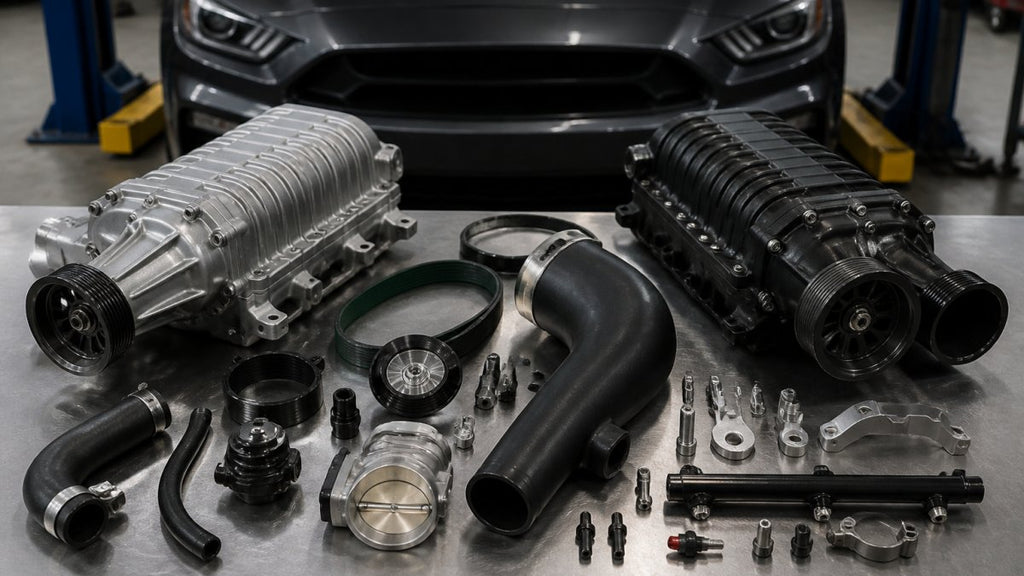
- Complete bolt-on kits — supercharger, intercooler, all hardware, and tuning support in one package
- OEM+ power delivery — strong, usable torque across the RPM range without an aggressive high-boost power curve
- Clean under-hood appearance — designed to look factory-appropriate
- Platform focus on Toyota, Lexus, Jeep, and Dodge — vehicles underserved by the domestic performance supercharger market
- Daily-driver orientation — built for vehicles that commute, tow, go off-road, and occasionally see spirited driving
Not sure which setup suits your build? Our team is happy to advise — reach out with your vehicle, engine, and goals and we'll help you work through the options.
Who Each Option Suits
Choose Edelbrock if:
- Your vehicle is a domestic V8 platform in their supported lineup
- You want a street-friendly roots-style system from an established brand
- Moderate boost and good street manners are the priority
- Your tuner has experience with Edelbrock systems
Consider VT Superchargers if:
- You're running a Toyota Camry, Land Cruiser, Tacoma, Lexus GX or IS, Jeep Wrangler, Jeep Gladiator, or Dodge/Chrysler 3.6L platform
- You want water-to-air intercooling for consistent street performance
- A complete bolt-on kit with OEM+ drivability is the goal
- Your vehicle is a daily driver, tow vehicle, or off-road rig
Consider Magnuson if:
- You want a TVS roots system with proven OEM integration on a domestic truck or SUV platform
- Budget is secondary to brand familiarity and proven fitment
Consider Whipple if:
- You're building a high-output street or strip car and thermal efficiency at high boost is a priority
- Your platform is in their lineup and budget allows for a premium twin-screw system
Platform Examples: Where VT Superchargers Operates
- Toyota Camry: One of the most popular daily drivers on the road. A bolt-on supercharger kit adds meaningful low-end torque for highway driving and overtaking without compromising the Camry's reliability or refinement.
- Toyota Land Cruiser: A serious towing and overlanding platform. Positive displacement supercharging delivers the low-end torque that makes a real difference when towing, climbing grades, or navigating trails.
- Toyota Tacoma: Off-road and daily use. Added torque improves loaded towing, trail performance, and highway confidence at the RPM ranges that matter most in real-world use.
- Lexus GX and IS: Enthusiasts who want more performance from their Lexus without compromising the composed, refined character these vehicles are known for.
- Jeep Wrangler and Gladiator: Off-road builds where low-RPM torque is critical for rock crawling, trail use, and loaded highway driving. The Pentastar 3.6L responds well to a well-engineered bolt-on supercharger kit.
- Dodge/Chrysler 3.6L Pentastar: A widely used engine across trucks, SUVs, and Jeep platforms that benefits significantly from the immediate torque delivery of a positive displacement supercharger.
Frequently Asked Questions
What is the best alternative to Edelbrock superchargers?
It depends on your platform and goals. For domestic V8 builds, Magnuson or Whipple are strong positive displacement alternatives. For Toyota, Lexus, Jeep, and Dodge platforms where you want OEM+ drivability and a complete bolt-on kit, VT Superchargers is worth a serious look. If you're unsure which direction makes sense for your build, reach out — we're happy to advise.
Are Edelbrock superchargers good for daily driving?
Edelbrock kits are designed with street use in mind and generally deliver good drivability. For buyers on platforms Edelbrock doesn't support, or those who want water-to-air intercooling for more consistent performance in traffic and varying conditions, alternatives are worth comparing.
What is the difference between air-to-air and water-to-air intercooling?
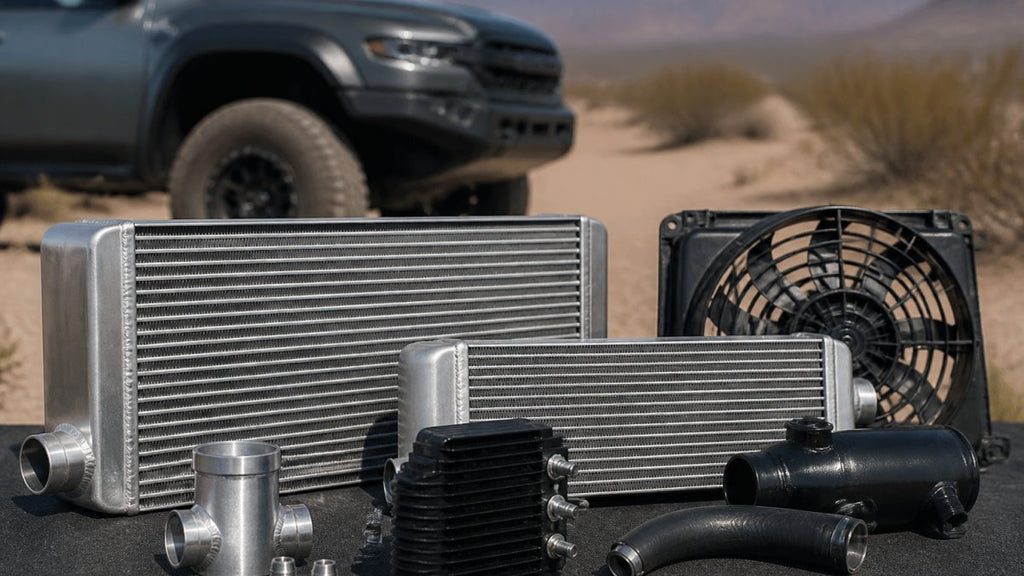
Air-to-air intercoolers cool the compressed air charge using airflow through the front of the vehicle. They work well at sustained highway speeds but can be less effective in stop-and-go traffic or at lower vehicle speeds. Water-to-air intercoolers use a water circuit to cool the charge and work effectively regardless of vehicle speed — making them well-suited to mixed street and daily use.
Do roots superchargers give good low-end torque?
Yes. Roots-style superchargers are positive displacement units that deliver boost from idle, producing strong low-end torque and linear throttle response. This is one of their key advantages over centrifugal superchargers, which build boost progressively with RPM. For daily driving, towing, and off-road use, the immediate torque delivery of a roots system is a significant practical benefit.
Do supercharger kits require tuning?
Yes, without exception. Any supercharger kit that adds meaningful boost requires a proper engine tune to adjust fuel delivery, ignition timing, and other parameters. Running a supercharger without a tune risks engine damage. Always confirm tuning is included or supported before purchasing a kit.
Which supercharger type is best for a daily driver?
For most daily drivers, a positive displacement supercharger — roots or twin-screw — is the better choice. Boost is available from idle, which means better throttle response in traffic, stronger torque for highway merging, and more usable power in the RPM ranges you actually use day-to-day. Centrifugal systems build boost with RPM, which is less relevant in everyday driving conditions.
Are supercharger kits reliable for daily use?
A properly engineered, correctly installed, and well-tuned supercharger kit can be very reliable for daily use. The key factors are appropriate boost levels, quality intercooling, a proper tune, and regular maintenance. Kits designed specifically for street and daily use — rather than maximum power output — tend to have the strongest real-world reliability track record.
What should I look for in a bolt-on supercharger kit?
Confirm the kit is engineered specifically for your engine and model year. Check what's included — a complete kit should cover the supercharger, intercooler, all hardware, and tuning support. Understand the installation requirements and whether your local tuner has experience with that system. Review the warranty. And be honest about your use case. If you're not sure what's right for your build, contact us — we're happy to help you work through it.
Final Thoughts
Edelbrock makes well-regarded street performance supercharger systems, and for domestic V8 platforms in their supported lineup, they're a legitimate option. But the forced induction market has expanded well beyond the traditional domestic muscle car space.
If you're building a Toyota, Lexus, Jeep, or Dodge platform and want a complete, well-engineered bolt-on kit with water-to-air intercooling and OEM+ drivability, there are now strong alternatives that didn't exist a few years ago.
Not sure which supercharger setup fits your build? Browse VT Superchargers kits or contact us with your vehicle, engine, and power goals — we're happy to advise.
Related post
09
Oct
RECENT POSTS