Supercharger vs Turbo for Towing: 2026 Comparison
Table of Contents
- Supercharger vs Turbo for Towing: The Core Difference
- Power Delivery and Torque Curves for Towing
- How Much Horsepower Do Superchargers Add
- Supercharger vs Turbo Reliability for Towing Applications
- Installation, Cost, and Real-World Towing Scenarios
- Which Forced Induction System Wins for Your Towing Needs
- Conclusion
Last Updated: August 28, 2026
Supercharger vs Turbo for Towing: The Core Difference
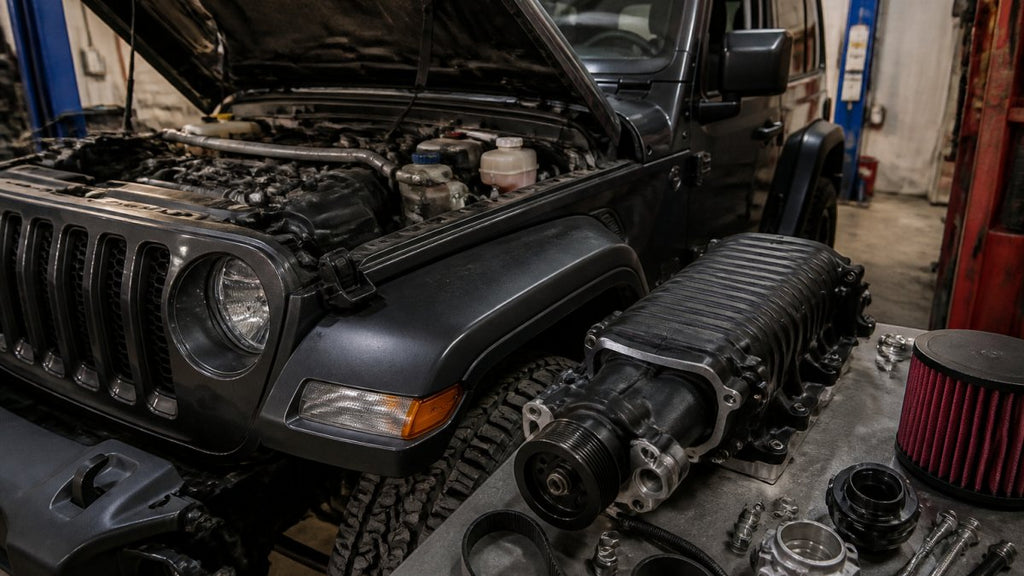
When you're serious about towing, the choice between a supercharger and a turbocharger fundamentally changes how your engine delivers power. At VT Superchargers, we've engineered bolt-on kits that address the exact problem most truck owners face: gear hunting on grades, sluggish throttle response, and the inability to maintain consistent speed when loaded.
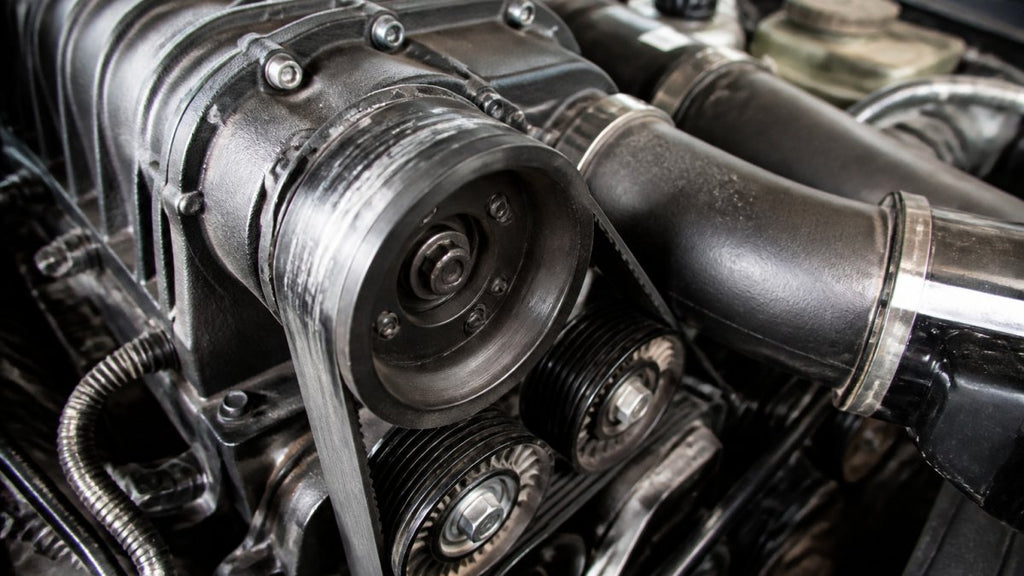
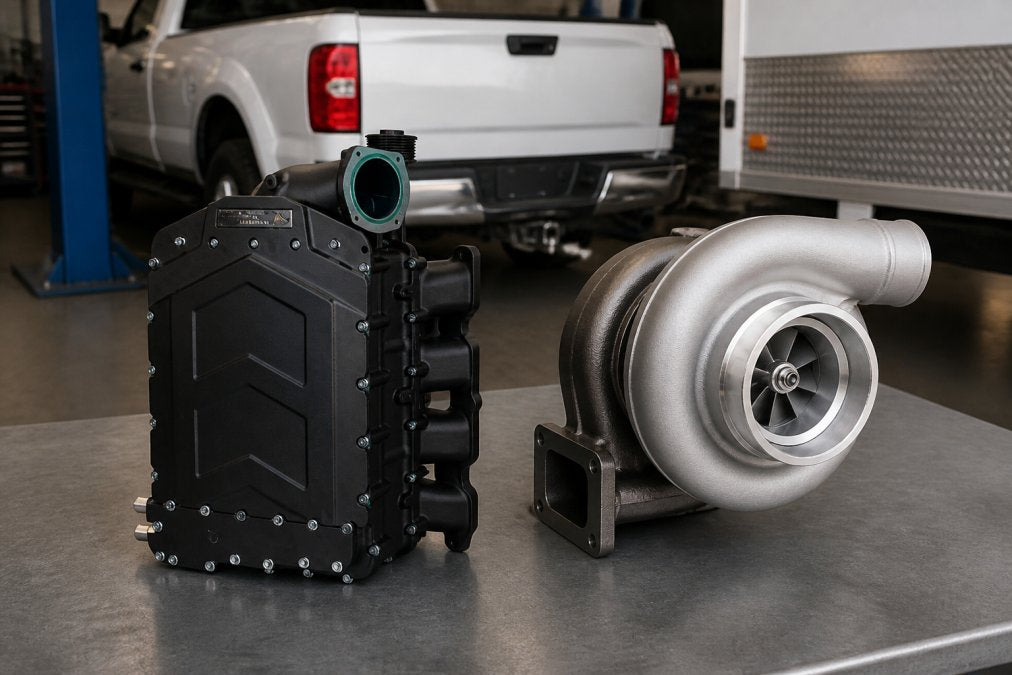
The core difference comes down to how each system forces air into your engine. A supercharger is mechanically driven by the crankshaft via a belt, delivering boost instantly across the entire RPM range. A turbocharger relies on exhaust gas energy to spin a turbine that compresses incoming air, which means there's a delay before boost arrives. For towing, that delay matters enormously.
According to VT Superchargers' 2026 guide on supercharger performance for towing, twin-screw superchargers deliver 40-60% more torque across the entire power band, with the biggest gains below 3,000 RPM, exactly where towing happens.
How Superchargers Deliver Power
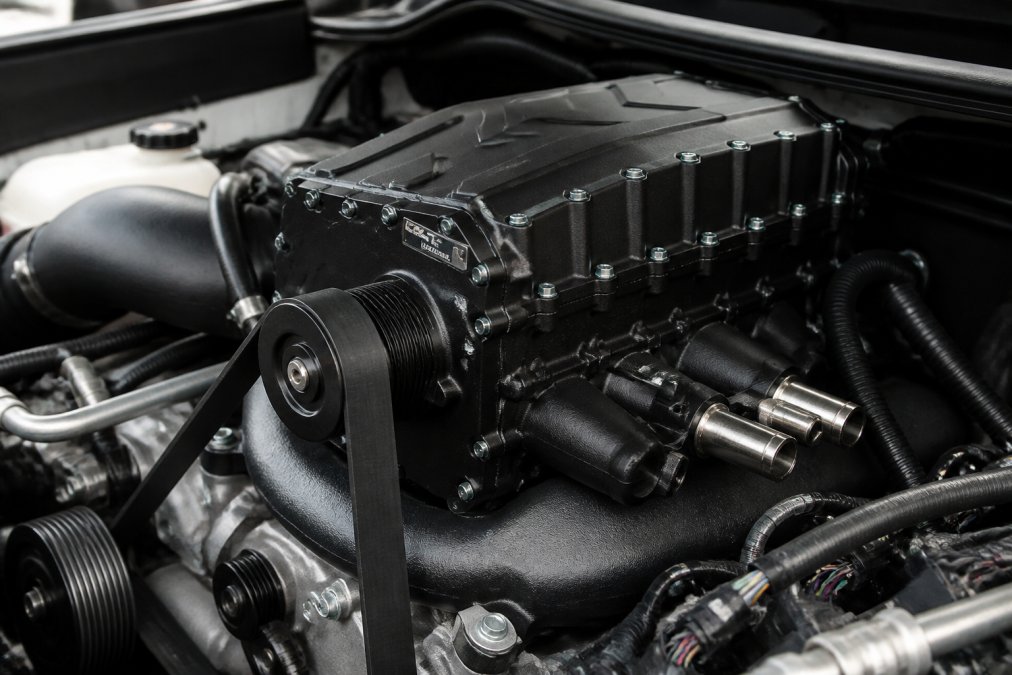
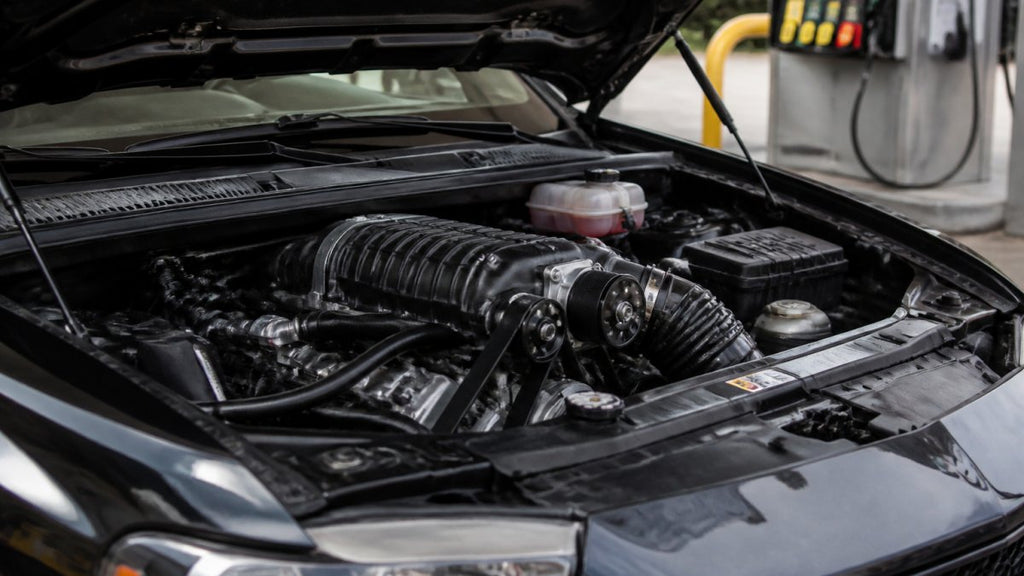
A supercharger is a direct mechanical pump bolted to your engine, spinning at a fixed ratio to engine speed. As soon as you crack the throttle, the supercharger immediately compresses air and forces it into the intake manifold. There's no lag, no delay.
Twin-screw superchargers deliver 70-80% of peak torque by 2,500 RPM, providing sustained low-end power critical when holding a steady grade with weight behind you (sae.org).
How Turbochargers Deliver Power
A turbocharger is a turbine-compressor assembly mounted in the exhaust manifold. Exhaust gases spin the turbine wheel, which drives a compressor that sucks in and compresses fresh air. The problem for towing: this process takes time. Most turbochargers don't produce meaningful boost until 3,000-4,500 RPM (peer-reviewed research). Below that, you're essentially driving a naturally aspirated engine.
The delay between throttle input and actual boost arrival, typically 0.5-1.5 seconds, is called turbo lag. For highway towing, this lag forces constant downshifting and aggressive throttle use, increasing fuel consumption and engine stress.
Power Delivery and Torque Curves for Towing
The torque curve, how much torque your engine produces across the RPM range, is everything in a towing vehicle. You spend 80% of your towing time between 1,500 and 3,500 RPM.
Supercharger Torque Advantage at Low RPM
A supercharger delivers torque where towing demands it. Superchargers outperform turbochargers in low-end torque metrics: instant boost with zero lag, consistent torque for sustained climbs, and better altitude compensation.
Consider a real scenario: you're towing a 12,000-pound trailer up a 6% grade. Your truck is at 2,200 RPM, third gear. A supercharged engine produces 40-60% more torque at that exact RPM. You maintain speed without downshifting. The transmission stays in gear. Engine temperature stays stable.
A turbocharged engine at 2,200 RPM is still waiting for boost. The driver downshifts to build RPM and exhaust pressure. The turbo finally spools. Now you have excess power you didn't need. The transmission upshifts. The cycle repeats, this is gear hunting.
Turbo Lag and Its Impact on Towing
Turbo lag isn't just an inconvenience. It's a fundamental mismatch between when you need power and when the turbo delivers it. Variable geometry turbochargers (VGTs) reduce lag but add complexity and cost, introducing additional failure points that superchargers simply don't have.
For towing, the practical impact is clear: you can't trust the power to be there when you need it. This forces defensive driving, maintaining higher RPM and avoiding full-throttle situations. Over a long day of towing, this increases fuel consumption, raises engine temperatures, and adds stress to the transmission.
How Much Horsepower Do Superchargers Add
Horsepower gains from a supercharger depend on engine displacement, boost level, and tuning. For mid-size V6 engines (like the Toyota Tacoma 4.0L 1GR-FE), a VT Superchargers kit delivers 40-60% more horsepower.
For larger V8 engines (like the Toyota Tundra 5.7L 3UR-FE), a supercharged engine produces 40-60% more horsepower.

But here's what matters for towing: horsepower is only half the equation. Torque is where towing happens. The same supercharger kits deliver 30-50% more torque at 7 PSI boost, which is what prevents gear hunting, maintains consistent speed on grades, and reduces stress on your transmission and engine. towing methods guide.
Supercharger vs Turbo Reliability for Towing Applications
When you're towing regularly, reliability isn't optional. A failure on the highway with a loaded trailer is dangerous. This is where superchargers have a decisive advantage.
Mechanical Simplicity and Durability
A supercharger is mechanically simpler: a pump driven by a belt. No turbine spinning at 150,000+ RPM. No waste gate. No variable geometry actuators. No electronic controls managing boost pressure.
This simplicity translates directly to durability. VT Superchargers kits feature self-contained oiling systems requiring no special maintenance beyond normal engine oil changes. The 24-month warranty covers the entire system.
A turbocharger has dozens of failure points. The turbine bearing can fail if oil supply is interrupted. The waste gate can stick. The variable geometry actuator can malfunction.
Heat Management and Engine Stress
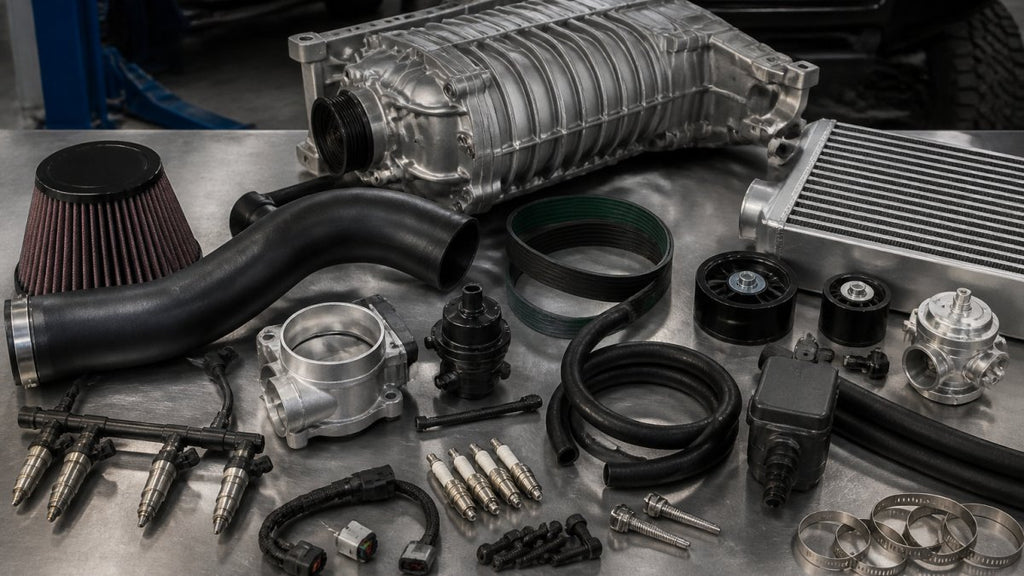
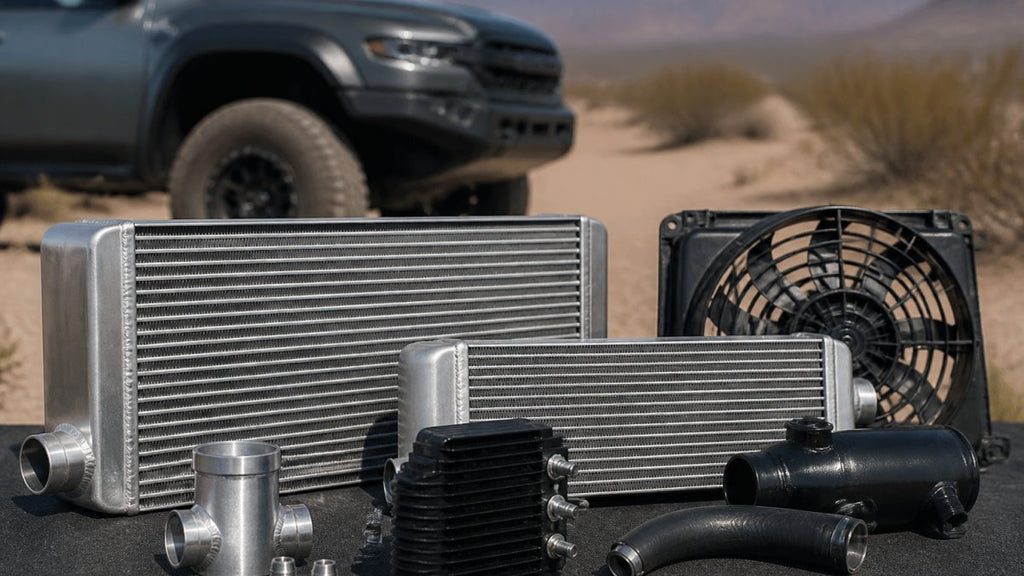
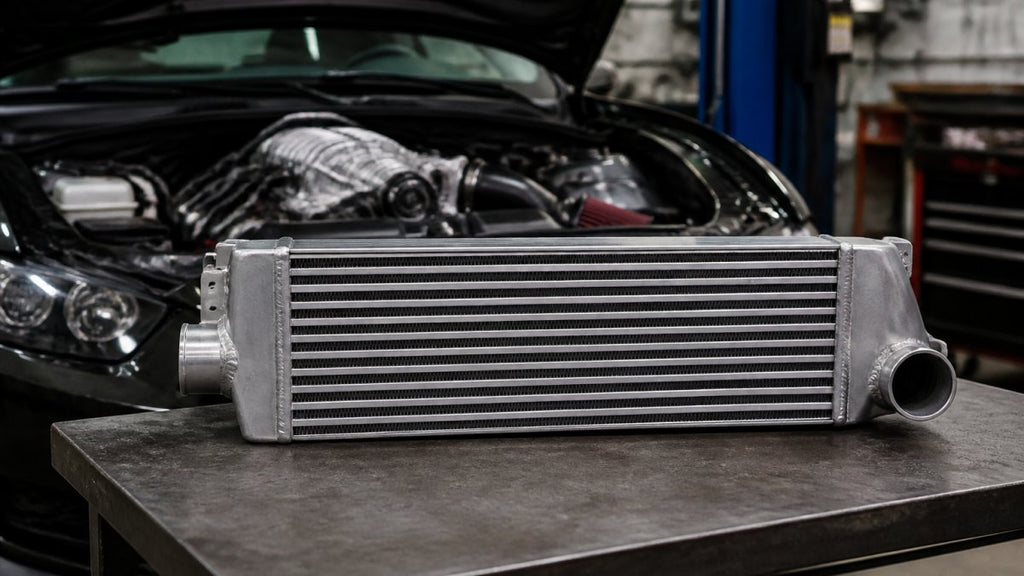
A supercharger generates heat through compression, but that heat is manageable. VT Superchargers kits include large water-cooled intercoolers that dissipate heat efficiently, keeping the incoming air charge cool for better combustion efficiency and less detonation risk.
A turbocharger's turbine wheel is exposed directly to exhaust gas temperatures of 1,200-1,400°F (asme.org). This extreme heat radiates into the surrounding engine bay, increasing under-hood temperatures and accelerating wear on internal components.
For towing, this heat difference matters. A supercharged engine stays cooler, meaning safer combustion, longer oil life, and less thermal stress on gaskets and seals. A turbocharged engine runs hotter, which increases the risk of detonation under heavy load.
Installation, Cost, and Real-World Towing Scenarios
The practical reality of owning a supercharger kit is that installation and long-term cost matter as much as raw performance.
Bolt-On Installation and Warranty Protection
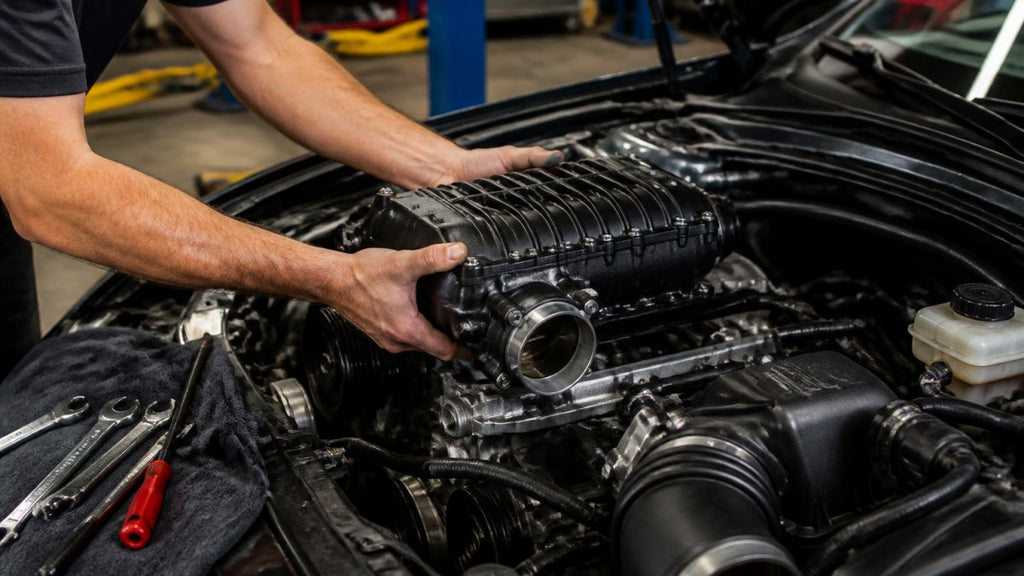
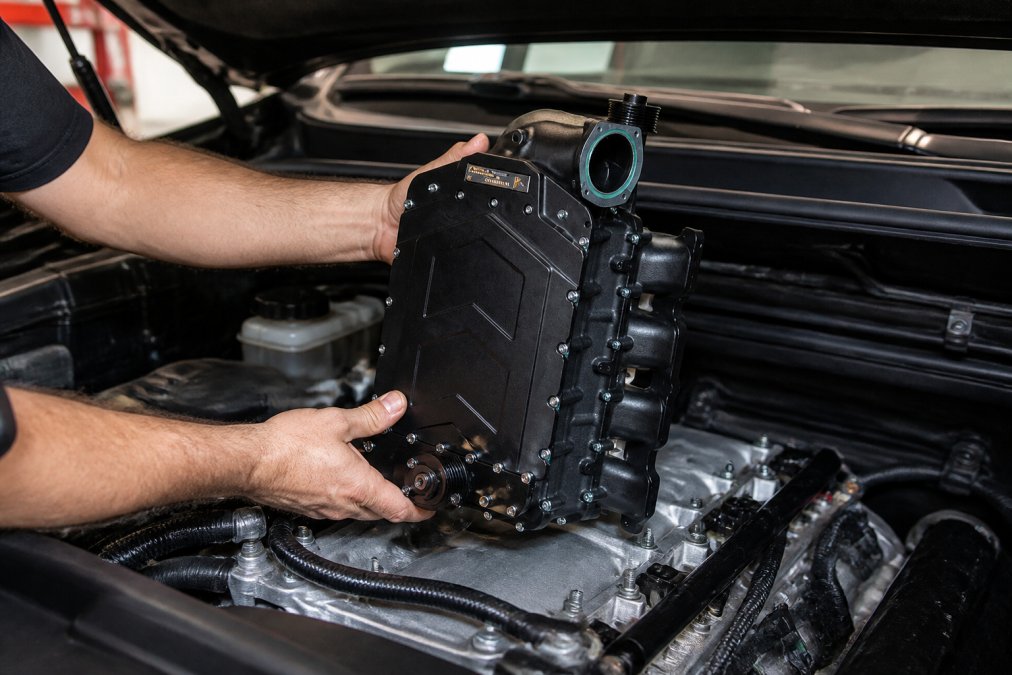
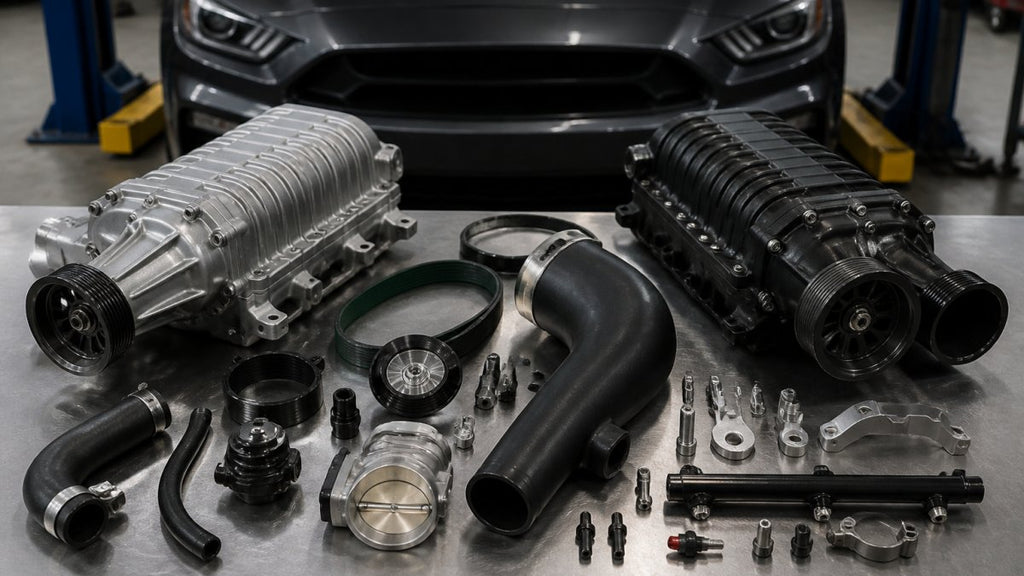
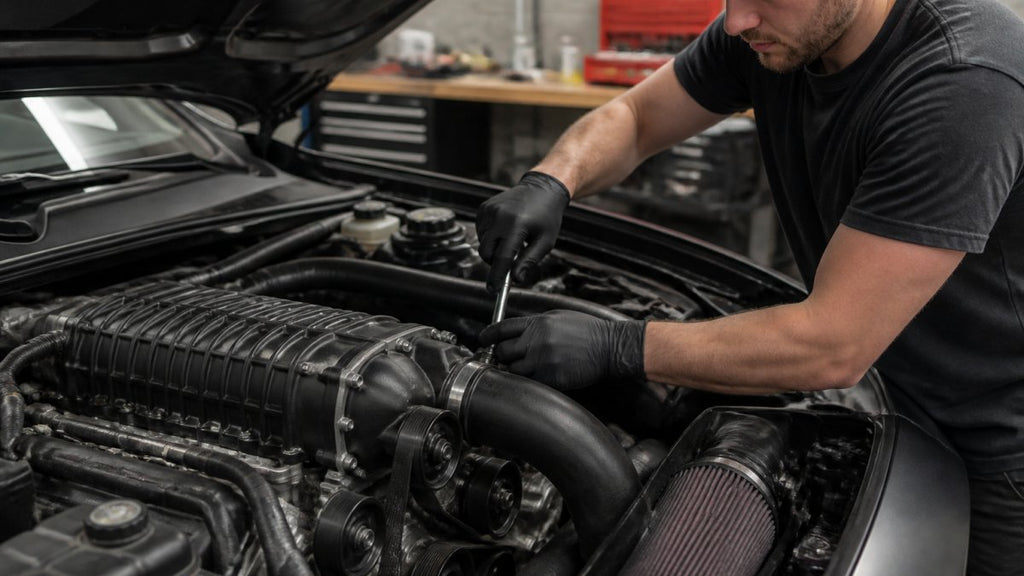
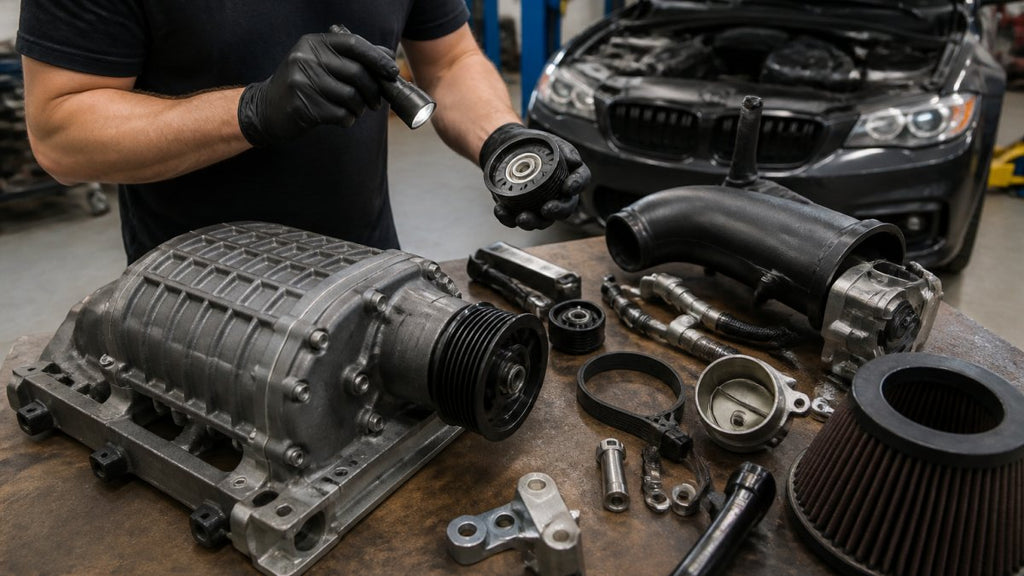
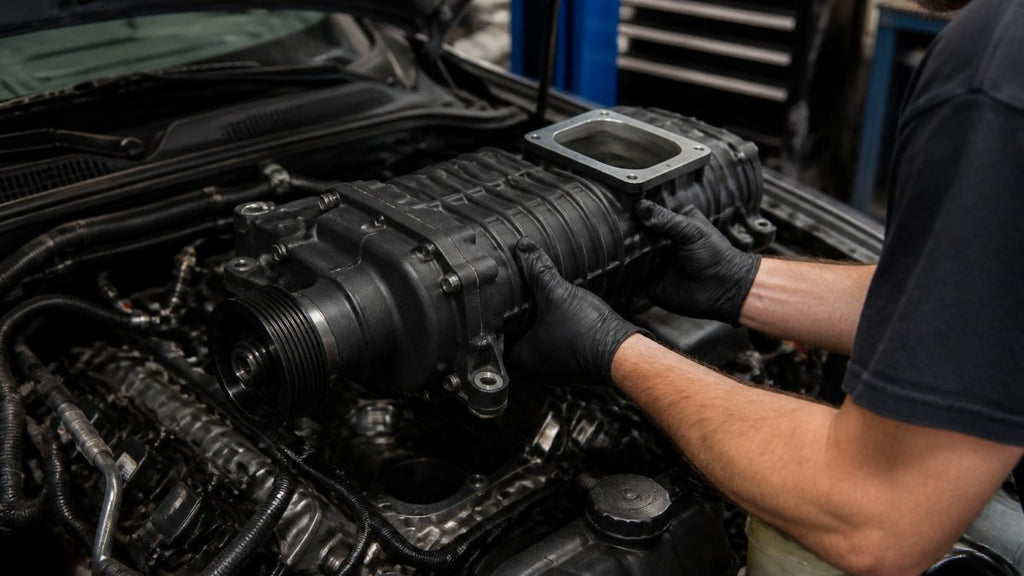
VT Superchargers kits are engineered for bolt-on installation. No cutting panels. No welding. No intake manifold removal. The kit mounts to existing engine structure using OEM-style brackets.
For someone with basic mechanical skills, installation takes 8-12 hours in a home garage. For a professional shop, 4-6 hours. This is dramatically simpler than turbo installation, which typically requires manifold work, exhaust modifications, and custom piping, often 20-30 hours of labor.
A professional supercharger installation might run $2,000-3,500 in labor. A professional turbo installation often runs $4,000-6,000 or more. VT Superchargers kits range from $5,950 for the Toyota Tacoma 4.0L to $7,500 for the Nissan Titan 5.6L, backed by a 24-month warranty covering defects, failure, and installation issues.

Emissions Compliance and Maintenance Intervals
Forced induction systems change your emissions profile. Both superchargers and turbos require ECU tuning to run safely and efficiently. A supercharger kit that's properly tuned can pass emissions testing because it's mechanically simpler and easier to tune conservatively.
VT Superchargers kits require ECU tuning but are designed to keep your engine safe and compliant. Maintenance intervals don't change: you still service your engine on the manufacturer's schedule. The supercharger itself requires zero special maintenance beyond keeping your engine oil clean.
Which Forced Induction System Wins for Your Towing Needs
If you're towing regularly, a supercharger is the better choice. The instant torque delivery, mechanical simplicity, and heat management make it more reliable, predictable, and cost-effective.
A turbo makes sense if you prioritize fuel economy in highway driving without a load and accept more complexity and higher maintenance costs. But for towing, that trade-off doesn't work. You need torque when you need it, not after a delay.
The real-world scenario that decides this: you're climbing a steep grade with a loaded trailer in hot weather at 2,200 RPM, third gear. With a supercharger, you have full boost and full torque available instantly. You maintain speed. The transmission stays locked in gear. The engine runs cool. With a turbo, you're downshifting, waiting for boost, and working the transmission harder than it should be.
Over a long towing day, that difference compounds. Fuel consumption stays lower with a supercharger. Engine temperature stays more stable. Transmission longevity improves. And the reliability advantage means you're less likely to face a breakdown when you're 200 miles from the nearest shop with a trailer in tow.
For truck owners who deal with mountainous terrain, large tires, and regular towing, a supercharger from VT Superchargers addresses the exact problem you're facing: gear hunting, sluggish power delivery, and the inability to maintain consistent speed under load. The Toyota Tundra 5.7L 3UR-FE Supercharger Kit delivers 40-60% more horsepower and 30-50% more torque at 7 PSI boost, the kind of real power gain that transforms how your truck performs when it matters most.
The choice between a supercharger and turbo for towing is clear when you focus on what actually happens on the road. Superchargers deliver instant, predictable torque in the RPM range where towing happens. Turbos add complexity and delay. For serious towing, that's the entire argument. VT Superchargers has engineered bolt-on kits for Toyota, Nissan, and other popular truck platforms, each backed by a 24-month warranty and designed for real-world performance that prevents gear hunting and keeps you moving when loaded. Get started with VT Superchargers and transform how your truck handles the demands of serious towing.
| System | Torque at Low RPM | Spool Time | Mechanical Complexity | Heat Output | Towing Suitability |
|---|---|---|---|---|---|
| Supercharger | 70-80% by 2,500 RPM | Instant (0 lag) | Simple (belt-driven) | Moderate (water-cooled) | Excellent |
| Turbocharger | 20-40% by 2,500 RPM | 0.5-1.5 seconds | Complex (turbine, waste gate) | High (exhaust-driven) | Good |
Pro Tip
When shopping for a supercharger kit, verify that it includes a water-cooled intercooler. Air-to-air intercoolers struggle with sustained towing in hot climates because they can't shed heat fast enough during long grades. VT Superchargers kits use water cooling specifically to handle this scenario.
Key Takeaway
A supercharger delivers 70-80% of peak torque by 2,500 RPM, exactly where towing happens. A turbo doesn't reach meaningful boost until 3,000+ RPM, which forces you to downshift and hunt for gears. For towing, that difference is the entire decision.
=== FAQ ANSWERS (audit these too, same rules) ===
[1] Q: Do superchargers provide better low-end torque for towing than turbochargers? A: Yes. Superchargers deliver 70-80% of peak torque by 2,500 RPM, which is critical for towing. Most turbochargers don't produce full boost until 3,000-4,500 RPM, creating a lag that forces downshifting on grades. Twin-screw superchargers are especially effective for towing because they generate 40-60% more torque across the entire power band, with the biggest gains below 3,000 RPM. This means your truck maintains speed on hills without hunting gears, reducing fuel consumption and improving safety.
[2] Q: How much horsepower do superchargers add to a truck for towing? A: Supercharger power gains depend on your engine. A Toyota Tundra 5.7L with a VT Superchargers kit gains 40-60% more horsepower and 30-50% more torque at just 7 PSI of boost. A Nissan Titan 5.6L with a twin-screw kit sees 50-70% horsepower and torque increases. These gains translate to dramatically improved acceleration, stronger pulling power on grades, and reduced downshifting during towing, making your rig more capable and efficient.
[3] Q: What are the downsides of using a supercharger for towing? A: Superchargers increase parasitic loss (they consume some engine power to drive the compressor), which can slightly reduce fuel economy compared to a naturally aspirated engine. They also generate heat, requiring an intercooler or water-cooled system to manage intake air temperature and prevent detonation. Installation requires ECU tuning to adjust air-fuel ratio for safe operation. Finally, superchargers add weight and complexity to the engine bay. However, these drawbacks are minimal compared to the reliability and low-end torque benefits for towing, especially versus turbochargers that introduce turbo lag and higher operating temperatures.
[4] Q: Is a supercharger or turbo more reliable for towing and off-road use? A: Superchargers are generally more reliable for towing and off-road use. They have fewer moving parts than turbochargers (no complex wastegate, variable geometry, or boost control systems), operate at lower temperatures, and don't rely on exhaust backpressure to function. VT Superchargers kits feature self-contained oiling systems that require no special maintenance and include a 24-month warranty. Turbochargers are exposed to extreme exhaust gas temperatures (EGT), which accelerates wear on internal components and can cause catastrophic failure if tuning is aggressive or cooling is inadequate. For sustained towing, superchargers deliver consistent, predictable power without the thermal stress turbochargers endure.
Frequently Asked Questions
Do superchargers provide better low-end torque for towing than turbochargers?
Yes. Superchargers deliver 70-80% of peak torque by 2,500 RPM, which is critical for towing. Most turbochargers don't produce full boost until 3,000-4,500 RPM, creating a lag that forces downshifting on grades. Twin-screw superchargers are especially effective for towing because they generate 40-60% more torque across the entire power band, with the biggest gains below 3,000 RPM. This means your truck maintains speed on hills without hunting gears, reducing fuel consumption and improving safety.
How much horsepower do superchargers add to a truck for towing?
Supercharger power gains depend on your engine. A Toyota Tundra 5.7L with a VT Superchargers kit gains 40-60% more horsepower and 30-50% more torque at just 7 PSI of boost. A Nissan Titan 5.6L with a twin-screw kit sees 50-70% horsepower and torque increases. These gains translate to dramatically improved acceleration, stronger pulling power on grades, and reduced downshifting during towing, making your rig more capable and efficient.
What are the downsides of using a supercharger for towing?
Superchargers increase parasitic loss (they consume some engine power to drive the compressor), which can slightly reduce fuel economy compared to a naturally aspirated engine. They also generate heat, requiring an intercooler or water-cooled system to manage intake air temperature and prevent detonation. Installation requires ECU tuning to adjust air-fuel ratio for safe operation. Finally, superchargers add weight and complexity to the engine bay. However, these drawbacks are minimal compared to the reliability and low-end torque benefits for towing, especially versus turbochargers that introduce turbo lag and higher operating temperatures.
Is a supercharger or turbo more reliable for towing and off-road use?
Superchargers are generally more reliable for towing and off-road use. They have fewer moving parts than turbochargers (no complex wastegate, variable geometry, or boost control systems), operate at lower temperatures, and don't rely on exhaust backpressure to function. VT Superchargers kits feature self-contained oiling systems that require no special maintenance and include a 24-month warranty. Turbochargers are exposed to extreme exhaust gas temperatures (EGT), which accelerates wear on internal components and can cause catastrophic failure if tuning is aggressive or cooling is inadequate. For sustained towing, superchargers deliver consistent, predictable power without the thermal stress turbochargers endure.
This article was written using GrandRanker
Related post
09
Oct
RECENT POSTS