7 Best Performance Upgrades for Suzuki in 2026
Table of Contents
- Supercharger Kits: Maximum Power Gains
- ECU Remapping and Performance Chips
- Exhaust System Upgrades for Better Flow
- Air Intake and Filtration Improvements
- Suzuki Jimny Performance Mods for Off-Road
- Suspension and Handling Enhancements
- Throttle Controllers and Brake Upgrades
- What to Avoid and Warranty Considerations
Last Updated: August 27, 2026
7 Best Performance Upgrades for Suzuki in 2026
When you're serious about extracting real power from your Suzuki, bolt-on modifications deliver measurable results without gutting your engine or voiding your warranty outright. According to Hi-Torque Performance's 2025 testing data, a properly engineered supercharger kit for the Suzuki Jimny increases peak power by 59% and torque by 42%.

The 7 best performance upgrades for Suzuki fall into a clear hierarchy: forced induction systems deliver the biggest horsepower and torque jumps, followed by engine management tuning, exhaust flow improvements, and supporting modifications. At VT Superchargers, we've engineered bolt-on kits that integrate seamlessly with factory systems, preserving OEM-level reliability while unlocking genuine performance. The upgrades you choose should match your actual use case, not just chase the biggest number on a dyno sheet.
Below, we'll walk through each upgrade category with specific power figures, installation considerations, warranty implications, and real-world trade-offs.
1. Supercharger Kits: Maximum Power Gains
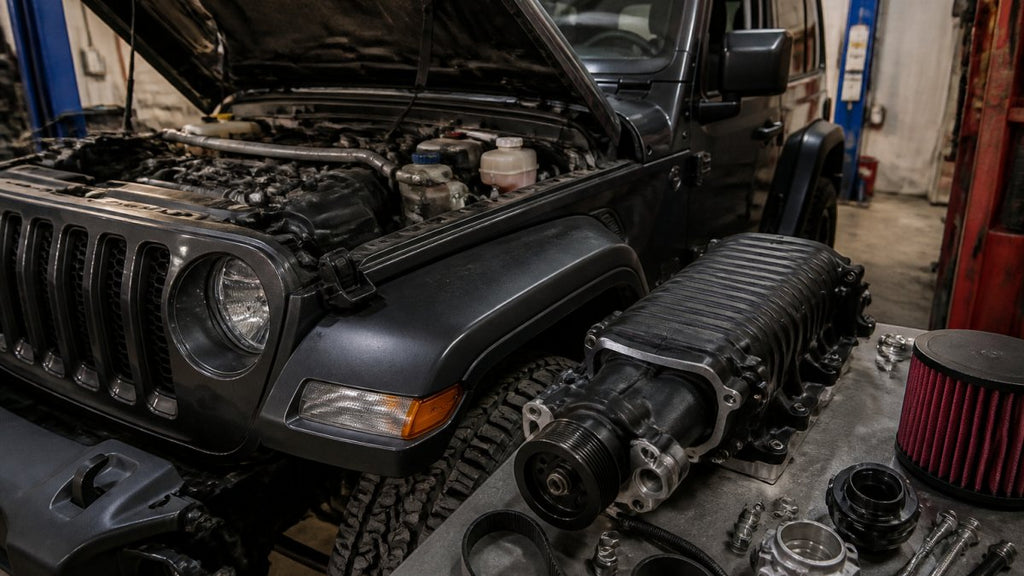
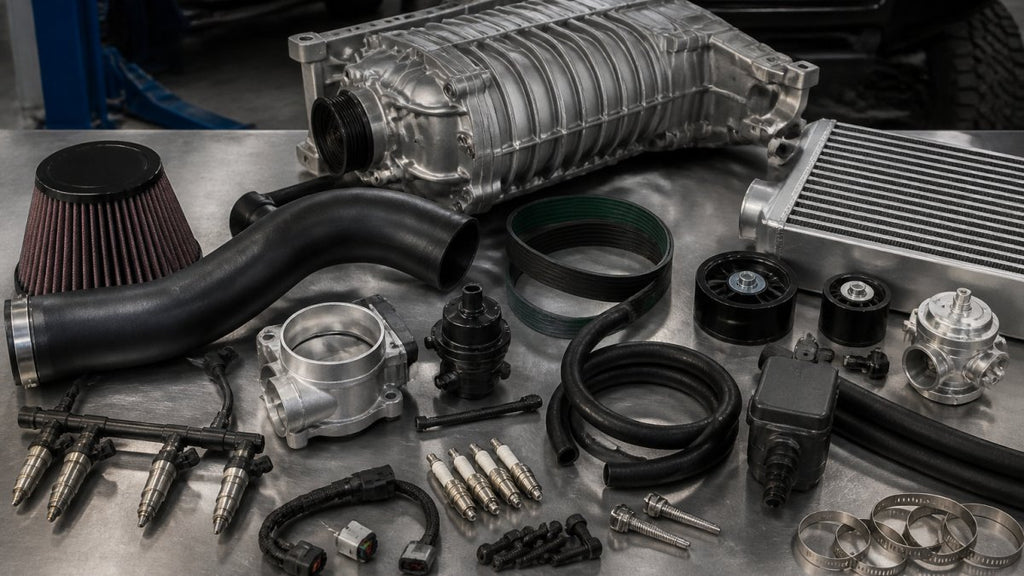
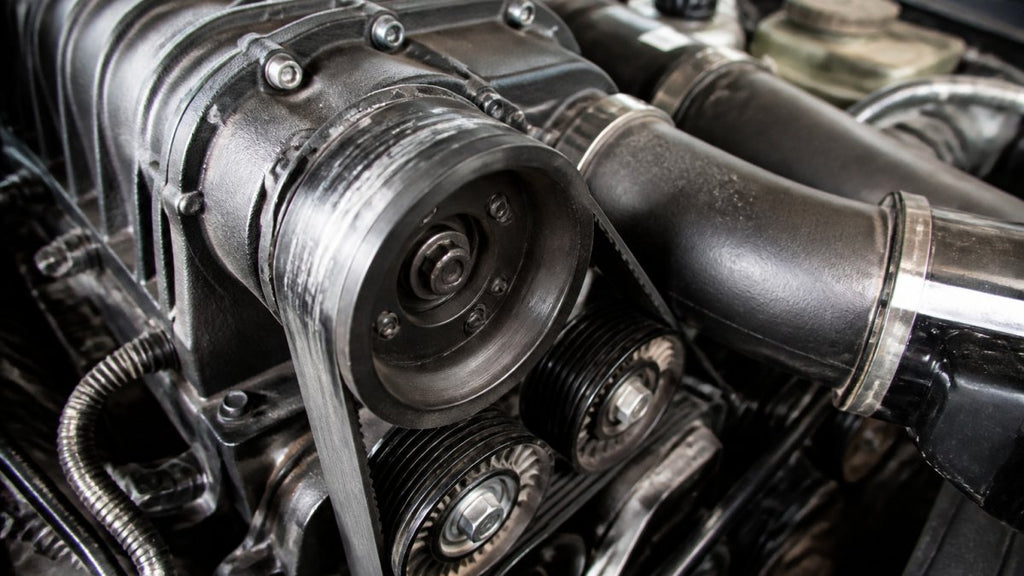
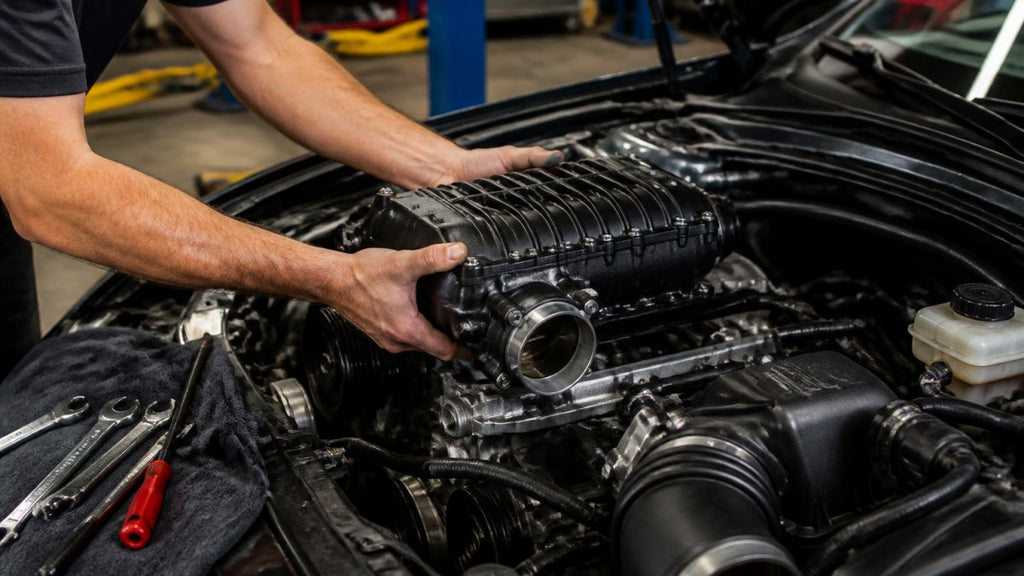
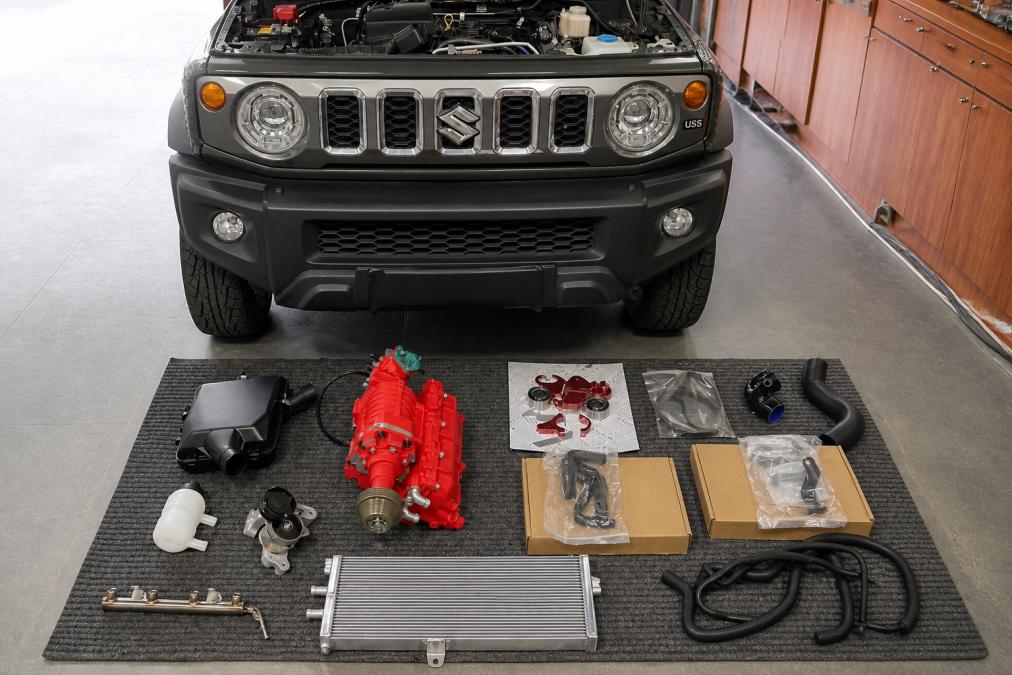
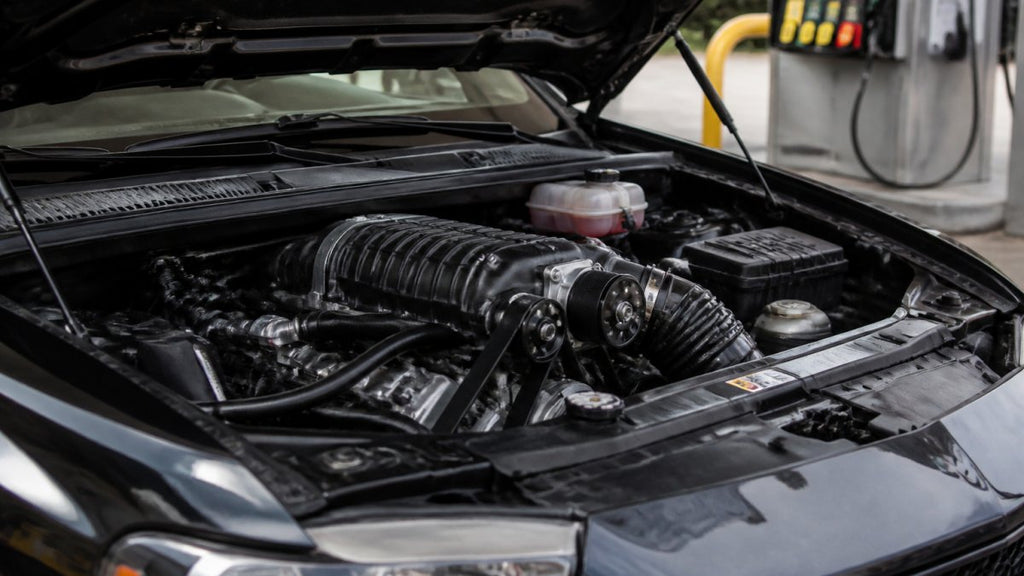
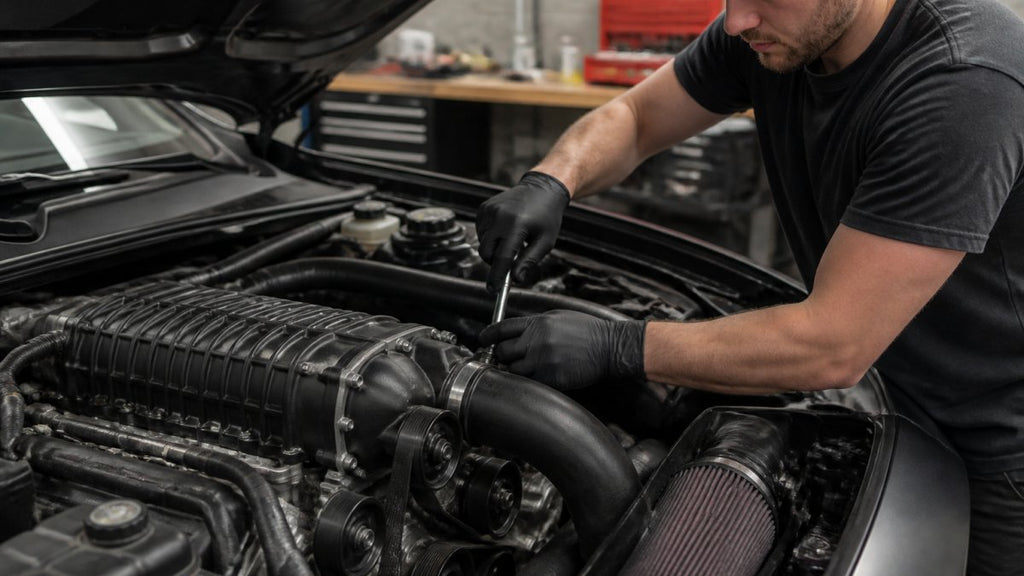
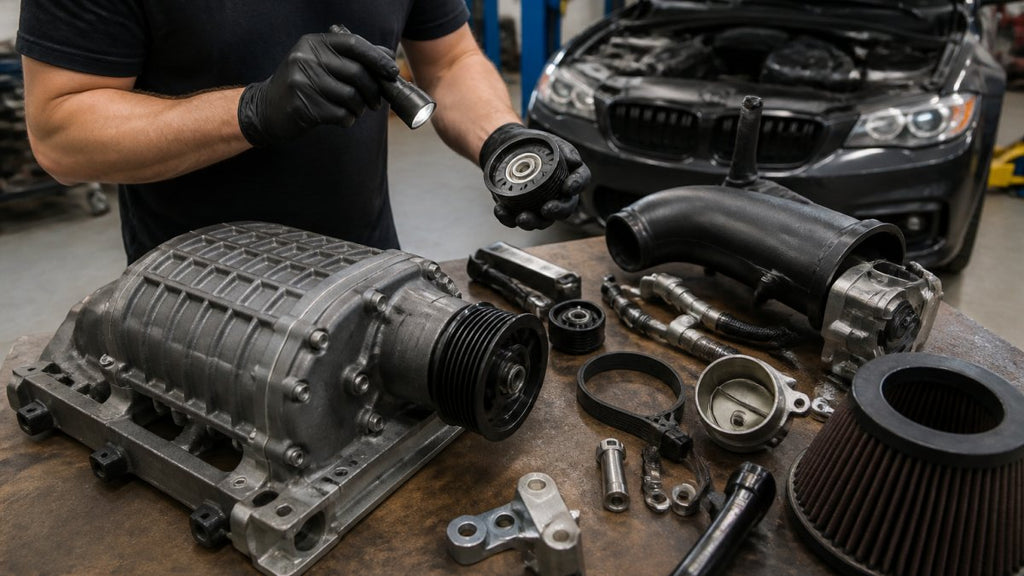
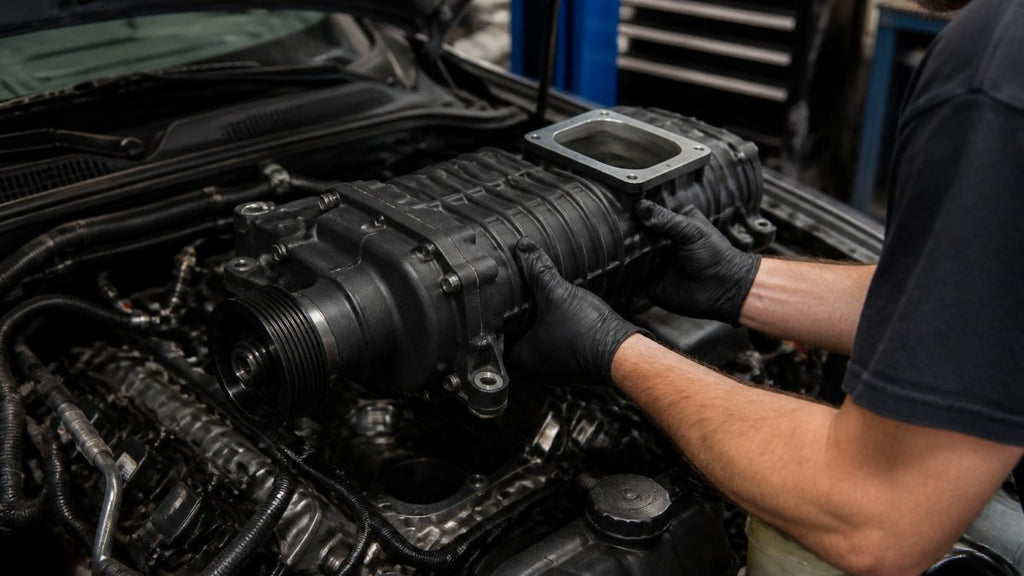
A supercharger is a belt-driven air compressor that forces more oxygen into your engine's cylinders, multiplying power output without requiring engine internals to be rebuilt. The Harrop Engineering TVS900 supercharger kit for the Suzuki Jimny delivers 106kW and 168Nm of dynamic driving force, a 59% boost in peak power and 42% increase in torque from the stock 1.5-liter K15B engine.
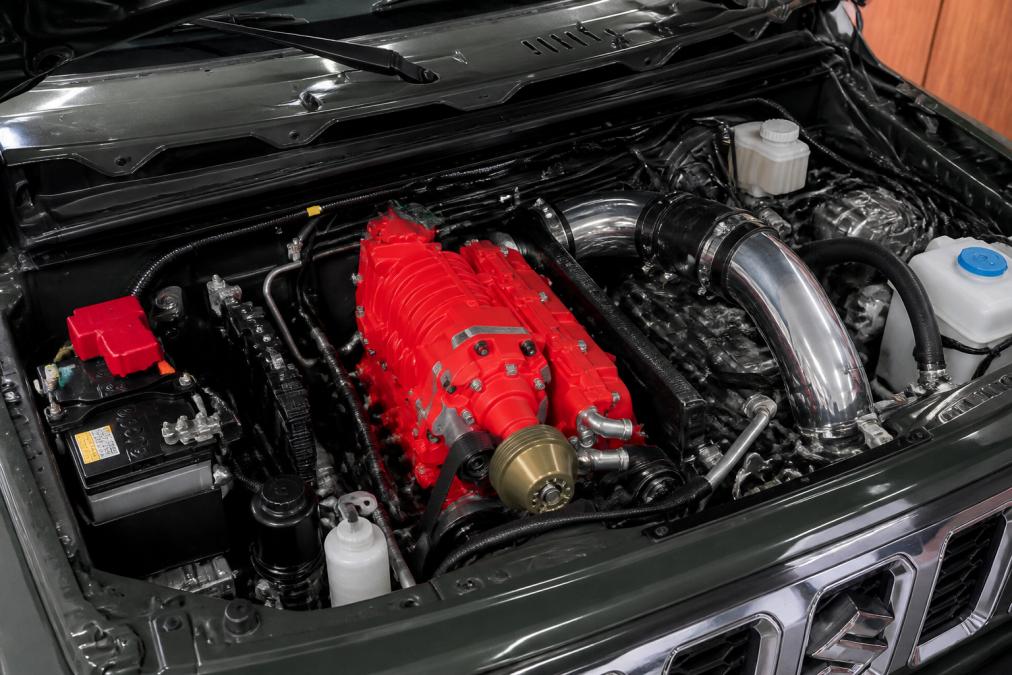
What sets superchargers apart from turbochargers is instant throttle response. There's no turbo lag, the moment you press the accelerator, the belt-driven compressor engages and boost builds immediately. This makes them ideal for off-road driving where low-end grunt matters more than peak horsepower.
"Our goal is to have an OE level of integration with the hardware... all the vehicle systems function as intended by Suzuki." -- Jake Di Pietro, Brand Manager at Harrop Engineering
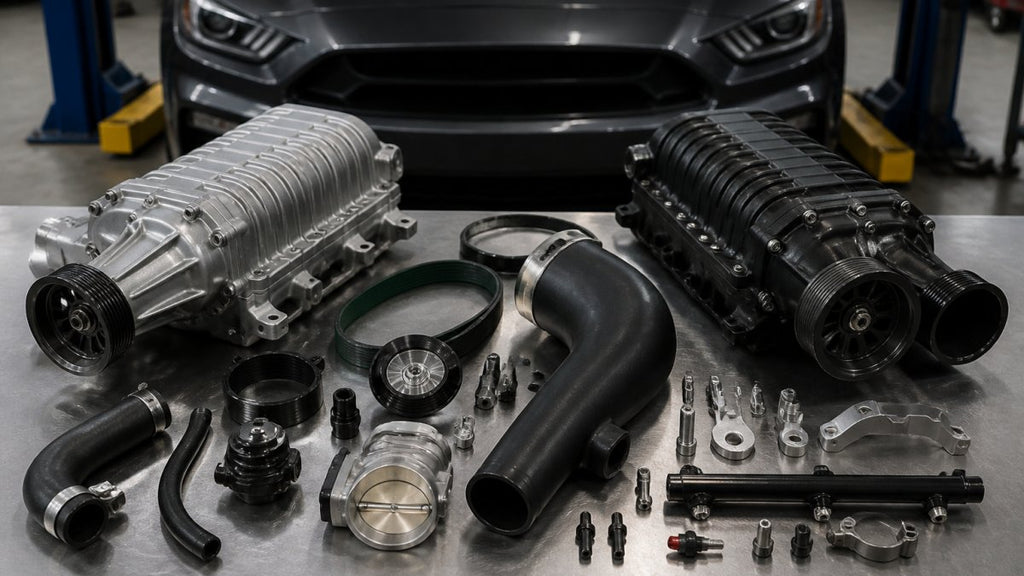
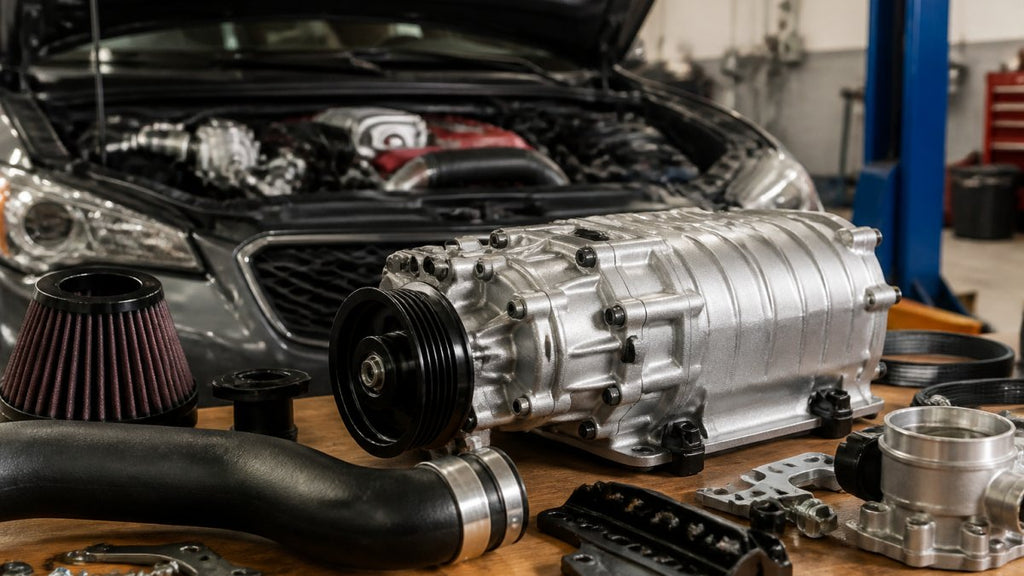
VT Superchargers offers the Suzuki Jimny JB74 1.5L K15B Supercharger Kit at $5,450, engineered for bolt-on installation with an external piggyback ECU included. The kit requires professional ECU calibration to optimize boost pressure and fuel mapping. The 24-month warranty covers the supercharger hardware, giving you protection against manufacturing defects.
The trade-off: supercharger kits cost more upfront than turbochargers, and they draw parasitic horsepower to drive the belt (typically 10-15 hp at the crank). For most Suzuki applications, the instant response and simplicity justify the investment.
2. ECU Remapping and Performance Chips
ECU remapping rewrites your engine's fuel and ignition maps to optimize combustion timing, fuel injection duration, and boost pressure. A Stage 1 ECU remap on a 2012 Suzuki Swift Sport 1.6 VVT (ZC32S) increased power and torque throughout the rev range and improved throttle response noticeably, according to Suzuki Swift tuning and performance testing via Facebook data from 2024.
For turbocharged Suzuki Swift Sport 1.4T ZC33S models, a downpipe paired with a Stage 1 ECU tune achieves 1.4-1.5 bar of boost, transforming the driving character from sluggish midrange to responsive and linear.
ECU remapping costs between $400 and $800 depending on your tuner and aggressiveness. Stage 1 tunes are conservative and safe for stock internals. Stage 2 and Stage 3 tunes push harder but demand upgraded fuel injectors, stronger spark plugs, and sometimes internal engine work.
Most manufacturers will flag a tuned ECU, but they won't necessarily deny warranty claims unless they can prove the tune caused the failure. Keep your original ECU file backed up so you can revert to stock if needed.
3. Exhaust System Upgrades for Better Flow
Factory exhaust systems prioritize emissions compliance and noise reduction over flow. Upgrading to a performance exhaust reduces backpressure and lets your engine breathe more freely, delivering better power across the rev range, especially in the midrange where daily driving happens.
For Suzuki motorcycles, slip-on Akrapovic mufflers are available for 2026 models and reduce weight while increasing power through improved scavenging. For automotive applications, a stainless steel cat-back exhaust system typically adds 5-15 horsepower depending on engine size and intake configuration.
The real benefit is improved throttle response. Your engine reacts faster to throttle input because it's not fighting back pressure. Installation is straightforward for most bolt-on systems: hangers, clamps, and a few bolts. Cost ranges from $300 to $1,200 depending on material and brand. The trade-off is that performance exhausts are louder, something to consider for daily drivers in residential areas.
4. Air Intake and Filtration Improvements
Your engine pulls in roughly 8,000 gallons of air per hour at highway speeds. A quality air filter and intake system ensures clean, cool air reaches the cylinders consistently, improving throttle response and preventing power loss from a clogged filter.
Aftermarket air intakes typically use larger-diameter piping and higher-flow filters compared to factory systems. The best designs pull cool air from outside the engine bay rather than recycling hot air from around the radiator. This temperature difference translates to measurable power gains, especially in warm climates.
For off-road vehicles like the Suzuki Jimny, a snorkel intake is essential. It draws air from above the windline, protecting your engine from water ingestion during river crossings and dust clouds during trail driving. Cost is reasonable: $150 to $400 for most systems. Installation takes 1-2 hours if you're comfortable with basic mechanics. car speedometer upgrades.
5. Suzuki Jimny Performance Mods for Off-Road
The Suzuki Jimny is a lightweight, nimble off-road platform that responds dramatically to targeted upgrades. Beyond the supercharger kit, the most impactful mods are suspension geometry changes and tire/wheel combinations that improve ground clearance and traction.
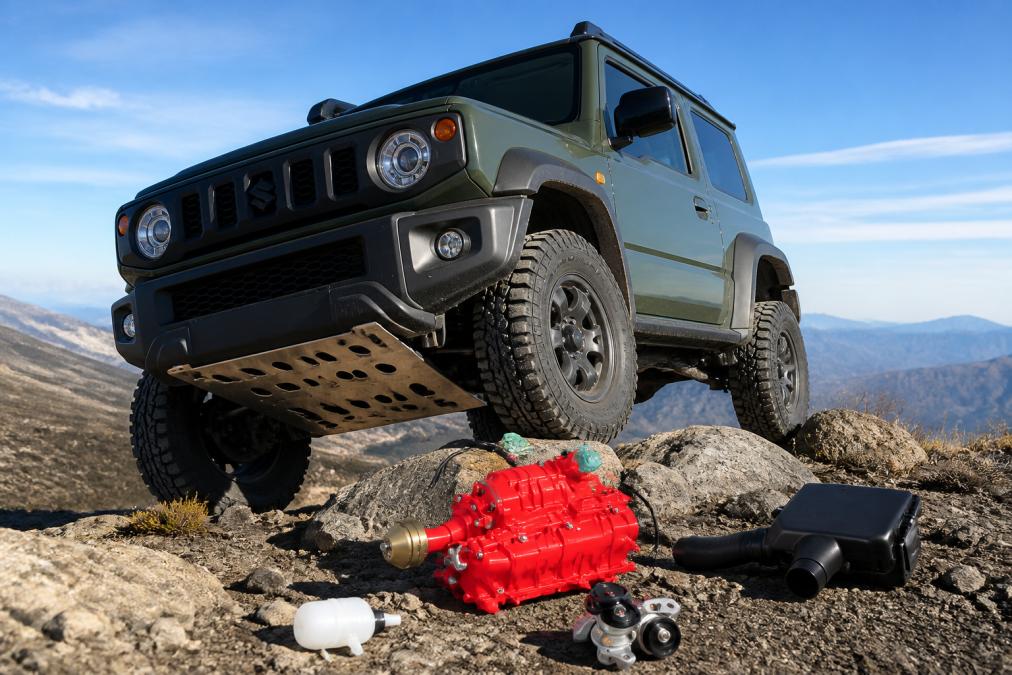
A Suzuki Jimny 1.5 engine tuning upgrade can increase power to 115 hp and torque to 145 Nm from its original 102 hp and 130 Nm, according to Chip Tuning NZ's 2026 data. This modest gain matters more in a 2,500-pound vehicle, improving the power-to-weight ratio noticeably.
For suspension, upgraded shocks and springs cost $800-$1,500 installed and transform how the vehicle handles rough terrain. Lighter riders especially benefit from properly tuned suspension that doesn't dive under braking or squat under acceleration.
Tire selection is critical. Larger tires (from factory 215/75R15 to 245/75R16) increase ground clearance and off-road capability but also increase rolling resistance. Pair larger tires with a supercharger kit or ECU tune to maintain acceleration feel.
6. Suspension and Handling Enhancements
Suspension upgrades are foundational to performance. Better damping, stiffer springs, and geometry corrections improve handling, reduce body roll, and increase confidence in corners and over rough terrain. They also allow you to run larger tires without instability.
The SSS Motorcycles suspension upgrade kit for the Suzuki DRZ4S corrects factory spring rates for lighter riders, improving front-to-rear balance and increasing traction and control. The same principle applies to automotive platforms: factory suspension is engineered for average driver weight and typical highway driving.
Coilover suspension systems offer adjustable ride height and damping, letting you dial in the exact setup your driving demands. Installation typically requires professional alignment afterward, adding $300-$500 to the cost.
Improving handling and control makes your existing power feel more usable. A responsive suspension that doesn't dive and squat makes acceleration feel sharper and braking more confident.
7. Throttle Controllers and Brake Upgrades
Throttle response controllers adjust the relationship between pedal input and engine response. They don't add power, but they change how quickly the engine responds to throttle commands. For vehicles with electronically controlled throttles, this can make a significant subjective improvement in driving feel.
A quality throttle controller offers multiple modes: eco mode for fuel economy, sport mode for aggressive response, and custom modes you tune yourself. Installation is plug-and-play on most modern Suzuki models. Cost is $150-$400.
Brake upgrades matter less for power but more for safety and control. Upgrading brake pads to a high-performance compound improves stopping power and heat dissipation, especially important if you're adding significant horsepower. Larger rotors and stainless steel brake lines improve modulation and feel. Budget $600-$1,200 for a complete brake system upgrade.
More power demands better braking. If you're adding 50+ horsepower with a supercharger kit, upgrading your brakes is a safety requirement.
What to Avoid and Warranty Considerations
Not all performance upgrades are created equal. Cheap turbocharger kits from unknown manufacturers often suffer from boost leaks, poor calibration, and catastrophic failures that destroy engines.
Warranty is a real concern. Factory warranties typically void if you modify the engine, but manufacturers must prove your modification caused the failure. Keep all receipts, installation photos, and dyno sheets. Use reputable shops that warranty their work. VT Superchargers backs its kits with a 24-month warranty that covers hardware.
Fuel economy trade-offs are manageable. Adding a supercharger or ECU tune will increase fuel consumption under full throttle, but in normal driving, the difference is minimal. Many owners report 1-2 mpg loss with aggressive tuning.
The biggest mistake is chasing power without addressing supporting systems. Adding 50 horsepower to a stock engine with weak suspension, factory brakes, and worn tires is dangerous and wasteful. Upgrades work best when coordinated: forced induction paired with ECU tuning, suspension improvements paired with larger tires, brake upgrades paired with increased power.
| Upgrade Type | Power Gain | Cost | Installation Difficulty | Warranty Risk |
|---|---|---|---|---|
| Supercharger Kit | 50-60% | $5,450 | Professional | Low (24-month coverage) |
| ECU Remap | 15-30% | $400-$800 | DIY (plug-in) | Medium (revert if needed) |
| Exhaust System | 5-15% | $300-$1,200 | DIY (bolt-on) | Low |
| Air Intake | 5-10% | $150-$400 | DIY (1-2 hours) | Very Low |
| Suspension Kit | Handling improvement | $800-$1,500 | Professional | Low |
| Throttle Controller | Subjective response | $150-$400 | DIY (plug-in) | Very Low |
| Brake Upgrade | Safety improvement | $600-$1,200 | Professional | Low |
The path to genuine performance is methodical. Start with the biggest power gain through a supercharger kit, then layer in supporting modifications that maximize that gain. ECU tuning unlocks the full potential of forced induction. Exhaust and intake improvements reduce restrictions. Suspension and brake upgrades make the power usable and safe.
VT Superchargers has engineered the Suzuki Jimny JB74 1.5L K15B Supercharger Kit to deliver OEM-level integration with measurable performance gains. The kit includes a piggyback ECU and professional calibration support, backed by a 24-month warranty. Start here, then build your upgrade strategy around that foundation. Real performance comes from thoughtful, coordinated modifications, not shortcuts or cheap alternatives.
=== FAQ ANSWERS (audit these too, same rules) ===
[1] Q: How much horsepower can I realistically gain from Suzuki performance upgrades? A: Gains depend on the upgrade type and engine. A supercharger kit for the Suzuki Jimny JB74 delivers up to 50% more power, while ECU remapping on a Swift Sport 1.4 Boosterjet increases output from 140 HP to 180 HP. Air intake and exhaust upgrades typically add 5-15 HP. Combining multiple upgrades produces cumulative gains, but realistic expectations range from 15-60 HP depending on your vehicle and modification strategy.
[2] Q: Do bolt-on supercharger kits improve Suzuki vehicle performance without voiding warranty? A: Bolt-on supercharger kits are designed for OEM-style fitment and can maintain factory integration when installed correctly. VT Superchargers kits include a 24-month warranty on the kit itself. However, engine modifications may affect your vehicle's factory warranty, check with your dealer before installation. Many owners pair supercharger kits with professional tuning to ensure reliability and preserve engine longevity while maximizing performance gains.
[3] Q: What are the best entry-level performance upgrades for a Suzuki Jimny? A: Start with air intake and exhaust upgrades for 5-10 HP gains and improved throttle response. Next, consider ECU tuning for better engine mapping and fuel efficiency. For serious power, a bolt-on supercharger kit like VT Superchargers' Suzuki Jimny JB74 kit ($5,450) delivers 50% more horsepower and resolves gear-hunting on vehicles with larger tires. These upgrades work well together and provide real-world performance improvements for daily driving and off-road use.
[4] Q: Will performance upgrades hurt fuel economy or engine reliability? A: Quality upgrades like supercharger kits and professional ECU tuning are engineered to maintain engine reliability when installed correctly. Some performance chips optimize fuel economy alongside power gains. However, aggressive tuning or poor-quality modifications can reduce fuel efficiency and strain the engine. VT Superchargers kits include external ECU control units and require proper calibration to balance performance with reliability and fuel consumption for your specific vehicle.
Frequently Asked Questions
How much horsepower can I realistically gain from Suzuki performance upgrades?
Gains depend on the upgrade type and engine. A supercharger kit for the Suzuki Jimny JB74 delivers up to 50% more power, while ECU remapping on a Swift Sport 1.4 Boosterjet increases output from 140 HP to 180 HP. Air intake and exhaust upgrades typically add 5-15 HP. Combining multiple upgrades produces cumulative gains, but realistic expectations range from 15-60 HP depending on your vehicle and modification strategy.
Do bolt-on supercharger kits improve Suzuki vehicle performance without voiding warranty?
Bolt-on supercharger kits are designed for OEM-style fitment and can maintain factory integration when installed correctly. VT Superchargers kits include a 24-month warranty on the kit itself. However, engine modifications may affect your vehicle's factory warranty, check with your dealer before installation. Many owners pair supercharger kits with professional tuning to ensure reliability and preserve engine longevity while maximizing performance gains.
What are the best entry-level performance upgrades for a Suzuki Jimny?
Start with air intake and exhaust upgrades for 5-10 HP gains and improved throttle response. Next, consider ECU tuning for better engine mapping and fuel efficiency. For serious power, a bolt-on supercharger kit like VT Superchargers' Suzuki Jimny JB74 kit ($5,450) delivers 50% more horsepower and resolves gear-hunting on vehicles with larger tires. These upgrades work well together and provide real-world performance improvements for daily driving and off-road use.
Will performance upgrades hurt fuel economy or engine reliability?
Quality upgrades like supercharger kits and professional ECU tuning are engineered to maintain engine reliability when installed correctly. Some performance chips optimize fuel economy alongside power gains. However, aggressive tuning or poor-quality modifications can reduce fuel efficiency and strain the engine. VT Superchargers kits include external ECU control units and require proper calibration to balance performance with reliability and fuel consumption for your specific vehicle.
This article was written using GrandRanker
Related post
09
Oct
RECENT POSTS