Supercharger Torque Increase for Jeeps: 2026 Guide
Table of Contents
- How Much Horsepower Do Superchargers Add to Jeeps
- Jeep 3.6 Pentastar Supercharger Gains: Real Dyno Results
- Supercharger Torque Increase Across Engine Models
- Bolt-On Supercharger Installation Process
- Calibration, Tuning, and Long-Term Reliability
- Off-Road Performance and Tire Size Impact
- Emissions Compliance and Warranty Protection
- Conclusion
- Frequently Asked Questions
Last Updated: August 31, 2026
How Much Horsepower Do Superchargers Add to Jeeps
A properly installed supercharger can add 40% or more horsepower and torque to a vehicle, transforming a stock engine into a significantly more responsive machine that handles larger tires, climbs steeper grades, and delivers the acceleration you've been missing (offroadxtreme.com). According to Mordor Intelligence's 2025 Automotive Supercharger Market Analysis, the global automotive supercharger market is expected to grow from USD 8.97 billion in 2025 to USD 11.39 billion by 2030, growing at a CAGR of 4.89%, reflecting genuine demand from enthusiasts who've seen what forced induction delivers.
The real difference lies between theoretical gains and real-world results. A supercharger torque increase for jeeps isn't just about peak dyno numbers, it's about how that power arrives and whether it solves your actual problems. A Jeep struggling with 35-inch tires on the highway needs low-end torque, not just peak horsepower. A daily driver needs responsiveness across the RPM range, not just a number on paper.
VT Superchargers has engineered bolt-on kits specifically designed to deliver these gains without installation headaches or reliability concerns. Their kits are built for OEM-style fitment across Jeep platforms.
Pro Tip
The difference between a good supercharger installation and a mediocre one often comes down to calibration. Peak numbers matter less than how the power band is tuned. A well-tuned system feels responsive across the entire RPM range, not just at redline.
Jeep 3.6 Pentastar Supercharger Gains: Real Dyno Results
The 3.6L Pentastar V6 is reliable, proven, and highly responsive to forced induction. Real dyno testing shows exactly what to expect: a Magnuson TVS1900 supercharger kit on a stock 4.0L Jeep engine achieved 404 hp and 367 ft-lbs at the crank, translating to approximately a 44% horsepower gain and 37% torque gain at the wheels. For the 3.6L Pentastar specifically, supercharger kits deliver 40-60% horsepower increases and 30-50% torque across a broad RPM range, according to VT Superchargers' 2026 performance data.

Since the Pentastar's stock output sits around 285 horsepower, a supercharger torque increase for jeeps running the 3.6L engine means 400+ hp at the crank, a transformation that changes how the vehicle behaves in every situation. The RIPP supercharger system on an automatic 3.6L Pentastar Jeep Gladiator with 37-inch tires produced 376 rear wheel HP and 350 ft-lbs of torque. The Edelbrock system on a 2018 Jeep Wrangler JL achieved 330 horsepower and 272 pound-feet of torque at the rear wheels, representing a 40% horsepower and 35% torque improvement.
What separates these results from theoretical gains is calibration. The supercharger itself is only half the equation. The ECU reflash and tuning strategy determine whether you get linear power delivery or a system that's unpredictable. VT Superchargers' kits come tuned for drivability, not just peak numbers.
Key Takeaway
Real-world Jeep 3.6 Pentastar supercharger gains consistently deliver 40-60% horsepower and 30-50% torque increases at 7 PSI boost. The key is matching the calibration to your specific build and tire size.
Supercharger Torque Increase Across Engine Models
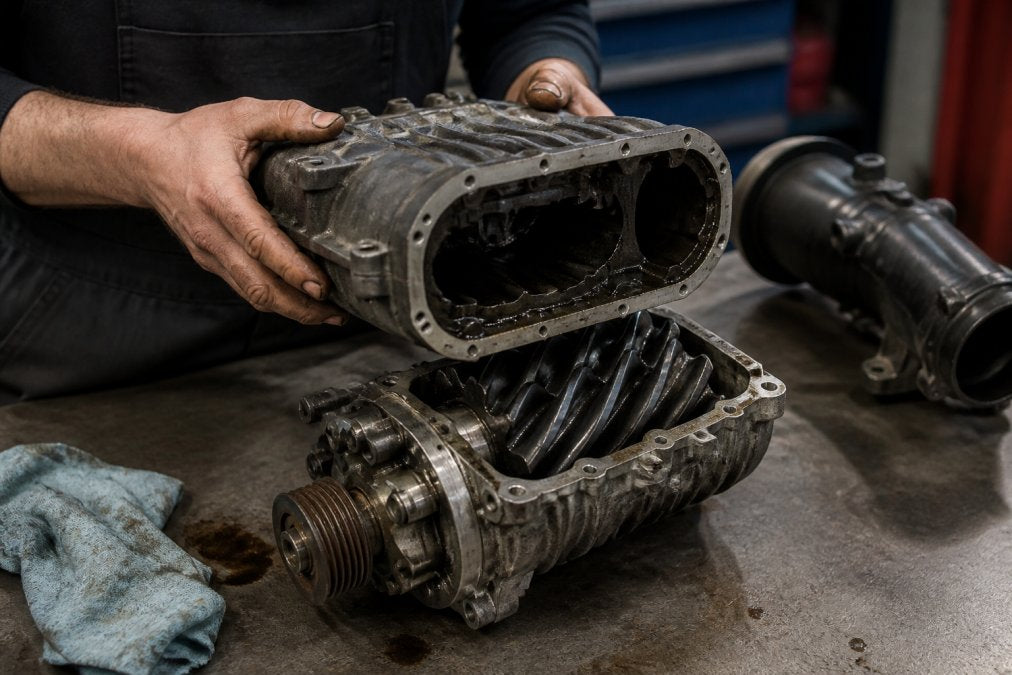
Not all Jeep engines respond the same way to forced induction. Twin-screw superchargers deliver 40-60% more torque across the entire power band for off-road use, with the biggest gains below 3,000 RPM, crucial for navigating rocky terrain or towing. There's no lag; the moment you step on the throttle, the engine responds.
For the 3.6L Pentastar (found in Wrangler, Gladiator, and Grand Cherokee models), VT Superchargers' kits deliver consistent power across the RPM range. The ProCharger system on a 2018 Jeep Grand Cherokee SRT8 with a 6.4L Hemi achieved 541 rear-wheel horsepower and 511 rear-wheel torque, demonstrating what forced induction can accomplish on larger displacement engines.
The supercharger torque increase for jeeps varies by engine displacement: smaller engines gain proportionally more in percentage terms, while larger engines gain more in absolute numbers. A stock 3.6L Pentastar produces around 260 ft-lbs of torque. With a supercharger, you're looking at 350-400+ ft-lbs at the wheels, the difference between hunting gears on the highway with 35-inch tires and maintaining steady, predictable power delivery.
| Engine Model | Stock Torque | Supercharged Torque | Gain | Best For |
|---|---|---|---|---|
| 3.6L Pentastar | 260 ft-lbs | 350-400+ ft-lbs | 30-50% | Daily drivers, off-road, towing |
| 4.0L (older Jeeps) | 240 ft-lbs | 320-370 ft-lbs | 33-54% | Classic Jeep builds |
| 6.4L Hemi | 465 ft-lbs | 500-550+ ft-lbs | 7-18% | High-horsepower applications |
For most Jeep applications, twin-screw is the better choice because of how you actually drive: short bursts of acceleration, climbing grades, navigating obstacles. Twin-screw superchargers provide instant torque from idle, making them ideal for off-road and towing applications.
Bolt-On Supercharger Installation Process
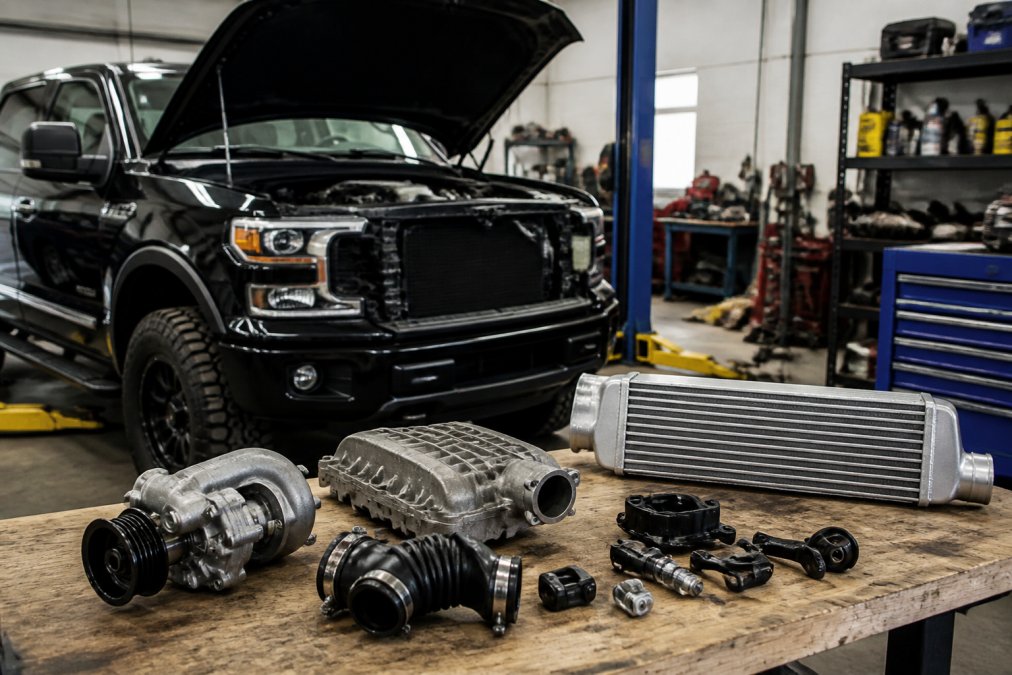
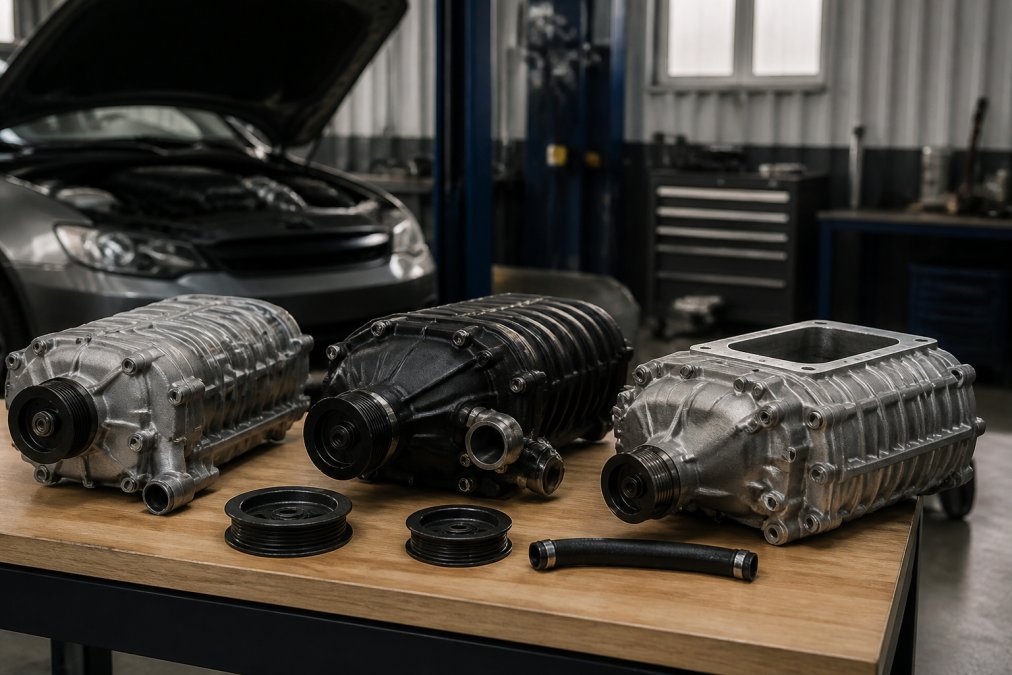
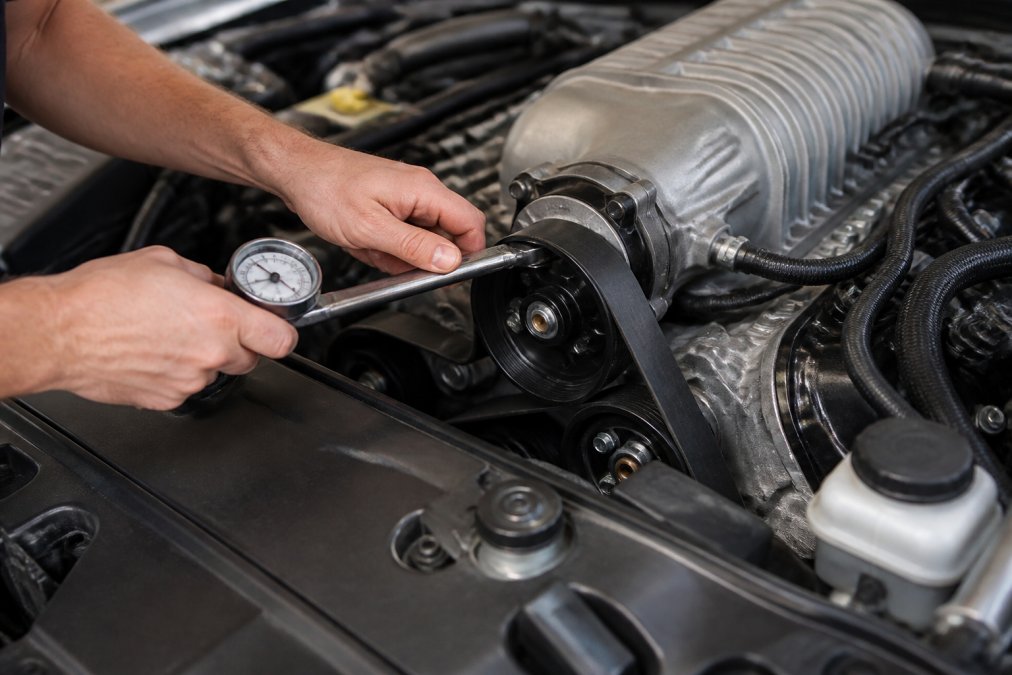
The appeal of a bolt-on supercharger kit is straightforward: you get forced induction without a complete engine rebuild. "Bolt-on" means the kit is engineered to fit within the existing engine bay and intake manifold architecture, not that installation is a weekend project.
What You'll Need Before Starting
Before you touch a wrench, gather these essentials:
- Complete supercharger kit (manifold, supercharger body, intercooler, mounting hardware, belt, pulleys)
- ECU tuning software or access to a tuning shop with experience on your specific engine
- Basic hand tools (socket set, wrenches, screwdrivers, torque wrench)
- Gasket scraper and new gaskets for the intake manifold
- Fresh engine oil and coolant
- Jack and jack stands
- 4-6 hours of focused time (or 8-10 if you're new to engine work)
- A friend with mechanical experience
Most importantly, confirm fitment with VT Superchargers before ordering.
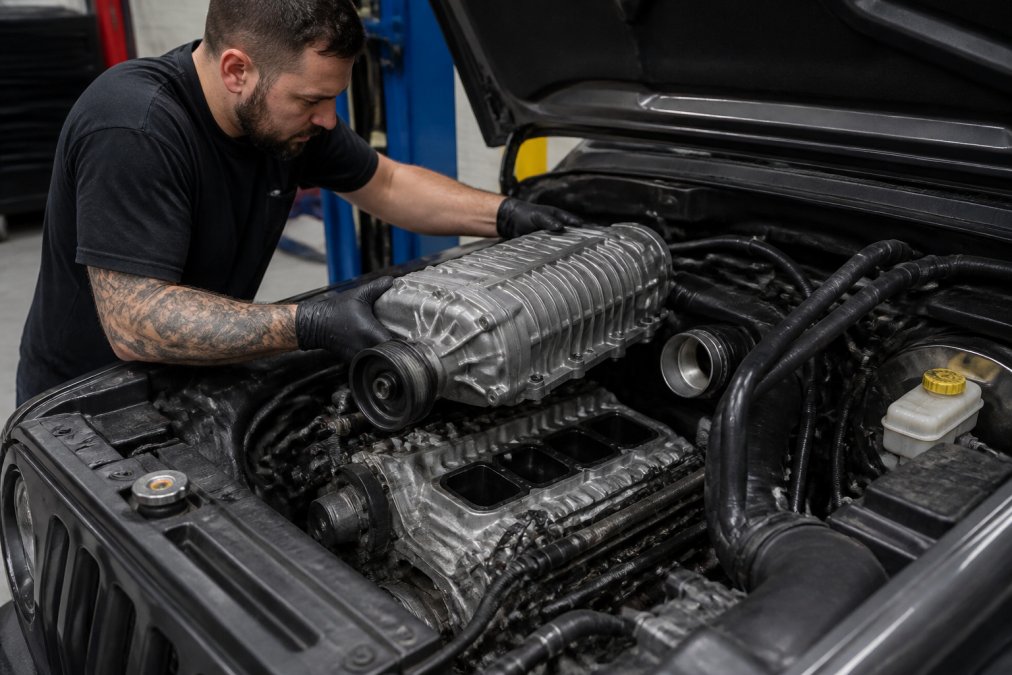
Step-by-Step Installation Overview
Installation follows a logical sequence, though exact steps vary by kit design:
-
Disconnect the battery and drain coolant (30 minutes). Safety first. Removing the negative battery terminal prevents electrical shorts.
-
Remove the factory intake manifold (45 minutes). Mark all fuel injectors, vacuum lines, and coolant hoses clearly for reassembly.
-
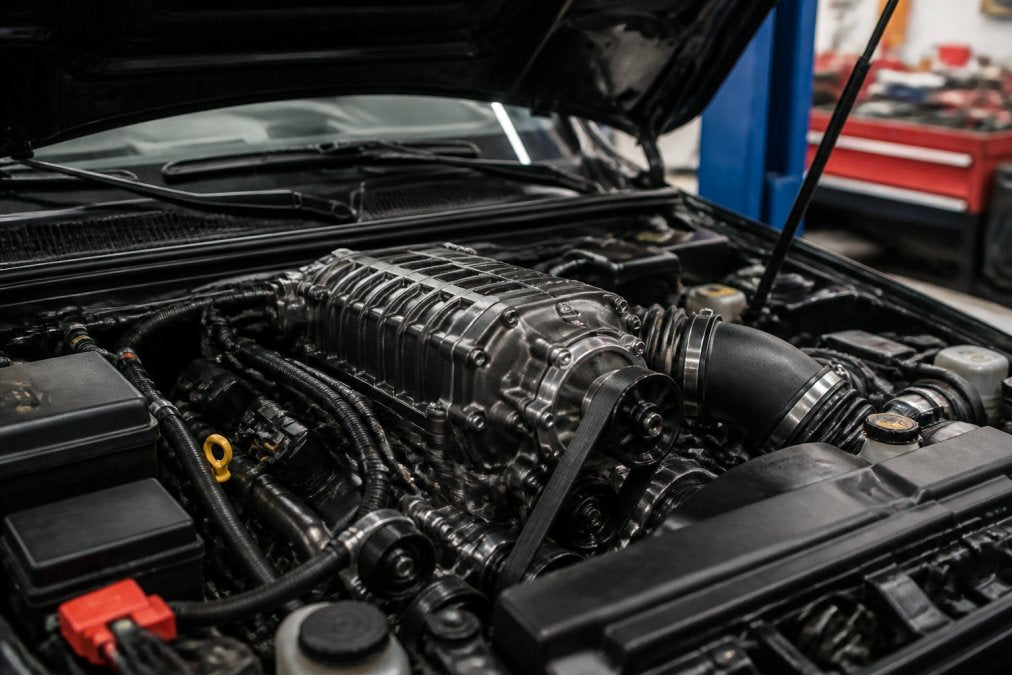
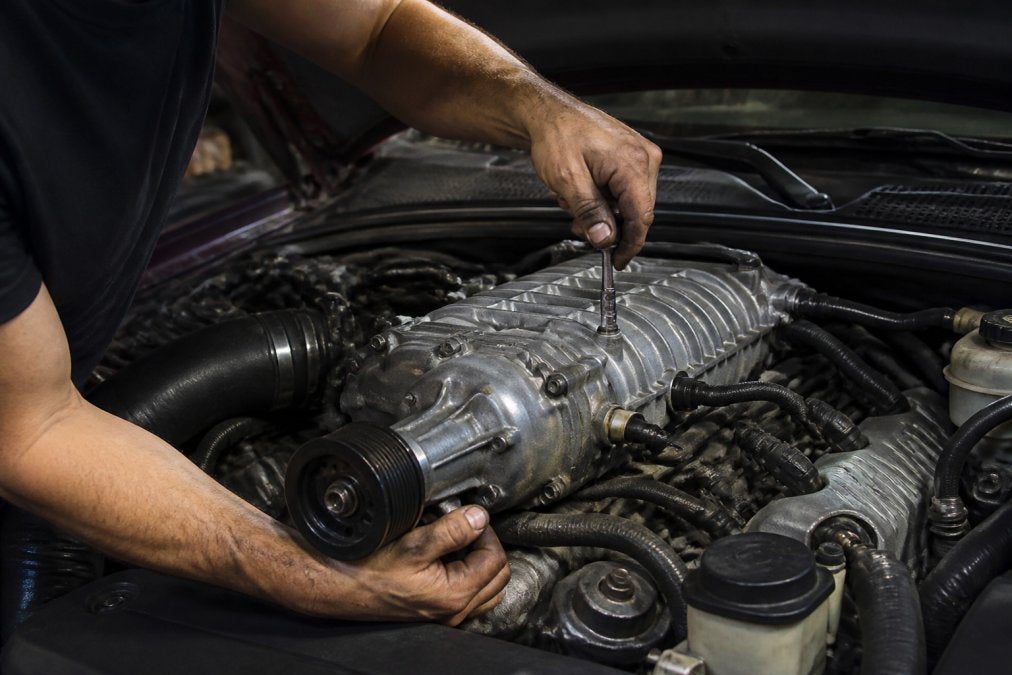
Install the supercharger manifold and body (60 minutes). The manifold bolts to the cylinder head where the factory intake was. Use a torque wrench and follow the kit's specifications exactly.
-
Connect the intercooler and plumbing (45 minutes). The intercooler cools the compressed air before it enters the engine. Connect the hoses and verify the coolant flow path.
-
Install the serpentine belt and pulleys (30 minutes). The supercharger is driven by the engine's serpentine belt. The pulley ratio determines boost pressure.
-
Reconnect all hoses and electrical connectors (30 minutes). Double-check everything before moving forward.
-
Fill coolant and perform initial start-up (15 minutes). Start the engine and check for leaks.
-
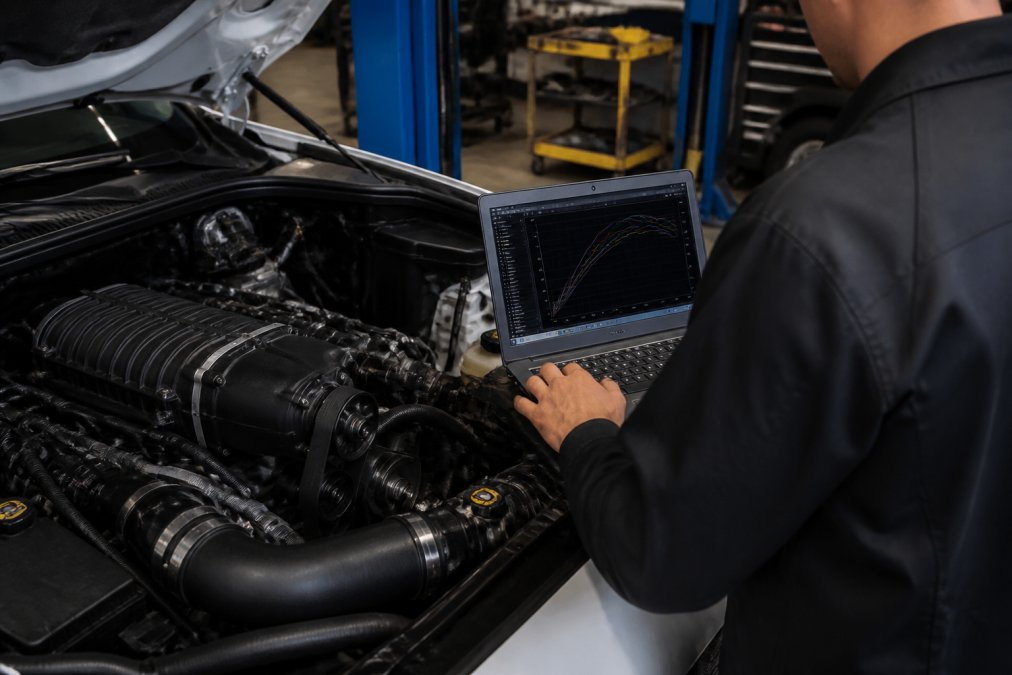
ECU tuning and calibration (variable, typically 2-4 hours at a shop or with remote tuning software). The ECU must be reflashed to account for the additional air being forced into the engine. Fuel injection timing, ignition timing, and boost pressure are all adjusted.
Watch Out
Skipping the ECU tuning step is the most common mistake. A supercharger without tuning produces minimal gains and risks engine damage. The factory ECU is calibrated for naturally aspirated operation. Forced induction without adjustment causes detonation and sensor errors.
Most owners choose to have a professional shop handle the ECU tuning. VT Superchargers can recommend installers with experience on your specific engine and kit.
Calibration, Tuning, and Long-Term Reliability
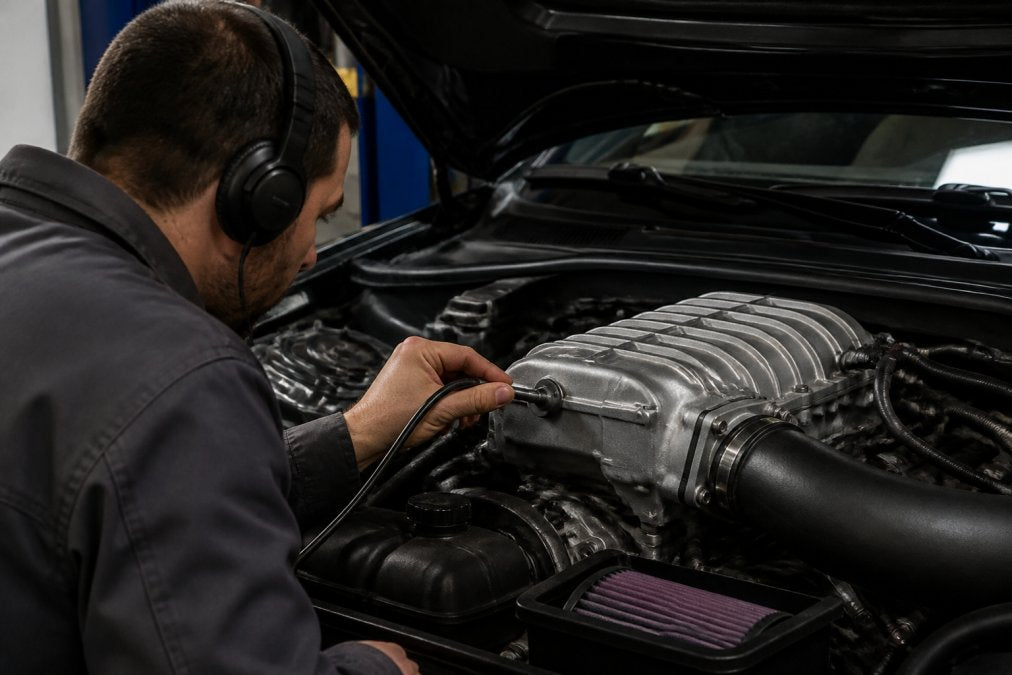
Calibration is the foundation of reliability. A properly tuned supercharger system runs at optimal fuel mixture, ignition timing, and boost pressure for your specific engine and modifications. Dyno testing of a tuned 3.6L Jeep engine shows peak increases of 10 HP / 10 TQ with 87 octane, and 20-30 HP and 20-30 TQ with 91 to 93 octane. There's an extra 20-30 TQ available under the curve at part throttle with 87 octane, and an extra 40-50 TQ with 93 octane.
The ECU reflash adjusts the air-fuel ratio to match the increased airflow. A professional tuner maps the entire power band, testing at different RPMs and loads to ensure consistency.
Long-term reliability depends on component quality, proper maintenance, and understanding your engine's limits. A stock 3.6L Pentastar can handle 7-9 PSI of boost reliably. VT Superchargers' kits are calibrated conservatively, delivering real power without pushing the engine into danger territory.
Superchargers produce significant heat, which can negatively affect engine performance if not properly addressed. This is why intercoolers are essential. An air-to-water design cools the compressed air to near-ambient temperatures before it enters the cylinders, producing more power and reducing knock risk.
The 24-month warranty from VT Superchargers covers manufacturing defects and workmanship. This signals confidence in reliability.
Off-Road Performance and Tire Size Impact
For off-road enthusiasts, a supercharger torque increase for jeeps solves a specific problem: gear hunting. When running 35-inch or 37-inch tires, the engine loses effective torque at the wheels. The transmission constantly shifts between gears, searching for the right ratio. It's inefficient and hard on the drivetrain.
A supercharger fixes this by delivering the torque the engine lost to tire size. A Jeep that struggled to maintain highway speed in 5th gear with 35-inch tires suddenly cruises comfortably. The transmission stays in the right gear and fuel economy improves.
Off-road, the benefits are even more pronounced. Torque is what climbs rocks and navigates obstacles. Twin-screw superchargers deliver 40-60% more torque across the entire power band for off-road use, with the biggest gains below 3,000 RPM. This means instant response when you need it, no waiting for the engine to build RPMs.
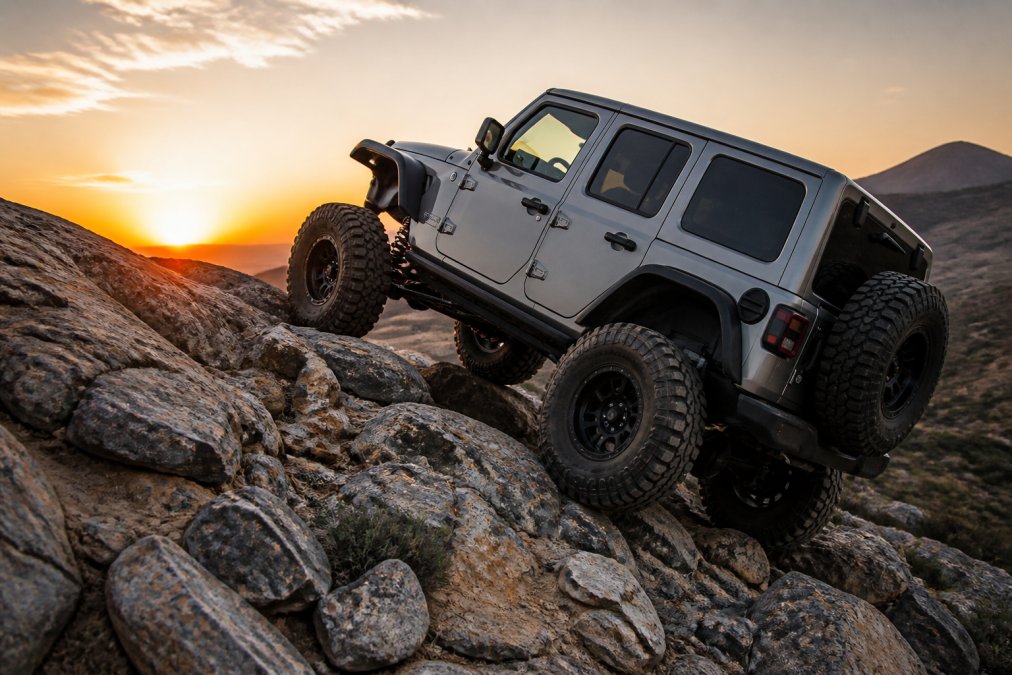
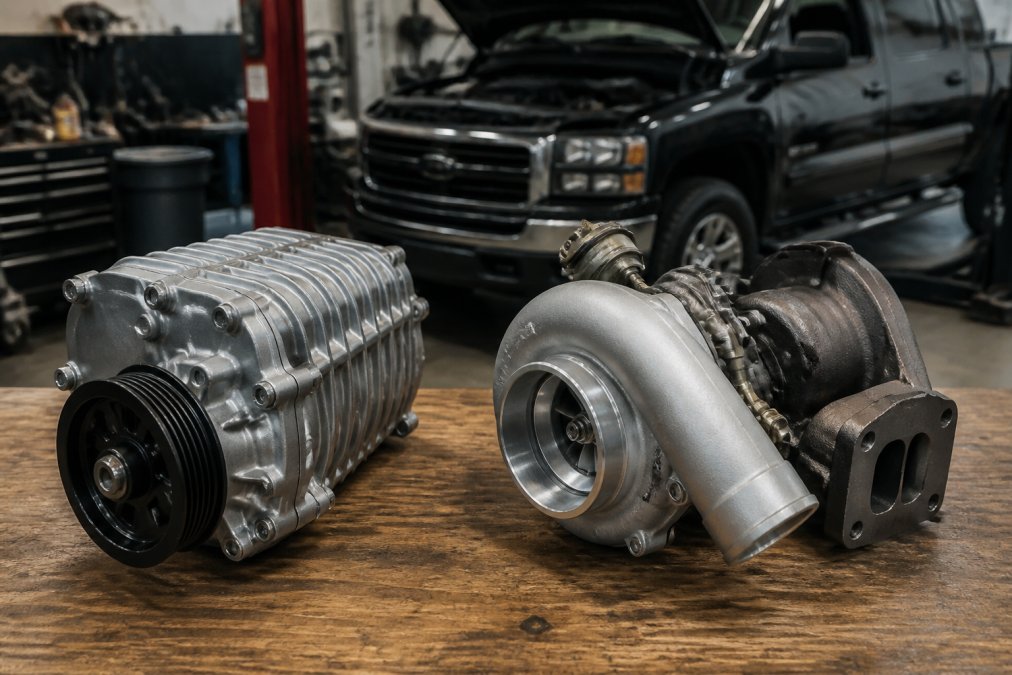
The relationship between tire size and supercharger effectiveness is direct. Larger tires require more torque to turn. A supercharger torque increase for jeeps compensates by increasing the engine's power output. This is why overlanders and off-road builders consistently choose superchargers over turbos. Turbos excel at high-RPM power, but superchargers excel at the low-end response that off-road driving demands.
Emissions Compliance and Warranty Protection
Adding forced induction changes emissions output. The question is: will your supercharger system pass emissions testing, and will it void your factory warranty?
The answer depends on your specific state and the supercharger kit design. VT Superchargers' kits are designed to meet emissions standards in most jurisdictions, but you need to verify your local regulations before installing.
The factory warranty is a separate issue. Most manufacturers void coverage for modifications. However, VT Superchargers' 24-month warranty covers the supercharger system itself. It's coverage for the performance upgrade, not a factory warranty replacement. This distinction matters because you have protection for the component you're adding, even if the factory warranty is voided for the engine as a whole.
In practice, many dealerships won't service a modified vehicle at all. This is why choosing a reliable supercharger system from a reputable manufacturer matters. Some owners keep the vehicle stock when servicing at the dealership, then reinstall modifications afterward.
Emissions compliance is improving. According to Grand View Research's 2026 Automotive Supercharger Market Report, the automotive supercharger market in North America is expected to grow at a CAGR of 3.9% from 2024-2030, driven partly by advances in emissions-compliant forced induction technology. The focus is moving toward durability and real-world testing rather than blanket prohibitions.
Best For
Jeep owners in states with moderate emissions regulations who want a supercharger torque increase for jeeps without legal complications. Confirm local regulations before purchasing and installation.
Conclusion
A supercharger torque increase for jeeps transforms how your vehicle performs. Real-world dyno results show 40-60% horsepower and 30-50% torque gains, depending on the engine and calibration. For daily drivers, off-road enthusiasts, and overlanders, these gains solve real problems: gear hunting with large tires, poor throttle response, and insufficient torque for challenging terrain.
The key to success is choosing a manufacturer that understands your specific engine and driving goals. VT Superchargers' bolt-on kits are engineered for OEM-style fitment and precise calibration. Their 24-month warranty and financing options remove barriers to entry. Most importantly, their kits deliver measurable, reliable performance without the guesswork.
=== FAQ ANSWERS (audit these too, same rules) ===
[1] Q: Does a supercharger add more torque than a turbocharger? A: Yes, superchargers deliver torque instantly across a broader RPM range, making them superior for off-road driving and low-end power. Twin-screw superchargers provide 40-60% more torque for Jeeps, with the biggest gains below 3,000 RPM, critical for navigating rocky terrain or towing. Turbochargers lag at low RPMs due to turbo lag, while superchargers draw air directly from the engine's crankshaft for immediate response.
[2] Q: How much horsepower and torque does a supercharger add to a 3.6L Pentastar? A: A properly tuned supercharger kit for the 3.6L Pentastar adds 40-60% horsepower and 30-50% torque. Real-world examples: the Magnuson TVS1900 delivers 440 hp and 380 ft-lbs at the crank (approximately 100 additional rear-wheel horsepower). The Sprintex Gen 2 produces 310 rear-wheel horsepower and 315 foot-pounds of torque by 3,500 RPM, making it ideal for daily driving and off-road work.
[3] Q: Will a bolt-on supercharger void my Jeep's factory warranty? A: Aftermarket supercharger kits may affect your manufacturer's powertrain warranty. However, VT Superchargers kits include a 24-month warranty covering defects in materials and workmanship. Many shops and installers understand forced induction and can install kits without creating reliability issues. Check with your Jeep dealer about specific warranty implications, and ensure proper ECU tuning and maintenance to preserve engine longevity.
[4] Q: Is a DIY supercharger installation realistic for someone without experience? A: Bolt-on supercharger kits are designed for OEM-style fitment, but installation requires mechanical skill, proper tools, and several hours of work. Most DIY enthusiasts can handle it with detailed instructions and online support communities. However, ECU tuning and calibration typically require professional dyno work. Many choose professional installation to ensure proper fitment and avoid costly mistakes, factor this into your total budget.
Frequently Asked Questions
Does a supercharger add more torque than a turbocharger?
Yes, superchargers deliver torque instantly across a broader RPM range, making them superior for off-road driving and low-end power. Twin-screw superchargers provide 40-60% more torque for Jeeps, with the biggest gains below 3,000 RPM, critical for navigating rocky terrain or towing. Turbochargers lag at low RPMs due to turbo lag, while superchargers draw air directly from the engine's crankshaft for immediate response.
How much horsepower and torque does a supercharger add to a 3.6L Pentastar?
A properly tuned supercharger kit for the 3.6L Pentastar adds 40-60% horsepower and 30-50% torque. Real-world examples: the Magnuson TVS1900 delivers 440 hp and 380 ft-lbs at the crank (approximately 100 additional rear-wheel horsepower). The Sprintex Gen 2 produces 310 rear-wheel horsepower and 315 foot-pounds of torque by 3,500 RPM, making it ideal for daily driving and off-road work.
Will a bolt-on supercharger void my Jeep's factory warranty?
Aftermarket supercharger kits may affect your manufacturer's powertrain warranty. However, VT Superchargers kits include a 24-month warranty covering defects in materials and workmanship. Many shops and installers understand forced induction and can install kits without creating reliability issues. Check with your Jeep dealer about specific warranty implications, and ensure proper ECU tuning and maintenance to preserve engine longevity.
Is a DIY supercharger installation realistic for someone without experience?
Bolt-on supercharger kits are designed for OEM-style fitment, but installation requires mechanical skill, proper tools, and several hours of work. Most DIY enthusiasts can handle it with detailed instructions and online support communities. However, ECU tuning and calibration typically require professional dyno work. Many choose professional installation to ensure proper fitment and avoid costly mistakes, factor this into your total budget.
Ready to transform your Jeep's performance? Explore VT Superchargers' Pentastar supercharger kits designed for Wrangler, Gladiator, and Grand Cherokee models. With a 40% horsepower increase, precise OEM-style fitment, and a 24-month warranty, you get real power backed by real reliability. Register for financing options and connect with approved installers in your area.
This article was written using GrandRanker
Related post
RECENT POSTS