Toyota Tacoma Supercharger Towing Example: Real Pulls
Put 33s on a Tacoma, add a bed rack, recovery gear, a rooftop tent, and then hook up a camper or utility trailer. Now that truck that felt fine empty spends every grade hunting gears with the pedal buried. This Toyota Tacoma supercharger towing example is for the owner who is tired of watching the tach climb while the truck still feels like it is working way too hard.
We see this all the time. A Tacoma owner does not necessarily want to drag race a half-ton. They want to pull a loaded UTV trailer through mountain passes, merge onto the interstate without holding up traffic, and run 70 mph without the transmission constantly deciding it needs another gear.
For the right Tacoma and properly matched kit, a supercharger changes the part of the driving experience owners complain about most: the weak midrange. It gives the truck the grunt to carry added weight and pull a trailer without feeling like every hill is a negotiation.
A Toyota Tacoma Supercharger Towing Example
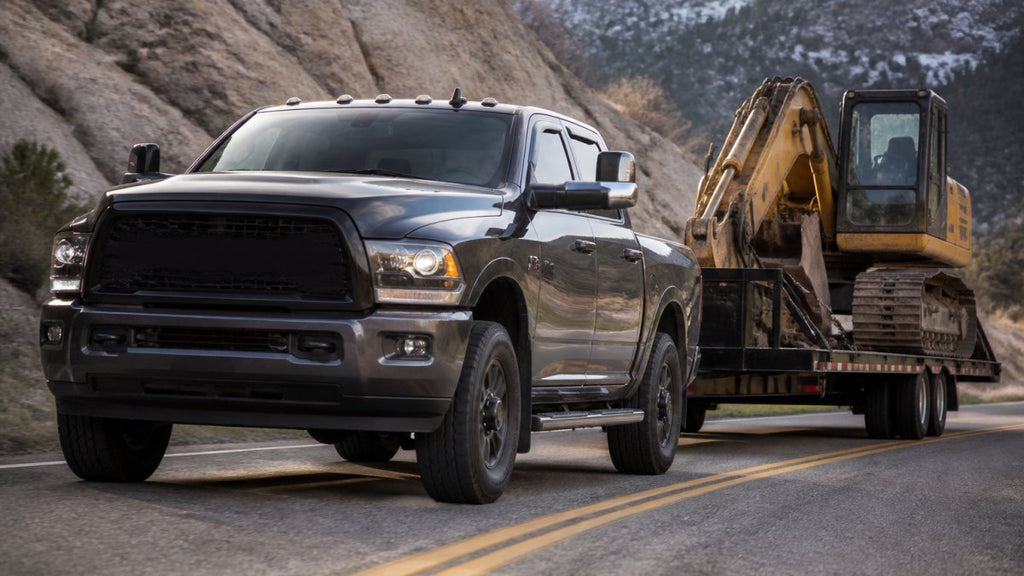
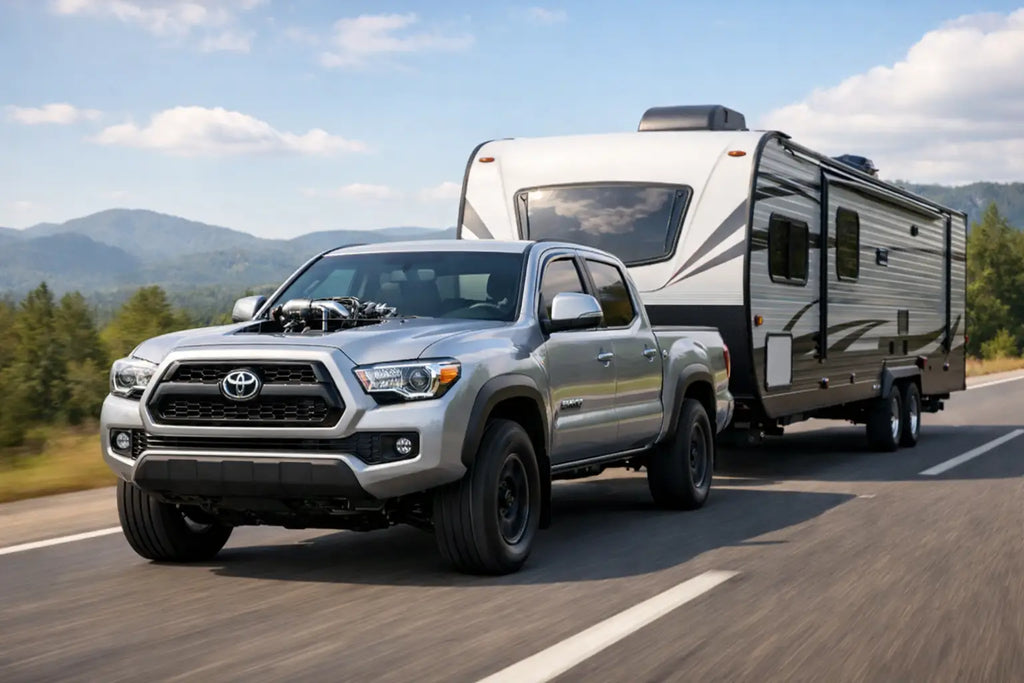
Picture a well-maintained 2005-2015 Tacoma with the 4.0L V6. It is a common real-world setup: four-door cab, 33-inch all-terrain tires, steel front bumper, winch, bed rack, and the usual tools and camping gear. The owner tows a 4,000-pound enclosed trailer a few weekends a month, usually with a side-by-side, dirt bikes, or a loaded mix of equipment inside.
Empty, that Tacoma is still usable. Loaded and pulling into a long grade, it is a different story. The truck drops a gear, then another. Speed falls off unless the driver stays deep in the throttle. Passing a slow RV takes planning, and hot weather or higher elevation makes the whole deal feel worse.
After a properly installed and tuned supercharger, the trailer did not suddenly weigh less. The tow rating did not change either. What changed was how much throttle and gear hunting the driver needed to maintain speed.
Instead of flooring it just to hold 60 mph up a grade, the truck has useful torque earlier in the pull. Instead of dropping two gears every time the road rolls upward, it can often carry the gear longer. The driver can make a pass with more confidence because there is actual response when the pedal goes down.
That is the result most owners tell us they wanted. Not a dyno-sheet story. A Tacoma that no longer feels embarrassed by its own trailer.
What You Feel From the Driver's Seat
The factory Tacoma V6 is dependable, but it is not a torque monster once you pile on the modifications. Bigger tires effectively make the gearing taller. Armor, drawers, roof tents, passengers, coolers, and a loaded trailer all ask more from the engine. At altitude, naturally aspirated power drops off even harder.
One of the biggest complaints we hear is that the truck feels fine around town but flat on the highway when it is loaded. The throttle response gets lazy, the transmission hunts, and the driver ends up running more rpm than they would like for long stretches.
A supercharger does not just make wide-open-throttle pulls more entertaining. Under a towing load, it fills in the middle of the pedal. That is where the Tacoma spends its time climbing a grade, rolling into traffic, or easing past a slower truck on a two-lane road.
You feel it when the trailer starts pulling back. You feel it at the bottom of the hill, before the transmission has to panic downshift. You feel it when the air is thin in Colorado, Utah, or Northern Arizona and the truck still responds like it has something left.
After installing hundreds of kits across truck and SUV platforms, that drivability difference is why we tell people to focus on torque delivery and calibration, not just the biggest horsepower number in an ad. A smooth, predictable truck is a better tow rig than one that only comes alive at the top of the rpm range.
The Grade Is Where It Pays Off
Let’s put the example on a real kind of road: a 6 percent interstate grade, summer heat, a 4,000-pound trailer, and a Tacoma that is already carrying camping weight. Stock, the driver may be sitting in a lower gear with high rpm, chasing the throttle to keep the speed from bleeding away.
With boosted torque available, the Tacoma can generally hold a steadier pace with less pedal input. It may still downshift. It should downshift when the load and hill call for it. The difference is that it does not feel like the engine is out of answers as soon as the road tilts upward.
That matters on long trips. Constant gear changes make towing tiring, especially when crosswinds, traffic, and mountain grades are already keeping you busy. More usable power lets the driver make smoother inputs, hold a safer gap, and spend less time trying to force speed out of the truck.
There is a big difference between pulling a light open trailer across flat Texas roads and towing an enclosed trailer over a high-elevation pass. Tire size, axle gearing, trailer shape, headwinds, and payload all matter. A supercharger helps in both situations, but the mountain truck on 33s or 35s usually feels the improvement more dramatically.
What a Supercharger Does Not Fix
More engine power is not permission to ignore the rest of the tow setup. The Tacoma's published towing and payload limits still apply. Trailer brakes, brake controller adjustment, tire condition, hitch setup, tongue weight, cooling system health, and trailer balance are not optional details.
If your trailer sways, your brakes are marginal, or the rear suspension is overloaded, adding power will not solve that problem. Fix the towing fundamentals first. A properly set up truck with a supercharger is fun and confidence-building. A poorly loaded trailer behind a more powerful truck is still a bad day waiting to happen.
We also tell owners to be honest about maintenance. Towing puts heat into everything. Start with fresh fluids where needed, a healthy cooling system, good plugs, clean filters, and no unresolved check-engine lights. If the truck has 180,000 hard miles and a mystery misfire, do not bolt on power until the base vehicle is right.
Why the Tune and Installation Matter So Much
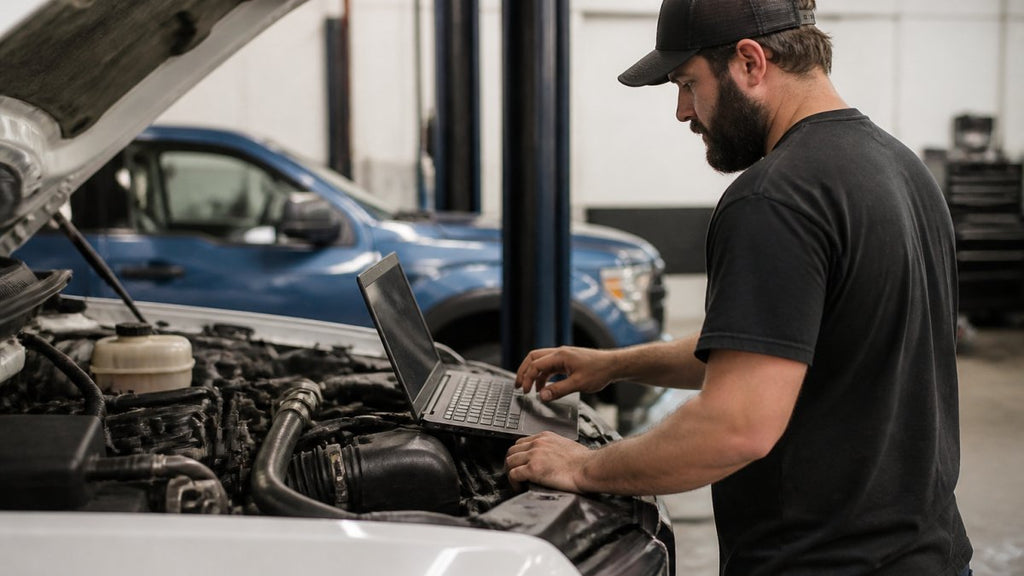
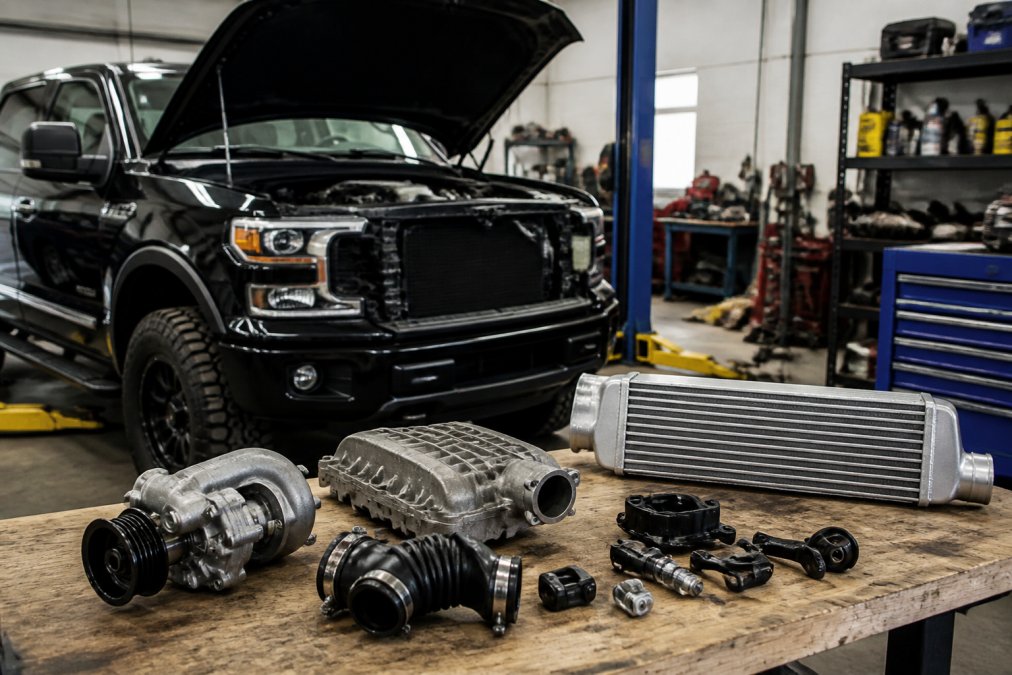
A Tacoma supercharger kit is only as good as the way it is installed and calibrated. This is not the place for universal parts, questionable fuel mapping, hacked wiring, or a shop that has never worked on your engine platform.
The goal is OEM-like behavior. Cold starts should be clean. Idle should be stable. Part-throttle driving should feel normal, not jumpy. Under load, the engine should deliver power consistently without knock, weird shifts, or the kind of drivability issues that make a truck miserable to live with.
That is why vehicle-specific fitment matters. Tacoma engines, model years, electronics, and supporting components are not all interchangeable. Confirm the exact engine, year, drivetrain, and existing modifications before ordering anything. A 4.0L 1GR-FE Tacoma is a different conversation from a newer 3.5L truck, and the kit must match the application.
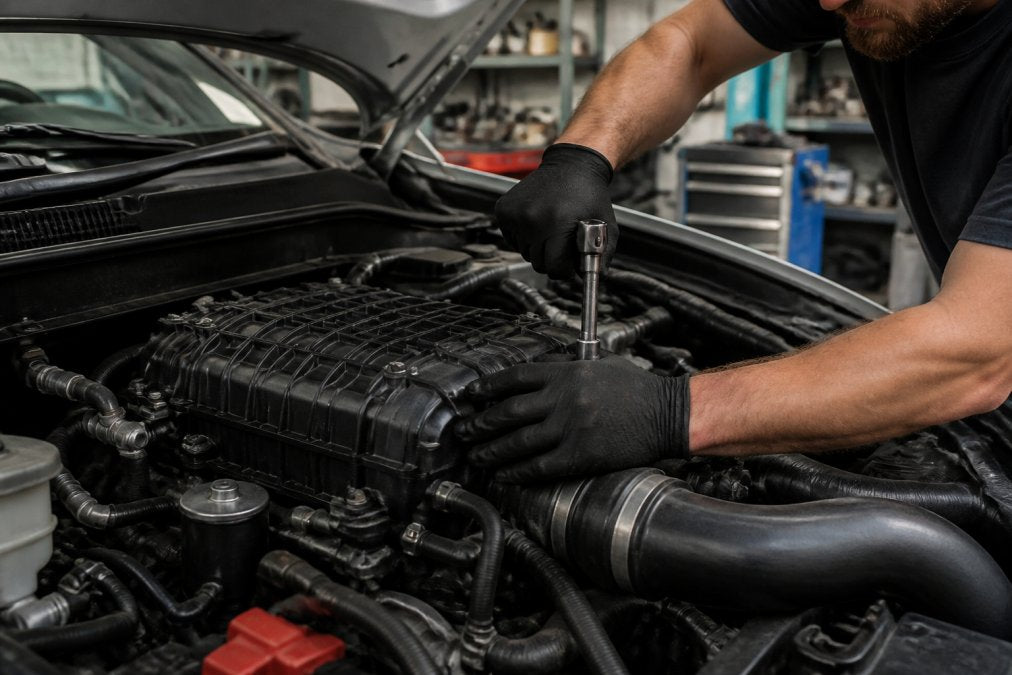
At VT Superchargers, we would rather see a clean installation with the right tuning, proper belt routing, and a customer who can tow for years than chase a flashy number that compromises daily use. Bolt it on correctly, and the truck should still be the Tacoma you trust to take you home after a long weekend.
Is It Worth It for Your Tacoma?
If your Tacoma stays stock, lives on flat roads, and only pulls a small utility trailer a few times a year, you may not need it. Good trailer setup and reasonable expectations can go a long way.
But if you run oversized tires, travel at elevation, carry overland weight, tow a camper or toy hauler regularly, or simply hate the constant downshifting, a supercharger makes a practical difference every time you drive the truck loaded. Most owners tell us the first hard hill with a trailer is the moment it clicks. The truck finally feels like it has the engine it needed all along.
Before you add power, weigh the truck and trailer, check your ratings, and get the maintenance squared away. Then build the Tacoma around the way you actually use it. That is how you end up with a tow rig that pulls hard, drives clean, and still feels right on Monday morning.
Related post


RECENT POSTS