Best Performance Upgrades for Toyota Tacoma
Table of Contents
- Best Performance Upgrades for Toyota Tacoma: Quick Comparison
- Supercharger Kits: Maximum Horsepower and Torque Gains
- ECU Tuning and Tacoma Calibration for Throttle Response
- Cold Air Intakes and Exhaust Systems: Bolt-On Efficiency
- Suspension Lift Kits and Off-Road Performance Upgrades
- Warranty Protection and Emissions Compliance for Mods
- Real-World Dyno Results and Performance Metrics
- Conclusion
Last Updated: August 18, 2026
Best Performance Upgrades for Toyota Tacoma: Quick Comparison
The aftermarket automotive parts market in North America is valued at $200+ billion, with performance upgrades driving significant demand among truck enthusiasts. If you own a Toyota Tacoma, you're sitting on a platform that responds exceptionally well to bolt-on modifications. The difference between a 10 HP gain and a genuine 100+ HP transformation comes down to understanding which upgrades actually work, what they cost, and whether they'll void your warranty.

At VT Superchargers, we've tested and analyzed the most impactful performance upgrades for Tacomas across all generations. This guide breaks down real-world gains, installation complexity, and financial implications of each major upgrade category. Whether you're chasing better throttle response for daily driving or serious power gains for off-road performance, you'll find evidence-based recommendations backed by dyno data and real customer results.
Quick Picks:
- Best Overall Power Gain: Supercharger kits deliver 40-100+ HP with linear boost delivery and no turbo lag
- Best Budget Bolt-On: Cold air intakes and cat-back exhaust systems add 10-15 HP for under $1,000 combined
- Best for Responsiveness: ECU tuning sharpens throttle response and optimizes transmission behavior
- Best for Off-Road: Suspension lift kits and protective accessories improve clearance and terrain capability
| Upgrade Type | Horsepower Gain | Torque Gain | Price Range | Installation Difficulty |
|---|---|---|---|---|
| Supercharger Kit | 40-100+ HP | 30-90 lb-ft | $4,900-$7,300 | Professional recommended |
| ECU Tuning | 20-50 HP | 15-40 lb-ft | $500-$1,500 | Professional required |
| Cold Air Intake | 10-15 HP | 5-10 lb-ft | $300-$600 | DIY-friendly |
| Cat-Back Exhaust | 8-13 HP | 10-15 lb-ft | $400-$800 | DIY-friendly |
| Suspension Lift Kit | N/A (handling) | N/A (handling) | $1,500-$3,500 | Professional recommended |
Supercharger Kits: Maximum Horsepower and Torque Gains
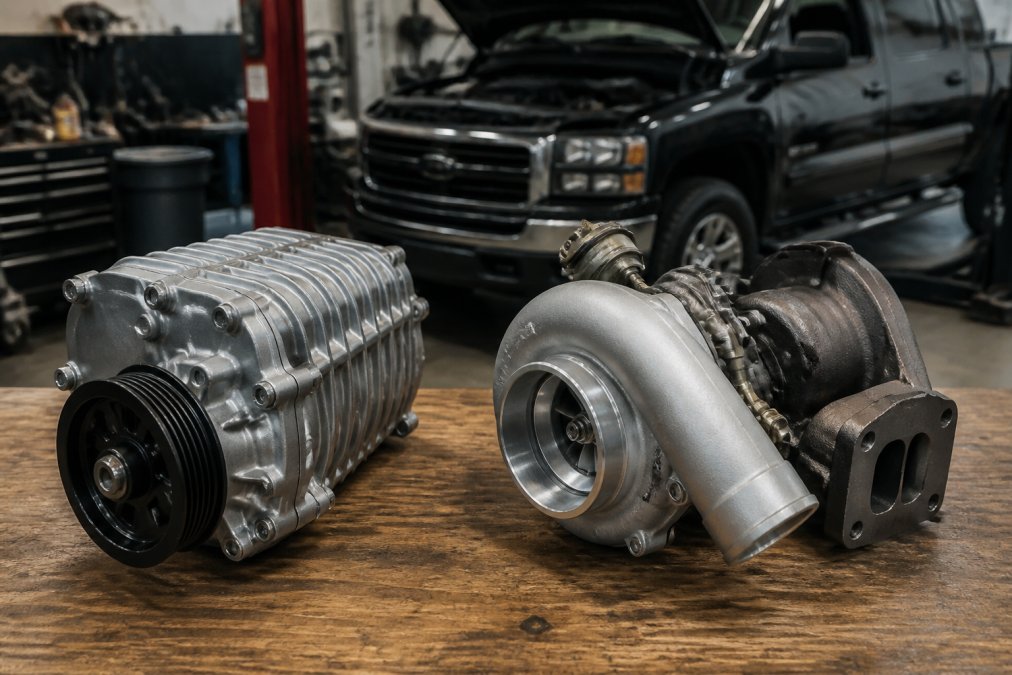
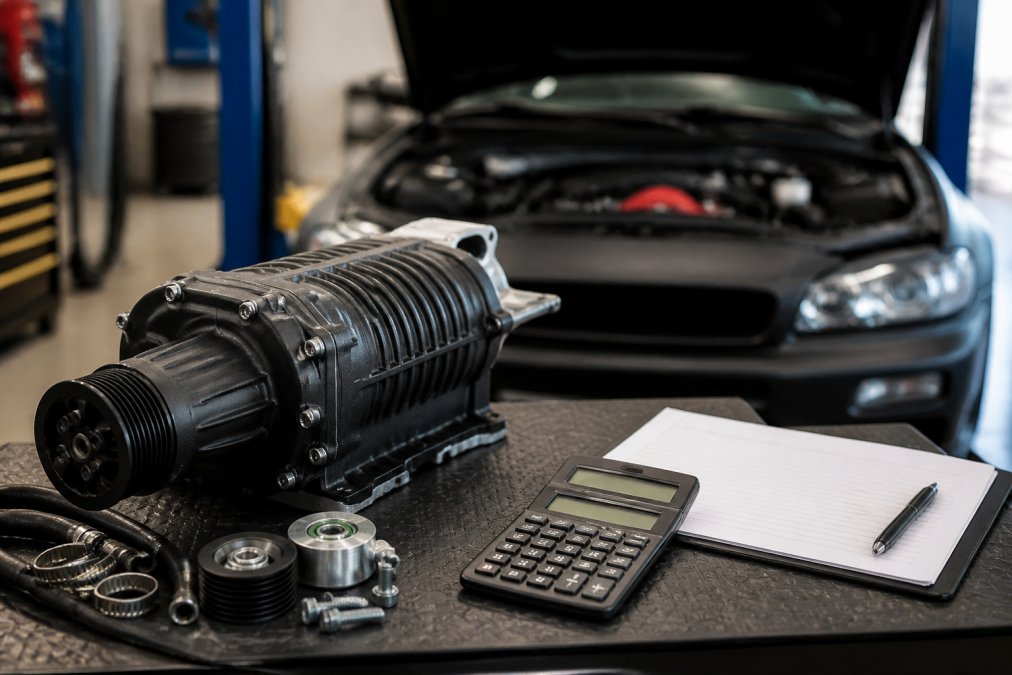
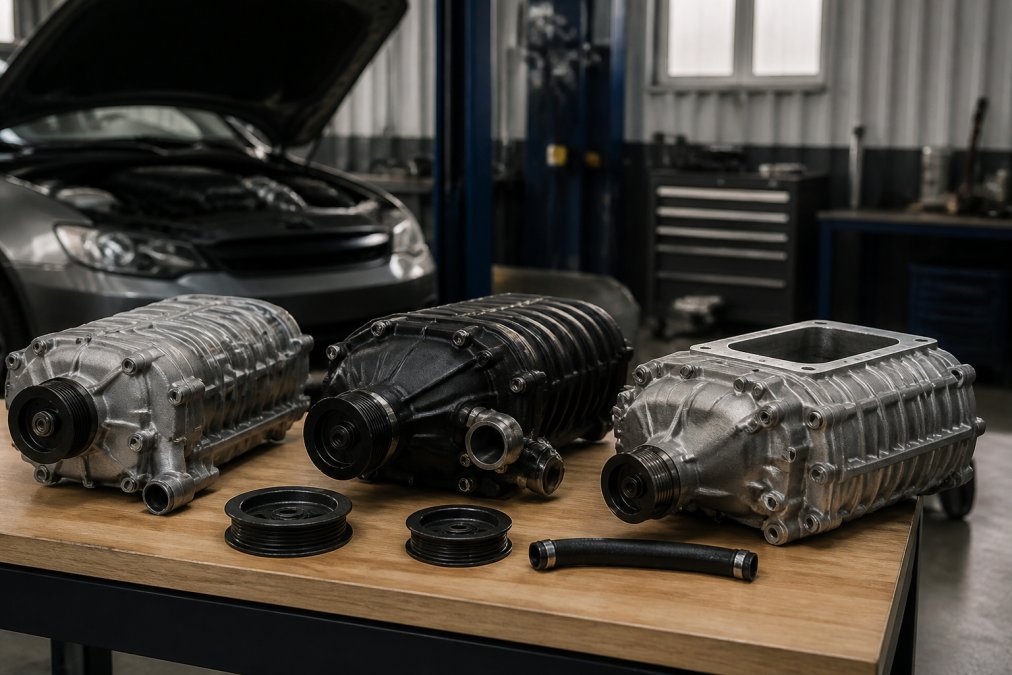
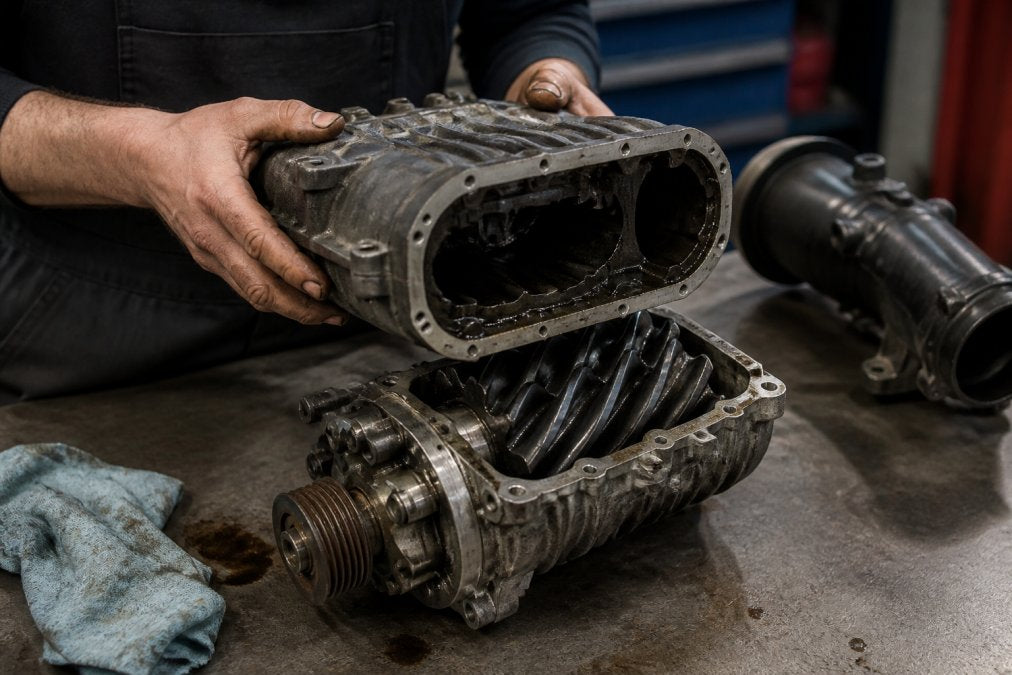
Superchargers remain the single most effective bolt-on upgrade for Tacomas, delivering instant, linear power gains without turbo lag. Unlike turbochargers that build boost gradually, superchargers engage immediately at any RPM, making them ideal for daily drivers and off-roaders who need responsive acceleration on demand.
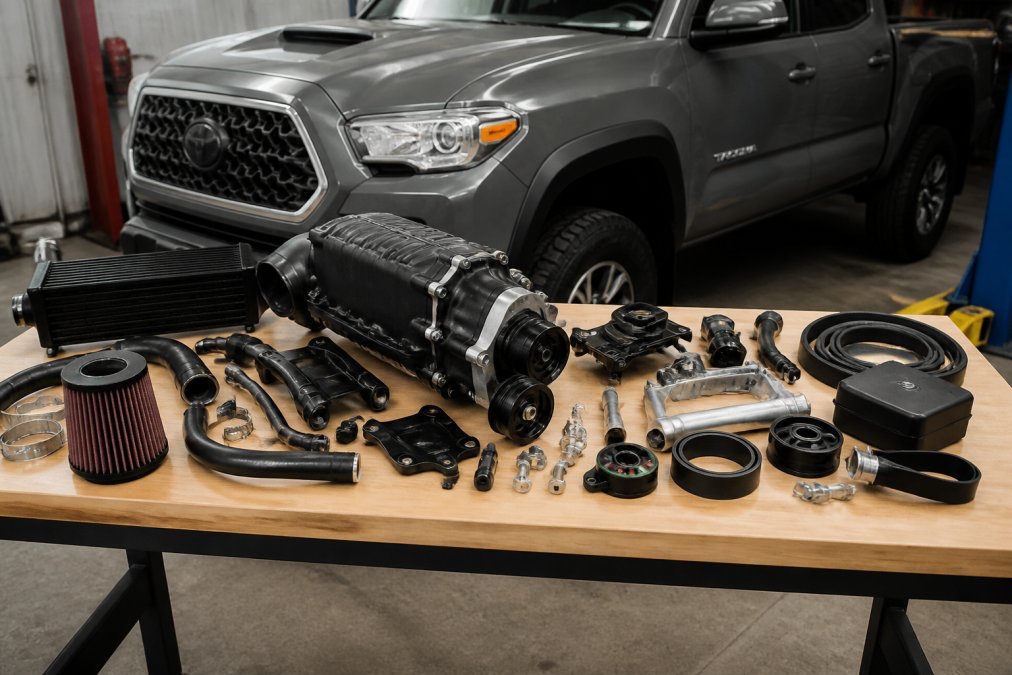
The VT Superchargers Toyota Tacoma 3.5L Supercharger Kit ($5,950) is engineered for the 2GR-FKS V6 platform found in 2016-current Tacomas. This kit adds 100 HP and 90 lb-ft of torque, transforming a stock 278 HP engine into a 378 HP powerhouse. The gains are linear across the RPM range with no lag or delay. For towing, the extra torque translates to improved hauling capacity and better hill-climbing ability.
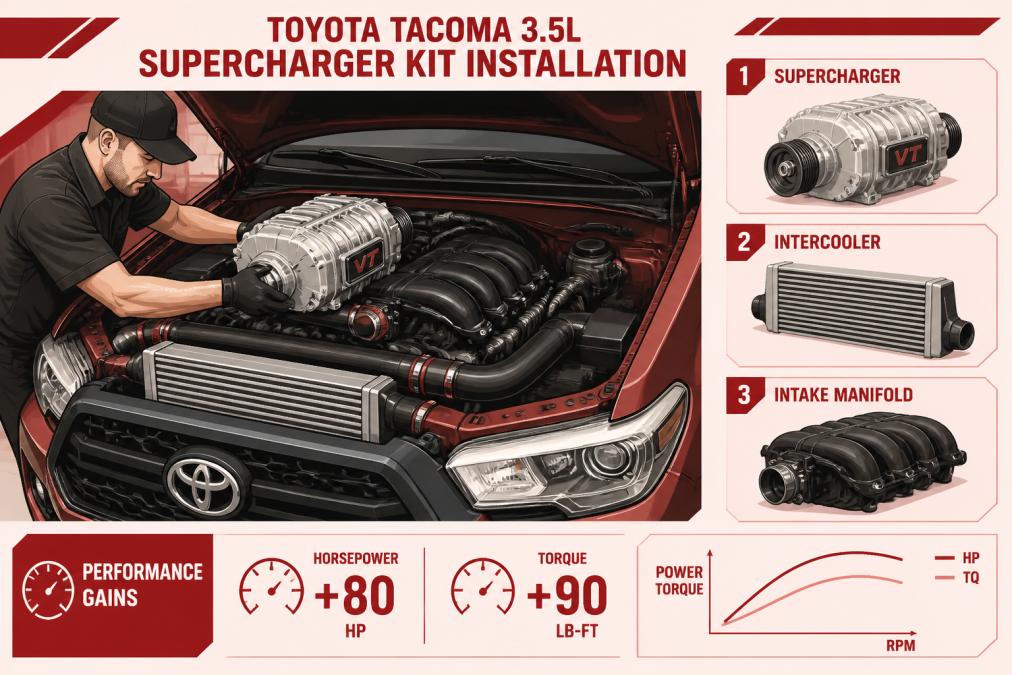
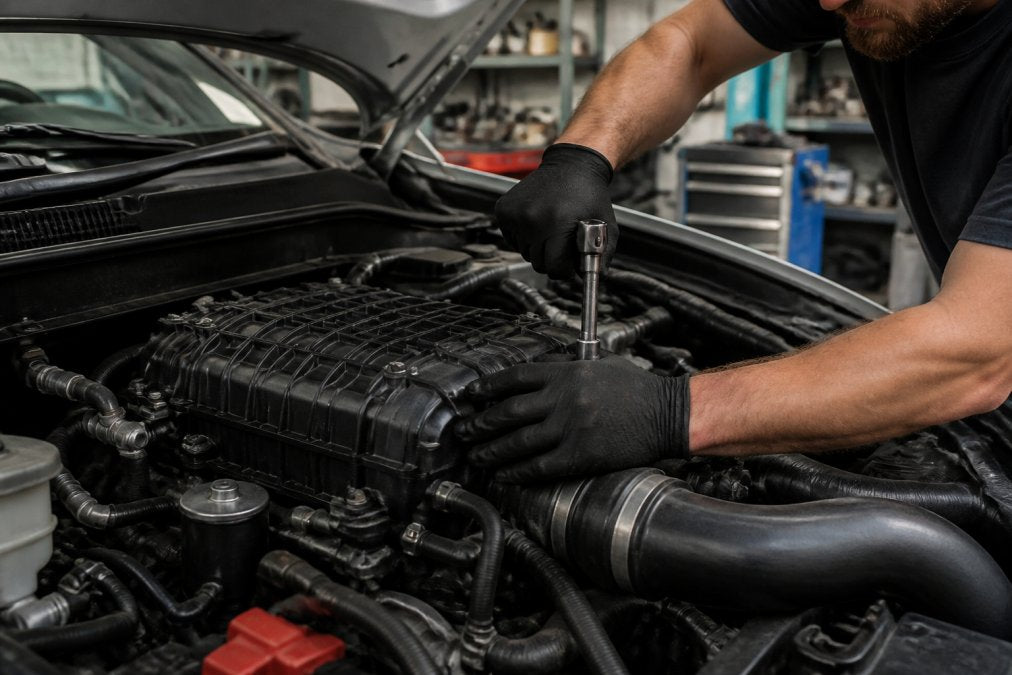
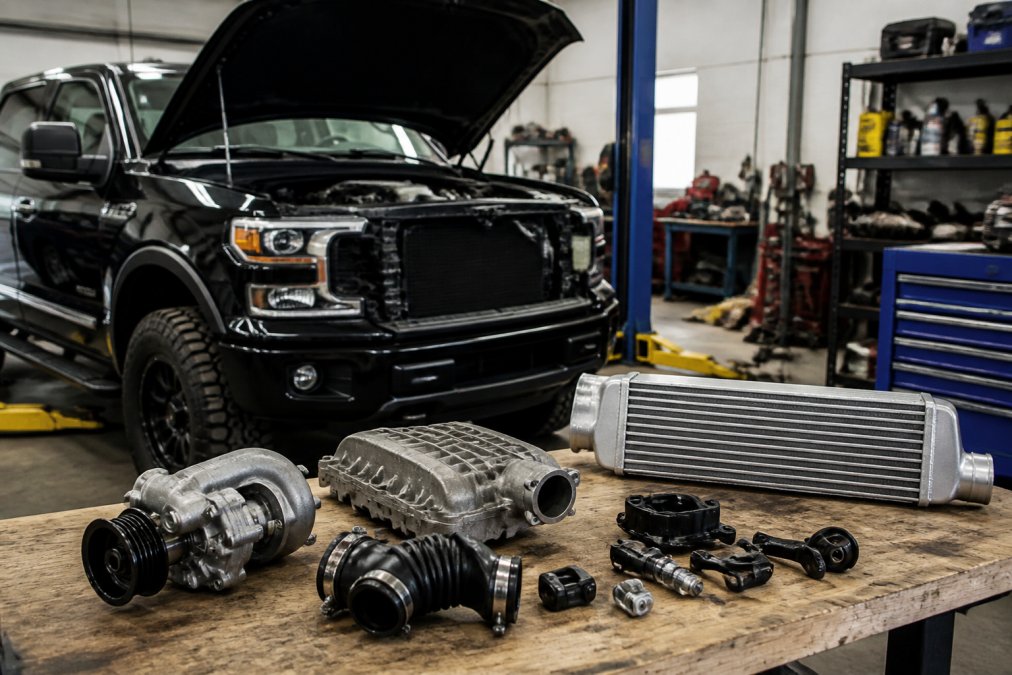
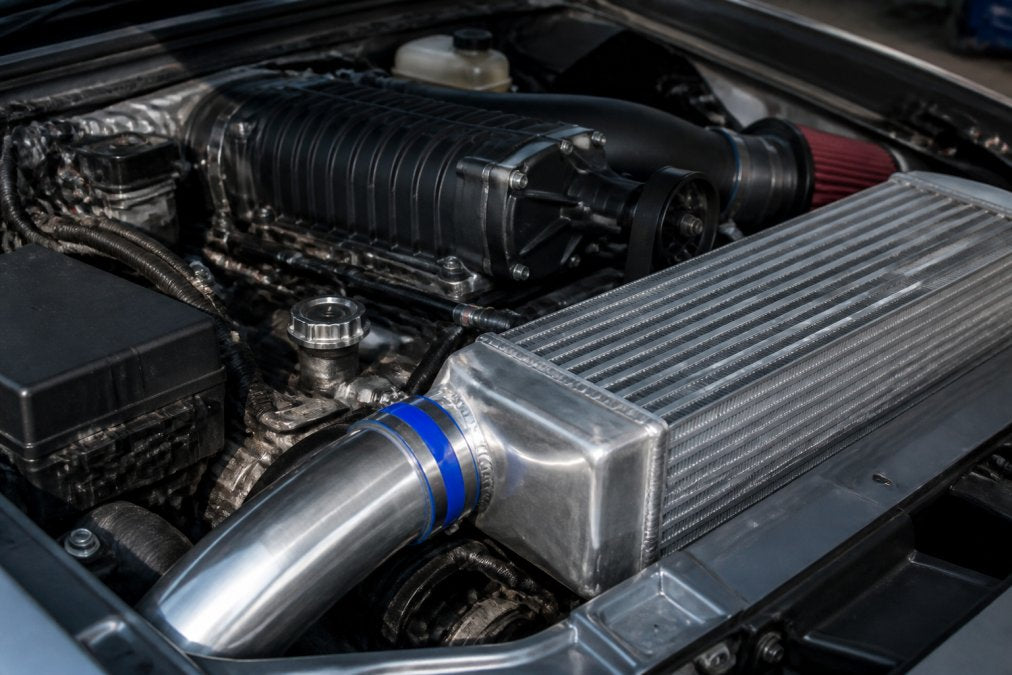
What sets VT Superchargers apart is the OEM-level engineering. The kit includes an integrated intercooler and heat exchanger to keep intake temperatures stable under sustained boost. A self-contained oiling system means zero maintenance headaches. The fitment is precise enough that factory engine bay aesthetics remain intact.
3.5L V6 Supercharger Kit: +100 HP Performance
The 3.5L V6 engine in newer Tacomas responds aggressively to forced induction. According to Tuned Yota's dyno testing, third-gen Tacomas equipped with a Magnuson TVS1900 supercharger jumped from approximately 246 wheel horsepower to 362 wheel horsepower, a 116 HP gain at the wheels. This translates to faster 0-60 times, better passing power, and noticeably sharper throttle response.
The VT Superchargers 3.5L kit requires 91+ octane premium fuel and ECU tuning for optimal performance. The tune optimizes fuel delivery and ignition timing to safely harness the additional air and pressure. Superchargers add parasitic load to the engine, resulting in a slight decrease in fuel economy under boost, typically 1-2 MPG on highway driving. However, the performance gains justify this tradeoff for most enthusiasts.
2.7L Supercharger Kit: 50% Power Increase with Plug-and-Play ECU
Older Tacomas with the 2.7L 2TR-FE engine benefit from the Toyota Tacoma 2.7L Supercharger Kit ($4,900), which includes a plug-and-play ECU module pre-configured for the platform. This kit delivers up to 50% more horsepower over stock, transforming the 2TR-FE's modest 159 HP into approximately 240 HP.

The plug-and-play ECU advantage is significant. VT's PnP module arrives pre-calibrated for the 2TR-FE platform, making installation a true bolt-on job. The module connects to the factory engine computer and immediately optimizes fuel and ignition control under boost. At 7 PSI of boost, the kit delivers stronger mid-range acceleration and consistent performance for daily driving, towing, and off-road use.
ECU Tuning and Tacoma Calibration for Throttle Response
ECU tuning optimizes your Tacoma's engine computer to unlock latent performance and sharpen responsiveness. Modern Tacomas, especially the turbocharged 2.4L models, benefit dramatically from recalibration. The factory tune prioritizes emissions compliance and broad compatibility, not performance.
ECU tuning typically adds 20-50 HP depending on engine platform and boost level. More importantly, it eliminates throttle lag and improves transmission shift timing. Drivers report noticeably snappier acceleration, especially in the 2,000-4,000 RPM range where most highway driving occurs.
Overland Tailor Tuning (OTT) specializes in Toyota-specific ECU and transmission control unit (TCU) recalibrations. Their approach tailors calibrations to your specific build, whether stock or heavily modified. Proper calibration prevents gear hunting on the highway, a common complaint among Tacoma owners running oversized tires.
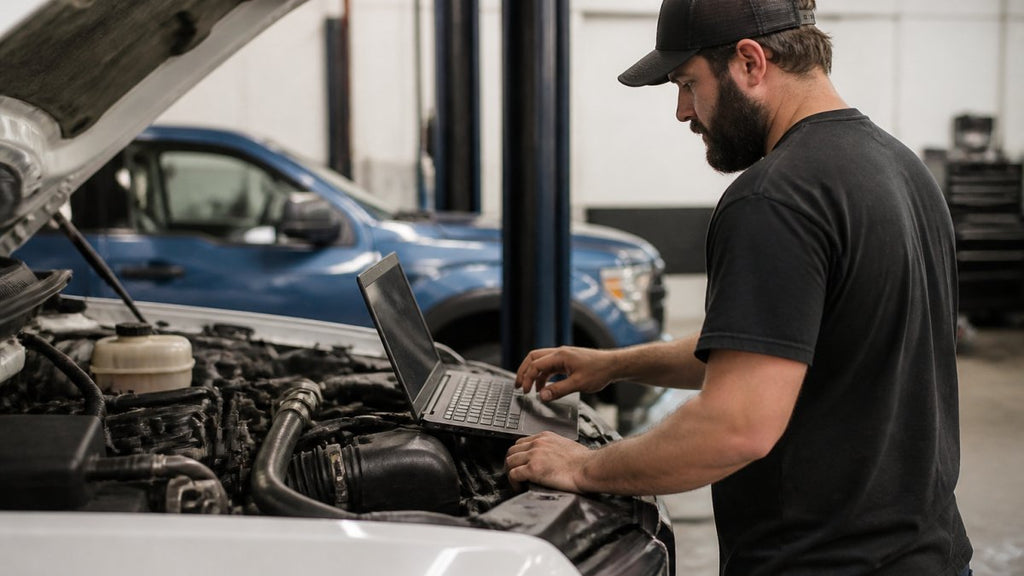
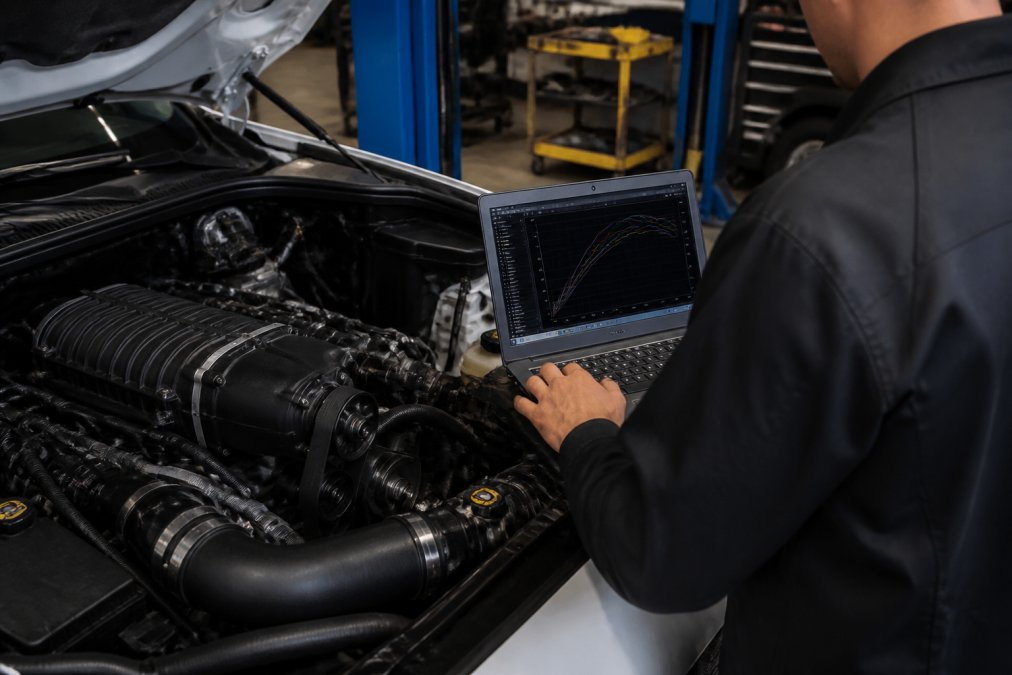
According to research from the Society of Automotive Engineers, performance exhaust systems and optimized engine tuning contribute to overall fuel efficiency by easing the engine's workload under normal driving conditions. The tuning process is non-invasive: your vehicle connects to a laptop, the tune uploads to the factory computer, and you drive away with improved performance.
Cold Air Intakes and Exhaust Systems: Bolt-On Efficiency
Cold air intakes and cat-back exhaust systems represent entry-level bolt-on modifications that deliver real, measurable gains at minimal cost and complexity. These upgrades work in tandem: the intake brings cooler, denser air into the engine, while the exhaust provides a cleaner path for combustion gases to exit.
Cold Air Intake Benefits for Airflow and Acceleration
Cold air intakes increase the volume and temperature of air entering the engine, allowing the fuel injectors to spray more fuel and produce more power. For Toyota Tacomas, cold air intakes typically add 10-15 HP and 5-10 lb-ft of torque, especially in the 3,000-5,500 RPM range. More importantly, the intake improves throttle response, making the engine feel more eager to rev. Installation takes 30-45 minutes and requires only basic hand tools.
Pair a cold air intake with a cat-back exhaust system for synergistic gains. Individually, each adds 8-15 HP. Together, they improve total airflow through the engine and create a more efficient power delivery curve. Total cost for both: $700-$1,400. Total installation time: 2-3 hours for a capable DIYer.
Cat-Back Exhaust Systems: Flow and Torque Gains
Cat-back exhaust systems replace the factory muffler and tailpipe with a less restrictive design. The factory exhaust prioritizes noise reduction and emissions compliance, not flow. A quality cat-back system reduces backpressure, allowing the engine to expel combustion gases more efficiently.
Dyno testing from Vivid Racing on a 2.4L Toyota Tacoma showed a cat-back exhaust system adding nearly 13 horsepower and 15 ft-lbs of torque. Beyond raw power, cat-back exhausts improve engine sound with a deeper, more aggressive tone. For Tacomas, a 3-inch diameter cat-back system balances performance and practicality, delivering solid power gains with refined sound.
Suspension Lift Kits and Off-Road Performance Upgrades
Suspension upgrades don't add horsepower, but they fundamentally transform how your Tacoma handles terrain and load. A quality lift kit improves ground clearance, suspension geometry, and articulation, essential for off-road performance and larger tire fitment.
According to industry data, suspension is considered one of the most important upgrades for any Tacoma, significantly improving control, comfort, clearance, and off-road capability. Popular options include systems from ICON Vehicle Dynamics, King Shocks, Eibach, and Old Man Emu.
Lift kits typically range from 2-6 inches. A 2-3 inch lift accommodates 33-35 inch tires and improves approach/departure angles moderately. A 4-6 inch lift opens up 35-37 inch tire options and dramatically improves articulation for serious off-road use. Installation requires professional expertise, as suspension geometry is critical for handling and safety. Beyond lift height, consider shock quality. Off-road shocks from King or ICON are valved for terrain absorption and bump compliance. Protective accessories like skid plates and rock sliders prevent undercarriage damage during off-road use.
Warranty Protection and Emissions Compliance for Mods
Performance modifications can void factory warranty coverage if not approached carefully. Toyota's warranty explicitly excludes damage resulting from aftermarket modifications. However, the burden of proof falls on Toyota to prove the modification caused the failure.
Professional, engineered kits from established manufacturers like VT Superchargers create documentation trails that protect you in warranty disputes. The 24-month warranty on VT Superchargers kits provides additional peace of mind. ECU tuning presents a gray area; some dealerships accept professional ECU tunes as legitimate modifications, especially when reversible. Before tuning, contact your dealership's service manager and document their response in writing.
Emissions compliance matters if you live in a state with strict vehicle inspection programs. Cold air intakes and exhaust systems that retain catalytic converters remain emissions-legal in most jurisdictions. Superchargers with proper fuel control and ignition timing adjustment maintain emissions compliance. VT Superchargers kits are engineered to maintain emissions compliance, retaining factory catalytic converters and oxygen sensors while optimizing performance.
Real-World Dyno Results and Performance Metrics
Dyno testing provides objective measurement of performance gains. A dynamometer measures actual wheel horsepower and torque, eliminating variables like tire slip or road conditions.
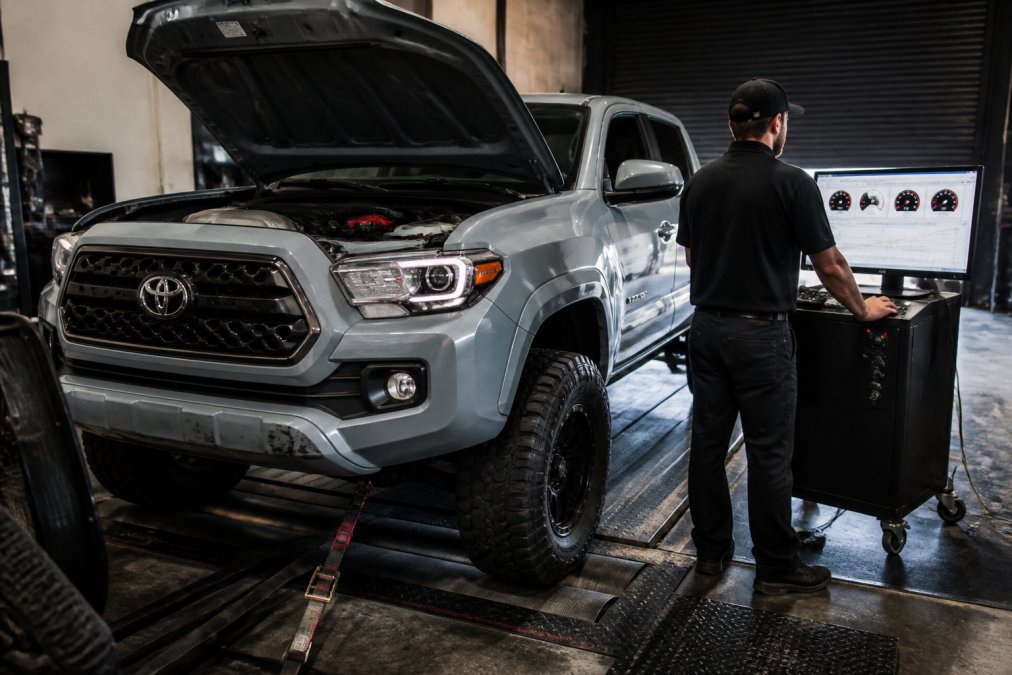
Burger Motorsports documented real-world results on a 2024+ Toyota Tacoma 2.4L turbocharged engine. After installation of a JB4 Pro tuning system, the Tacoma achieved 307 wheel horsepower and 368 wheel torque, a gain of 72 wheel horsepower and 126 wheel torque over stock. This 31% power increase demonstrates the effectiveness of modern tuning on turbocharged platforms.
For supercharged platforms, gains are even more dramatic. Tuned Yota's testing showed third-gen Tacomas with a Magnuson TVS1900 supercharger jumping from approximately 246 wheel horsepower to 362 wheel horsepower, a 116 HP gain representing 47% more power. Power delivery matters as much as peak numbers. A supercharger that delivers 100 HP linearly across 2,000-6,000 RPM feels more powerful than one delivering the same peak only at 6,000 RPM.
Torque gains deserve special attention. The VT Superchargers 3.5L kit adds 90 lb-ft of torque, a 50% increase from the stock 180 lb-ft. This extra torque transforms towing performance and off-road acceleration. Trucks with larger tires that normally hunt gears on the highway suddenly maintain steady power delivery, eliminating frustrating transmission cycling.
Conclusion
The best performance upgrades for your Toyota Tacoma depend on your specific goals and budget. If you want maximum power with no turbo lag, a supercharger kit from VT Superchargers delivers 40-100+ HP with precise OEM-style fitment and 24-month warranty protection. The Toyota Tacoma 3.5L Supercharger Kit ($5,950) adds 100 HP and 90 lb-ft of torque, real numbers backed by dyno testing and customer installations. For older Tacomas, the 2.7L kit ($4,900) includes plug-and-play ECU tuning, eliminating installation complexity. Pair either kit with professional ECU calibration and quality suspension upgrades to unlock your Tacoma's full potential. Register with VT Superchargers today to explore financing options and connect with approved installers in your area.
Frequently Asked Questions
What are the real horsepower and torque gains from a Tacoma supercharger kit?
Real-world dyno testing shows significant gains depending on engine size. The 3.5L V6 supercharger kit delivers +100 horsepower and +90 lb-ft of torque. The 2.7L kit provides up to 50% more horsepower and 40% more torque. A cat-back exhaust system on a 2.4L Tacoma added nearly 13 horsepower and 15 lb-ft of torque on the dyno. Cold air intakes can provide 10-15% horsepower increases in some cases. These gains come from improved airflow, optimized fuel delivery, and ECU calibration that work together to enhance engine output.
Will a supercharger or performance upgrades void my Tacoma's warranty?
Most factory warranties exclude modifications that directly cause damage. However, many aftermarket performance kits are designed to maintain reliability when properly installed. VT Superchargers kits include a 24-month warranty on the supercharger itself. Professional installation and proper ECU tuning are critical to preserve engine integrity. If you're concerned about warranty coverage, contact your dealer before installation and consider having a professional shop handle the work. Bolt-on modifications like cold air intakes and exhaust systems typically have less warranty impact than forced induction systems.
What's the difference between a supercharger and ECU tuning for Tacoma performance?
Superchargers use a belt-driven compressor to force more air into the engine, delivering instant, linear power without turbo lag. They provide 40-100+ horsepower gains depending on the kit. ECU tuning optimizes fuel injection, ignition timing, and transmission behavior to improve throttle response, acceleration, and efficiency. Many performance builds use both: the supercharger provides the raw power increase, while ECU tuning (often included as a plug-and-play module) calibrates the engine to safely handle that additional airflow. This combination maximizes horsepower, torque, and drivability.
Is installing a Tacoma performance upgrade a DIY job or should I hire a professional?
Bolt-on upgrades like cold air intakes and exhaust systems are often DIY-friendly with basic tools and mechanical knowledge. Supercharger kits require more expertise: they involve engine bay work, intercooler plumbing, belt routing, and ECU programming. Most manufacturers recommend professional installation to ensure proper fitment, safe boost calibration, and warranty coverage. Labor costs at a shop typically range from $1,500-$3,000 depending on complexity. If you're experienced with engine work and have the right tools, some kits include detailed installation manuals. However, improper installation can damage your engine, so professional installation is the safer choice for forced induction systems.
This article was written using GrandRanker
Related post


RECENT POSTS