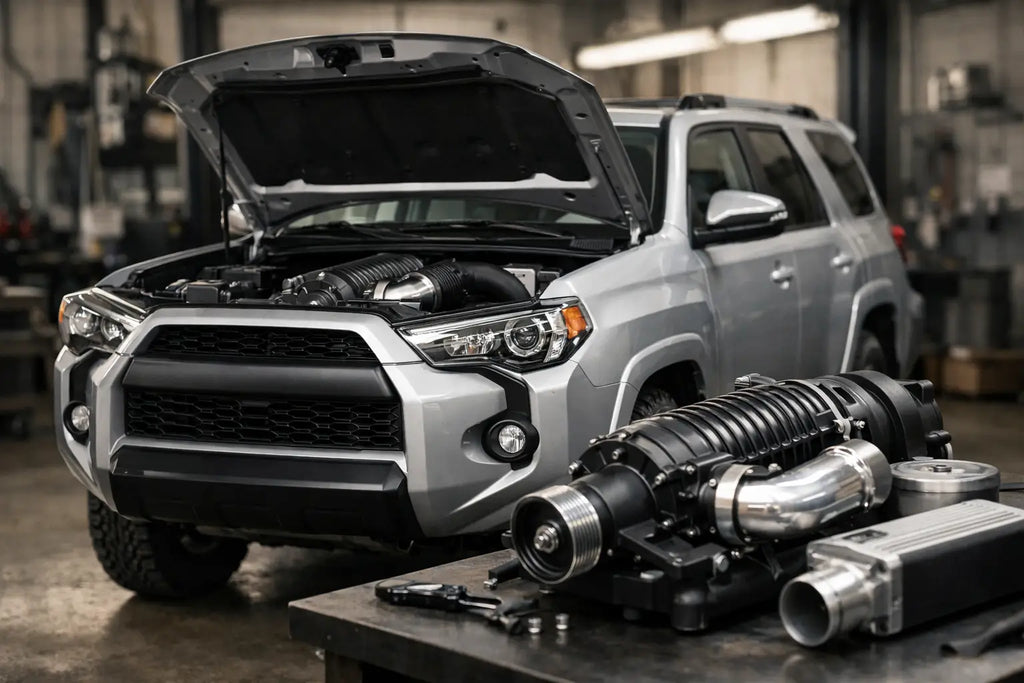
Can You Supercharge a 4Runner?
Put 33s or 35s on a 4Runner, add a roof rack, sliders, bumpers, camping gear, maybe a trailer behind it, and the same complaint shows up every time. It feels heavy, it hunts for gears on hills, and passing power gets real thin real fast. So if you’re asking can you supercharge a 4Runner, the short answer is yes - and for a lot of owners, it’s the cleanest way to get the vehicle back to how it should have felt from the factory.
We see this all the time with 5th gen 4Runners and even older trucks that have slowly gained weight through useful mods. Nobody adds armor, bigger tires, and overlanding gear because they want a slower SUV. But that’s exactly what happens. The 4.0L is dependable, no argument there, but once the truck is loaded up, the weak spot is obvious - it needs more midrange torque.
Can you supercharge a 4Runner and still drive it every day?
Yes, if the kit is built right and the tune is right. That’s the part a lot of owners worry about, and honestly, they should. A 4Runner isn’t some weekend-only toy for most people. It’s the daily driver, the road-trip truck, the tow rig for the small camper, the mountain vehicle, the desert vehicle, the family hauler. If it gets supercharged, it still needs to start every morning, idle clean, run in traffic, and climb a grade without feeling like it’s fighting for its life.
That’s why we always push owners toward vehicle-specific bolt-on kits with OEM-like fitment and proper calibration, not pieced-together setups. After installing hundreds of kits, the difference is obvious. A clean, well-engineered supercharger setup doesn’t just make peak power. It changes how the truck responds the second you touch the throttle.
Most owners tell us the biggest improvement isn’t some top-end race-car feeling. It’s that the 4Runner finally feels awake. It pulls harder from low and mid rpm, it doesn’t nose over when you’re trying to merge, and it stops doing that annoying gear-hunting routine every time the road starts climbing.
Where a supercharged 4Runner feels the difference
A 4Runner owner usually doesn’t care about a dyno sheet nearly as much as what happens on the interstate on-ramp, on a mountain pass, or with a trailer hooked up. That’s where a supercharger makes sense.
Bigger tires are one of the biggest reasons. Move from the stock size to 285s, or jump to a true 35-inch setup, and you’ve changed the whole feel of the truck. Acceleration gets softer, braking feels more strained, and the transmission starts working overtime. One of the biggest complaints we hear is, “It was fine before I built it.” That’s normal. The mods that make the truck more capable off-road usually make it less happy on pavement.
Towing is another big one. The 4Runner can tow, but anybody who has spent time pulling a small trailer, side-by-side, or boat knows the factory powertrain runs out of breath on grades. You’re into the throttle, it drops gears, revs climb, and it still doesn’t feel like it has enough in reserve. A properly supercharged setup gives you more usable torque where you actually need it. That means less drama climbing hills and less stress trying to keep speed with traffic.
Altitude is brutal too. Naturally aspirated engines feel softer the higher you go, and if you live in Colorado, Utah, Arizona, or anywhere with elevation, you know exactly what I mean. We see this all the time with overland builds that are loaded down and spend time in the mountains. The truck that felt acceptable at sea level suddenly feels like it left half its power behind. Forced induction helps bring that back in a way bolt-ons just don’t.
Which 4Runner owners usually benefit most?
If you’ve got a mostly stock 4Runner that never tows, never sees altitude, and still runs factory-size tires, a supercharger may be more of a want than a need. Nothing wrong with that. But the owners who usually get the most value are the ones who’ve already pushed the truck beyond what the stock powertrain is happy with.
That means 5th gen owners on 285/70R17s or larger, trucks with steel front and rear bumpers, winches, skid plates, drawer systems, rooftop tents, and all the stuff that adds up quick. It also means people who commute in the same truck they take on long trips. They want more power, but they do not want a weird idle, touchy throttle, or a vehicle that becomes high-maintenance.
That’s why drivability matters more than bench-racing numbers. A 4Runner responds really well when boost is added in a way that feels natural. You want smooth power delivery, predictable behavior in traffic, and a setup that doesn’t turn the vehicle into something annoying to live with.
What changes when you supercharge a 4Runner?
The first thing most people notice is throttle response. The truck feels lighter. You press the pedal and it actually goes instead of pausing, downshifting, and then slowly getting moving.
The second thing is midrange pull. That’s the sweet spot for a 4Runner because that’s where you live in normal driving. You’re not drag racing it. You’re rolling into the throttle from 30 to 70 mph, climbing a grade with gear in the back, or trying to pass somebody on a two-lane road without planning the move three business days in advance.
Hill climbing gets easier. Towing feels more relaxed. The truck is less busy because you don’t have to stay buried in the throttle all the time. Most owners tell us it makes the whole vehicle feel less stressed.
And that’s the key point. A good supercharger setup should make the 4Runner feel stronger, not more fragile.
The trade-offs nobody should ignore
Let’s keep this real. More power always comes with responsibility. If you supercharge a 4Runner, you need to be honest about the condition of the vehicle, the quality of the parts, and who is doing the installation and tuning.
If the truck already has unresolved maintenance issues, a boost setup won’t magically cover them up. Cooling system health matters. Fuel system health matters. Spark plugs matter. Transmission behavior matters. You want a solid baseline before adding power.
Fuel economy is another area where people ask questions. If you stay out of the throttle, the hit may not be dramatic. But let’s be honest - most people don’t supercharge a 4Runner to drive it like a Prius. If you use the power, you’ll burn more fuel. That’s just part of the deal.
There’s also the question of how much power is enough. For a street-driven, trail-driven, tow-capable 4Runner, the goal usually isn’t to chase the biggest number possible. The goal is to restore performance and add confidence without sacrificing the long-term reliability that made you buy a Toyota in the first place.
What to look for in a 4Runner supercharger kit
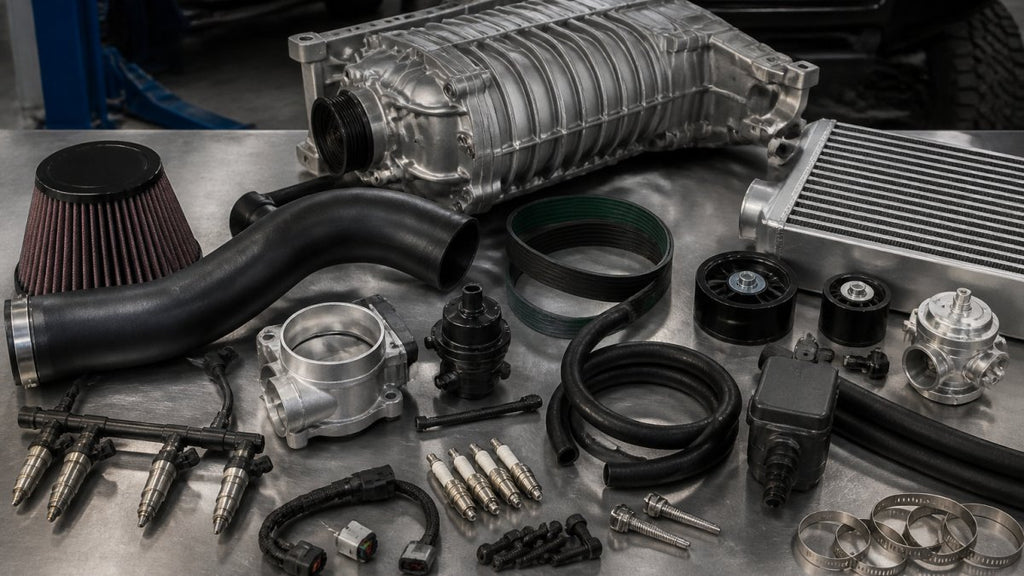
This is where people either end up happy for years or frustrated right out of the gate. A proper 4Runner kit should fit cleanly, include the supporting hardware, and be backed by tuning that matches the application. You do not want to gamble on a mystery setup that requires a bunch of fabrication, oddball fixes, or endless back-and-forth to get it running right.
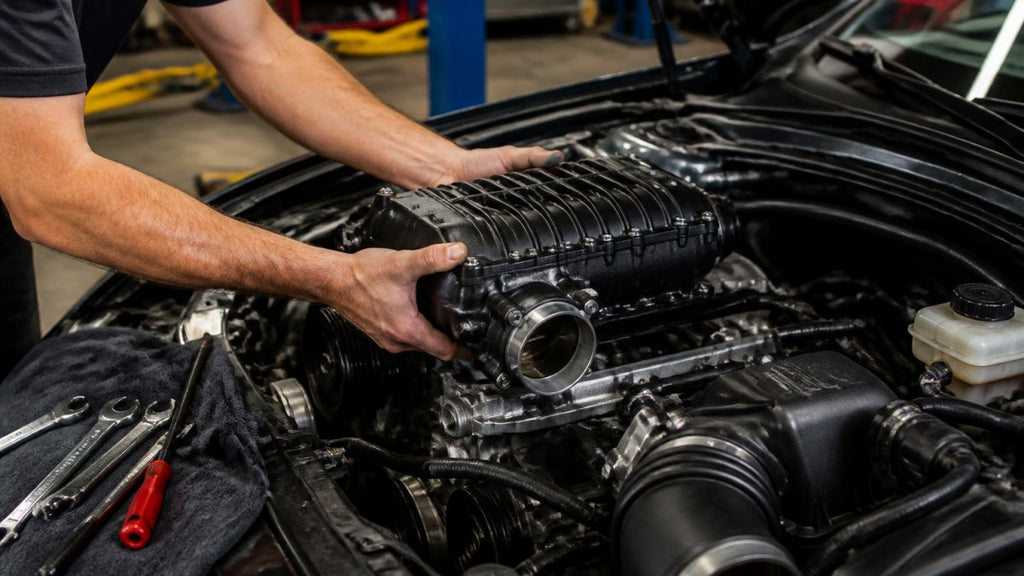
After installing hundreds of kits, we can tell you the best setups all have the same feel. They install like they belong there. The power comes in smoothly. Cold starts are normal. Part-throttle driving is normal. The vehicle still behaves like a daily driver, just stronger everywhere.
That matters more than people think. A lot of 4Runner owners are not trying to build a race truck. They want to bolt it on, have it tuned correctly, and go use the vehicle. They want to tow the camper, run mountain passes, carry the family, hit the trail, and enjoy the truck instead of apologizing for how slow it got after the build.
If you’re shopping, pay attention to application coverage by model year and engine, tuning support, installation guidance, and whether the kit was designed around real-world use. One clean, proven kit is worth more than a pile of parts and a headache.
So, can you supercharge a 4Runner and is it worth it?
If your 4Runner still feels fine for the way you use it, maybe not. But if bigger tires, armor, towing, altitude, or added weight have turned it into a constant downshifting machine, then yes - supercharging makes a lot of sense.
We see this all the time. Owners spend serious money making a 4Runner more capable, then live with worse performance because they assume that’s just part of the deal. It doesn’t have to be. A well-matched kit brings back the urgency, the torque, and the drivability that the vehicle lost along the way.
That’s really the whole point. Not to turn a 4Runner into something it was never meant to be, but to make it feel right again every time you pull onto the highway, climb a grade, or load it up for the next trip.
Related post
09
Oct
RECENT POSTS