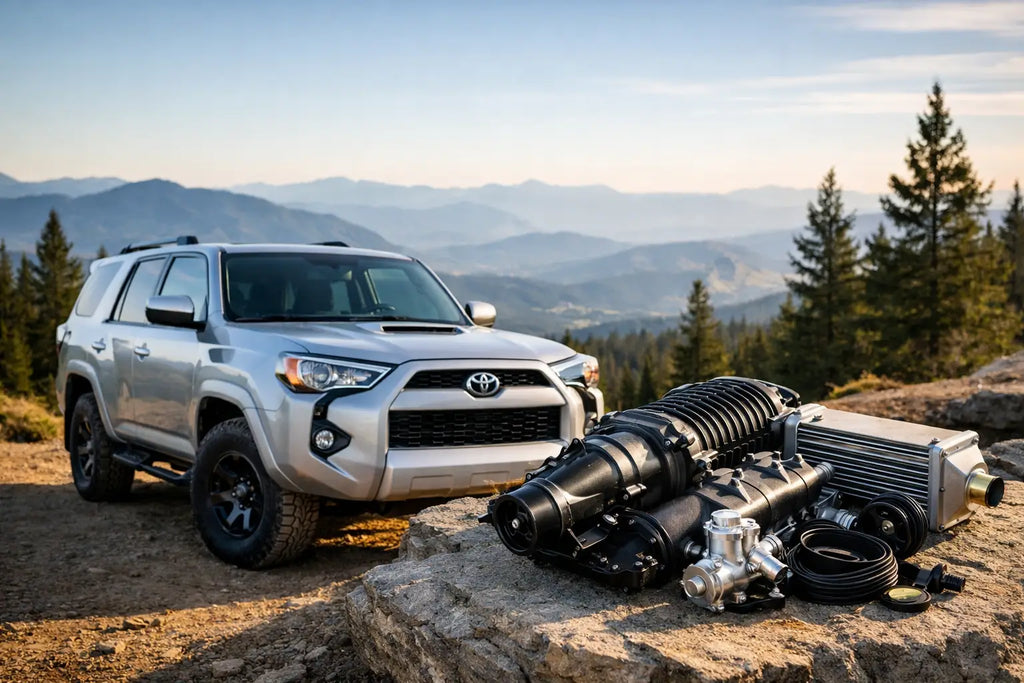
Toyota 4Runner Supercharger Options
You throw on 33s, add a roof rack, sliders, a rear bumper, maybe a drawer system, and all of a sudden your 4Runner feels like it lost a fight. It hunts for gears on the highway, downshifts on hills, and passing power gets real sketchy when the truck is loaded down. That is exactly why owners start looking at Toyota 4Runner supercharger options in the first place - not because they want a race truck, but because they want their 4Runner to feel strong again.
We see this all the time. A 4Runner is a great SUV right out of the box, but once you build it for how you actually use it, the factory power starts to feel thin. Bigger tires, camping gear, towing a small trailer, mountain driving, high heat, high altitude - all of it hits the 4.0L V6 where it hurts most, right in the midrange.
The real reason 4Runner owners shop superchargers
One of the biggest complaints we hear is not top-end horsepower. It is that dead feeling when you roll into the throttle and nothing happens fast enough. The truck is not terrible. It is just working too hard.
That matters more in a 4Runner than a lot of people admit. These trucks spend real time on the street, in traffic, on family trips, and on long highway runs to the trail. Most owners tell us they want more grunt merging, climbing grades, and pulling through soft sand or mud without having to mash the pedal and wait.
A good supercharger changes that part of the driving experience first. The truck feels lighter. Throttle response wakes up. Midrange torque comes in where you use it. You do not need to rev the life out of it just to keep up with traffic or hold speed on a hill.
Toyota 4Runner supercharger options by engine and generation
If you are shopping Toyota 4Runner supercharger options, the first thing to know is that your engine and model year decide everything. Fitment is not a maybe on these trucks. It has to match.
4th gen and 5th gen 4.0L V6 models
For most owners, the 1GR-FE 4.0L V6 is the main conversation. That covers a lot of the 4Runner crowd people still drive, build, wheel, and tow with today. It is a durable engine, and it responds well to boost when the kit and tune are done right.
This is usually the sweet spot for a bolt-on supercharger setup. You keep the stock character of the truck, but add the power it always felt like it should have had from the factory. After installing hundreds of kits across Toyota platforms, this is the kind of setup that makes sense for people who use their truck for everything.
V8 4Runner models
If you have a V8 4Runner, your options are more limited, and that is just the truth. There are fewer vehicle-specific, clean-install kits out there compared to the V6 market. Some owners go custom, but once you start piecing together a one-off forced induction setup, cost and complexity go up fast.
That route can work, but it is usually not what most daily-driven 4Runner owners want. If reliability, support, and OEM-like drivability matter, a vehicle-specific bolt-on kit is always the better answer than chasing a custom setup unless you know exactly what you are signing up for.
Centrifugal vs roots-style on a 4Runner
This is where people get lost in forum talk. They start reading about blower types and compressor maps, and pretty soon they are ten tabs deep and no closer to a decision.
For a 4Runner, the real question is simple. How do you use the truck?
A roots-style setup tends to feel strong right now, especially down low and through the middle. That is the kind of power delivery a lot of 4Runner owners like because it helps with heavier builds, larger tires, and trail-friendly response. It feels immediate and muscular in normal driving.
A centrifugal setup usually builds power in a smoother, more rising way as RPM climbs. That can still work very well on the street, and plenty of owners like the feel, but if your biggest complaint is lugging around extra weight or dealing with constant downshifts, most people are really asking for stronger midrange torque more than a big top-end rush.
We see this all the time with overland builds. The truck is not lacking excitement at 5,500 rpm. It is lacking pull at 2,500 to 4,000 rpm, where it actually lives.
What actually makes a 4Runner supercharger kit worth buying
A supercharger kit is not just a blower in a box. That is where a lot of bad decisions get made.
The kit needs to fit cleanly, start every morning, idle right with the AC on, shift properly, and behave in traffic when your wife is driving it or when you are headed out on a 600-mile road trip. That is the standard. If it only feels good at full throttle but is annoying the other 99 percent of the time, it is the wrong setup for this platform.
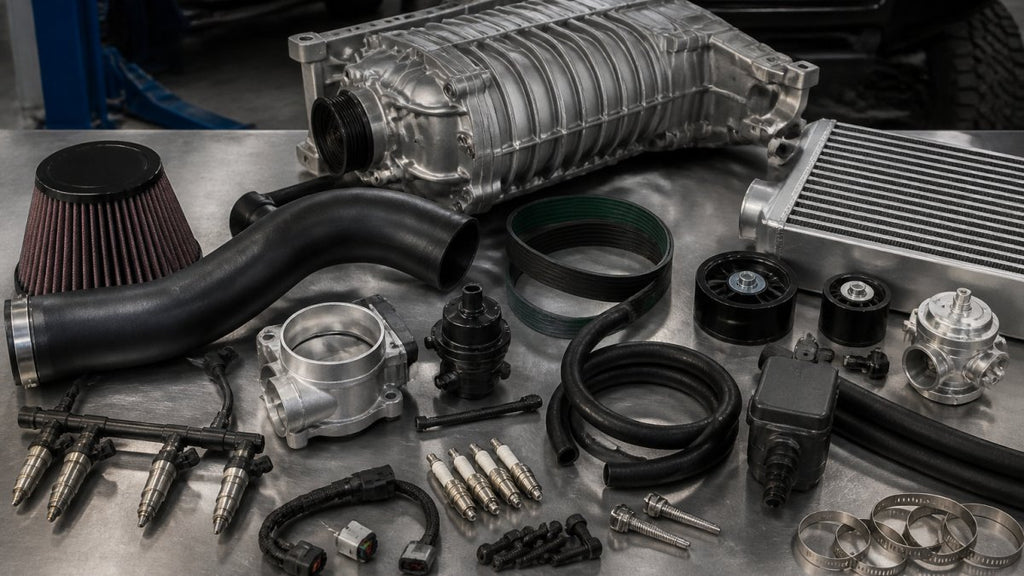
Most owners tell us they want factory-like manners with a lot more authority when they get into the pedal. That means you should care about the tuning, belt routing, fueling, inlet design, underhood packaging, and how complete the system is.
A good kit should not feel hacked together. It should look like it belongs there.
The best option depends on how your 4Runner is built
A stock-tire commuter 4Runner and a steel-bumper, 33-inch, rooftop-tent truck are not asking for the same thing, even if they share the same engine.
If your truck is mostly a daily driver with some weekend trips, you will notice the gain in throttle response and passing power right away. The vehicle just feels less lazy. It gets out of its own way without drama.
If you are running 33s or 35s, added armor, and a full cargo setup, the value is even easier to feel. One of the biggest complaints we hear from built 4Runner owners is that the truck becomes tiring to drive. You are constantly into the throttle, always waiting for a downshift, and every hill feels like work. Supercharging does not turn it into a sports car. It makes it usable again.
If you tow, the benefit is just as real. No, you still need to respect the platform and tow rating. But having more torque on tap helps the truck hold speed better, feel less strained, and respond quicker when the trailer is behind you.
Altitude is another big one. At elevation, naturally aspirated power disappears fast. Forced induction helps bring that power back in a way you can feel immediately. If you live in Colorado, Utah, Arizona, or spend a lot of time in the mountains, this matters more than most spec sheets will ever show.
What to expect behind the wheel
The best supercharged 4Runner is not the one with the wildest dyno number. It is the one that makes you stop thinking about how underpowered the truck used to feel.
After a proper install and tune, the biggest change is usually how little effort the truck needs to do normal things. It merges easier. It climbs easier. It pulls through the middle without falling on its face. Around town, it feels more responsive. On the highway, it feels less busy.
That matters on long trips. A lot of owners think they are shopping for more speed, but what they really want is less stress behind the wheel. That is why drivability matters so much on a 4Runner build.
The trade-offs nobody should sugarcoat
Yes, there are trade-offs.
You are adding complexity. You need the right fuel requirements for the tune. Installation quality matters a lot. Maintenance habits matter more than they do on a stock truck. If your 4Runner already has unresolved issues, boost is not the bandage for that.
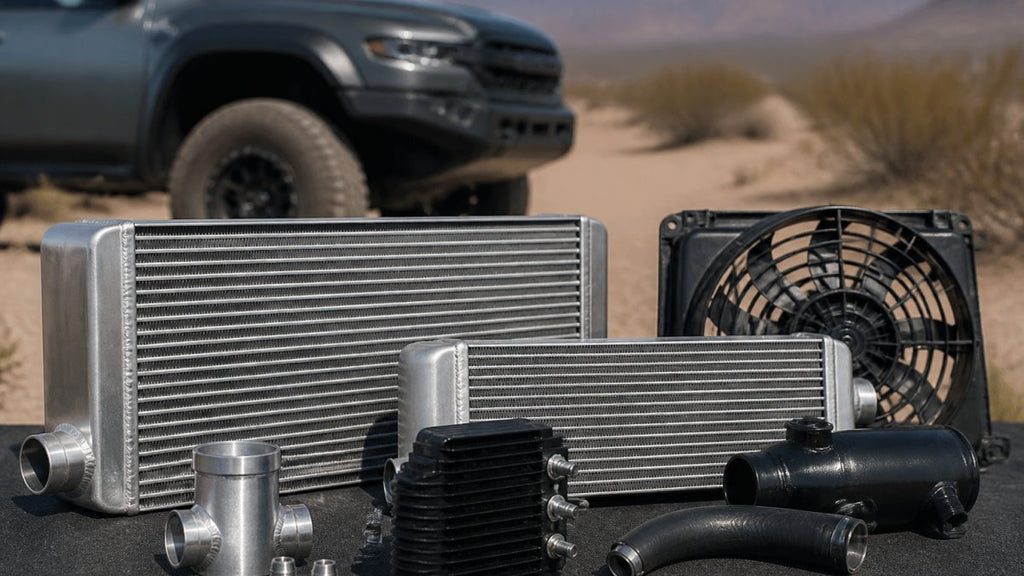
Heat management also matters, especially if you live in a hot climate, tow often, or spend long periods crawling and then jumping back on the highway. A well-engineered kit accounts for that. A pieced-together setup usually makes you pay for it later.
Cost is the other reality check. A proper supercharger setup is not the cheap path. But neither is trying to fix a heavy 4Runner with gear swaps, intake noise, exhaust drone, and a bunch of parts that never really solve the core problem. If the goal is real power you can feel every day, a sorted supercharger kit is often the cleanest answer.
Installation and tuning matter as much as the hardware
This is not the place to cut corners. One of the biggest mistakes owners make is focusing only on the blower and not the complete system around it.
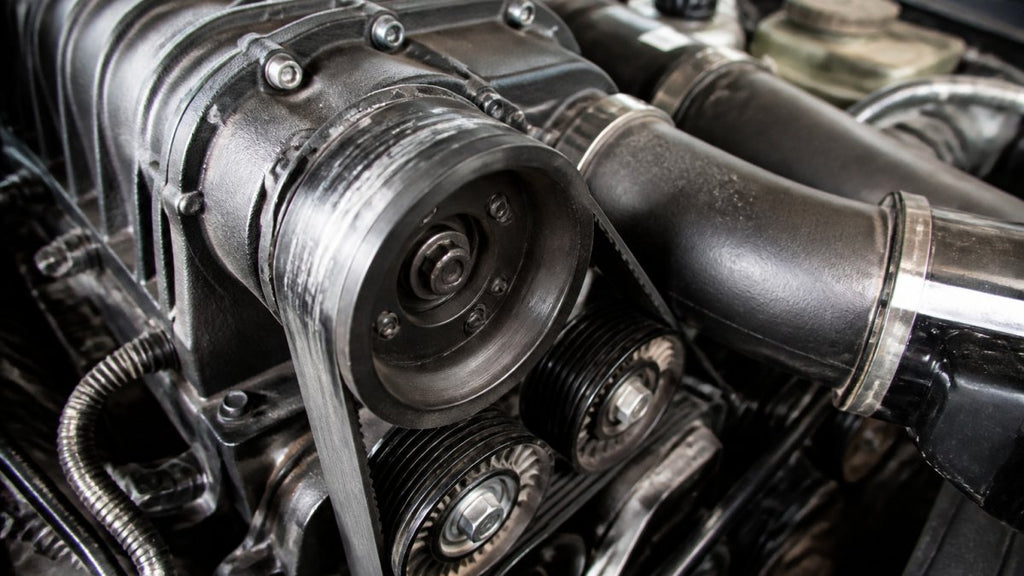
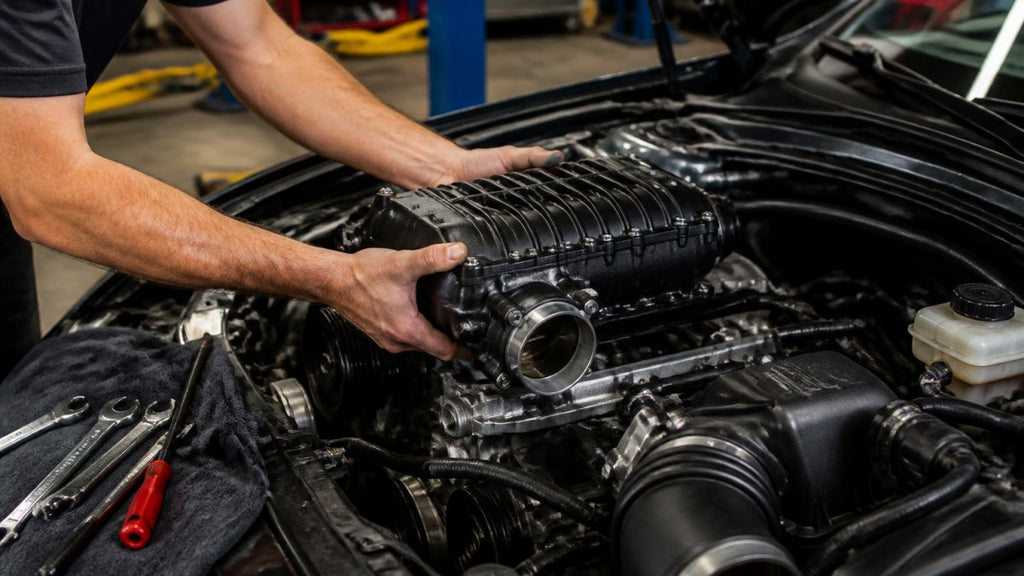
After installing hundreds of kits, I can tell you this straight - clean installation and proper calibration are what separate a truck that feels factory-right from one that becomes a headache. Belt alignment, vacuum routing, fuel delivery, and tune quality all show up in the way the truck starts, drives, and lasts.
That is why vehicle-specific kits matter so much. You want something built for your exact 4Runner application, not a universal science project that turns your daily driver into a part-time hobby.
So which Toyota 4Runner supercharger options make sense?
For most V6 4Runner owners, the right answer is a complete, bolt-on, properly tuned kit designed around real street and SUV use. Not the biggest number. Not the most exotic setup. The one that gives you immediate torque, clean drivability, and long-term confidence.
If your truck is built, loaded, or lives at altitude, the value shows up even faster. If it is mostly stock, you will still feel a huge difference, but the owners with armor, bigger tires, and towing duty are usually the ones who wonder why they waited so long.
That is really what this comes down to. A 4Runner does not need to be a race truck. It just needs to stop feeling slow every time you use it the way a 4Runner is meant to be used. Get the right kit, install it right, tune it right, and your truck finally feels like it can carry the weight you bolted onto it.
Related post
09
Oct
RECENT POSTS