Affordable Bolt-On Supercharger Kits: 2026 Buyer's Guide
Table of Contents
- What Are Affordable Bolt-On Supercharger Kits?
- Quick Comparison: Top Affordable Bolt-On Supercharger Kits
- Supercharger Kit Installation Cost Breakdown
- Supercharger Pros and Cons for Budget-Conscious Buyers
- Best Cheap Superchargers by Vehicle Type
- Leading Supercharger Brands: What Sets Them Apart
- Types of Superchargers: Roots vs. Twin-Screw vs. Centrifugal
- Real Horsepower Gains and Performance Expectations
Affordable Bolt-On Supercharger Kits: 2026 Buyer's Guide
Last Updated: July 22, 2026
Affordable bolt-on supercharger kits deliver 40-70% more horsepower without complete engine rebuilds. At VT Superchargers, we engineer kits for precise OEM-style fitment across Toyota trucks, Nissan platforms, Mazda vehicles, and more, all backed by accessible financing and a 24-month warranty. This guide covers selecting, installing, and maintaining forced induction systems that deliver real results without breaking the bank.
What Are Affordable Bolt-On Supercharger Kits?
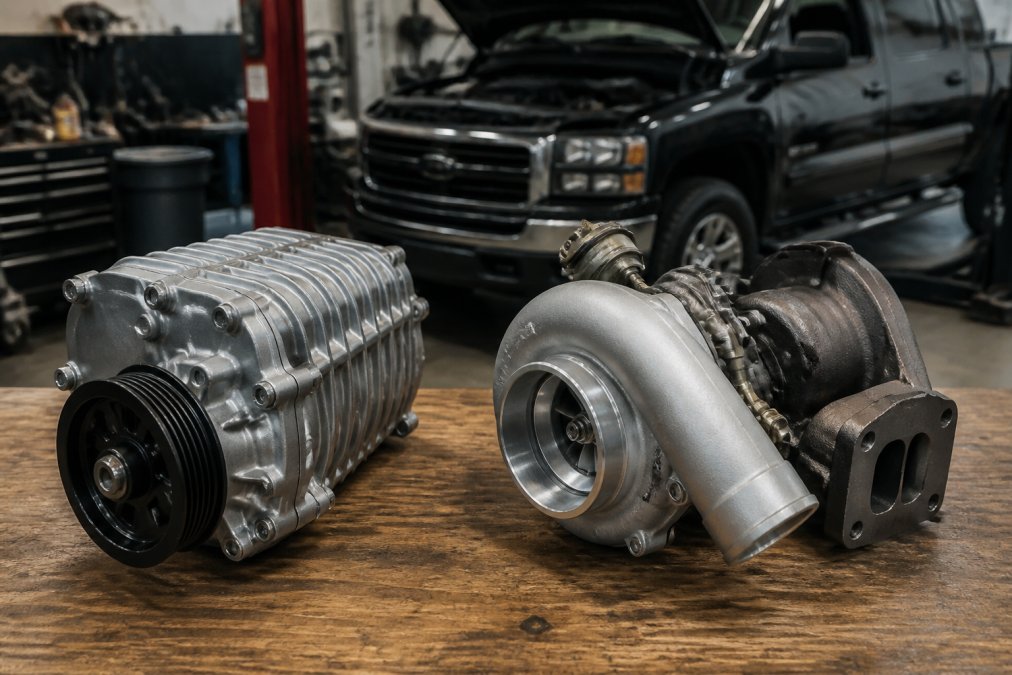
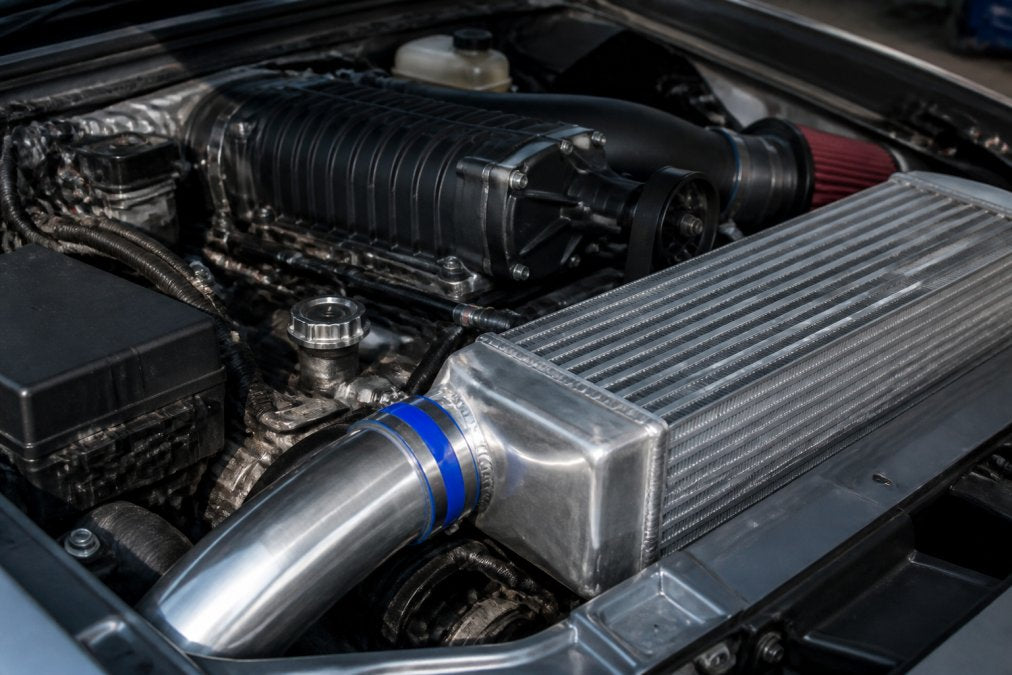
Bolt-on supercharger kits are complete forced induction systems that mount directly onto your engine's intake manifold without custom fabrication. Unlike turbochargers that use exhaust gases, superchargers employ a belt-driven compressor to force more air into the combustion chamber, creating immediate throttle response and linear power delivery across the RPM range.
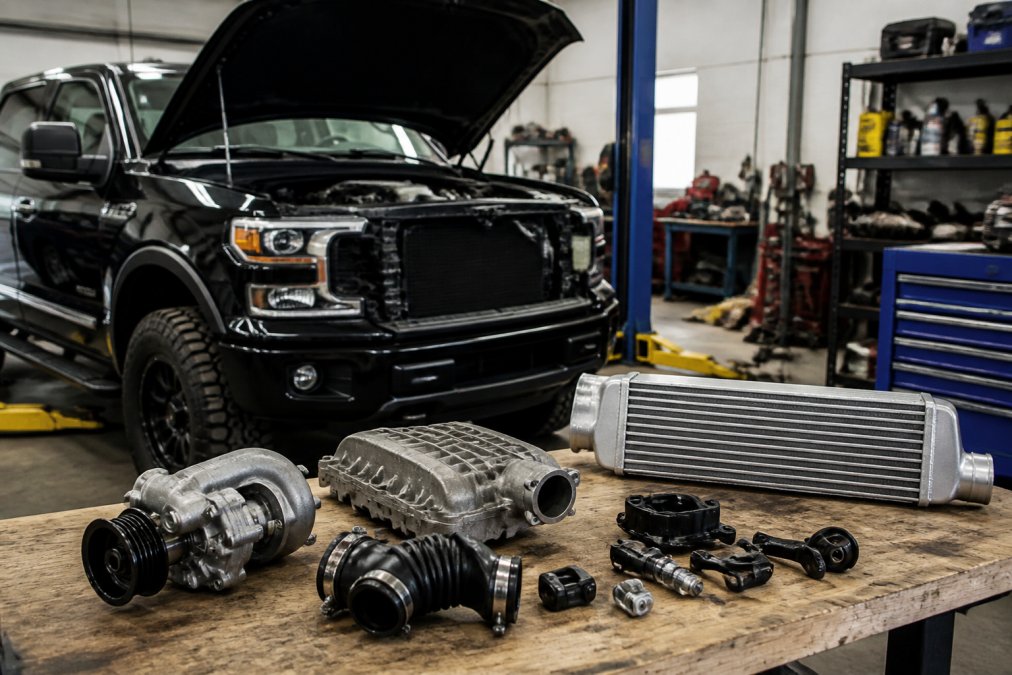
"Affordable" distinguishes these systems from high-end options exceeding fifteen thousand dollars. Modern bolt-on kits typically range from forty-five hundred to seven thousand dollars and include the compressor head, intake manifold adapter, fuel injectors, high-flow fuel pump, intercooler (on most twin-screw systems), drive belt, and necessary gaskets and hardware.
How Bolt-On Systems Differ from Professional Installations
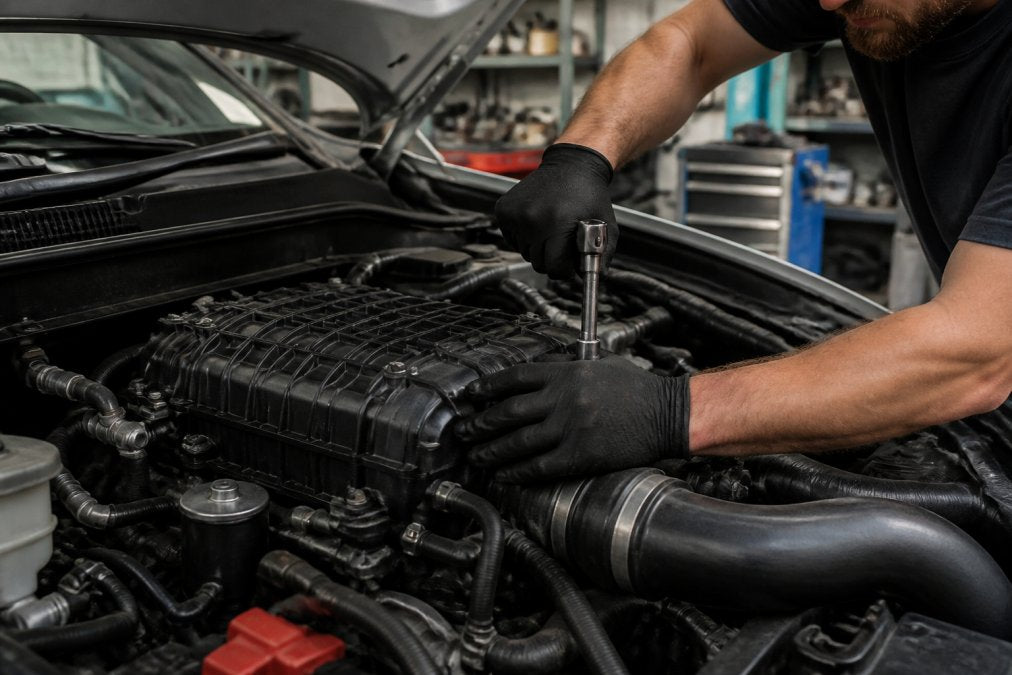
Professional custom installations involve dyno testing and labor costs adding two to four thousand dollars. Bolt-on kits minimize expense through pre-engineered intake manifolds and fuel system components requiring no modification. Installation takes eight to sixteen hours instead of thirty to forty hours, significantly reducing labor costs while maintaining the same performance and reliability.
Pro Tip
Bolt-on kits engineered for your specific vehicle year and engine code are essential. Installing a kit designed for a different platform requires custom fabrication, negating cost savings and creating reliability risks.
Quick Comparison: Top Affordable Bolt-On Supercharger Kits
| Kit | Vehicle Application | Type | Starting Price | Horsepower Gain | Best For |
|---|---|---|---|---|---|
| VT Superchargers Toyota 5.7L | Land Cruiser, Tundra, Sequoia | Twin-Screw | $6,950 | 40-60% | Truck owners wanting torque and reliability |
| VT Superchargers Nissan Frontier 4.0 | 2005-2019 Frontier | Twin-Screw | $5,500 | 40-60% | Mid-size truck buyers on budget |
| VT Superchargers Mazda 6 2.0 | 2014-2024 Mazda 6 | Twin-Screw | $4,600 | 40-60% | Compact sedan enthusiasts |
| Vortech V-3 Si-Trim | Mustang 5.0L (Fox Body) | Centrifugal | $4,304 | ~100 HP | Classic muscle car owners |
| Magnuson TVS Rotor | Chevrolet 5.7L LS | Twin-Screw | $4,495 | 50-80 HP | Truck and SUV owners seeking low-end torque |
| Sprintex S5-210 | Jeep JK/JL Wrangler | Twin-Screw | $4,695 | 41% HP, 58% TQ | Off-road and daily-driver Jeep owners |
VT Superchargers dominates the affordable segment through direct fitment engineering and financing options that make systems accessible to everyday owners.
Supercharger Kit Installation Cost Breakdown
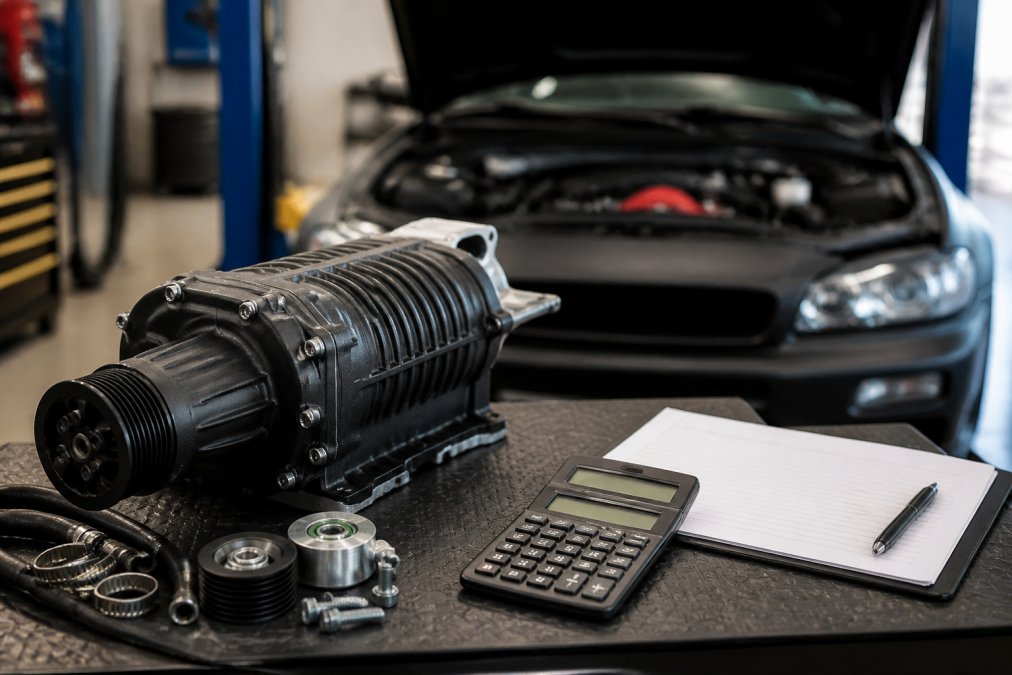
Total ownership cost extends beyond kit purchase. Understanding the full financial picture prevents budget surprises.
Kit Purchase: Forty-five hundred to seven thousand dollars depending on engine displacement and supercharger type.
Labor Installation: Eight hundred to two thousand dollars if outsourced to a professional shop. DIY installation eliminates this cost but requires mechanical skill and proper tools.
Fuel System Upgrades: Most kits include high-flow fuel injectors and fuel pump, but older vehicles may need fuel line upgrades (three hundred to six hundred dollars).
Engine Tuning: Aftermarket ECU tuning ranges from three hundred to eight hundred dollars. Some kits include tuning; others require separate purchase.
Intercooler (if not included): Five hundred to fifteen hundred dollars for systems requiring separate purchase.
Miscellaneous Hardware: Belts, gaskets, clamps, and fittings typically run one hundred to three hundred dollars.
DIY vs. Professional Installation
DIY installation saves labor costs but introduces risk. Mistakes like cross-threading bolts or misaligning the intake manifold can damage the engine or void warranty. Professional installation provides peace of mind and warranty protection covering installation defects for twelve to twenty-four months. At twenty-five dollars per hour opportunity cost, DIY time investment often makes professional installation financially comparable.
Long-Term Maintenance and Reliability Costs
Supercharged engines run hotter and require more frequent oil changes, every three thousand to four thousand miles instead of five thousand to seven thousand miles. Intercoolers need cleaning every twelve to eighteen months (fifty to one hundred dollars at a shop).
Watch Out
Neglecting intercooler maintenance reduces horsepower gains by 15-20% within months. Clogged cores restrict airflow, lowering boost pressure and peak power. This is the most common reason supercharged vehicles underperform.
Most VT Superchargers kits carry a 24-month warranty covering material and workmanship defects, but NOT maintenance-related failures or improper tuning damage. Budget four hundred to eight hundred dollars annually for preventive maintenance.
Supercharger Pros and Cons for Budget-Conscious Buyers
Forced induction delivers real performance, but it's not perfect for every driver or vehicle.
Pros:
- Immediate power delivery across the RPM range with no turbo lag
- Linear horsepower and torque gains (40-70% typical)
- Bolt-on installation without custom fabrication
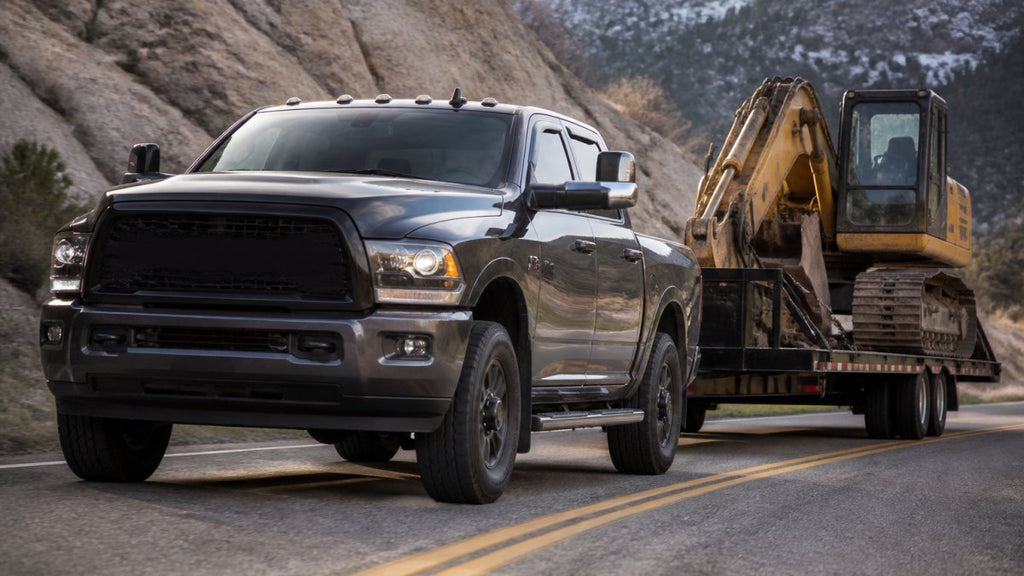
- Improved towing capacity for trucks and SUVs
- Works with stock fuel systems on most applications
- Reliable, proven technology with decades of real-world testing
Cons:
- Increases engine temperature and stress on internal components
- Requires more frequent maintenance and oil changes
- Reduces fuel economy by 10-15%
- Can void factory warranty if not properly documented
- Requires ECU tuning to prevent engine knock
- Belt-driven systems add parasitic drag
Forced Induction Benefits and Trade-offs
The primary benefit is immediate throttle response. Supercharged engines compress air at idle, delivering boost pressure instantly when you press the accelerator. For truck owners, low-end torque gains are transformative. A stock 5.7L Toyota engine produces roughly three hundred eighty foot-pounds of torque at four thousand RPM. With a bolt-on supercharger kit, that same engine delivers five hundred to six hundred foot-pounds across a broader RPM band, starting lower in the rev range.
The trade-off is complexity and maintenance. Supercharged engines require precise fuel tuning to prevent engine knock, which damages pistons and valves. Professional tuning through a handheld device or custom ECU calibration is essential, not optional.
Best Cheap Superchargers by Vehicle Type
Affordable bolt-on supercharger kits vary dramatically by vehicle platform. What's available for a Toyota Tundra isn't available for a Dodge Challenger.
Toyota and Nissan Truck Applications
Toyota truck owners have the widest selection. The 5.7L 3UR-FE engine in Land Cruisers, Tundras, and Sequoias has proven reliable under boost for over a decade. The VT Superchargers Toyota Tundra 5.7 Supercharger Kit delivers 40-60% horsepower gains at sixty-nine hundred fifty dollars.
Nissan Frontier owners benefit from the 4.0L V6's popularity. The VT Superchargers Nissan Frontier 4.0 Supercharger Kit for 2005-2019 models costs fifty-five hundred dollars with twin-screw technology and air-to-air intercooling.
Nissan Xterra owners (2005-2015) have the VT Superchargers Nissan Xterra 4.0 Supercharger Kit at fifty-four hundred dollars, offering 50-70% horsepower gains.
Mazda and Compact Vehicle Options
The VT Superchargers Mazda 6 2.0 Twin Screw Supercharger Kit for 2014-2024 models costs forty-six hundred dollars and delivers 40-60% horsepower gains, transforming stock 187 horsepower into 260-300 horsepower.
The VT Superchargers Mazda CX-5 2.0 Twin Screw Supercharger Kit for 2013-2025 models carries the same forty-six hundred dollar price point on the same 2.0L Skyactiv-G engine platform.
The [VT Superchargers Mazda3 2.0 Twin Screw Supercharger Kit](https://ecae6f-2.myshopify.com/products/mazda3-2-0-twin-screw-supercharger-kit) for 2014-2018 models also costs forty-six hundred dollars, making Mazda one of the most affordable performance upgrade platforms.
Leading Supercharger Brands: What Sets Them Apart
The affordable supercharger market includes several established manufacturers with distinct engineering philosophies and target markets.
VT Superchargers: OEM-Style Fitment and Warranty
VT Superchargers specializes in direct-fit bolt-on systems engineered for precise OEM-style mounting without modification. Kits include everything needed: intake manifolds, fuel injectors, pumps, intercoolers, and hardware, reducing hidden costs and installation surprises. The 24-month warranty is industry-standard, backed by accessible financing options spreading cost over twelve to thirty-six months.
Competitor Comparison: Vortech, Magnuson, and Others
Vortech manufactures centrifugal superchargers known for efficiency and reliability. The Vortech V-3 Si-Trim starts around forty-three hundred dollars and delivers approximately one hundred horsepower to Fox-body Mustang 5.0L engines. Centrifugal superchargers build boost gradually as RPM increases, producing less low-end torque but smoother power delivery.
Magnuson manufactures twin-screw systems using Eaton TVS rotor technology starting around forty-five hundred dollars, with a 3-year/36,000-mile warranty. Sprintex manufactures twin-screw systems focusing on Jeep Wranglers and sport-compact cars, starting around forty-six hundred dollars.
VT Superchargers covers all market segments with direct-fit kits engineered for each specific platform, making them the most versatile affordable option.
Types of Superchargers: Roots vs. Twin-Screw vs. Centrifugal
Three main supercharger designs dominate the affordable market, each with distinct characteristics.
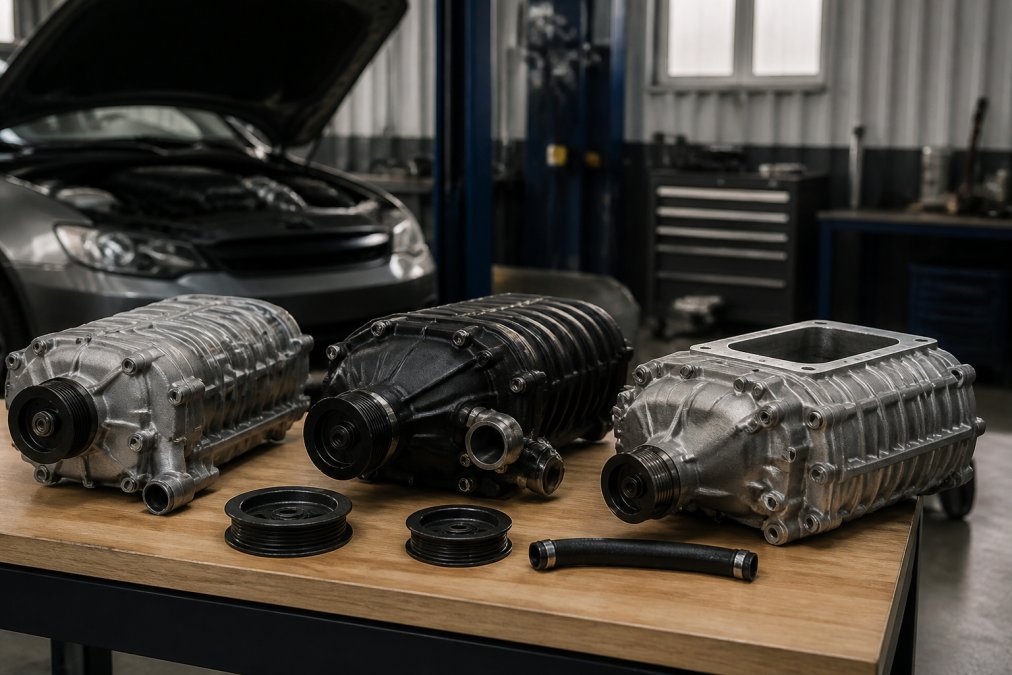
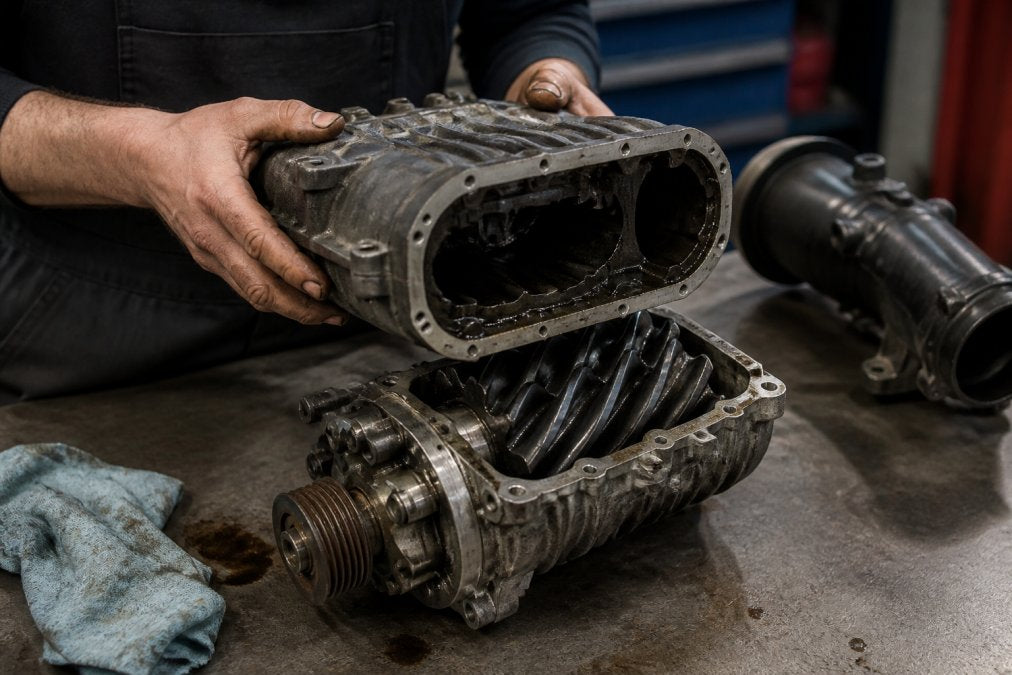
Twin-Screw Superchargers use two interlocking rotors to compress air continuously, producing maximum boost pressure at lower RPM. They're the most efficient design, converting approximately eighty percent of belt-driven power into boost pressure. Twin-screw systems produce instant throttle response with no lag and excel at low-end torque production. Most affordable bolt-on kits use twin-screw technology because engineering is straightforward and reliability is excellent, with superchargers routinely lasting over one hundred thousand miles.
Centrifugal Superchargers use a single impeller spinning at extremely high RPM to compress air. They produce boost pressure that increases with engine RPM, delivering linear power gains rather than flat boost across the band. They're lighter, more compact, and quieter than twin-screw systems but produce minimal boost at idle and low RPM, meaning less low-end torque and slower throttle response.
Roots-Style Superchargers use two rotating lobes to push air into the engine. They produce maximum boost at lower RPM but are less efficient, converting approximately sixty-five percent of belt-driven power into boost, and are noisier. Roots-style designs are rarely used in modern affordable bolt-on kits.
For affordable bolt-on supercharger kits, twin-screw is the dominant design because it balances instant boost, low-end torque, and reliability at reasonable cost.
Real Horsepower Gains and Performance Expectations
A bolt-on supercharger kit typically adds 40-70% more horsepower and torque compared to stock output. For a stock 5.7L Toyota engine producing three hundred eighty horsepower, expect real-world gains of one hundred fifty to two hundred sixty horsepower, resulting in five hundred thirty to six hundred forty horsepower total. These gains assume professional tuning and proper fuel system support.
Dyno Testing and Torque Curve Improvements
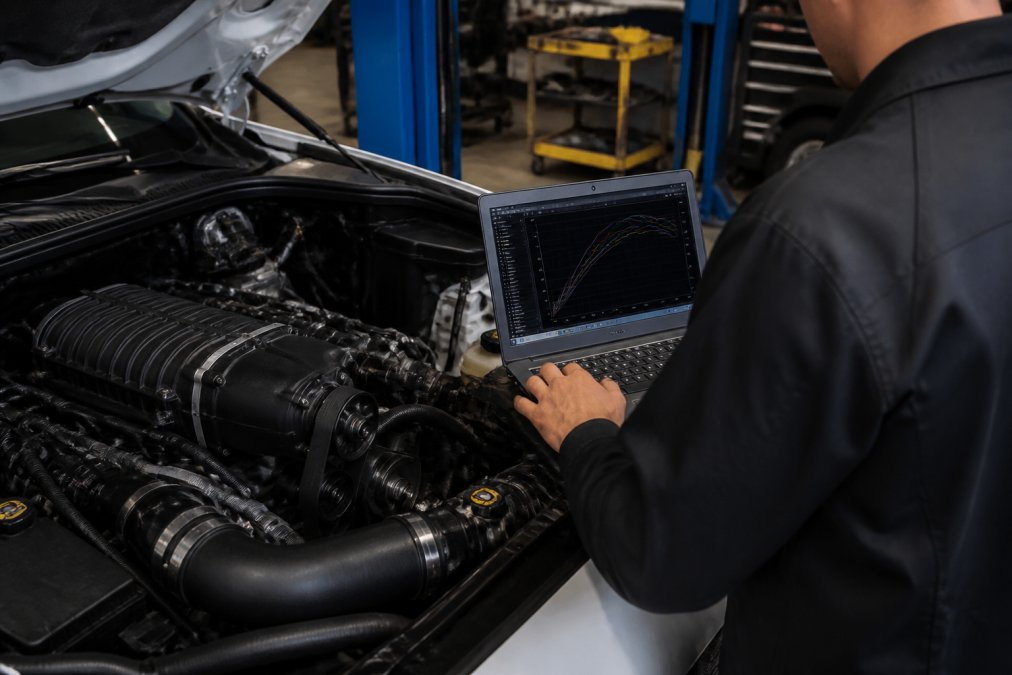
Dyno testing measures actual horsepower and torque output more reliably than manufacturer claims. A supercharged 5.7L engine typically produces peak horsepower around five thousand to fifty-five hundred RPM, compared to forty-five hundred to five thousand RPM for stock engines.
More importantly, the torque curve flattens and rises across a wider RPM band. Stock 5.7L engines produce peak torque at four thousand RPM, then drop as RPM increases. A supercharged 5.7L maintains high torque from three thousand RPM to six thousand RPM, making towing and acceleration effortless across a broader range. Real dyno numbers for a VT Superchargers Toyota 5.7L kit show approximately five hundred thirty to five hundred eighty horsepower and five hundred to five hundred fifty foot-pounds of torque, depending on tuning aggressiveness and fuel quality.
Throttle Response and Daily Driving Feel
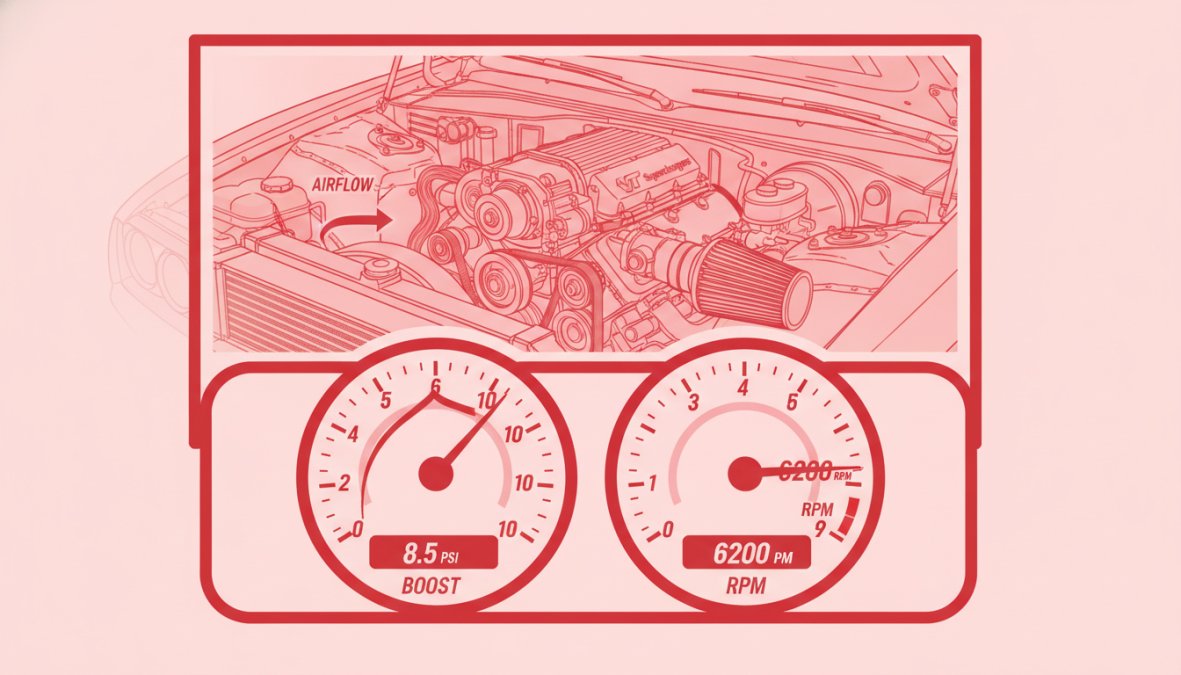
The most noticeable change after supercharger installation is throttle response. Supercharged engines produce boost pressure instantly when you press the accelerator, eliminating lag present in naturally aspirated engines. In daily driving, this feels like the engine wakes up. Merging onto highways requires less planning because acceleration is immediate and powerful. Towing feels less strained because the engine produces maximum torque at lower RPM, reducing the need to downshift.
Affordable bolt-on supercharger kits have evolved significantly, offering real performance and reliability at prices making forced induction accessible to everyday vehicle owners. VT Superchargers addresses this through direct-fit kits engineered for precise OEM-style fitment across Toyota trucks, Nissan platforms, Mazda vehicles, and other popular models. With financing options, a 24-month warranty, and worldwide shipping, VT Superchargers eliminates barriers preventing budget-conscious buyers from accessing forced induction technology. Start your performance upgrade journey today and experience the immediate throttle response and genuine power gains that bolt-on superchargers deliver.
External References
According to automotive performance research from SAE International, forced induction systems deliver measurable improvements in low-end torque production across all engine displacement categories, making them particularly valuable for towing and off-road applications.
Research from the American Automobile Association's vehicle maintenance guide indicates that supercharged engines require more frequent oil changes and intercooler maintenance than naturally aspirated engines, with cooling system stress increasing by approximately 20-30% under boost pressure conditions.
The EPA's guidelines on aftermarket performance modifications clarify that CARB-certified supercharger kits meet emissions standards in all fifty states, but non-certified modifications may violate state emissions regulations and void factory warranty coverage on emission-related components.
Frequently Asked Questions
How much horsepower does a bolt-on supercharger kit actually add?
Power gains vary significantly by engine size and supercharger type. Twin-screw systems typically deliver 40-60% more horsepower than stock, while centrifugal designs may add slightly less but offer better efficiency. For example, a Toyota 5.7L engine can gain 40-60% additional power with a bolt-on kit, translating to substantial torque improvements across the RPM range. Real-world gains depend on vehicle weight, gearing, and whether ECU tuning is optimized for the boost pressure.
Will a supercharger kit void my factory warranty or cause engine reliability issues?
Most OEM warranties are voided on the engine and drivetrain once forced induction is installed, though some manufacturers offer powertrain coverage if the supercharger is CARB certified. Reliability concerns are valid if the engine wasn't designed for boost, but quality bolt-on kits from established brands like VT Superchargers (with 24-month warranties) are engineered for safe operation. Key is proper ECU tuning, fuel injector upgrades, and maintaining air-fuel ratios. Many enthusiasts run supercharged vehicles reliably for years with proper maintenance.
Is DIY installation of a bolt-on supercharger kit realistic for someone with no experience?
Bolt-on kits are designed for direct-fit installation without cutting or welding, making them more accessible than custom builds. However, difficulty varies by vehicle, some require only basic hand tools and 4-8 hours, while others demand pulley ratio adjustments and intercooler plumbing. ECU tuning adds complexity and typically requires professional calibration or handheld tuner software. Many DIY enthusiasts successfully install these kits, but budget $1,000-$2,000 for professional installation if you're uncomfortable with engine management systems.
What's the real difference between cheap supercharger kits and premium brands like Whipple or ProCharger?
Premium brands offer decades of R&D, extensive dyno testing, and broader vehicle compatibility, but affordable bolt-on kits like VT Superchargers deliver comparable power gains at lower cost by targeting specific platforms. The trade-off: premium brands may offer wider tuning options, better customer support networks, and stronger resale value. VT Superchargers compensates with OEM-style fitment, accessible financing, and 24-month warranties. For budget buyers, the real question is: does the kit fit your specific vehicle and include ECU tuning? Brand prestige matters less than engineering precision for your application.
Are there emissions compliance issues with bolt-on supercharger kits in my state?
Many states follow EPA or CARB emissions standards. CARB-certified supercharger kits (marked with E.O. numbers) are legal in California and 49 other states. Non-certified kits may trigger check-engine lights or fail emissions testing. Before purchasing, verify your kit's certification status and your state's requirements. Some affordable kits skip CARB certification to reduce cost, so clarify this during purchase. VT Superchargers offers options for various regions, and reputable manufacturers clearly disclose emissions compliance on product pages.
This article was written using GrandRanker
Related post


RECENT POSTS