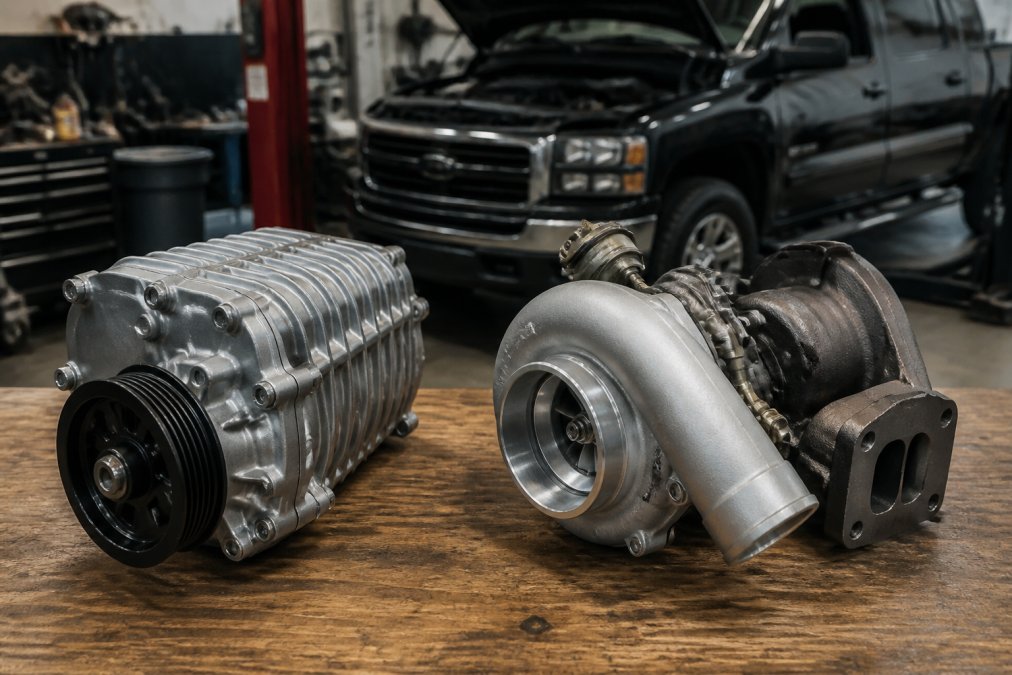
Supercharger vs Turbo for Truck Owners
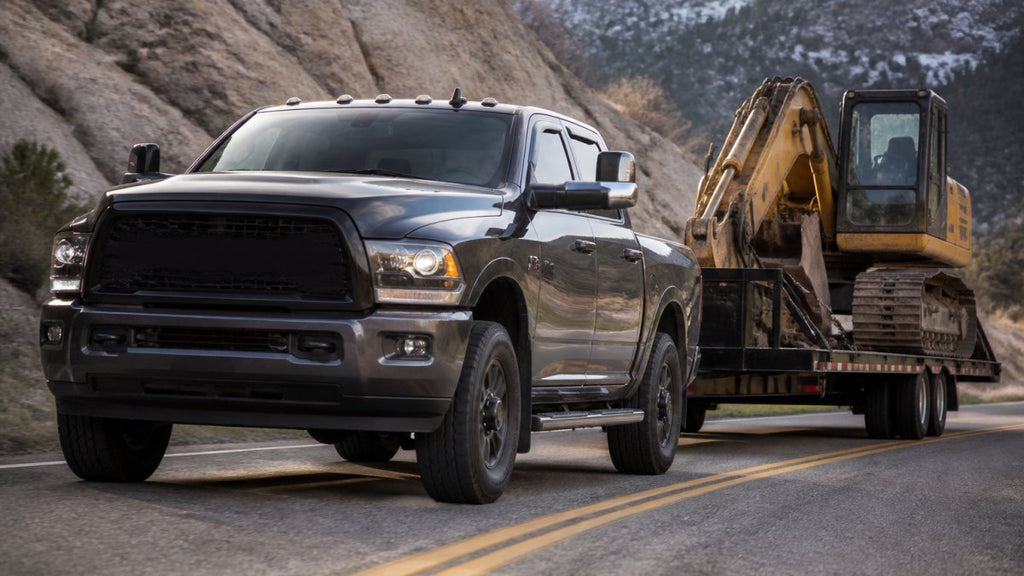
Bigger tires, a bed full of gear, a trailer on the hitch, and suddenly your truck feels like it lost half its engine. You roll into the throttle, it drops two gears, makes a bunch of noise, and still doesn’t move the way it should. That’s usually when the supercharger vs turbo for truck question starts coming up in the shop.
We see this all the time with Tacomas on 33s, Frontiers carrying overland weight, Gladiators fighting headwinds, and half-ton trucks that tow every weekend. Most owners are not chasing dyno-sheet bragging rights. They just want the truck to feel strong again - pulling hills without drama, passing without planning a week ahead, and getting back that low-end punch the extra weight and mods took away.
Supercharger vs Turbo for Truck Use
If you’re talking about a street-driven truck that tows, hauls, wheels, or sees daily duty, the answer is usually less about peak horsepower and more about where the power shows up. That’s the whole ballgame.
A supercharger gives you power right now. You hit the throttle, and the truck responds immediately. That matters in the real world. Pulling into traffic, climbing a grade with a trailer, easing over an obstacle off-road, or trying to hold speed on a long uphill with 35-inch tires - that instant torque is what most truck owners actually feel and care about.
A turbo can make great power too. No argument there. But on a truck, especially one that spends its life under load, the way that power arrives matters just as much as how much there is. If you have to wait for boost to build, downshift harder, or keep the engine in a narrower rpm window, the truck can end up feeling less natural than the numbers suggest.
That’s why one of the biggest complaints we hear from truck owners is not “I need more top-end horsepower.” It’s “This thing feels lazy now,” or “It won’t hold a hill without hunting for gears.”
What a Truck Owner Actually Feels Behind the Wheel
Let’s keep this where it belongs - in the driver’s seat.
On a supercharged truck, throttle response is usually the first thing people notice. The truck feels awake. You roll into the pedal and it moves with authority instead of hesitation. Around town, that means less throttle to get the same result. On the highway, it means cleaner passing power. Towing, it means the truck stops feeling like it is working overtime just to maintain speed.
After installing hundreds of kits, that’s the part owners bring up first. Not the dyno number. Not the blower itself. It’s how much more normal the truck feels, just stronger everywhere.
With a turbo setup, the experience can vary a lot depending on the system, tuning, transmission behavior, and how the truck is used. A well-done turbo truck can be very strong. But for many owners, especially on vehicles that weren’t built around a factory turbo package, you can end up with more heat, more plumbing, and a powerband that feels less predictable in day-to-day use.
That may be fine on a street car. Trucks are different. They spend more time loaded down, climbing, towing, crawling, and carrying the aerodynamic profile of a brick.
Why Superchargers Make Sense on Trucks
A truck wants torque early. That’s true for a Tacoma with armor and a rooftop tent, a Frontier with 285s, or a V8 half-ton pulling a bass boat in July.
A properly engineered supercharger setup feeds right into that need. You get boost in direct relationship to engine speed, which makes power delivery feel linear and easy to manage. There’s no waiting around for the setup to come alive. The truck just responds.
That’s a big deal off-road too. In loose climbs, ledges, and slow-speed technical driving, predictable throttle matters. A truck that delivers smooth, immediate torque is easier to place and easier to control than one that comes on harder later.
Towing is another area where superchargers shine. Most owners tell us they are tired of the same pattern - slight incline, transmission kicks down, rpm flares, speed still drops. More low and midrange torque fixes that better than a power bump way up top. It helps the truck hold gears better and feel less strained.
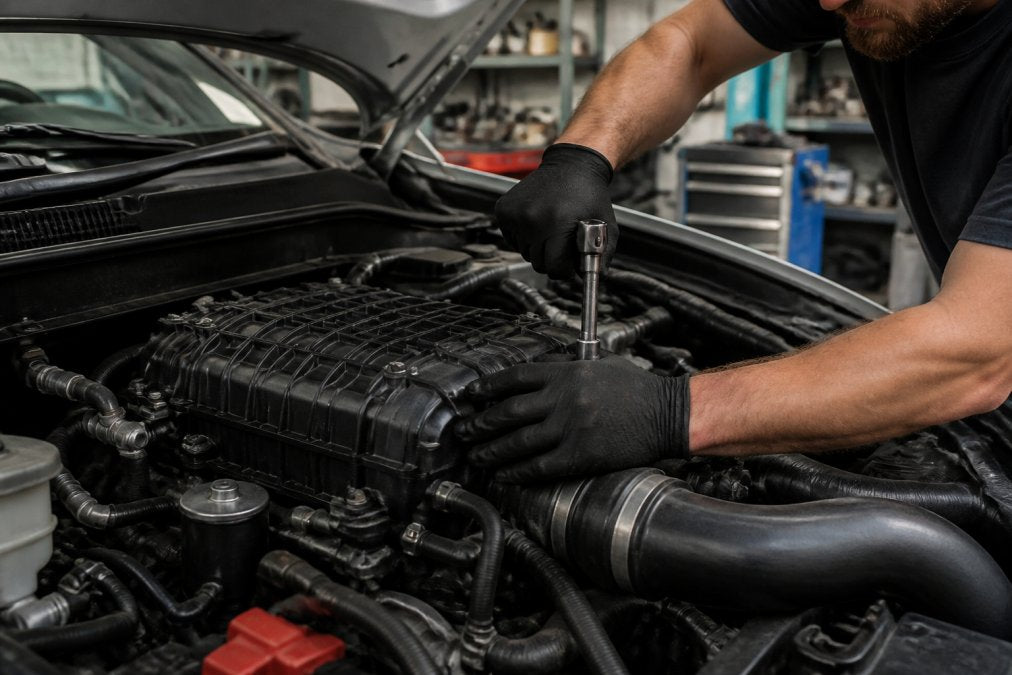
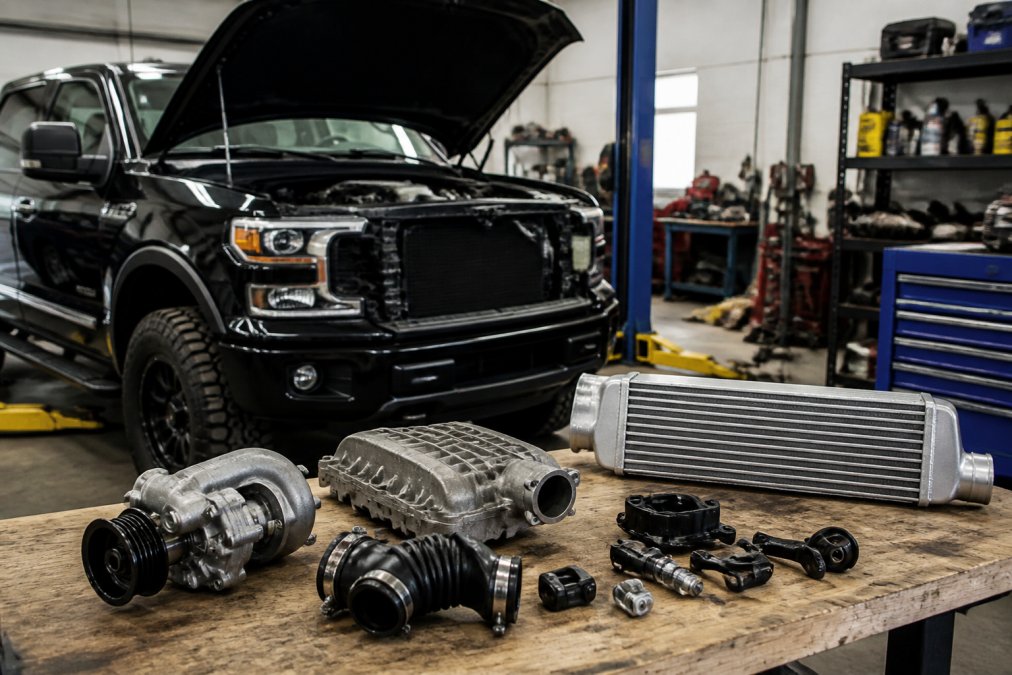
And from a packaging standpoint, a bolt-on supercharger kit often fits the mission of a truck owner better. Cleaner install, OEM-style routing, vehicle-specific tuning, and fewer custom variables usually mean fewer headaches down the road. That matters if this truck has to start every morning, drive across state lines, and still hit the trails on the weekend.
Where a Turbo Can Make Sense
To be fair, there are cases where a turbo setup works well.
If the goal is maximum peak power, room to keep turning things up, or a custom build where fabrication is part of the plan, a turbo can be the right path. At altitude, turbos also have some real advantages. If you live in Colorado, tow in the mountains, and know exactly what kind of system you want, that can be part of the conversation.
But here’s the thing. Most truck owners asking this question are not building a one-off setup and chasing huge top-end numbers. They want to bolt on real power, keep stock-like manners, and avoid turning the truck into an unfinished project. That pushes the answer back toward a supercharger more often than not.
We see this especially on popular midsize platforms. Tacoma owners usually want their 3.5 or 4.0 to stop feeling winded with bigger tires. Gladiator owners want better low-end grunt after adding weight. Frontier owners want more passing power and less strain when loaded up. Those are drivability problems first. A supercharger is a drivability solution.
Supercharger vs Turbo for Truck Reliability
This is where a lot of owners get cautious, and they should.
Any forced-induction setup lives or dies by the quality of the kit, the tune, and the install. Doesn’t matter what logo is on the box. If the calibration is sloppy, the fitment is hacked together, or the system runs hot and inconsistent, you’re buying trouble.
That said, for the average truck owner, a well-sorted, vehicle-specific supercharger kit usually fits long-term ownership better than a pieced-together turbo build. Simpler packaging and OEM-style integration go a long way. Fewer custom parts usually means fewer weird issues six months later.
One of the biggest complaints we hear from owners who went down the wrong path is that they ended up with a truck that made power but lost daily manners. Idle got weird. Heat became a problem. Throttle got touchy. The transmission never felt happy. That’s not a win if the truck is driven every day.
The better goal is not the biggest number. It’s a truck that starts, idles, drives, shifts, and pulls like it should - only stronger.
Which Is Better for Your Truck?
If your truck is a daily driver, tow rig, overland build, or weekend trail truck, a supercharger is usually the better fit.
It gives you the kind of power trucks actually need - low-end and midrange torque, sharp throttle response, and more confidence under load. It also tends to preserve the feel most owners want to keep. That factory-like drivability matters a lot more than people think until they lose it.
If your truck is becoming a custom high-horsepower project and you’re fine with more fabrication, more tuning variables, and a setup built around peak output, then a turbo may make sense. But that’s a narrower lane than internet bench racing makes it sound.
After installing hundreds of kits, the answer usually gets pretty simple once the owner describes how the truck is used. If the complaint is constant downshifting, weak passing power, hills, towing strain, or bigger tires killing performance, a supercharger fixes the problem in the part of the rpm range where you actually drive.
That’s why so many truck owners end up in the same place. They don’t want a science project. They want the truck to feel right again - stronger leaving a stoplight, steadier on a grade, less miserable into a headwind, and more confident with weight on it.
If that sounds like your truck, stop shopping by peak number and start thinking about how you want it to feel on Monday morning, with the trailer hooked up, the tires aired down, or the bed full of gear. That’s usually where the right answer shows up.
Related post


RECENT POSTS